TAG
#1989
0 reviews · 3 essays
Related essays
Puzzle Boy / Kwirk (1989) — The Day Atlus Walked a Potato Under Its Own Name
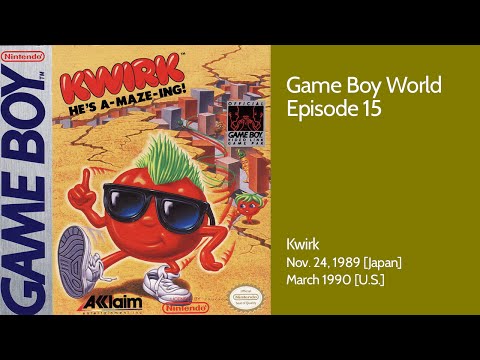
On November 24, 1989, Atlus released Puzzle Boy for the Game Boy, sold overseas as Kwirk. For a studio that had spent years working as an uncredited contractor for other publishers, this was the first game to carry its own name. A maze puzzle built from just three verbs — turn, push, fill — it quietly draws a line all the way to Catherine, the block-stacking puzzle the same company released in an entirely different form 22 years later.
Puzznic (1989) — The Credits Screen That Never Existed, and the Five Names Found in the ROM Decades Later
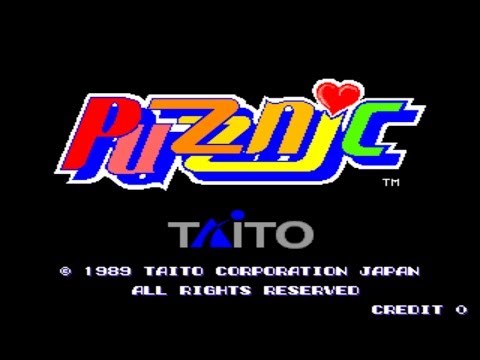
In October 1989, Taito released the arcade puzzle game Puzznic, sliding identical blocks together to clear them, with no randomness and every board hand-designed, and ports reaching nearly every 8/16-bit platform of the era. Its developers were never credited on screen; more than three decades later, ROM analysis uncovered five names hidden inside the arcade board.
Slitherlink (1989) — Loop-Closing Logic Born From a Two-Player Paper Game
In June 1989, barely half a year into the Heisei era, Puzzle Communication Nikoli #26 introduced a new puzzle format. Adapted from a two-player paper game called Slither into a single-player pencil puzzle, Slitherlink offers a paradoxical solving pleasure — proving where lines cannot go rather than where they can — and carries a nearly 38-year lineage running through NP-completeness proofs to Steam storefronts in the 2020s. We trace, with sources, the loop-logic Nikoli founder Maki Kaji once called "the son of Sudoku."