REVIEW · 2015-10-15
Human Resource Machine
De l'assembleur pour employes de bureau, en une douzaine d'instructions
First Impressions
Human Resource Machine hands you a tiny office worker and a few commands—pick up a box from the inbox, carry it, branch on a condition—and asks you to automate each floor's task. It was made and published by Tomorrow Corporation, the studio behind World of Goo, in 2015. I'm writing this not from my own playthrough but from the pool of Steam reviews.
The aggregate is steady: 94% of 4,663 reviews are positive, rated Very Positive (2026-07-04 snapshot), and 93% among the 1,460 English ones. The last 30 days are thin—13 reviews, 76%—the temperature of a long-lived title old fans keep returning to.
Read the helpful reviews, though, and nearly every bit of praise converges on one line: it taught them assembly without telling them it was teaching them assembly. The shared language here isn't what players learned—it's the buzz of the moment they realized they'd been learning.
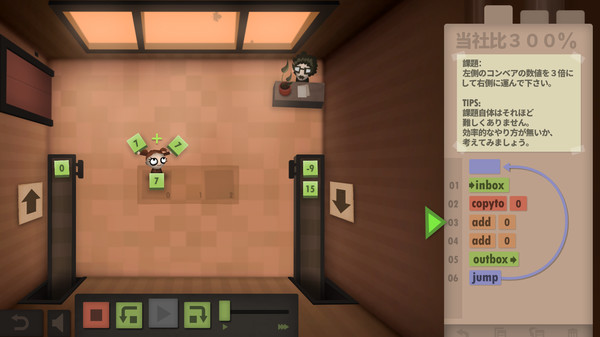 Carrying boxes between the inbox and the outbox, the basic loop — Steam store
Putting the Mechanics into Words
The first thing positive reviews point to is how few commands there are—inbox, outbox, copyfrom, copyto, add, jump—barely a dozen verbs. Yet by the midgame you're writing sorts and multiplication, and by the end, prime factorization. Reviewers are half-exasperated, half-awed that such poor tools are asked to do so much.
This is exactly what we call subtraction of verbs. The fewer the verbs, the heavier each combination becomes, and the player is pushed into taming a combinatorial explosion with almost no grammar. The Zachtronics reviews—Opus Magnum, SpaceChem—describe the same 'small parts, huge design space'; here it's condensed into one worker and some boxes.
The recurring complaint, from both camps, is the UI. Comments are drawn, not typed; there's no copy-paste; long programs turn into tangled jump arrows—one reviewer called their finished code 'a crime scene.' The elegance of subtracted verbs and the friction of the tool that spells them out share the same screen.
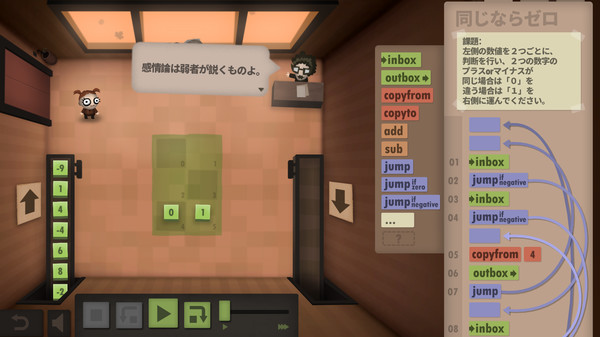 The editor: stacking a dozen command blocks into a program — Steam store
Teaching
The developer's store text says 'programming is just puzzle solving' and 'don't worry if you've never programmed.' The reviews bear out the wide door: beginners report finishing without any coding background, while people with CS degrees say it made them feel like a kid again.
In our vocabulary, the learning curve is carefully built. One reviewer noted how deliberately easy levels are placed after hard ones to preserve a sense of progress, and said you could write an essay on the pacing alone. Each new verb is handed over one at a time, and the grammar you just learned is always reused next.
But the developer's 'anyone' and the negative reviews don't quite agree. 'I bounced off around the midpoint,' 'too hard for me to enjoy'—these recur. Some levels assume outside knowledge (XOR, primes, Fibonacci) with little explanation. A door open to everyone isn't a staircase everyone can climb; that's not unkindness, it's the reach of the design.
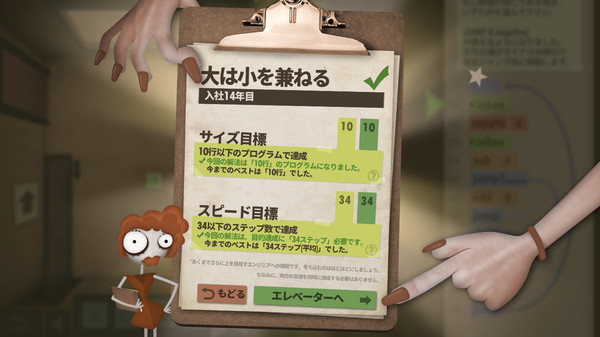 Floors that hand you one new command at a time — Steam store
The Texture of Difficulty
When 'too hard' and 'just right' split, gathering where reviewers got stuck reveals the kind of difficulty. Clearing the main path takes most people five or six hours—'breezed through,' they say. The split begins after that, in the optimization challenges (get under a size and a speed target). 'It will absolutely humble you,' several write.
Pool the sticking points and the difficulty sorts into three: conceptual walls (Level 40 Prime Factory and Level 35 Duplicate Removal get named), optimization walls (the 'obvious in hindsight' kind everyone mentions), and UI friction. Only the third is a tool problem, not a design one—and that's where the negative reviews really concentrate.
Playtime is legible from the reviews too: about 5–6 hours for the main game, 14–17 to 100%, and figures like 38 or even 166 hours from the obsessed. That spread exists because optimization is a floorless freedom—the game leaves it to you to decide where to step off.
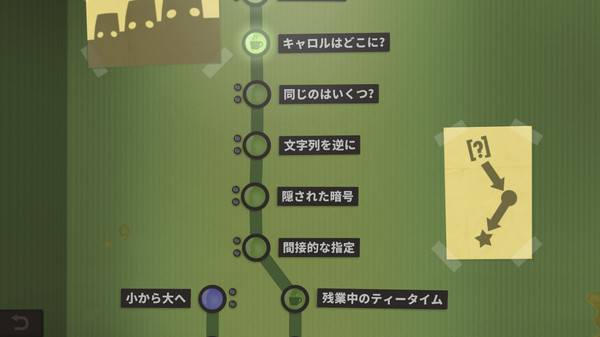 The optimization challenge results: instructions vs. speed — Steam store
Place in the Lineage
The most common comparison in the pool is Zachtronics; one reviewer flatly called it 'baby's first Zachtronics game.' The breadth-for-barrier trade of SpaceChem or SHENZHEN I/O is deliberately trimmed here, and reviewers read that as entry design, not shortfall.
The other throughline is the studio lineage. The cute art and wry little story inherited from World of Goo get cited again and again as a buffer against programming's coldness. Some invoke the sequel, 7 Billion Humans—'without it, an easy recommend'—so this reads as a first step.
So the pool positions this not as the genre's peak but as its doorway: the thrill of combinatorial explosion, with an off-ramp before it. Within the programming-puzzle lineage, a first rung worth touching—that's the consensus that surfaces from the reading.
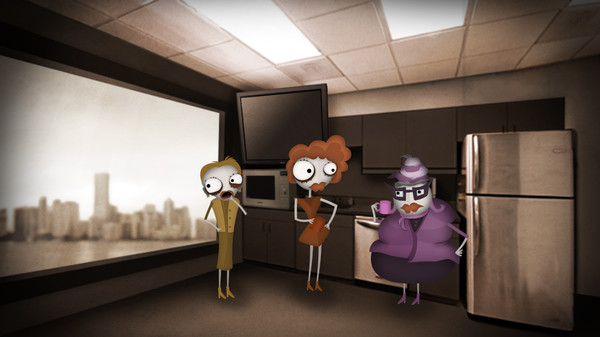 A wry little story slips in between the floors — Steam store
Sources
This piece was written by reading the Steam user reviews as of 2026-07-04. No review text is quoted directly; typical claims are reconstructed.
· Steam: Human Resource Machine (94% of 4,663 reviews positive, Very Positive; 93% of 1,460 English reviews)
· Read the top 20 helpful positive, 9 negative, and 10 recent reviews; labels and counts are a same-day snapshot.
· Cross-checked the developer's store text ('programming is just puzzle solving') against reviewer experience; Metacritic metascore is reported as 78.
Closing
What lingers after reading isn't a clash so much as different people touching different faces of one design. Praise for 'the beauty of few verbs' and complaints about 'the friction of the tool that writes them' point at two sides of the same coin—subtraction on one, UI on the other.
Who it's for is clear. If you want the thrill of taming a combinatorial explosion with almost no grammar, this is a first-rate doorway. If you want a comfortable editor, a big story, or you're already tired of programming's friction, you'll step off midway—by design, not by failure.
Against Steam's 94%, I give it 8.0 from a design view. The subtraction of verbs and the learning curve are top-tier, and it hasn't aged as a doorway. But the un-abstracted tools and small scale form a ceiling. Recommend it as an entrance; leave the summit to another title.
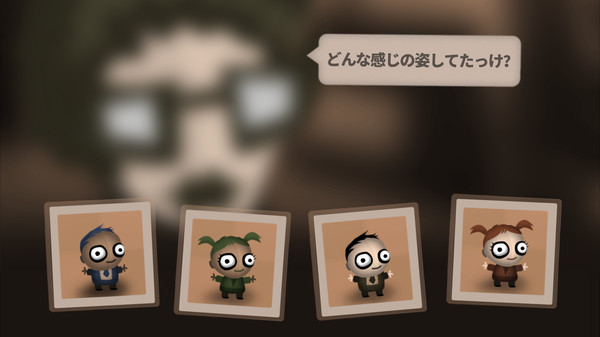 The worker ages as he's promoted; a faint story that lingers — Steam store
Where are you with this game?
Press one and the game goes on your shelf. You can see it on your account page.
Reactions (no login)
Anonymous • one of each per visitor per day
Read next
Related reviews
7 Billion Humans
Un puzzle de programmation parallèle où une même liste d'instructions s'exécute simultanément sur toute une foule d'ouvriers, chargés de transporter et trier des cubes de données au sol pour résoudre chaque niveau. Suite de Human Resource Machine, conçu par Tomorrow Corporation en conservant l'idée de bâtir une solution à partir de peu d'instructions.
TIS-100
Un puzzle de programmation en assembleur : on ecrit du code sur une grille de minuscules noeuds paralleles pour reparer un ordinateur en panne. Chaque noeud ne dispose que de deux registres et d'une douzaine d'instructions, et l'echange de donnees entre noeuds peut provoquer un interblocage — sous ces contraintes, on rivalise sur les cycles, les instructions et le nombre de noeuds. Signe Zachtronics, createurs de SpaceChem et Opus Magnum.
Infinifactory
Un puzzle 3D à la première personne où l'on bâtit des usines en blocs et convoyeurs pour assembler ce que commandent vos geôliers extraterrestres. SpaceChem en trois dimensions, signé Zachtronics : peu de verbes, une optimisation sans fond.


