REVIEW · 2015-02-27
Pneuma: Breath of Life
Lecture des avis partagés sur un puzzle à la première personne qui se résout par le regard
First Impressions
Pneuma is a first-person puzzler set in a Greco-Roman temple, solved by choosing where you look — an eye floating on a pillar, floor tiles that flip the instant you glance away — while a self-styled creator-god narrates. It was made in 2015 by Deco Digital and Bevel Studios (the same team is said to have later become BULKHEAD). I write this not from playing it, but from reading the Steam review pool.
The label is 'Mixed': 68% of 135 Steam-purchaser reviews are positive (snapshot 2026-07-04). Metacritic sits at 63 and PC Gamer also at 63, so for once users and critics run at nearly the same temperature. This isn't a game where love and loathing brawl; it's one where most people converge on the single word 'almost.'
The positives reach for gorgeous, clever, and 'aha.' The negatives and hedged positives keep returning to short, pretentious, and 'the voice won't shut up.' What interests me is how often both sides point at the same thing under different names. My job is to translate that fork into design terms.
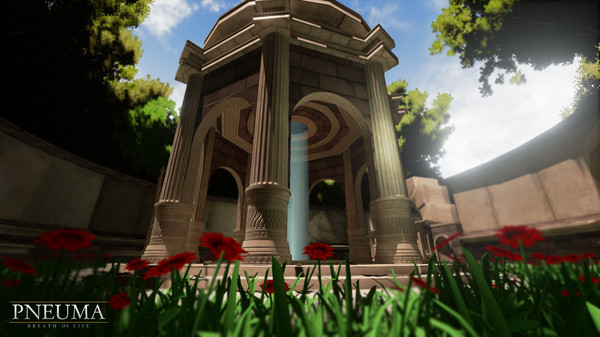 A scene from the temple puzzler — Steam store
Putting the Mechanics into Words
What the positive reviews call fresh is that the verb here is looking. Most puzzles are solved not with levers but with your gaze: stare at an eye to open a door, or keep your back to it instead; two terminals copy each other's lights and rearrange the moment you look away. In Puzzlebyrinth terms, the game turns observation resolution itself into the input — looking becomes pushing.
But for all the restraint of one verb, the grammar under it is thin. Gaze has few variables — look or don't, and where you face — and reviewers keep noting that levers and buttons still sit among the eyeballs. PC Gamer writes that the central observation idea 'didn't yield as much flexibility as hoped.' The verb is subtracted; the table of moves for that verb is short.
So the mechanics split on expectation. As a proof-of-concept for observation-as-verb, it's genuinely clever. Expect a bottomless system from a single verb and the shelf is bare in two hours. Compare The Witness, which kept building grammar out of lines and symmetry; Pneuma stops at the discovery of its verb, and the verdict splits on how you take that gap.
 A temple puzzle that switches with your gaze — Steam store
The Feel of the Narration
The other lead role here is the ceaseless divine monologue. Voiced by Jay Britton, Pneuma keeps asking, in an arch tone, whether he is the creator. Positive reviews call the narration charming, philosophical, well-acted. Yet the most common complaint on the negative side is that same voice: too much of it, a tone that never changes, more eager to sound clever than to be it.
PC Gamer is blunt, comparing it to 'a first-year philosophy student down the pub.' In The Stanley Parable the narration works because it commits to comedy; in The Talos Principle 2 the philosophy is built into the frame. Pneuma's voice lies over the quiet verb of looking and, trying to speak for that quiet, muddies it instead.
As design critique, this is a second-verb problem. Looking demands silence and focus, and the voice talks straight through it. Adding philosophy as audio doesn't deepen a game; depth only tells when it's built into the puzzle as structure. The review split is really about whether you read that addition as atmosphere or as padding.
 The world of the self-styled creator-god — Steam store
The Texture of Difficulty
On difficulty the pool splits between 'mostly easy' and 'occasionally unfair.' Many helpful reviews say the puzzles are gentle and the insights light; a few report sudden walls. The contradiction isn't really one — the difficulty never stacks into a single curve.
Collect the sticking points and the difficulty sorts into three kinds. Most is the 'solved before you think' kind. Then there's one that tests hands and patience, not thought — the corridor whose tiles flip when unseen, which PC Gamer told to 'shoot into space,' undone by a wide field of view and the slightest mouse slip. Third is the small handful of true 'aha' moments when the observation verb clicks.
In Puzzlebyrinth terms, there is no learning curve. A concept appears and is dropped before it combines with the next — the room ends before any combinatorial blow-up. So difficulty never becomes a sense of getting better; it's flat ease with one lump of dexterity lodged in it. Not a game you recommend for its challenge, but one judged on whether you hold its easiness against it.
 Contraptions that test the act of looking — Steam store
Place in the Lineage
The proper noun that shows up most in Pneuma's reviews is neither the studio nor a genre — it's other games. 'Influenced by Portal,' 'but the real one is The Talos Principle.' Reviewers reflexively file it under first-person 'smart puzzle plus philosophy,' then conclude it's thinner than Talos. It's a game fated to be discussed by comparison.
On the same shelf sit compact games that squeeze perception into one verb: Superliminal, which cheats space with forced perspective; ChromaGun, which solves Portal-style chambers with a single painting verb; and The Witness, which kept building the grammar of observation. Pneuma lands on the high-purity, low-quantity side of that row.
So its accurate place is an early step that proved observation can be a verb, not a finished work that realized it. When reviewers reach for Talos to name what's missing, that isn't spite; it's an honest placement for a small game the lineage arrives ahead of.
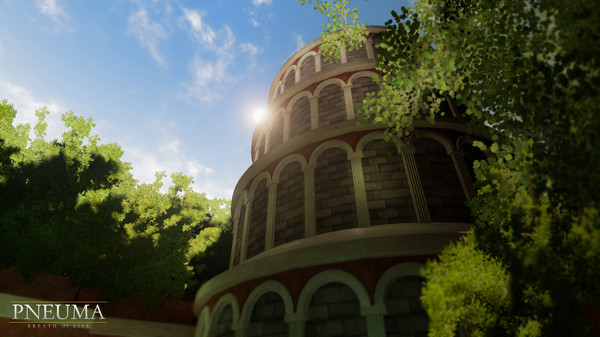 One entry in the first-person observation lineage — Steam store
Sources
This piece was written by reading the user reviews on the Steam store page as of 2026-07-04. No review text is quoted directly; typical claims are reconstructed.
- Steam: Pneuma: Breath of Life (Mixed, 68% of 135 Steam-purchaser reviews)
- Read via the store page: top helpful positives, representative negatives, and several recent reviews; shared vocabulary (gorgeous, gaze gimmick, short, chatty narration) was reconstructed rather than quoted.
- Press: PC Gamer (63), Kotaku (Recommended), Eurogamer and others; Metacritic critic score 63.
Closing
Steam reads 68% positive; my design-critique score is 6.5, and the two don't diverge much. The core verb of looking is a real invention, and there's genuine spark in the minutes where the world switches with your gaze. The marks come off because the grammar under that verb is short — the shelf empties in two hours — and because a too-talkative voice muddies the quiet the verb needs.
Reviews put the run at roughly two to three hours, so what you bring to it decides almost everything. Recommended for anyone who wants a short taste of observation-as-verb, or a light dish after Talos; outside its reach for anyone wanting the heft of a full work or a curve that builds. That the split converges so cleanly on 'almost' is, I think, the most honest verdict this small game can get.
 A two-to-three-hour prototype of the observation verb — Steam store
Where are you with this game?
Press one and the game goes on your shelf. You can see it on your account page.
Reactions (no login)
Anonymous • one of each per visitor per day
Read next
Related reviews
The Magic Circle
Un méta-puzzle à la première personne où le protagoniste, enfermé dans un jeu de fantasy en développement depuis vingt ans et toujours inachevé, vole des « comportements » aux créatures et aux objets pour les coller sur d'autres cibles, réécrivant ce monde à moitié fini pour trouver une sortie. Il n'existe pas une solution unique. Sortie en 2015, l'œuvre d'une équipe créditée pour avoir travaillé sur Thief et BioShock, qui prend la fabrication même des jeux vidéo comme sujet.
Else Heart.Break()
A Swedish adventure set in the electric town of Dorisburg, where you carry a device that opens up the insides of almost anything. Coffee makers, doors and buses all run on source code written in the game's own language, and you edit it directly. Led by Erik Svedäng and released in 2015.
Magnetic: Cage Closed
Un puzzle en vue subjective où le protagoniste, condamné à mort, manipule des caisses à l'aide d'un pistolet magnétique aux deux pôles — attraction et répulsion — pour s'échapper d'une installation expérimentale truffée de pièges. Les choix de fin de chapitre mènent à neuf dénouements différents. Une œuvre du studio suédois Guru Games.


