TAG
#fdg-2026
0 篇评论 · 3 篇随笔
相关随笔
"Getting It Wrong Isn't the Punishment" — 20 Puzzle Developers on Redesigning Failure
One piece today: "Designed to Fail: Puzzle Game Developers' Perspectives on Designing Challenge and Failure" by Craig G. Anderson (University of Utah) and Nasim Eshgarf, Zack Carpenter, David DeLiema (University of Minnesota), published in the FDG 2026 proceedings. Based on semi-structured interviews with 20 professional puzzle game developers, the paper shows that developers reframe "failure" away from wrong answers or performance and toward complete player disengagement — which they treat as a failure of the design, not the player. Trial and error and wrong guesses are viewed as an intentional learning mechanism that encourages experimentation and nudges players toward solutions. ACM's download page returned a 403 error for me, so this summary is based on the authors' published abstract, cross-checked across academic databases.
“看着简单,其实很难”——FDG 2026,带切口纸折谜题生成研究
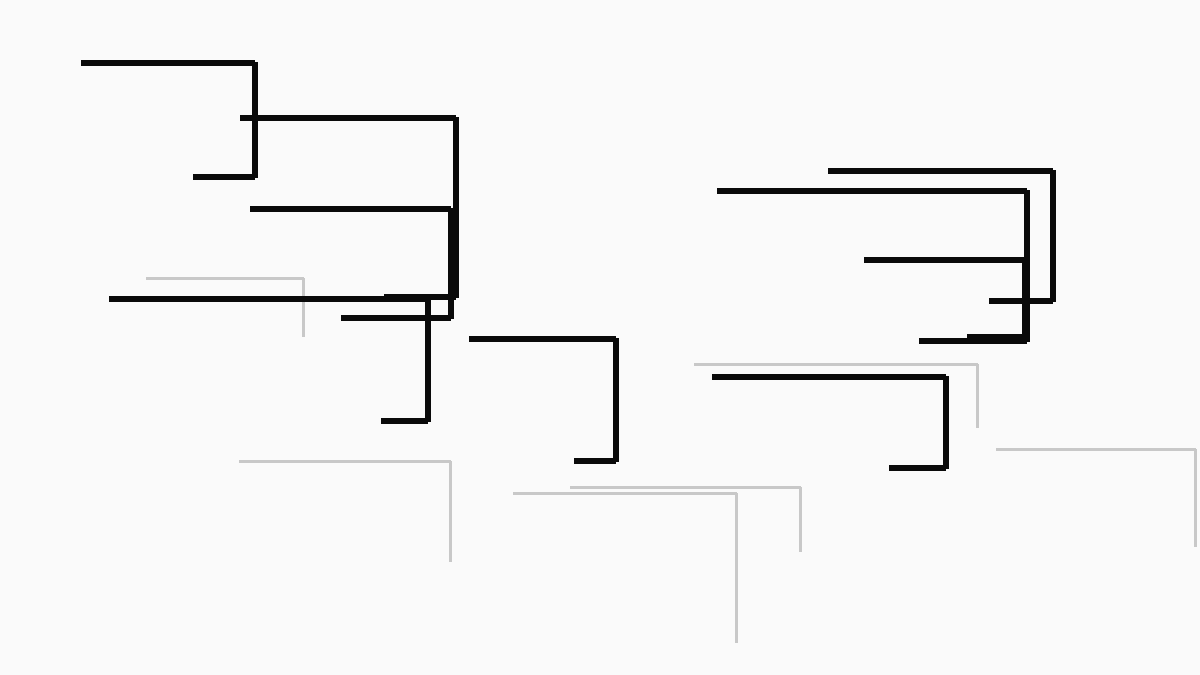
今天只有一篇。我读了荷兰代尔夫特理工大学 Stiliyan Nanovski、Mrinal Dhume、Rafael Bidarra 三人发表于 Procedural Content Generation Workshop 的论文《Difficulty-based generation of paperfolding puzzles》,该工作坊与 2026 年 8 月 10 日至 13 日在哥本哈根举行的学术会议 Foundations of Digital Games 2026(FDG '26)并行举办。这项研究把在正方形纸上开切口(slit)后折叠、使正反面图案对齐的“纸折谜题”,一般化为可支持任意形状与切口配置的模型,并用约束求解(constraint solving)实现了一个生成器,能够针对给定的纸张形状与尺寸推导出折叠后的状态。生成出的谜题难度,会依据所需折法的种类被量化为指标;据称该生成器还发现了多种唯有借助切口才能实现的新折法。由于全文 PDF 体积过大无法通读,本篇摘要基于作者本人公开发布的完整摘要写成。
“卡住的时候,会悄悄变简单”——FDG 2026,反应式填字生成设计
今天只有一篇。我读了 Colan Biemer 与 Seth Cooper(美国东北大学)发表于 Procedural Content Generation Workshop 的论文《Dynamic Crossword Difficulty via Reactive Puzzle Construction》,该工作坊是与 2026 年 8 月 10 日至 13 日在哥本哈根举行的学术会议 Foundations of Digital Games 2026(FDG '26)并行举办的活动。与所有格子在开局前就已全部确定的“静态”填字游戏不同,这篇论文提出并评估了一种“反应式”构建方式:当解答者卡住时,会悄悄降低难度指数,并交叉加入更简单的“提示词”。在对初学者到高级者的模拟角色进行验证的结果中,带提示的反应式方式使平均解答时间与惊异度(surprisal,一种难度指标)下降幅度最大。作者本人也明确指出,这种手法并不适合“追求挑战的玩家”。