GESCHICHTE · 2026-07-25
Kakuro (1966) — Von Cross Sums zum Additionskreuz: sechzig Jahre eines unveränderten Additionsgitters
Wie ein Randprojekt bei Dell den Pazifik überquerte, unter Nikolis Namen bekannt wurde und schließlich in den Regalen von Steam landete
Einleitung — der andere Bruder im Schatten von Sudoku
Ich habe früher schon einmal beschrieben, wie das Magazin Nikoli (1980) Sudoku großgezogen hat. Doch dieselben Seiten enthielten noch ein weiteres Bleistifträtsel, das nie so berühmt wurde wie Sudoku: Kakuro, im Englischen auch Cross Sums genannt. Es entstand 1966 als Randprojekt in den USA.
In diagonal geteilte schwarze Felder werden kleine Zahlen geschrieben, und die weißen Felder werden mit Ziffern von 1 bis 9 gefüllt, ohne dass sich eine Ziffer innerhalb derselben Reihe oder Spalte wiederholt, sodass die vorgegebene Summe erreicht wird. Optisch ähnelt es einem Kreuzworträtsel, in der Lösungsweise einem Sudoku. Tatsächlich wurde es in den damaligen japanischen Zeitschriften oft als „Mischling aus Kreuzworträtsel und Sudoku“ vorgestellt. Doch dieser Mischling hat seine eigene, sechzigjährige Geschichte.
Dieser Beitrag verfolgt den Weg von Dells Projekt aus dem Jahr 1966 über die Umbenennung durch Nikoli in den 1980er-Jahren, den Re-Export nach Großbritannien 2005 bis hin zu den heutigen Steam-Verkaufsseiten. Kein Ereignis hier ist so dramatisch wie der Sudoku-Boom, doch gerade deshalb ist es ein gutes Beispiel dafür, wie robust ein Rätselformat überleben kann.
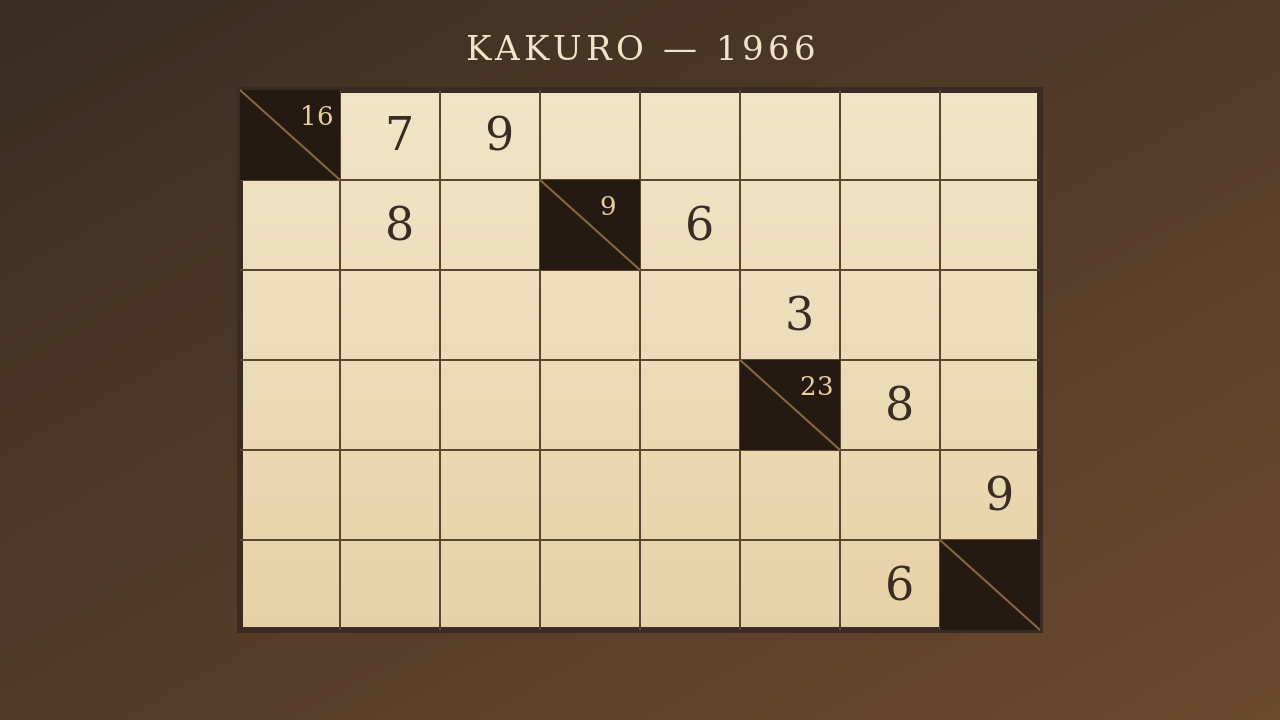 Diagonal geteilte Felder und aufgetürmte Zahlen — die Urszene des Kakuro (Illustration, KI-generiert)
Der zeitliche Kontext — Dell 1966 und Nikoli 1983
1966 gab Jacob E. Funk, ein aus Kanada stammender Mitarbeiter von Dell Magazines, dem Rätsel, das später Kakuro heißen sollte, seinen englischen Namen: Cross Sums, wörtlich ins Japanische übersetzt „sich kreuzende Summen“. Dell veröffentlichte damals in großer Zahl monatliche und vierteljährliche Rätselzeitschriften; Kreuzworträtsel, Number Place (der Vorläufer von Sudoku) und unzählige weitere Zahlenrätsel erreichten die amerikanischen Haushalte per Postabonnement. Es war die Blütezeit der Rätselzeitschrift als Unterhaltungsmedium – vor dem Fernsehen, ja sogar vor dem Heimcomputer.
Dieses Cross Sums gelangte erst in den 1980er-Jahren nach Japan. Laut der japanischen Wikipedia erwähnte Nikoli die Existenz von Cross Sum in einer Vorschau auf die nächste Ausgabe in Heft 7 der „Puzzle Communication Nikoli“ (Januar 1982), doch tatsächlich erschien das Rätsel in diesem Heft nicht. Im selben Jahr 1982 beauftragte die Zeitschrift „The Puzzle“ des Verlags Hagishima (heute Aia) Nikoli mit der Produktion, und dort erschien Cross Sum erstmals in Japan – dies fand jedoch kaum Beachtung.
Nikoli selbst stellte dieses Rätsel erst im August 1983 ernsthaft vor, in der Zeitschrift „Monthly Nikolist“. Das englische „Sum“ wurde ins Japanische übersetzt und mit „kasan kurosu“ (Additionskreuz) benannt, was später zu „Kakuro“ verkürzt wurde. Zur gleichen Zeit arbeitete Nikoli auch daran, dem amerikanischstämmigen Number Place den Namen „Sudoku“ zu geben. Kakuro und Sudoku sind in diesem Sinne zwei Kinder, die bei denselben Pflegeeltern aufwuchsen.
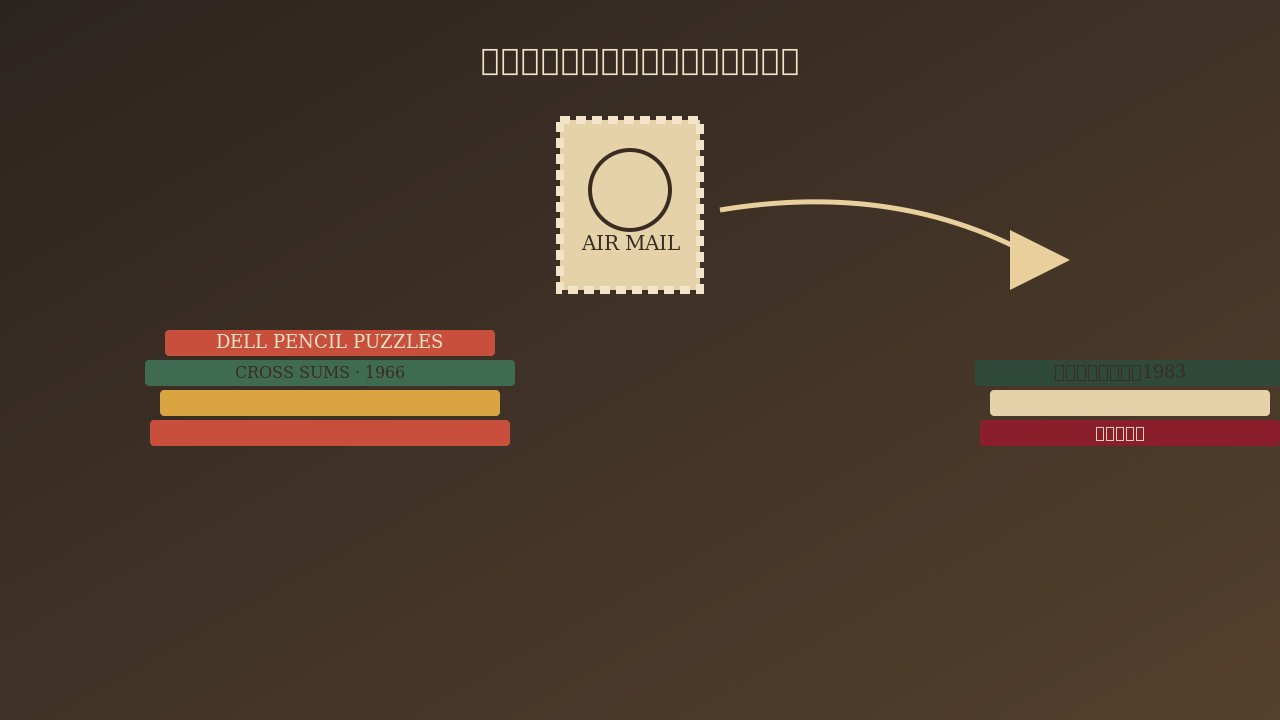 Zeitschriftenseiten aus der Ära des Postabonnements und die Geschichte einer Umbenennung, die den Pazifik überquerte (Illustration, KI-generiert)
Mechanik — die Kombinatorik, die aus der einen Regel gegen Wiederholung entsteht
Die Regel des Kakuro ist einfach. In eine Reihe weißer Felder (ein zusammenhängender horizontaler oder vertikaler Abschnitt) werden Ziffern von 1 bis 9 so eingetragen, dass sie die für diesen Abschnitt vorgegebene Summe ergeben. Dieselbe Ziffer darf innerhalb derselben Reihe jedoch nicht wiederholt werden. Diese einzige Einschränkung – „kein Wiederholen“ – ist der Schlüssel dafür, dass die Lösung eindeutig bestimmt ist. Bei einem zweifeldrigen Abschnitt mit der Summe 3 etwa kommen nur 1 und 2 infrage; bei der Summe 17 nur 8 und 9. Sich eine solche Tabelle „eindeutig bestimmter Kombinationen“ einzuprägen, ist der erste Schritt zum Lösen von Kakuro.
Der Unterschied zu Sudoku liegt darin, dass die Hinweise nicht als „Ziffer selbst“, sondern als „Summe“ gegeben werden. Die Lösenden grenzen die Kandidatenkombinationen sich kreuzender Reihen ein und bestimmen gemeinsame Ziffern durch Ausschlussverfahren. Die japanischen Informatiker Takayuki Yato und Takahiro Seta zeigten 2003/2004 in Arbeiten zur Berechnungskomplexität von Kakuro, dass diese Rätselklasse NP-vollständig ist. Von Hand ist das schwer zu bemerken, doch mathematisch gehört Kakuro zu den ziemlich hartnäckigen Rätselarten.
Bemerkenswert ist, dass dieser Gedanke, „von der Summe aus rückwärts zu rechnen“, zwei unterschiedliche Traditionen auf demselben Spielfeld vereint: das vom Kreuzworträtsel (erstmals 1913 gedruckt) stammende Gitterdesign und die von Sudoku stammende Ziffernfüllung. Kakuro war nie als Rechenübung gedacht, sondern hat als Lehrstück der Kombinatorik in der Ecke unzähliger Zeitschriften das Kopfrechnen ganzer Generationen von Lesern geschult.
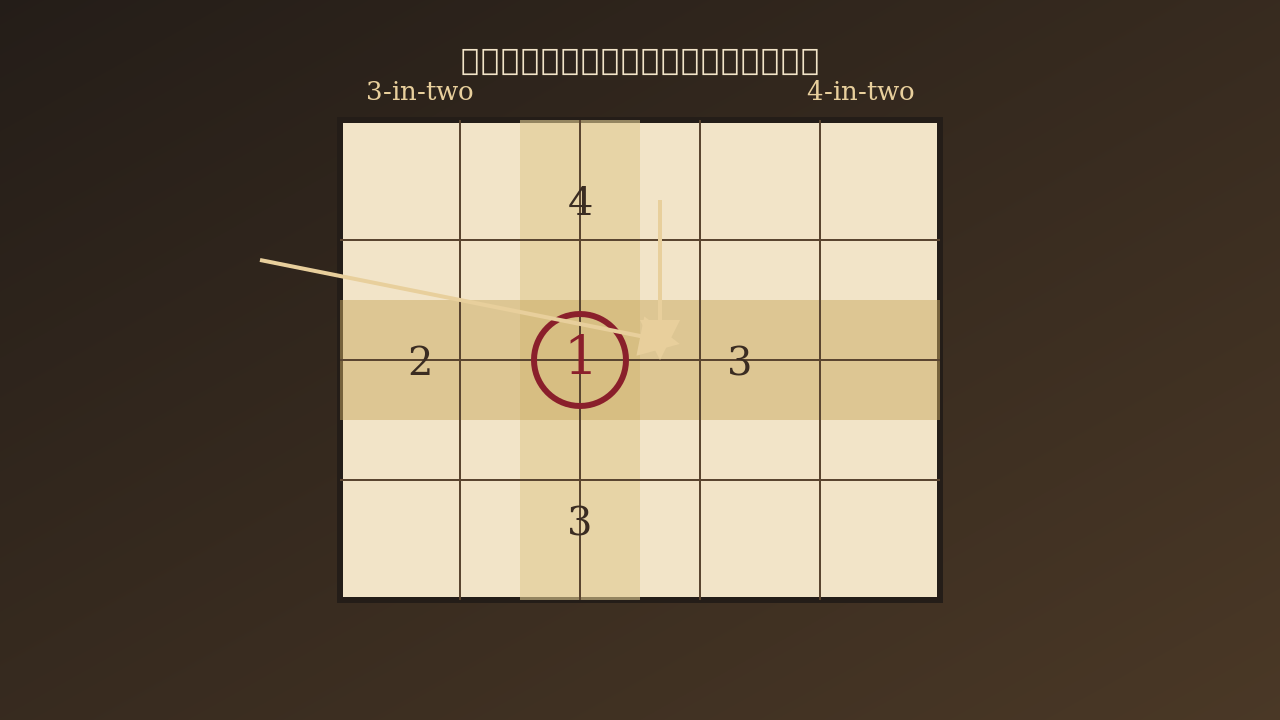 Zwei sich kreuzende Reihen, sich eingrenzende Kombinationen — das logische Grundgerüst des Kakuro (Illustration, KI-generiert)
Genealogie bis in die Gegenwart — Re-Export, der DS und ein bis heute bestehendes Regal bei Steam
International bekannt wurde Kakuro unmittelbar nach dem weltweiten Sudoku-Boom von 2004/2005. Laut der japanischen Wikipedia setzte sich der japanisch-stämmige Name „Kakuro“ im englischsprachigen Raum weithin durch, nachdem Nikoli 2005 begonnen hatte, der britischen Zeitung The Guardian Rätsel zu liefern. Auch die englische Wikipedia nennt den Guardian-Artikel „The New Grid on the Block“ als Primärquelle dieser Verbreitung. Cross Sums, 1966 in Amerika geboren, kehrte nach seiner Umbenennung in Japan nun als „Kakuro“ gewissermaßen in seine alte Heimat zurück. „Kakkuro“ und „KAKURO“ sind bis heute eingetragene Marken von Nikoli.
Auch der Übergang vom Papier zur digitalen Plattform erfolgte früh. Am 10. August 2006 veröffentlichte Hudson „Puzzle Series Vol. 4: Kakuro“ für den Nintendo DS, bei dem Nikoli die Rätsel fachlich betreute. Es bot Gitter von 5×5 bis 13×21 sowie eine Hinweisfunktion, die die Zerlegungsmuster der Summen auflistete. Im selben Strom wie die Portierung von Sudoku auf tragbare Konsolen wandelte sich auch Kakuro vom Papierrätsel zum Bildschirmrätsel.
Und heute, im Jahr 2026, findet man auf den Steam-Verkaufsseiten noch immer eigenständige Titel wie „Kakuro“, „Kakuro Blend“, „Kakuro++“ und „Super Kakuro – Cross Sums“. Dieses 1966 erdachte, in den 1980er-Jahren in Japan benannte, 2005 in eine britische Zeitung zurückgekehrte und 2006 auf eine tragbare Konsole portierte Spielfeld hat sechzig Jahre lang nur die Medien gewechselt, ohne auch nur ein einziges Zeichen seiner Regel zu ändern. Nur wenige Rätselformate überleben tatsächlich so lange.
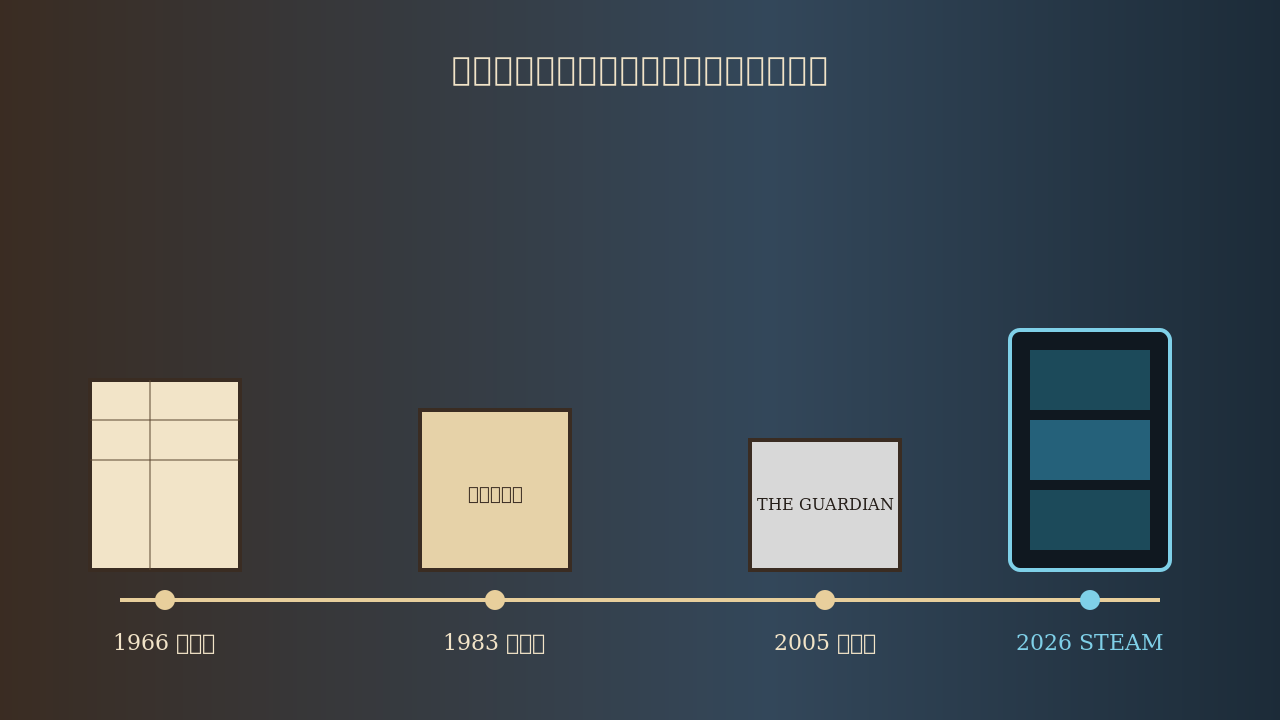 Von der Postabonnement-Zeitschrift über die tragbare Konsole bis zum Verkaufsregal — ein unveränderliches Gitter in immer wieder wechselnden Gefäßen (Illustration, KI-generiert)
Quellen
In diesem Artikel herangezogene Quellen:
・Japanische Wikipedia: Kakkuro (カックロ)
・The Guardian: The New Grid on the Block
・MobyGames: Puzzle Series Vol. 4: Kakuro (2006)
・Wikipedia: Puzzle Series (Hudson)
・Berthier, D. (2013). Pattern-Based Constraint Satisfaction and Logic Puzzles. arXiv:1304.1628
Zum Schluss — eine Regel, die jeden Behälter überdauert
Was die Geschichte des Kakuro zeigt, ist keine dramatische Erfindungssage und keine Anekdote eines großen Hypes. Es ist die Tatsache, dass eine einzige Einschränkung – das Verbot der Wiederholung – sechzig Jahre lang überlebt hat, von der Postabonnement-Zeitschrift über den Nintendo DS bis zu den Verkaufsseiten von Steam, ohne trotz wechselnder Gestalt je zu zerbrechen. Einen weltweiten Hype wie bei Sudoku gab es nicht, doch gerade deshalb ist dieses unscheinbare Additionsgitter ein guter Maßstab, um die Robustheit einer Regel an sich zu messen.
Die Designästhetik, die heutige Indie-Rätsel gern beschwören – „ein weiter Möglichkeitsraum, der sich aus einem minimalen Regelwerk entfaltet“ –, hat Kakuro in Wirklichkeit bereits seit 1966 verkörpert. Mit nur zwei Einschränkungen, der Summe und dem Verbot der Wiederholung, entsteht auf jedem Spielfeld eine andere Geschichte der Deduktion. Als Historikerin kann ich mit Zuversicht eines behaupten: Die Regel eines guten Rätsels überlebt die Lebensdauer der Medien, die sie tragen.
 Ein abgelegter Bleistift neben einem gerade gelösten Feld (Illustration, KI-generiert)
Reactions (no login)
Anonymous • one of each per visitor per day
Learn — Curriculum
LearnTeil 2 Lineage — Where Puzzles Came FromKapitel 4 Pencil Puzzles and Nikoli2 / 12
関連シリーズ
Puzzle Incident History第14回 / 全40回