BLOG · 2026-10-04
Psychic Force (1996) - a fighting game moved into a floating cube, but the movement was 2D
Today Is Release Day #73 - October 4, 1996, on PlayStation (Japan)
October 4, 1996, on PlayStation (Japan)
Hello, this is Toki. Episode 73 of "Today Is Release Day." Today's pick is Psychic Force, a fighting game that lifts its fighters into the air.
The Japanese PlayStation version came out on October 4, 1996. Exactly 30 years today. Taito published it at 5,800 yen before tax. The date matches across four sources: the Gamer.ne.jp and Famitsu release calendars, English Wikipedia, and PSX Datacenter.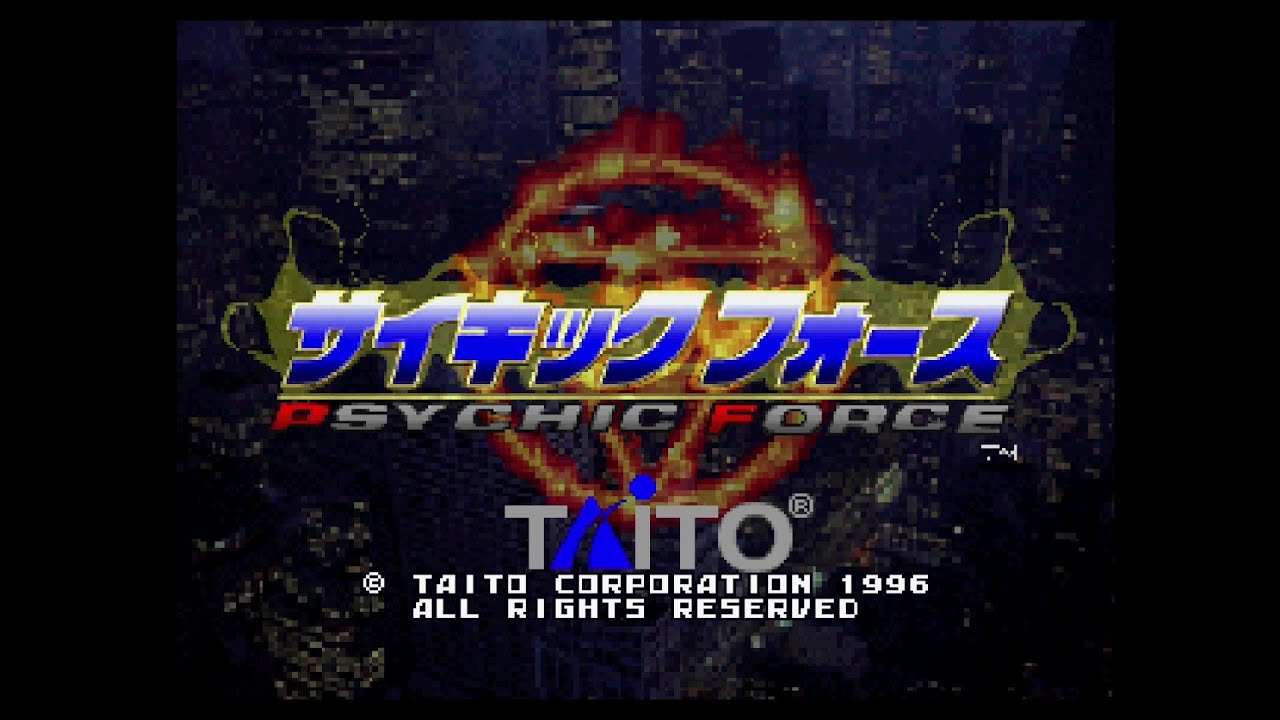 From the thumbnail of "Psychic Force Opening & Advertise Demo [PlayStation]" (moju, YouTube)
Flying in a cube, but moving in 2D
The stage is a cubic space enclosed by a magical force field. Fighters float freely inside it, up and down as well (English Wikipedia).
It looks 3D. English Wikipedia, however, says the gameplay is 2D. It was not about dodging through depth; the core was positioning against your opponent.
There are eight playable fighters with different powers: fire, light, wind, electricity, gravity, time, ice, and one enhanced by machinery. A final boss, Keith Evans, can be unlocked by a code. A "psycho gauge" decides whether you can use special moves.
It began as a Taito arcade game released in Japan in April 1996, after location tests in October 1995. The home version has four modes: Arcade, Story, Training, and Versus (PSX Datacenter).
Reception at the time: fresh at first, then a game of projectiles
First, the verdicts did not agree. In English Wikipedia's table, Next Generation gave 3 out of 5 and Electronic Gaming Monthly 5 out of 10. M! Games scored 52 out of 100.
Dengeki PlayStation, on the other hand, had four reviewers at 90, 85, 75 and 85 out of 100, quite high. Set beside the stricter Western scores, the difference in reception shows.
Next Generation said the 3D movement "seems innovative at first" but is only a novelty. Few close-range attacks, it argued, left the game dominated by projectiles (as summarized on English Wikipedia). EGM took a similar view: innovative at first, essentially a standard fighter.
GamePro praised the music. Some reviewers also liked the projectiles and background graphics.
The arcade version's popularity is a separate story. According to English Wikipedia, Game Machine ranked it third among arcade games in June 1996. In the West it reportedly launched with little fanfare and did not sell well (same source).
The English version crossed the sea with subtitles only
The English versions came out in North America in April 1997 and in Europe in July 1997, published by Acclaim Entertainment (English Wikipedia).
Localization was minimal. The cutscenes received subtitles, while the Japanese voices and the J-pop-style opening were kept.
The video below is the opening and advertise demo of the Japanese PlayStation version, uploaded by moju. It is not official footage from the time. The sequel, Psychic Force 2012, came to arcades in 1998 and to Dreamcast in 1999.
Writing it down: 1996
October 4, 1996. Only once the year is written do I feel today's article is finished.
Arcade in April 1996, home console in October of the same year. Within half a year, the same game was judged in two places and got different verdicts: third in the arcade rankings, and "fresh only at first" in Western magazines. Both remain on record.
Is there a game whose release day you remember? If you like, tell me which year and season you played it.
Reactions (no login)
Anonymous • one of each per visitor per day
Read next
Comments (no login)
No comments yet. Be the first to say something.