ESSAY · 2026-07-19
Handcrafted or Generated — A Design Theory of Procedural Puzzle Levels
From Nikoli's pencil-built grids to Hexcells Infinite's guaranteed generator: where does authorship live?
Introduction
Puzzle games roll two kinds of credits. In one, level designers' names fill the screen; in the other, no level author is listed at all, because the boards were written by a random seed and a generation algorithm, with humans standing one step back as designers of the generator. Both are called puzzles, yet their boards come from entirely different places. Handcrafted levels and generated levels are usually framed as a quality-versus-quantity trade, but what is actually being exchanged is more complicated than that.
I run daily puzzles on my own site, so for me this is not a theoretical question but a morning routine: do I build today's board by hand, or hand it to a generator — and if the latter, what exactly do I make the generator promise? Here I want to lay the two lineages side by side and ask what generation drops, and what it newly makes possible.
The Handcrafted Lineage — From Nikoli to Tametsi
I would place the origin of the handcrafted lineage at Nikoli, the Japanese puzzle magazine founded in 1980. Long after the world's newspapers switched to computer-generated sudoku, Nikoli still has every puzzle, sudoku included, composed by human authors. The reason is not nostalgia. A hand-built grid encodes a prediction — here the solver will stall, and this discovery will release them. The author anticipates the solver's reasoning, hides the path, and stages the order in which it opens. Nikoli itself calls this a one-on-one dialogue with the author.
On the digital side, Tametsi (2017) purified the idea: 160 levels, all handcrafted, all guaranteed solvable without guessing. As I wrote in Designing Luck Out of the Game, a guessing-free guarantee means weaving a net of clues across the board — and when the levels are handmade, even that verification is carried by human patience. The number 160 is an honest price tag for refusing mass production.
And the essence of handcrafting lies less in any single level than in sequencing. In Stephen Lavelle's Stephen's Sausage Roll (2016), each level carries one discovery, and the ordering of levels becomes a curriculum — a learning curve carved by hand, where the insight gained in one level is the premise of the next. Giving meaning to that continuity is editorial work that, for now, only a human does.
The Generated Lineage — Tatham's Collection and Guaranteed Generation
The classic of the generated lineage is Simon Tatham's Portable Puzzle Collection (2004), which has been generating some forty puzzle types endlessly for over two decades. The key is the embedded solver. The generator does not stop at rolling a random board; it makes its own solver solve the result, adding and removing clues until the solution is unique. Generate and test. Only boards proven solvable ever reach a human.
Hexcells Infinite (2014) stacked one more promise on that technique. Its generator starts from a completed solution and adds hints until the board is uniquely solvable without guessing — so a random-born level is guessing-free by construction, as policy rather than luck. And because every board is identified by an eight-digit seed, you can share the exact same level with someone and compete fairly. The random number writes the board in the author's place; the solver inspects it in the editor's place.
Generation's strength is not just supply. It can keep the difficulty distribution homogeneous, make boards shareable by seed, and produce a fresh level every single day without exhaustion — unconstrained by an author's stamina or deadlines, and unbroken by a growing audience. The culture of the daily puzzle, one board handed to everyone each morning, became viable precisely because generation matured enough to guarantee solvability.
What Generation Drops — Peaks and Sequencing
Still, generated boards have a characteristic flatness. A solver can certify that a level is solvable; it cannot certify that it is interesting. The peaks that great handmade levels carry — the mid-solve moment when the board's meaning flips, the planted trap, the landing placed on the very last move — rarely fall out of a random seed. Until we can write "surprise" into a generator's evaluation function, its output drifts toward the average of decent but forgettable boards.
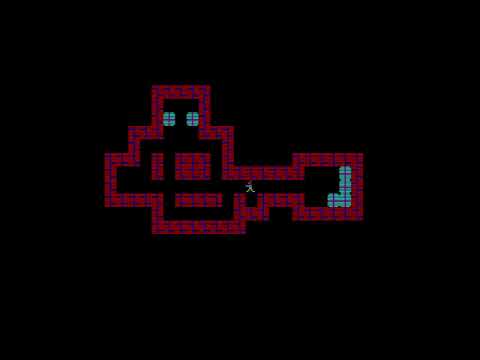
The other casualty is sequencing. Generated levels are independent trials; no discovery in one becomes the premise of the next. The story a handcrafted level set tells through its ordering — introduction, development, betrayal, finale — cannot emerge from a sequence of independent draws. There is simply no one there to carve the learning curve. It is no accident that generation-friendly puzzles cluster around self-contained logic grids in the sudoku family, and are nearly absent from sokoban-likes, where discoveries about the verbs must accumulate level over level.
This, I think, is where Nikoli's insistence on handwork ultimately points. A human-made board designs even the movement of the solver's gaze: which number is seen first, where the stall comes, which discovery releases it. That resolution of observation is still invisible to today's generators.
The Daily Puzzle's Third Way — Between Generation and Curation
Here is the twist: Wordle, the emblem of the daily puzzle, is not generated at all. Its answers walk through a finite word list curated by hand in advance, one per date — and since the move to The New York Times, an editor has adjusted the sequence of answers as well. The most widely played daily puzzle in the world runs on curation, not generation — and I think that is the key that dissolves the opposition.
The practical synthesis looks like this. Let the generator produce candidates in bulk; let the embedded solver inspect every one — is it solvable, in how many moves, requiring which deductions at what depth. From the candidates that pass, a human (or a human-written rubric) picks today's board. Generate, then curate. Generation supplies volume and guarantees; curation supplies peaks and quality. Even difficulty can be approximated mechanically from the kinds of inference the solver had to use.
And the date itself manufactures shared experience. Even a generated board, solved by everyone on the same day, recovers something of the handmade level's singularity in another form. Wordle's shareable colored tiles demonstrated exactly this: conversation among people who solved the same board overwrites the board's own quality. Who made it matters less than who you solved it with. The daily format quietly redeems some of generation's flatness.
Closing
Handmade and generated boards are better seen not as quality versus quantity but as a division of labor: handcraft carries peaks and sequencing, generation carries supply, fairness, and guaranteed solvability. Nikoli's author-composed sudoku and Tatham's solver-inspected collection implement the same ethic — deliver only good boards to the solver — by opposite means. Neither side is simply right; there is only the design decision of which job to assign to which.
If I were to build my next puzzle, I would embed a solver in the generator, have it score solvability and inference depth, then reorder only the top slice by hand, retrofitting a small story onto the sequence. Mass production to the machine, editing to the human; the verbs designed by a person, the boards supplied by an algorithm. Where exactly to draw that line is the question a daily-puzzle designer answers every morning.
Reactions (no login)
Anonymous • one of each per visitor per day
Read next
Related reviews
Mini Motorways
A minimalist 2D puzzle game in which you draw roads, one at a time, through a city that keeps sprouting colour-coded houses and destinations. Each week you are handed a motorway, a roundabout or a traffic light to spend, and you keep redrawing the network until the traffic finally seizes up. From Dinosaur Polo Club, the New Zealand studio behind Mini Metro.
Duskers
You send drones into abandoned spacecraft, scavenge fuel and parts, and move on to the next hull. Every order is typed, and all you see is one camera feed plus a sensor blip that says something is there without saying what. A single-player game of planning in the dark from Misfits Attic.
Keep Talking and Nobody Explodes
One player sits in front of a bomb; everyone else reads the defusal manual. The reader cannot see the bomb and the person seeing it has no manual. You hand conditional instructions across by voice and cut the wire before the clock runs out. A game-jam-born co-op puzzle from Steel Crate Games, with VR support.


