PAPER-DIGEST · 2026-09-21
Liquin: Told the answer would cost them, people wanted it just as much — Fukai Reads
Cognitive psychology — the gap between curiosity and the decision to go get it
TL;DR
Tell people in advance that seeing the answer will cost them effort, and their desire to know does not drop. Yet how often they actually go and get the answer does drop. That is the conclusion of a paper by Emily G. Liquin, published on 15 March 2026 in the peer-reviewed journal Open Mind: Discoveries in Cognitive Science.
There are three experiments, all preregistered, with 419 participants in total. Changing how much effort was required barely moved self-reported curiosity. The Bayes factor in Experiment 1 was 133.37 — the "no difference" account was supported by a wide margin.
Behaviour, on the other hand, moved. In Experiment 2, participants chose to reveal the answer on 4.87 of 10 low-effort trials and 4.08 of 10 high-effort trials. The feeling stays the same; only the feet stop.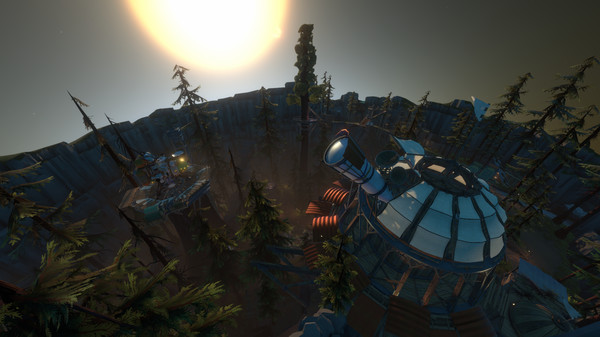 Outer Wilds (Mobius Digital, 2020). Knowledge is the only thing you carry between loops — a game in which curiosity itself is the reward. Image: Steam store page
Who wrote it, and where?
The author is Emily G. Liquin, of the Department of Psychology at the University of New Hampshire in the United States. There are no co-authors; this is a single-author paper.
It appeared in Open Mind: Discoveries in Cognitive Science, a peer-reviewed open-access journal from MIT Press whose full text anyone can read. It was published on 15 March 2026, DOI 10.1162/OPMI.a.342. The title is "More Time and Effort, Same Curiosity: Expected Effort Does Not Impact Curiosity."
I picked it today because it lands squarely on a decision puzzle makers make every day: how far away to put the hint or the answer. When you move it further away, does only the behaviour cool off, or does the feeling cool off with it? This paper measures exactly that, three times over.
What was already known about when curiosity rises
Curiosity research has two leading accounts. One centres on learning progress — how fast one's internal map of the world is being updated. On this view, people want to know more in situations where learning looks likely to be quick.
The other centres on the information gap: the distance between what you currently know and what you would like to know. Curiosity flares up the moment you notice the gap. Both accounts put "is learning likely here?" at the centre.
So what about the effort it takes to reach that learning? That was the open question. The author lays out two predictions. One is that effort discounts curiosity the way distance discounts other rewards: with money and food, delay and effort have repeatedly been shown to lower value.
The other prediction is the opposite: curiosity is the kind of motivation that does not mind effort, so it should not move. People will happily pay a steep price once they truly want to know. Experiments comparing the two head-on have been scarce. Filling that gap is what this paper sets out to do.
How effort was manipulated
Experiment 1. Eighty-two participants (University of New Hampshire, aged 18–24, 74% women) saw 40 general-knowledge trivia questions with one-word answers. For each question, the number of key presses needed to reveal the answer differed: 15 presses in the low-effort condition, 60 in the high-effort condition.
The order matters. Right after reading the question — before pressing a single key — participants rated how curious they were about the answer on a 1-to-7 scale. They already knew the effort cost. So the measure is curiosity while knowing the price you are about to pay.
Experiment 2. One hundred and seventy-four participants (recruited via Prolific, aged 21–74). Here the design splits in two. In the forced-effort condition (88 people) the task always had to be completed. In the choice condition (86 people) participants could stop. Answers were five letters long, requiring 3 key presses per letter in the low-effort condition and 12 in the high-effort one.
Experiment 3. One hundred and sixty-three participants. The nature of the effort changes here: to reach the answer, you must solve a word-search puzzle under a 9-second limit. Easy puzzles (over 70% success) formed the low-effort condition, hard ones (under 30% success) the high-effort condition. On top of cost, this adds uncertainty about whether the effort will pay off at all.
The analyses use Bayes factors — a number comparing how strongly the data support one account over another — as a tool for arguing positively that there is no difference. Think of it as a way to separate "we failed to find a difference" from "we can reasonably say there is none."
What was found
Experiment 1. Mean curiosity was 3.53 (SD 1.11) in the low-effort condition and 3.56 (SD 1.06) in the high-effort condition. No statistical difference emerged (β = −0.02, 95% CI [−0.08, 0.04], p = .61). The Bayes factor of 133.37 strongly favoured the no-difference account.
The manipulation itself clearly worked. Reaching the answer took 3.44 seconds on average in the low-effort condition and 11.50 seconds in the high-effort one (p < .001). Participants felt a more-than-threefold difference in their hands, and their desire to know did not budge.
The forced-effort condition of Experiment 2 had the same shape. Curiosity was 4.36 (1.44) for low effort and 4.20 (1.43) for high effort, with no statistical difference (β = 0.07, 95% CI [−0.005, 0.14], p = .07). The Bayes factor was 28.93.
What did move was the choice condition — the behaviour. Out of 10 trials, participants went for the answer on 4.87 (2.39) low-effort trials versus 4.08 (2.52) high-effort ones, an odds ratio of 2.45 (95% CI [1.57, 3.84], p < .001). Think of the odds ratio as roughly how much the scales tip towards going after the answer.
Experiment 3 repeats the pattern. Curiosity was 4.18 (0.93) versus 4.17 (0.99) with no difference (p = .88) and a Bayes factor of 120.26. Information seeking ran at 9.08 of 10 trials (1.73) versus 8.03 (2.31), a clear difference (odds ratio 3.94, 95% CI [1.84, 8.44], p < .001).
One more number is worth holding on to. Curiosity itself predicted seeking very well (odds ratio 27.92 in Experiment 2, 5.03 in Experiment 3, both p < .001). People who want to know go and look. But how much they want to know does not change with effort. Summarising all three studies, the author writes that there was no evidence that expected effort influences self-reported curiosity.
How puzzle makers can use this
Here are concrete uses. All of them follow from one premise: feelings are hard to move, and what you can usually move is behaviour.
(1) Treat hint distance as a behaviour dial, not a curiosity dial. Bury the hint three taps deep and players will not want the answer any less; they will just press less often. So the deeper you bury it, the more players end up wanting to know and never finding out. That is not satisfaction — it is unresolved tension piling up.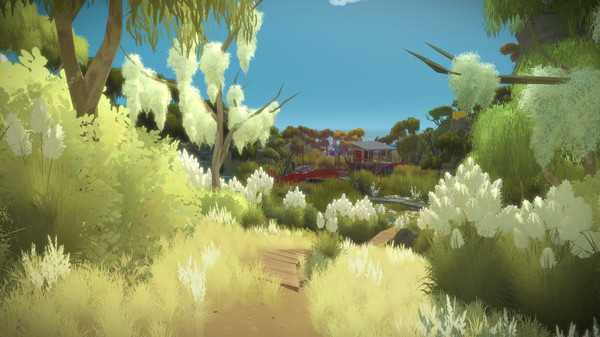 The Witness (Thekla, Inc., 2016). Designed without any hint system: when a panel defeats you, all you can do is leave it and walk away. Image: Steam store page
(2) Do not read drop-off logs as proof of lost interest. Apply this paper's shape directly and raising effort lowers only the behavioural numbers, not the felt ones. A falling hint-usage or answer-check rate may mean "too far away" rather than "bored" — and the two call for completely different fixes (see also our piece on hint design).
(3) Split friction into the kind you keep on purpose and the kind you remove on purpose. In Experiment 3, participants still sought the answer on 8.03 of 10 trials under high effort, so friction does not zero out behaviour. If you want players to pause before revealing a solution, mild friction works; on paths where you truly need everyone to arrive, take the friction out.
(4) Rethink when a daily puzzle reveals its answer. If the answer lands the next day, this framework reads the waiting player's desire to know as undiminished — what falls is the return rate. Which suggests that removing the effort of coming back (a notification, an email) may work more directly than trying to rebuild the feeling.
(5) Cut external links out of tutorials. Parking a walkthrough in another tab is exactly the arrangement that preserves the wanting while stopping the doing. A thin in-game hint lets the same desire actually land somewhere.
And one reading to avoid. "Effort does not reduce curiosity, so we can make things as inconvenient as we like" is a misreading. What the paper measured is in-the-moment wanting — not satisfaction after hours of play, nor whether anyone launches the game again tomorrow. The bill for inconvenience may simply arrive somewhere else.
How far to trust it
Start with the limits the author acknowledges. First, the nature of the task: the trivia paradigm, she writes, does not resemble many aspects of real-world curiosity, because the questions are supplied to participants rather than generated by them. A question that wells up inside you may not be the same thing as one handed to you.
The sample is narrow too. The author states plainly that the population studied was adults in the United States, primarily college students; Experiments 1 and 3 centre on 18-to-25-year-olds. Age, cultural and developmental variation go unexamined here.
She also grants the limits of the measures themselves: both information search and self-reported curiosity are imperfect indicators, and more research is needed on the mechanism by which discounting affects search but not subjective feeling.
Another limit she raises herself: effort here is divorced from learning. In everyday life, "this will take effort" travels with "this looks hard" and "there is a lot to learn here." Key-press counts and word-search difficulty have nothing to do with the content of the answer. She suggests curiosity may respond to an idealised representation of learning rather than the actual process.
Two things I would add. First, the results were not perfectly flat: curiosity in Experiment 2 came in at p = .07, slightly higher in the low-effort condition. Statistically no difference, but only just. Second, the baselines swing widely — 4.87 of 10 trials sought in Experiment 2 versus 9.08 in Experiment 3. How often people go after an answer at all depends heavily on the task. When applying this to your own game, borrow the direction of the effect, not the numbers.
How Fukai reads it
What follows is my own reading. I would place this study in a shift from measuring the strength of curiosity to measuring the gap between curiosity and action. In design vocabulary, it reads as an argument that designing motivation and designing friction are two separate jobs. Makers often blend them — explaining a buried hint as "protecting focus," or a nearby one as "raising engagement." If this paper's shape holds, neither may have happened. Only the friction moved; the wanting was waiting at the same height the whole time.
What to read next
A good companion read is the 2026 paper by Yue Yin, Liang Luo and Kobe Desender in the peer-reviewed Psychonomic Bulletin & Review. Without incentives, participants gravitated towards medium-confidence questions; with performance-based incentives, they consistently prioritised low-confidence ones. Today's paper works on the effort side; that one works on the reward side.
For the relationship between difficulty and fun measured in real game data, see the 2025 Scientific Reports paper by Franziska Brändle, Charley M. Wu and Eric Schulz. In the puzzle game alone they analysed 7,994 levels and 376,341 votes, reporting a preference for intermediate difficulty along with effects of matching prior expectations and of success itself — continuous with ground we covered from another angle before.
And if you want to check this from the game side, spend an evening with a puzzle game that has no hint system. You will catch yourself in the moment of wanting to know and not going to look — the effect turns up well outside the lab.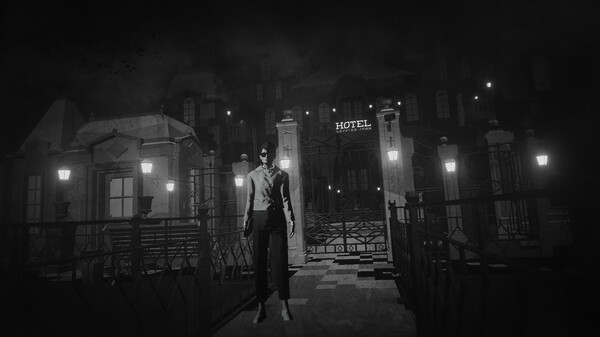 Lorelei and the Laser Eyes (Simogo, 2024). Numbers and symbols scattered through a mansion, which you reconnect yourself. Image: Steam store page
Sources
Papers and related material referenced in this article:
Reactions (no login)
Anonymous • one of each per visitor per day
Part of these series
Paper DigestEpisode 91 of 91