REVIEW · 2015-05-26
Magnetic: Cage Closed
Magnet-gun test chambers on death row
First Impressions
I write this from the pool of 276 Steam user reviews (Steam purchasers, 68% positive, labeled "Mixed," snapshot 2026-07-24). Sweden's Guru Games grew it out of a student project and shipped it in 2015 via Good Shepherd Entertainment. A death-row prisoner escapes an experimental facility with a magnet gun — a premise that summons one word before you open a single review.
That word is "Portal." But the positive and negative reviews use the same comparison to opposite ends: one side welcomes "Portal, but you think with magnets," the other dismisses "a charmless imitation." Read the helpful reviews side by side and they often point at the very same feature to reach opposite verdicts.
What interests me is that the split is less about "is it fun" than "which difficulty did you think you were buying." My job isn't to stage the fight, but to collect where reviewers actually got stuck and translate the nature of that sticking into design terms.
Putting the Mechanics into Words
The positive reviews praise the restraint of a single tool. The magnet gun has only two poles — attract or repel. Pull a box onto a switch, fling yourself off a magnetic pad, open the door to the next cell. In Puzzlebyrinth terms, the verb is subtracted down to one: "apply magnetism."
Three power levels add a thin grammar — big boxes need force, small ones can be flung. As with Portal and The Turing Test, the test-chamber shelf lives or dies on how far one verb can be developed.
But the negative side keeps hitting the shallowness of that development: "it's just boxes onto buttons," "when it's hard, it's the controls, not the solution." The verb was cleanly subtracted, yet no combinatorial explosion grows from it. The subtraction landed; what it was meant to seed never sprouted.
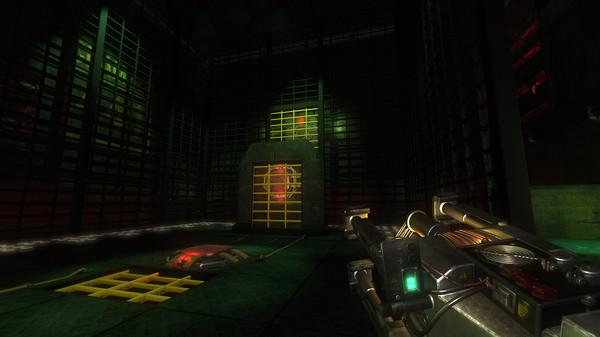 Magnetic: Cage Closed gameplay — Steam store screenshot
Branching and Choice
The game has something many test-chamber games lack: choices at the end of each act, sold in reviews as "nine endings" and "no two runs alike." For the positive side, that branching is a reason to replay.
But the negative side keeps returning to the cost of going to see those branches. There's no manual save, and reaching an ending locks your save; to see another you replay the same puzzles from the start. Many reviewers admit they watched the other endings on YouTube instead.
Here is the seam. The ambition of branching sits atop a thinly subtracted puzzle layer. Because the verb is single and shallow, it can't bear re-running the same cells. The architecture of choice and the architecture of puzzles pull against each other — praise a game for its branches and its puzzles should be deep enough to revisit.
The Texture of Difficulty
This is where opinion splits hardest, and the split has a clear shape. The positive side reads the instant-death traps — spikes, chlorine gas — as tension and accomplishment. The negative side reads the same traps as "unfair" and "dying to the controls."
Collect where reviewers got stuck and most of it is execution, not logic. Magnet-jumps are imprecise; aiming a box at one spot is fiddly; mid-puzzle checkpoints are scarce, so one slip means replaying a long cell. "I know the answer, my fingers can't keep up" is a shape I also saw in the ChromaGun reviews.
So it's a question of kind, not amount. A twitch-and-aim grammar is grafted onto a spatial-logic verb; the learning curve steps rather than rises. Most of the low scores aren't "too hard" but "I came for thinking and got execution." The gap between the store's promise of a brain-teaser and a game that measures your hands is where the split is rooted.
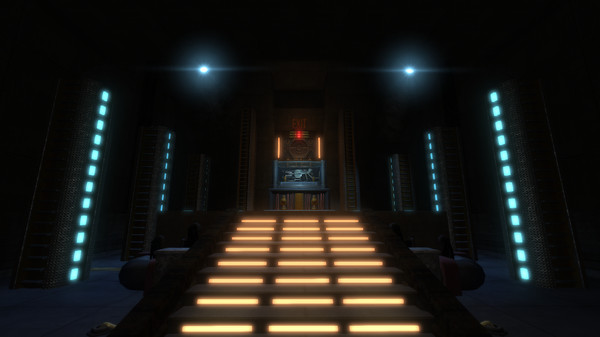 Magnetic: Cage Closed gameplay — Steam store screenshot
Sources
This piece was written by reading the Steam store user reviews as of 2026-07-24 against the aggregate figures and press reviews. No review text is quoted directly; typical claims are reconstructed.
- Steam: Magnetic: Cage Closed (Mixed, 68% positive of 276 Steam-purchaser reviews; ~67% across 344 all-language reviews)
- Read the helpful positive/negative and recent trends, plus recurring mentions of the magnet gun, checkpoints, and branching (verbatim per-review fetch was limited by environment constraints)
- Press: GameSpot (3/10), TechRaptor, Metacritic 61 (IGN Italy 8.4 and IGN Spain 7.5 pull the other way)
Closing
Steam reads 68% positive among purchasers; my design-critique score is 6.0. The core magnet verb has real appeal — binding attract and repel into one gun is a good idea for the test-chamber shelf. The marks come off for a verb never developed into combinatorial depth, for friction that makes players mistake execution-difficulty for thinking-difficulty, and for a save design that can't carry the branching ambition.
The pool's near-unanimous advice is "on sale, if you like Portal-likes." Fair. If you enjoy the feel of flinging your body with magnetism, this facility is plenty of fun. If you want to work logic quietly, what gets measured shifts from your head to your hands partway through. What you bring to it decides most of the outcome — and that 68% is the number that tells you so.
Where are you with this game?
Press one and the game goes on your shelf. You can see it on your account page.
Reactions (no login)
Anonymous • one of each per visitor per day
Read next
Related reviews
The Magic Circle
A first-person meta-puzzle set inside a fantasy game that has been in development for twenty years and is still unfinished. You steal behaviours from creatures and objects, paste them onto other things, and rewrite your way toward the exit. Puzzles have no single intended answer. Released in 2015 by Question, a studio whose members are credited with work on Thief and BioShock.
Keep Talking and Nobody Explodes
One player sits in front of a bomb; everyone else reads the defusal manual. The reader cannot see the bomb and the person seeing it has no manual. You hand conditional instructions across by voice and cut the wire before the clock runs out. A game-jam-born co-op puzzle from Steel Crate Games, with VR support.
Mini Metro
A 2D minimalist puzzler in which you draw subway lines between circle, triangle and square stations in a growing city, allocating the carriages and tunnels handed to you each week, and keep the city moving until the platforms overflow. From New Zealand's Dinosaur Polo Club, grown out of a game-jam prototype.


