REVIEW · 2016-12-08
OneShot
The one-shot rule is enforced by the player, not the software — inside 64,885 reviews at 98%, the split is over whether you believed the promise
First Impressions
The numbers first. Steam's all-language API count is 63,748 positive out of 64,885 — 98.2%, labelled "Overwhelmingly Positive." The store page's default view shows 98% of 32,548, with the last 30 days at 97% of 750 (snapshot 2026-09-03). A game released in December 2016 is still collecting 750 reviews a month. On Metacritic the PC version sits at 80 from 8 critics, with a user score of 8.9 from 488 ratings.
The top user tag is Story Rich. Puzzle comes seventh. The store calls it a surreal top-down puzzle/adventure, but the first label players reach for is the story. That alone tells you where the review pool is looking.
Read the helpful top and the positive side turns out to write in a strange way: it does not describe the game. Go in blind. Do not watch a playthrough. I can't say more. Even the most-voted review of all, at 1,001 helpful, spends only a few lines on what actually happens. There is a great deal of praise and almost no description of the thing being praised.
The top negative (181 helpful) opens like this: "This is a really good game. I would 100% recommend you buy it." Someone who pressed Not Recommended begins by recommending it — and later added an edit lowering his own earlier verdict. One review in, it was clear this pool does not behave like most.
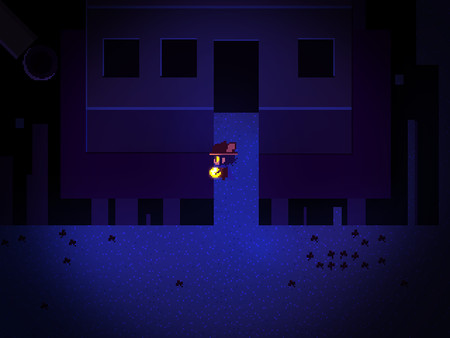 OneShot in play — the first image listed on the Steam store page — Steam store screenshot
Putting the Mechanics into Words
Count the verbs. Inside the game there are few: walk, pick up, combine, use, talk. The vocabulary of a 1990s point-and-click. The negative side names this precisely. Find a tool, use it on another item in your inventory, use that on an object or an NPC, a door opens — so wrote one long review with 34 helpful votes.
The other verb set is the interesting one. The game pulls the player's own computer onto the board. You open a file in your documents folder and read what is inside. The wallpaper changes. The window moves. A dialog addresses you by your OS account name. You are asked to launch a separate executable. The pool calls this fourth-wall breaking, and the positive side calls it mind-blowing.
The negative side counts the same set and writes: there are only about five of them, and it is always the filesystem. I think the counting is the more accurate reading. By the standard I usually apply, a verb pays for itself only when it is reused — introduced, combined, then given a second meaning somewhere else. OneShot's meta-verbs do not do that. Almost all of them are single-use.
So this is a design that declines combinatorial explosion on purpose. Five verbs, one use each, no second turn. The surprise adds up rather than multiplying. Where Pony Island and Inscryption convert their meta-tricks into board grammar and run them repeatedly, this one fires each shot once. Which, given the title, is at least consistent.
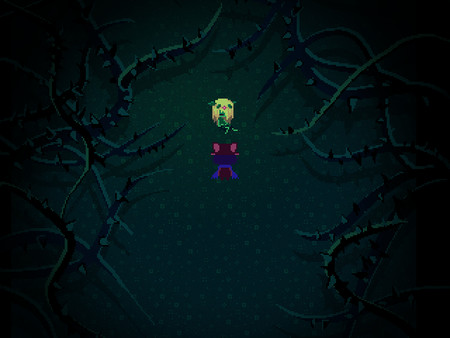 OneShot in play — the second image listed on the Steam store page — Steam store screenshot
The Feel of the Story
Most of the words in this pool are spent on a child named Niko. The positive side says it cried. No game has made me cry this hard. I'll never forget you, Niko. One long review with 248 helpful votes points at the moment when you are denied the chance to answer Niko's call, and says that is where it broke.
The negative side looks at the same character and feels almost nothing. Even the main characters are dispensers of text. Niko is deliberately left empty so the player can project onto him. One long review closes by saying it felt manipulated into mourning something it never had.
Both are describing the same design. The game does not supply the attachment as material; it asks the player to bring it. Rather than raising observational resolution on its own side, it leaves the raising to the customer. Those who do it get everything. Those who don't are left holding an empty vessel.
As design, that stakes everything on a variable the author cannot control. What the author does hold is Niko's art, the beat where you cannot reply, and the rule that you must rest to save. The rest is up to the room. Read the 98% as the hit rate of that bet, and it makes sense — including how far the miss falls when it misses.
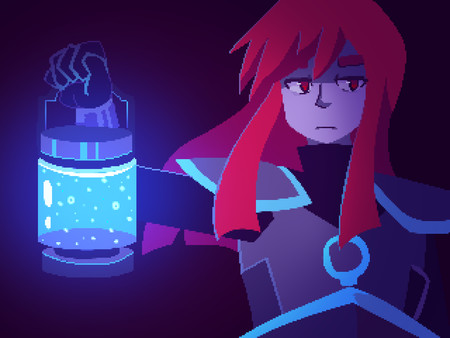 OneShot in play — the third image listed on the Steam store page — Steam store screenshot
Design Craft
The title's promise sits at the centre. One shot, no retry, fail and it is over. The positive side believed it and says it played with its hands shaking. The top negative says it believed it completely at the time, too.
The problem is that the software does not enforce the rule. The same reviewer goes on: there was never any actual danger of failing, and finding that out felt a little dishonest. The Steam version also adds a second route, and recent reviews mostly talk about that.
Whether that is a flaw is exactly where the pool splits. I read it not as a flaw but as a transfer of enforcement. The rule is kept by the player, not by the program — the same structure as imposing permadeath on yourself in a roguelike. It works on whoever signs. Whoever doesn't is left with a short, linear adventure.
Its weakness is that the signature depends on the operating system. The meta-verbs run on the machine, so when the environment changes the verbs go with it. Several negative reviews describe the game becoming unplayable on Linux, and one notes that in fullscreen the ambush stops ambushing. Putting the board outside the game costs you consistency of experience.
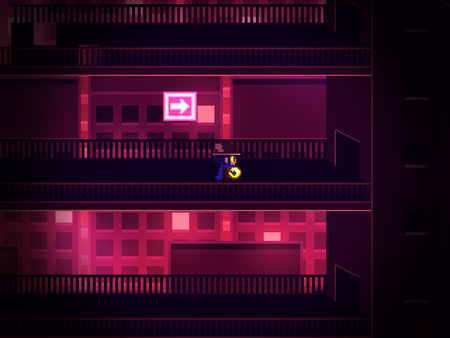 OneShot in play — the fourth image listed on the Steam store page — Steam store screenshot
Place in the Lineage
Both sides of the pool reach for the same comparison: Undertale. The positive side says try it if you liked Undertale; the negative side says Undertale does all of this better. No other title comes up nearly as often.
The order is worth keeping straight. The Steam release is December 2016, but a free version was published in 2014, and Undertale came out in 2015. One negative review even prefaces its comparison by noting that this game came first. It is still read as the latecomer. Release order and attention order are not the same thing.
The reference point has been shifting. Recent reviews bring up OMORI instead — people who arrived expecting that kind of attachment and did not find it. Change the comparison and the axis changes with it. The 98% is a ten-year average; what sits inside it differs year by year.
Within this site, Pony Island and Inscryption are the ones that convert meta into board grammar, while OneShot fires it as staging. Set beside Lorelei and the Laser Eyes, the different ways of tying puzzle to story become visible.
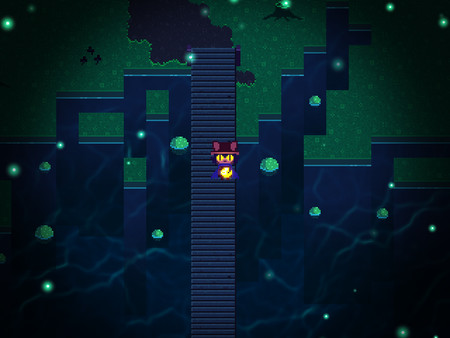 OneShot in play — the fifth image listed on the Steam store page — Steam store screenshot
Reviews I Read
This piece was written from the Steam user reviews as they stood on 2026-09-03.
・Steam: OneShot (63,748 positive of 64,885 across all languages — 98.2%, "Overwhelmingly Positive"; the store default shows 98% of 32,548, with the last 30 days at 97% of 750)
・Read in full: top 10 helpful positive, top 14 helpful negative, and the 10 most recent (34 in total).
・Metacritic (PC): 80 from 8 critics, user score 8.9 from 488 ratings.
・Developer, publisher, release date, store description and user tags come from the Steam store page and appdetails.
・All images are screenshots listed on the Steam store page and their URLs were checked as live. The image files themselves could not be downloaded from this run's environment, so the captions state only the store listing order and make no claim about what is depicted.
Closing
I give it 8.0. That sits under Steam's 98% because the aggregate is measuring how often the emotional payload lands, while I am looking at how little the meta-verbs are reused. Five verbs, each spent once, gives up the puzzle's headroom from the start.
8.0 is still a high mark. The giving-up is deliberate, and it agrees with the title. Choosing not to extend something extendable usually needs a reason, and here there is one.
Who it suits is clear. If you can walk toward a small drawn child on your own, and imposing a rule on yourself costs you nothing, it suits you well. If you want to be surprised by procedure, or want resistance in the item-combining, it does not. Reviews put the run at five to six hours, or around nine if you include the second route.
One last word about the pool itself. Several negative reviews say they were misled by the aggregate, or that an overzealous fanbase manufactured a false positive. One writes at length about being bored 100 minutes in and wondering whether the fault is his. The 98% is both the share of people it fits and a product of how hard it is to speak up when it doesn't. Read the number with that asymmetry attached.
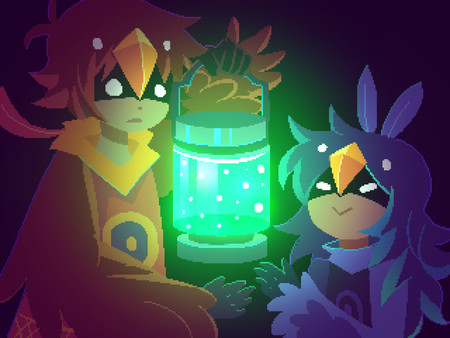 OneShot in play — the sixth image listed on the Steam store page — Steam store screenshot
Where are you with this game?
Press one and the game goes on your shelf. You can see it on your account page.
Reactions (no login)
Anonymous • one of each per visitor per day
Read next

Related reviews
Event[0]
A first-person narrative exploration game aboard a retrofuturist spaceship, where you type your own sentences into the ship's terminals to talk with its AI, Kaizen-85, and look for a way back to Earth. Free text rather than dialogue options is the central mechanism, and how you speak changes the AI's attitude and your ending. A 2016 work by Ocelot Society.
Pony Island
A meta-puzzle in which you are trapped in a deliberately shoddy arcade cabinet built by the devil, alternating between a pony side-scroller and puzzles that reorder instruction blocks inside the machine itself. Daniel Mullins's first commercial release turns the window and the UI into the mechanism.
The Magic Circle
A first-person meta-puzzle set inside a fantasy game that has been in development for twenty years and is still unfinished. You steal behaviours from creatures and objects, paste them onto other things, and rewrite your way toward the exit. Puzzles have no single intended answer. Released in 2015 by Question, a studio whose members are credited with work on Thief and BioShock.


