REVIEW · 2020-05-21
Observation
Sie sind nicht auf der Station — Sie sind die Station
First Impressions
The top helpful positive reviews all open the same way: not with what the game does, but with what it reminds them of. Alien: Isolation, 2001: A Space Odyssey, HAL 9000. The proper nouns come first, before any account of the actual gameplay.
In design terms that is a story about observation resolution. Before you act, you watch — light and shadow through a low-res lens, a weightless body, the creak of the station. Its 'story emerges from watching' instinct rhymes with Return of the Obra Dinn, transplanted into the sealed room of space.
The other thing nearly every review flags up front: you play the AI, not an astronaut. Reviewers repeat the studio's line — you aren't on the station, you are the station — almost verbatim. The hook lands as lived experience.
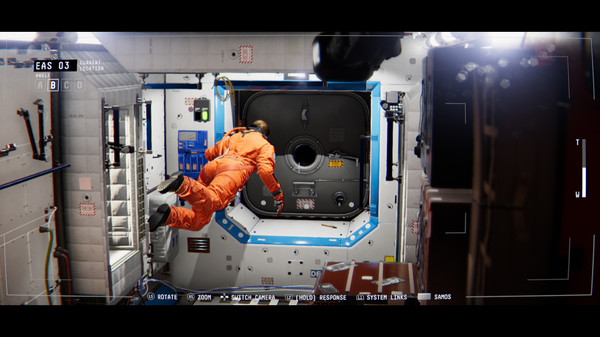 Observation — Steam store key art
The World
Atmosphere is where the positive reviews spend their words: claustrophobic, eerie, atmospheric, slow burn — the same adjectives, dozens of times over. Tight corridors, near-identical modules, then the vast silence of a spacewalk. 'The exterior scenes gave me chills' recurs again and again.
Tellingly, the negatives point at the very same phenomenon: 'every section looks alike, I got lost', 'the spinning drone made me sick.' The disorientation is part of the intended experience. Where Outer Wilds builds awe from vastness, Observation builds dread from tightness and lost bearings.
The 2001 references aren't idle. The film's HAL killed the humans; here that vantage is handed to you. You are the cameras, the station's nervous system. Pool the reviews together and the core of the world isn't set design but the question of whose eyes you are given.
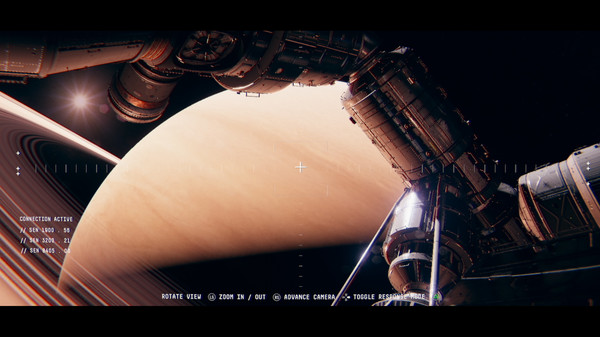 Observation — Steam store key art
Putting the Mechanics into Words
Mechanics is where positive and negative split most cleanly. Positive: 'just touching the UI is immersive', 'each interface has its own personality.' Negative: 'objectives are vague, I wandered for ten minutes', 'you're a spectator, not a player.' They describe the same systems — camera-switching, the spherical drone, and mini-games that make you discover the procedure yourself.
In Puzzlebyrinth terms, this is subtraction of hand-holding. The verbs are few — open a door, boot a system — but the game won't say which verb, or where. For some that subtraction is the pleasure of learning the station; for others it withholds the very context clues they needed. GamingBolt landed on the same spot, scoring it 6/10 (FAIR).
Collect the sticking points and the difficulty splits in two: spatial (getting lost among identical modules) and objective (not knowing what to solve at all). The first feeds the atmosphere; the second breaks the pace. When many reviews single out 'the coordinate puzzle is impossible without a walkthrough,' that's the second kind failing.
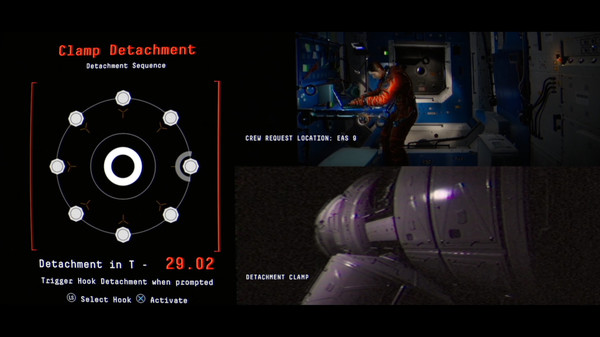 Observation gameplay — Steam store screenshot
The Feel of the Story
On story, praise and disappointment arrive in the same order. 'The opening and middle pull you in beautifully' — nearly everyone agrees. The split is the final seconds: 'a perfect short story that lingers' collides head-on with 'the moment I got answers, I stopped caring.'
What's striking is that the negative users and the professional criticism converge here. Game Developer's Katherine Cross wrote that it 'tells a 2001 story and gives a 2010 ending.' Menace left ambiguous is scarier than menace named — critic and hard-to-please user say the same thing. No spoilers, but the complaint is that it explained too much.
As a metareview I'd file this not as a feud but as design reach. The maker pushed the story to a point where clarity-seekers and ambiguity-seekers can't both be satisfied, and chose the former. Next to Her Story, which hands interpretation over wholesale, you can weigh what it means to preach 'observation' and then, at the last moment, declare.
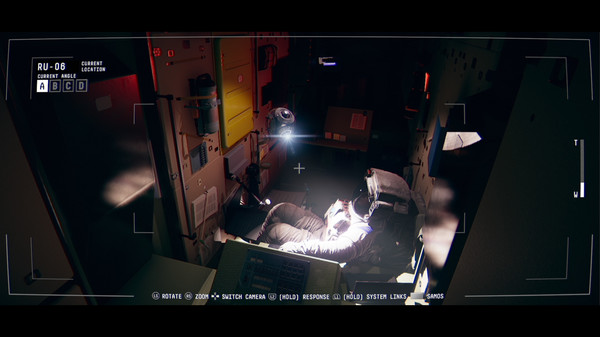 Observation — Steam store key art
Closing
The numbers, for the record: 78% positive of 2,492 English reviews on Steam, 'Mostly Positive' across 4,530 in all languages (2026-07-21 snapshot). The last 30 days dip to 70% of 20, but the recent negatives lean technical — Windows 11 launch crashes, motion sickness — not a verdict on the design. Metacritic 79; IGN, Game Informer and PC World each gave 9/10.
From a design standpoint I'd give it 7.5 — close to Steam's 78%, but for different reasons. Atmosphere, vantage and UI design are unimpeachable. The deductions are the unfair sticking points born of vague objectives, and an ending that tips toward declaration. Growing the single verb 'observe' into a whole game is rare craft, and the density fits the short run (reviews cite roughly 6–10 hours).
Who's it for? Anyone who wants the air of Alien: Isolation or 2001 on the quiet side of tension rather than the tense one. Not for players after brisk, legible puzzle payoffs. On sale, spend your two-hour refund window testing whether you can forgive 'time spent wandering' — that's most reviewers' conclusion, and mine.
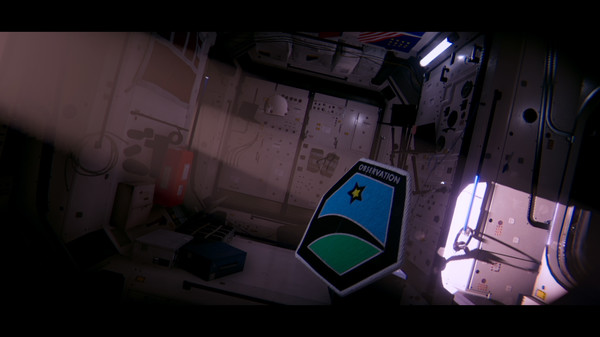 Observation — Steam store key art
Sources
This piece was written by reading the user reviews on the Steam store page as of 2026-07-21. No review text is quoted directly; typical claims are reconstructed.
- Steam: Observation (Mostly Positive, 78% of 2,492 English reviews; 4,530 in all languages)
- Read via WebFetch: the top ~10 helpful positive reviews, representative negative complaints, and several recent reviews; aggregates cross-checked on SteamDB.
- Press: GamingBolt (6/10), Game Developer on the ending, and Metacritic 79.
Where are you with this game?
Press one and the game goes on your shelf. You can see it on your account page.
Reactions (no login)
Anonymous • one of each per visitor per day
Read next

Related reviews
SUPERHOT: MIND CONTROL DELETE
Die Fortsetzung von SUPERHOT, dem Actionpuzzle aus der Egoperspektive, in dem die Zeit nur vergeht, wenn man sich bewegt. Statt handgebauter Einzellevel gibt es nun zufällig zugeteilte Räume, die in Läufen nacheinander bestritten werden, dazu ein System, bei dem man Fähigkeiten wählt, um stärker zu werden. Das dritte Spiel von SUPERHOT Team.
Röki
Ein Point-and-Click-Adventure durch einen verschneiten Wald nach nordischer Volkssage: Tove sammelt und kombiniert Gegenstände auf der Suche nach ihrer Schwester. Kampf und Scheitern gibt es nicht — das Spiel von Polygon Treehouse trägt sich durch handgezeichnete Landschaften und eine Geschichte des Verlusts.
Lightmatter
Ein First-Person-Puzzle, in dem die Beruehrung eines Schattens sofort toetet. Beleuchte deinen Weg aus einer eingestuerzten Anlage mit tragbaren Lampen und lichtweiterleitenden Pylonen. Tunnel Vision Games' offener Liebesbrief an Portal.


