DESIGNER-STUDY · 2026-08-06
Inside Ernő Rubik's Philosophy — insisting it was found, not invented
The Rubik's Cube, fifty years of unchanging vocabulary, and a designer who gives up ownership
Intro — an inventor who will not say he invented
Ernő Rubik (b. 1944) is a Hungarian architect and designer who, in 1974, while teaching at the College of Applied Arts in Budapest (today MOME), built the twisting object he called the Magic Cube — the puzzle that would go on to sell more than 500 million copies as the Rubik's Cube.
He is worth reading now because the Cube has passed fifty, and because his 2020 book Cubed: The Puzzle of Us All gathered up statements that had previously been scattered across decades. He is also one of the very few designers who has said more or less the same thing for half a century.
This is a study of a person, not of a product. Every quotation below comes from a source I read in full; my own interpretation is confined to the final section.
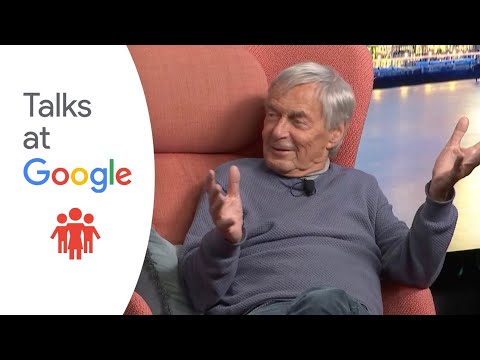 From the thumbnail of “Erno Rubik | Celebrating 50 Years of the Rubik’s Cube | Talks at Google” (Talks at Google, YouTube)
Background — trained as an architect, never worked as one
Rubik was born in Budapest. His father designed gliders — the R-26 Góbé, which became Hungary's standard trainer in the early 1960s, was his. The son studied sculpture, then architecture, then taught. But as he puts it: "I made some architecture work but never worked as an architect. I loved the workshops" (Wallpaper* interview, 20 May 2024 ↗). He was a workshop person, not an office one.
In the spring of 1974 he was building teaching models for spatial relationships: identical wooden cubes, drilled and strung together first with rubber bands and then with fishing line, hunting for a structure whose parts could move independently without the whole falling apart. They all fell apart. What finally worked was an internal mechanism you cannot see.
Getting it into shops was slow. "Back in the 1970s, Hungary was under State-Socialist rule and five-year economic planning – not exactly ideal for a completely new product in the obscure category of puzzles," he recalls; domestic production came three years later, in 1977 (Guinness World Records interview, 13 Jul 2021 ↗). After the 1979 Nuremberg Toy Fair, Ideal Toy took it worldwide in 1980 under the name Rubik's Cube.
Philosophy — "we are not creators but discoverers"
Lay his statements out chronologically and the most persistent word is not "made" but "found." In 2018: "The cube was not created as a puzzle. I discovered the potential of a puzzle, creating an object, which contains many pieces which work together, which remains one unit" (Gathering 4 Gardner interview, April 2018 ↗). In 2020 he generalised the same idea: "What is under the surface is the need to understand. In that sense, we are not creators but discoverers" (Salon interview, 20 Sep 2020 ↗).
That view of discovery connects directly to how he thinks about rules. Asked in 2018 whether rules constrain creativity, he answered: "There are rules all the time. Physics, and the existence of the world, the world itself, the universe, it has the rules. There are so many rules, my task is to find out the rules! ... Usually to achieve our goals is not to break the rules. It's to keep the rules, and using their potentials." Not breaking rules but exhausting their potential — most of his design outlook fits inside that sentence.
The second pillar is building complex systems from simple parts. Asked on radio in 2010 why a cube, and why nine squares, he said: "I was looking for the simplest possibility. So probably that is the most difficult task," adding that whether designing furniture or buildings, "you need to find out the simple elements which are capable to form a complicated system" (NPR Science Friday, 22 Oct 2010 ↗). Simplicity is not the goal; it is the means to complexity.
Obsessions — never finishing, having no opponent, using hands
First: it must not end. Asked what jigsaws lacked, he said: "I was bored with jigsaw type of [puzzles]. Hundreds of thousands of pieces work together. When it's finished, it's really finished. You'll never want to repeat it. But if you have such an object which I dream of, you can do it endlessly" (Gathering 4 Gardner interview, April 2018 ↗). Boredom with puzzles whose completion is terminal is the stated motive for designing a repeatable object.
Second: there must be no opponent. Asked about his childhood favourites, he described tasks he set himself — "These were mainly solitary types, where you are faced with the challenge itself, not a competitor or opponent" (Guinness World Records interview, 13 Jul 2021 ↗). In 2018 he restated it: "to play with the puzzles, you have no opponent. Your opponent is the problem that you are working on. In a good puzzle, this problem is created by nature" (Gathering 4 Gardner interview, April 2018 ↗). In a good puzzle, the adversary is nature, not a person.
Third: hands. Already in 2010 he was saying "it is very important to keep the touch with the real world, to use our hands and to have the feelings of a form and movement" (NPR Science Friday, 22 Oct 2010 ↗). In 2024, asked about a world of screens, he sharpened the same claim: "we are slowly forgetting that we have hands"; "I think probably the cube reminds us we have hands... You are not just thinking, you are doing something" (AFP interview, 20 May 2024 ↗). Fourteen years apart, down to the vocabulary — this is not a retrofitted talking point.
Failures — prototypes that fell apart, a month without a solution
The first failure he tells is mechanical. The wooden cubes strung with rubber bands and fishing line all came apart. He does not hide this stage; the concealed mechanism was what remained after everything else broke (Wallpaper* interview, 20 May 2024 ↗). The substance of his account of inventing is a list of structures that did not hold.
The second is that he could not solve his own object. "It was more than a month I find my practical solution, not a theoretical one" (Gathering 4 Gardner interview, April 2018 ↗). He repeats both halves without softening either: over a month, and what he arrived at was a working procedure rather than a theory. On the mathematics he is equally plain: "I wasn't equipped with the knowledge to fully understand its significance for group theory, combinatorics or algorithms" (Guinness World Records interview, 13 Jul 2021 ↗).
The third is the three years to market. Pushing a brand-new product in the obscure category of puzzles through a planned economy was, in his words, not exactly ideal (Guinness World Records interview, 13 Jul 2021 ↗). His account of getting through it is undramatic. Advising young people in 2018 he offered something almost disappointingly ordinary: "Never give up till that. You need patience to do that. To achieve something, it's not possible without hard work. Sometimes it looks it's happened accidentally, but it's not true, it's only on the surface" (Gathering 4 Gardner interview, April 2018 ↗).
Dilemmas — the self-correction that follows his own slogan
The clearest tension he has shown in public opens a 2014 interview. He interlaced his fingers, thought, and said: "I wanted to convince human beings that there are no unsolvable problems." Then he smiled and immediately undercut it: "Maybe it's not exactly like that, in reality. But if we don't have the courage to venture towards the unknown, then surely we'll never get anywhere" (La Stampa interview, 2014 (English via Worldcrunch) ↗). The slogan and its retraction arrive in the same breath.
The second is distance from his own fame. "The Cube has become world-famous and some of its fame has also covered me with some stardust. But I have always been careful not to be too near the limelight…" (Guinness World Records interview, 13 Jul 2021 ↗). In 2020 he used a parent-and-child figure: "He became the superstar that I never personally aspired to be"; "the Cube's story is not mine" (Salon interview, 20 Sep 2020 ↗). In 2024 he was blunter, comparing it to having a wunderkind in the family: "You need to take a step back because of your 'child' and its fame.... (which) can be very tiring" (AFP interview, 20 May 2024 ↗).
The same tension surfaces in smaller ways. Asked on air in 2010 whether he was tired of talking about the Cube, he answered at once: "I don't think so" (NPR Science Friday, 22 Oct 2010 ↗). In 2024, showing a journalist around his house, he let slip: "Yes, I made other things, too, but people only want to talk about the cube" (Wallpaper* interview, 20 May 2024 ↗). The two are not strictly contradictory, but the temperature differs. I read the gap less as fatigue than as an ordinary designer's wish to have the rest of the work looked at.
The third is commerce. He does not disown financial success. But in 2014 he redefined it — "I often ask myself: What is success? Making money? Becoming famous? Yes, but it's not enough. For me, it means finding inner peace, and doing things that keep yourself interested" (La Stampa interview, 2014 (English via Worldcrunch) ↗) — and in 2024 he said: "I was curious, but I had no money from work, partly because of the circumstances and partly because I was not looking for it. If you are lucky like me, you do what you want to do and don't mind if you can sell it" (Wallpaper* interview, 20 May 2024 ↗). He treats not having to think about sales as luck.
Influences — his father's gliders, the 15 Puzzle, and "Mother Nature"
He acknowledges few influences explicitly. The most repeated is his father. "My father was a huge influence, although in comparison, I consider myself to be a creative 'amateur'," he says, adding of the man who designed the R-26 Góbé that "every time he figured out the structure and the materials and all the details of his designs, he was solving very practical and complicated puzzles" (Salon interview, 20 Sep 2020 ↗). The point is the redescription: engineering as puzzle-solving.
On the play side he names classic mechanical puzzles and chess problems: "While enjoying the challenge of classics like the 15 Puzzle or even chess riddles, I was most involved in creating my own little games and tasks" (Guinness World Records interview, 13 Jul 2021 ↗) — more time spent making his own tasks than playing existing ones. In 2014, citing the ancient Greeks measuring the Earth without satellites, he said "I have always been fascinated by the capabilities of the human mind to solve problems" (La Stampa interview, 2014 (English via Worldcrunch) ↗). He also volunteers a love of science fiction (Wallpaper* interview, 20 May 2024 ↗).
And he names nature itself. "The Cube is my creation, but the other parent must be Mother Nature. As much as I created it, it also changed me, and it opened up my life too" (Salon interview, 20 Sep 2020 ↗). Read alongside his 2018 line that in a good puzzle the problem is created by nature (Gathering 4 Gardner interview, April 2018 ↗), this looks less like a figure of speech than a restatement of a consistent worldview.
I found no primary source in which he names a designer or a prior puzzle as an influence on the Cube's design. On the contrary: "As the Cube did not follow from anything that had existed before, it would be very difficult to point to anything in particular" (Salon interview, 20 Sep 2020 ↗). I will not fill that gap with guesses.
Kizuki's reading — insisting on discovery is a way of giving up ownership
What follows is my own reading. Rubik's half-century of insisting on "discovery, not invention" is, I think, neither modesty nor a taste for philosophy but a deliberate surrender of authorial ownership. Call it a discovery and the object stops being your property and becomes something anyone could have reached. That is why he can stay so even-tempered about a thing that took three years to reach shops, sold half a billion copies, and whose shape a court has ruled cannot be trademarked. He never claimed it was his to begin with.
If that reading holds, his other statements line up. "Your opponent is not a person but nature." "Rules are not to be broken but exhausted." "The Cube is my creation, but the other parent must be Mother Nature." All are versions of the same move: the designer does not manufacture problems, he digs out ones already there and hands them over. His boredom with jigsaws belongs to the same line — he chose a structure that keeps multiplying after it is unearthed, rather than one where the author buries a single answer and is done.
I do not want to celebrate this unconditionally, though. The line he let slip at home in 2024 — "people only want to talk about the cube" — reads like the bill that comes due for surrendering ownership. If the work becomes public property, the author is placed outside it. When he says you have to take a step back, and that it can be very tiring, I hear the cost of a subtraction that took fifty years to complete.
Closing — where to start
If you want to understand him, carry a 3×3×3 cube for a week without looking up a method. Putting yourself where he was when he says it took him more than a month changes what the word "discovery" feels like. Then try Rubik's Snake and Rubik's Magic, which he says are "really not puzzles, because you can play with them" — a useful hint that his interest leans toward the manipulable rather than the solvable (Gathering 4 Gardner interview, April 2018 ↗). In prose, the 2020 book Cubed is the only sustained self-account; he admits in it that he hates to write (Salon interview, 20 Sep 2020 ↗).
For further reading on this site, Rubik's Cube (1974) covers the object's own history. On the designer side, Maki Kaji, Alexey Pajitnov and Scott Kim each approach a related question from a different angle.
Sources
Primary sources consulted for this article (all read in full):
・Guinness World Records, "An interview with Rubik's Cube creator Ernő Rubik," 13 Jul 2021 ↗
・Wallpaper*, "Rubik's Cube inventor on 50 years of the cult puzzle" by Alia Akkam, 20 May 2024 ↗
・AFP, "Forever fad: Rubik says his cube 'reminds us why we have hands'," 20 May 2024 ↗
Passages attributed here to Cubed: The Puzzle of Us All (Flatiron Books, 2020) rely on wording quoted inside the Salon, Wallpaper* and AFP pieces above.
Reactions (no login)
Anonymous • one of each per visitor per day
Learn — Curriculum
LearnPart 8 Designers — The Philosophies Behind the WorkChapter 18 Those Who Doubt the Rules7 / 9
Part of these series
The Designer's PhilosophyEpisode 39 of 63