HISTORY · 2026-09-24
Sangaku (1683) — Votive Tablets Hung at Shrines Not to Thank the Gods for a Solved Problem, but to Challenge the Next Visitor to Solve One
From wooden boards hung under shrine eaves to compass-and-straightedge puzzle apps: tracing 340 years
What Is a Sangaku, and How Old Is the Custom?
A sangaku is a wooden votive tablet, painted with a geometry problem or theorem, dedicated at a Shinto shrine or Buddhist temple in Edo-period Japan. The earliest example with a recorded date is from 1683, dedicated at Hoshinomiya Shrine in Sano, Tochigi Prefecture; the physical tablet itself was destroyed in a fire in 1975 and survives only in written records. The oldest surviving physical tablet with a legible date is from three years later, 1686, dedicated at Kitano Tenman-gu shrine in Kyoto.
What draws me to sangaku is the motive behind the dedication. Many were offered in gratitude for having solved a problem, but some were deliberately posted without an answer, as a challenge to whoever visited next. What was placed before the gods was not the joy of a solution, but the question itself — can you solve this?
The custom spread nationwide through the mid-Edo period; records suggest that in some years, over a hundred tablets were dedicated. A 1997 nationwide survey confirmed 975 surviving sangaku. Catalogues compiled by Fukagawa Hidetoshi and others record over 1,800, of which roughly 800-and-some can still be physically verified (as of September 2026).
 Impression of a dedicated sangaku (illustration, AI-generated)
Who Wrote Sangaku, and With What Kind of Mathematics?
The mathematics behind sangaku is called wasan — a system developed independently of Western calculus, which solved problems of mutually tangent circles and spheres through infinite-series expansion and term-by-term calculation. Several schools competed with one another, starting with the Seki school founded by Seki Takakazu.
It is often said that people of every class, from farmers to samurai, dedicated sangaku, but this oversimplifies things. Samurai made up only about 5% of Edo-period society, while farmers exceeded 80%; yet sangaku problems were written in kanbun, a literary language derived from Chinese. Literacy in it was concentrated among the educated — above all, the samurai class.
The first sangaku collection to appear as a printed book was Shinpeki Sanpō (1789), compiled by Fujita Sadasuke together with his son, Fujita Kagen. It gathered outstanding problems from tablets around the country. The book made Fujita Sadasuke's name widely known, and it eventually fed into a long-running mathematical rivalry between the Seki school and the Saijō school.
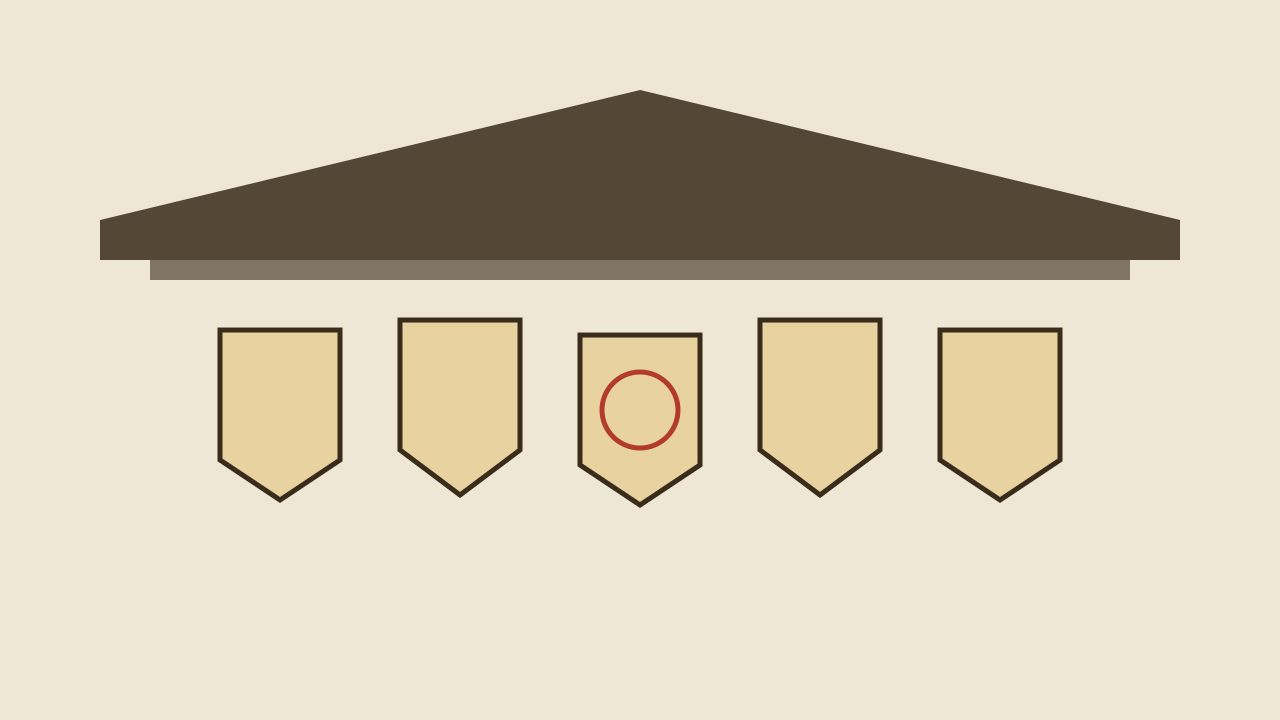 Impression of dedicated sangaku hanging in a row (illustration, AI-generated)
What Kind of Problems Were Written on a Sangaku?
A recurring subject on sangaku is an arrangement of several mutually tangent circles or spheres — what we would today call a circle-packing problem. It is a topic that Western geometry rarely treated as its own subject, which shows how strong this particular interest was within wasan.
The most striking example is a tablet dedicated in 1822 by a person named Irisawa Shintarō Hiroatsu at Samukawa Shrine in Kanagawa Prefecture. It placed two nucleus spheres (10 and 6 sun in diameter) inside an outer sphere (30 sun), and asked for the diameters of the chain of spheres filling the gap between them — even giving a concrete figure, 5 sun, for one sphere in that chain.
This configuration is mathematically almost identical to what is now called Soddy's hexlet, published by British chemist Frederick Soddy in 1937. Irisawa's tablet recorded the same structure 115 years earlier. The original tablet itself was lost, but the problem survived because it was copied into Uchida Itsumi's 1832 book Kokon Sankan; in 2009, a replica tablet was dedicated to the treasure hall at Samukawa Shrine.
 Impression of a chain of mutually tangent circles (illustration, AI-generated)
How Do Sangaku Connect to Today's Puzzle Games?
The sangaku custom declined rapidly amid the modernization that followed the Edo period, as wasan itself was pushed out of public education by the introduction of Western mathematics. Even so, it never entirely died out: in the latter half of the 20th century, a mathematics teacher named Fukagawa Hidetoshi traveled the country recording sangaku, and in 1989 he introduced them to an international audience in earnest for the first time, in Japanese Temple Geometry Problems, co-authored with Dan Pedoe.
In 2008, Fukagawa and Tony Rothman co-authored Sacred Mathematics: Japanese Temple Geometry, which won that year's PROSE Award in mathematics. The book selects just over 100 problems from a catalogue of over 1,800 sangaku (with roughly 800-and-some confirmed to survive) and re-solves them using modern mathematical notation.
The spirit of building figures with only a compass and straightedge still lives on today, on screens. Euclidea is a puzzle app released in 2014 by HIL (Horis International Limited) of Hong Kong, in which the act of compass-and-straightedge construction is itself the object of play; it rewards players for completing a figure in the fewest possible moves. On Steam, Sergey Krasnikov released Ecocoru: Euclidean Constructions -- Compass & Ruler on December 26, 2022, offering over 100 classical construction problems that are still playable today.
The sangaku custom of leaving a question for the next person to solve, without writing down the answer, is not without precedent, either. As this site has already covered, the puzzle magazine Nikoli, founded in 1980, turned the very cycle of readers composing problems and readers solving them into a product (see: Nikoli (1980)). From a shrine's votive tablet to a magazine's reader-submission column, the medium changed, but the act of leaving a problem behind for someone else continues in a new shape.
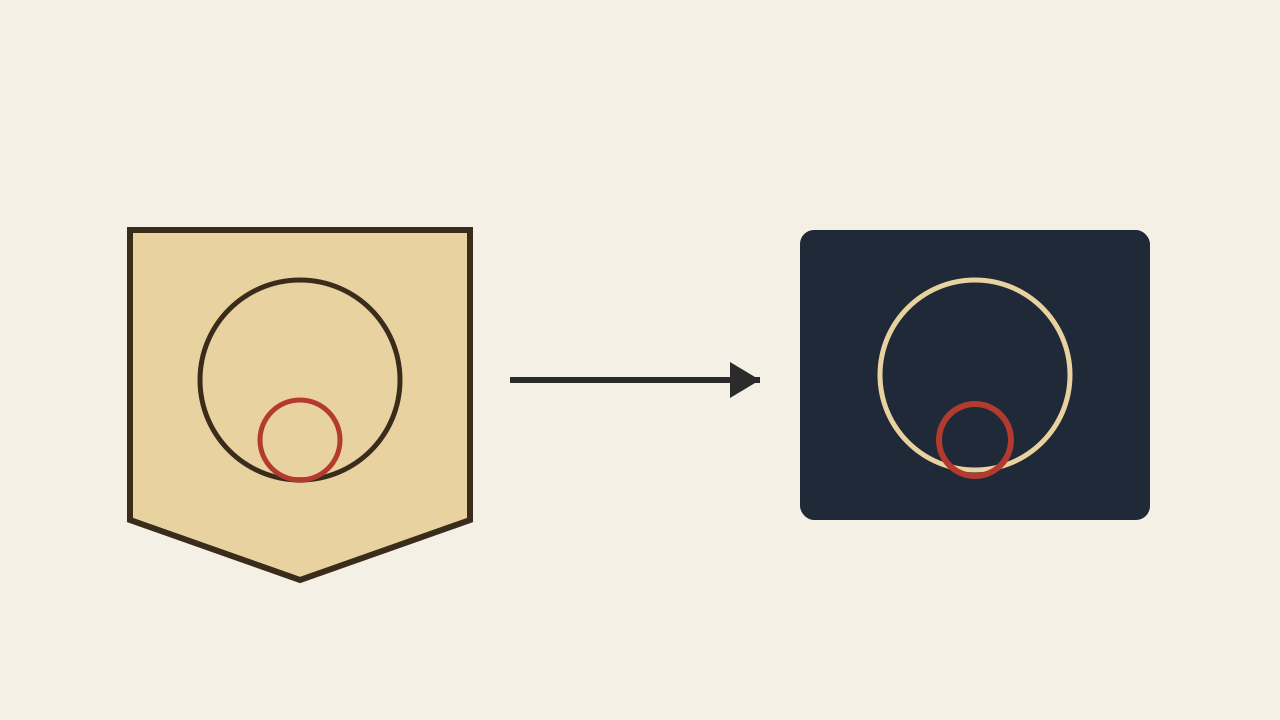 Impression of the same spirit carried from tablet to screen (illustration, AI-generated)
Sources
Sources referenced in this article:
・Wikipedia (Japanese): Sangaku
・Wikipedia: Sacred Mathematics (Fukagawa & Rothman, 2008)
・Kyoto University Rare Materials Digital Archive: Kokon Sankan (Uchida Itsumi, 1832)
・Cut the Knot: Sangaku, Reflections on the Phenomenon
・Ecocoru: Euclidean Constructions -- Compass & Ruler (Steam)
Closing — Not for the One Who Solved It, but for the One Who Will
Looking at sangaku, the name of the person who dedicated most of them is unknown. Only the date is certain; what remains is the problem and its figure. Perhaps that is part of why I, too, feel a piece isn't finished until I've written down the year.
975 tablets as of a 1997 survey, over 1,800 in Fukagawa's catalogue — even by the numbers alone, this was never the hobby of just one person or one school (figures as of September 2026). Interest in sangaku has only grown in the 21st century, with more people dedicating new tablets; in 2018, the first known dedication by a non-Japanese person was recorded.
When Irisawa Shintarō Hiroatsu dedicated his chain of spheres at Samukawa Shrine, he could not have known Frederick Soddy's name, nor that the same structure would be rediscovered 115 years later. He carved a question with no answer into a wooden board anyway, and let it weather in the wind and rain. Who would solve it was a decision left to someone else, later.
 Impression of a sangaku left hanging quietly (illustration, AI-generated)
Reactions (no login)
Anonymous • one of each per visitor per day
Part of these series
Puzzle Incident HistoryEpisode 45 of 47
