REVIEW · 2015-02-25
A Good Snowman Is Hard To Build
Building snowmen with a single verb: push
Introduction
I treat A Good Snowman Is Hard To Build as a reading of its Steam reviews, not as my own playthrough. Released by Draknek & Friends in 2015, this Sokoban-like sits at an almost unanimous figure: as of 2026-06-28 the store label is Overwhelmingly Positive, with 96% of 662 Steam-purchaser reviews positive and about 95% across all 1,172.
High scores make praise look like one block. But read the helpful reviews one by one and the targets scatter: the push-only restraint, the hug you give each finished snowman, the second game hidden after the credits. Rarely is the same 96% built from such different words.
My interest is translating that praise into design terms — why a tiny Sokoban garden lingers, and where a single verb turns into depth.
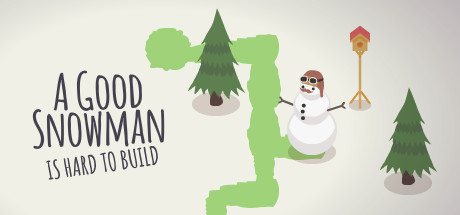 The snowy garden and its monster — Steam store
First Impressions
Line up the helpful positives and the words converge: adorable, relaxing, charming, 'simple-looking but a pain to solve.' Most write about the gap between how easy it looks and how hard it bites.
The qualified positives and negatives keep returning to short, slow, overpriced at full price, and 'the hidden world is tiresome.' The main game is 30 puzzles in 2–3 hours, and 'buy it on sale' is everywhere. Ten years on, the talking points barely move.
What interests me is that praise and complaint point at the same thing. One reader's 'short and clean' is another's 'short and pricey.' I read that not as a fight but as a question of who the design is aimed at.
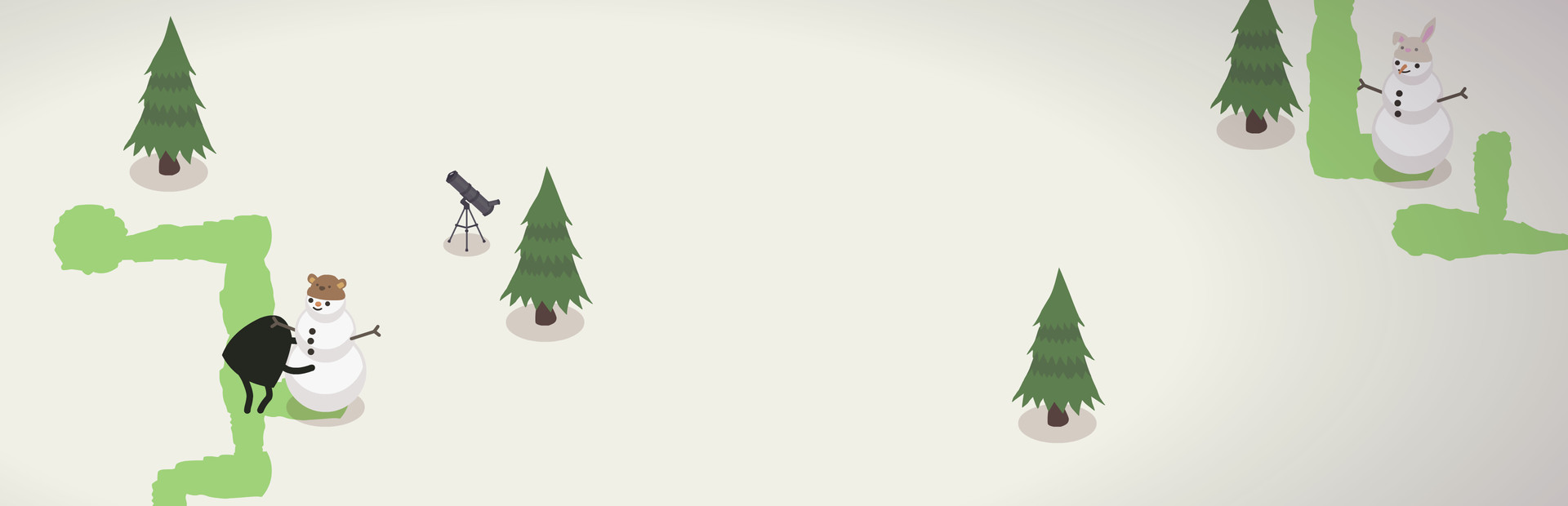 Stack large-medium-small into a snowman — Steam store
Putting the Mechanics into Words
Nearly every positive review names one fact: you can only push, never pull. A snowball grows one size on fresh snow; stack large-medium-small to finish, and there's no shrinking in the main game. It's textbook verb subtraction — strip the controls to one and all the load shifts onto reading the board.
Two rules — push, and grow on snow — entangle size, position and order. When reviewers say 'deliberate movement and order,' they're describing grammar. Late rooms with several snowmen pull a combinatorial explosion out of one verb, the same lineage as Hazelden's Sokobond and A Monster's Expedition.
And many reviews lower their voice about a second world found after the ending. No spoilers, but there the snowballs shrink instead of grow. Invert a single rule and the whole grammar a player has built reshuffles.
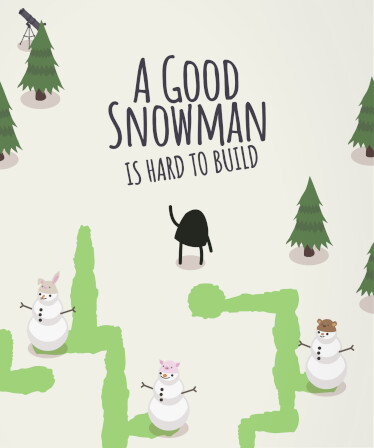 Push to roll; fresh snow grows the ball — Steam store
What Makes It Great
More striking than the score: a good share of reviews aren't about puzzles at all. A lonely monster builds snowmen, names them, hugs them — mechanically pointless, yet reviewers write long, personal notes about it. Priscilla Snow's music gets called 'haunting,' the art 'soothing.'
I read this as reward design placed outside the puzzle: a second circuit of satisfaction, separate from correctness, that fills the garden in. It adds a degree of warmth to Sokoban's cold optimization. The praise splits into 'clever' and 'warm' because the game hands out two rewards at once.
 Each finished snowman gets a name — and a hug — Steam store
The Texture of Difficulty
Difficulty is where the reviews split hardest. Some call the main game 'just right, stops short of frustrating'; others call the hidden world and finale 'brain-cell killers.' The range barely sounds like one game, and that split is the point.
Collect where people get stuck and the difficulty sorts into three layers: the main game's order-of-operations; the hidden world's rule-inversion; and the meta-step of re-solving rooms across dimensions. Almost all the complaints land on that third layer.
So 'too hard' aims at a layer, not the whole. The main game's learning curve is gentle and didactic, teaching one rule per puzzle. What divides people is whether the hard appendix counts as 'the game' or 'a bonus' — a question of range, not a flaw.
 Late rooms ask for several snowmen at once — Steam store
Sources
This piece was written by reading the user reviews on the Steam store page as of 2026-06-28. No review text is quoted directly; typical claims are reconstructed.
- Steam: A Good Snowman Is Hard To Build (Overwhelmingly Positive; 96% of 662 Steam-purchaser reviews, ~95% across all 1,172)
- Read via WebFetch: the top ~10 helpful positives, representative qualified and negative complaints, and several recent reviews
- Reference: aggregate and price history via SteamDB; press trends cross-checked on Metacritic
Closing
Steam's overall is 96% (662 Steam-purchaser reviews, 2026-06-28). I give it 8.5 on design grounds. The points I held back track the recurring notes on slow movement, the short main game, and the divisive hidden world — not the puzzle craft.
It's a small thing that pares Sokoban down to one verb, then layers warmth and a secret room on top. Come for the tidy main game and it reads 'short but perfect'; come to dig and the hidden world is the real game. The split isn't a flaw so much as two ways of playing living together.
If the rule-flipping appeals, A Monster's Expedition and Sokobond are the next rooms over by the same designer. Many call it pricey at full price, so siding with the majority and waiting for a sale is fair.
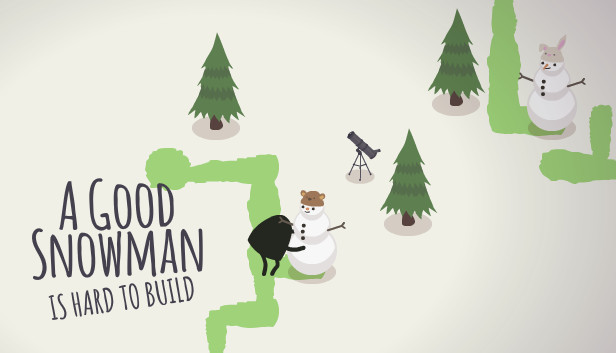 A 2015 small work from Draknek & Friends — Steam store
Where are you with this game?
Press one and the game goes on your shelf. You can see it on your account page.
Reactions (no login)
Anonymous • one of each per visitor per day
Read next
Related reviews
Snakebird
A snakebird grows by eating fruit, and must use its lengthening body to solve grid-based puzzles. A thoughtful sokoban-like about shape and constraint.
Please, Don't Touch Anything
You are covering a colleague's bathroom break in front of an unmarked console with a single red button, and you have been told not to touch anything. A pixel-art point-and-click puzzle by Four Quarters about reading the clues hidden in the posters and the wiring to dig out its 25 endings.
Grim Fandango Remastered
A 3D point-and-click adventure in which you play Manny Calavera, a skeletal travel agent in the Land of the Dead, following a journey and a conspiracy told across four years. Double Fine's rebuild of a film-noir-meets-Day-of-the-Dead world, with repainted textures, dynamic lighting and a re-recorded live score.


