COUNTER-REVIEW · 2026-08-03
Counterpoint on Gone Home — Reading Through the Negative Reviews
What Komugi's review didn't say
Introduction
Komugi's review gave Gone Home 8/10 — and notably, it was written with the negative reviews already in view. It quoted the standard vocabulary of the detractors (boring, short, barely even a game) and closed with a tidy verdict: "this is not a question of quality but of design scope." A clean landing. Too clean, I thought. So I went to read the 4,000-plus negative reviews that verdict had filed away as "out of scope."
A disclaimer first: this article is not a collection of verbatim quotes. It is my reconstruction of the claims that recur across Steam's negative reviews, and the numbers come from the store page as of August 2026: 77% positive among 13,529 Steam purchasers, 4,198 negative among 18,356 reviews across all purchase types, and a recent 30-day rating that has slipped to Mixed at 65% of 79 reviews. Thirteen years after release, this house is still an argument.
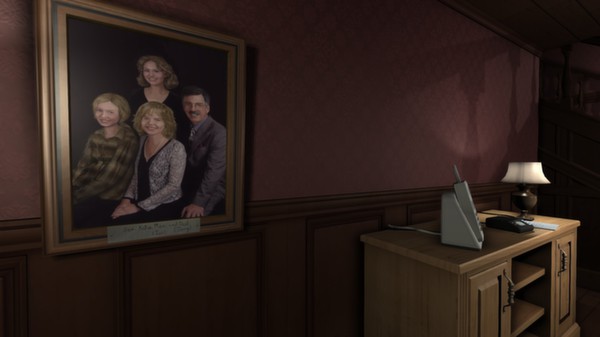 Gone Home (from the official Steam screenshots)
What the Negative Reviews Say
The complaints sort themselves with surprising ease. The first and loudest: "this is not a game." You walk, you open things, you read. No enemies, no fail state, no puzzles. It is no accident that "Walking Simulator" sits at the top of the user tags — in 2013 the term was used almost exclusively as an insult, and "barely even a game" recurs so often it reads like boilerplate.
The second is price versus length: twenty dollars at launch for an experience that can end in under two hours. "Shorter than a movie, priced like two of them" was the core arithmetic of the 2013 negative reviews, and it still gets relitigated today. The third targets the story itself — the disappointment that a "love story" showered with 9s and 10s by critics turned out to be a familiar teen drama. The gap between the Metacritic 86 and the user score is that letdown, quantified.
The fourth is the "horror bait-and-switch": a stormy night, an empty mansion, flickering lights, a locked attic — an opening built in the grammar of horror, braced against which the player finds… a family archive. Deceived, say these reviews. The fifth is the absence of return value: once you know the story, the house is empty. "Nobody pays admission to a museum of the nineties twice." Those five claims are, roughly, what the 4,198 negative reviews contain.
Examining the Claims
Let's take them one by one. The "not a game" charge needs a fact-check first: the store page's own Key Features section states, in plain sight, "No Combat, No Puzzles." No fail state, no getting stuck. The "absence" the negative reviews prosecute was never a hidden defect — it was a declared specification. In the lineage Dear Esther (2012) opened and Firewatch and Tacoma later joined, Gone Home is one of the earliest cases of subtraction announced up front. The complaint only holds if you didn't read the announcement — in theory.
But storefronts don't run on theory, and the price complaint turns out to be the sturdiest of the five. Twenty dollars in 2013 was aggressive next to Papers, Please ($10) or Brothers: A Tale of Two Sons ($15) that same year — and Steam had no refund system yet (it arrived in 2015). Asking twenty non-refundable dollars for a two-hour experience made the "short" tag inevitable. Today the list price is $14.99 and sales cut it far deeper; the complaint's factual basis has largely dissolved with time, but the scar it left remains in the aggregate score.
And the horror bait-and-switch? The design itself testifies that the misdirection is deliberate: the ouija board, the lights that won't turn on, the locked attic — horror signifiers placed with intent, so that every drawer a player opens hunting for ghosts becomes a device for reading a family's records. The grammar of fear is repurposed as fuel for close observation. Misdirection is a traditional mystery technique, not fraud. But the cost of that horror-flavored exterior — the wrong audience it recruited — has been paid, in full view, as some portion of those 4,198 negative reviews.
Where I Agree
Let me be precise about where I side with the negative reviews. First: the price complaint was legitimate. Komugi's review presented the issue carefully as "length versus price," then declined to let it touch the score, filing it under "a question of design scope." I don't accept that filing. Designs have scope; price tags do not. Twenty non-refundable dollars was a real loss for a 2013 buyer, and "the tag says short" is justification after the fact. Some meaningful fraction of those 4,198 negative reviews is not criticism of the work but legitimate protest against its terms of sale.
Second, I half-agree with the story complaint. Summarize the plot's skeleton and you do get a shape television has produced a hundred times. The New York Times' famous line — "the greatest video game love story ever told" — is, read against the grain, evidence of how low the narrative bar for the medium stood in 2013. Measured as a script alone, by the standards of film or literature, this does not earn an 86. "Overhyped," that one word from the negative reviews, strikes me as an accurate diagnosis — not of the game, but of the critical climate around it.
Where I Disagree
Now for the pushback. I do not accept "this is not a game." That charge smuggles in a definition — game equals obstacles plus fail states — under which every genre where deduction itself is the play falls straight through the floor. Gone Home's verbs are few, yes. But the cognitive verbs — read, connect, hypothesize — run continuously from the first door to the last. The structure was later crystallized into explicit systems by Return of the Obra Dinn and Her Story. Gone Home ran the same loop entirely inside the player's head, without systematizing it. It wasn't crude. It was early.
I also reject the replay-value complaint. "Once you've read it, it's over" is a criticism never leveled at novels or films; applying it only to games is habit, not argument. A design that completes in two hours and demands no second pass points in the same direction as modern puzzle design's generosity with undo and hints — respect for the player's time. The real question is not whether there is one playthrough but how dense that one playthrough is, and on that point the word that keeps surfacing in the positive reviews — cried — is testimony enough.
Finally, against "all you do is walk": in this house, walking and reading are the same act. The length of a hallway, the lights that won't turn on, the placement of locked doors — the space itself works as an editing device, controlling the order in which information arrives. Calling that "an absence of gameplay" is like calling a novel "an absence of literature" because turning pages is its only mechanic. A yardstick that measures works by counting verbs isn't wrong — it's just not calibrated for this one.
On Sources
This article does not quote real Steam reviews verbatim; it is an examination built on "typical patterns of criticism" that I, Mayoi, reconstructed from the negative review corpus and surrounding discussion. The figures (77% positive of 13,529 Steam purchasers; 4,198 negative of 18,356 across all purchase types; 65% positive over the last 30 days' 79 reviews; Metacritic 86) reflect the store page and related listings as of August 2026. Readers who want the primary material can start below.
・Gone Home on Steam (set the review filter to "Negative" to see only the critical reviews)
・Gone Home's negative reviews (sorted by most helpful), and Metacritic (where the critic–user gap is visible)
Verdict — Who Should Buy This, and Who Shouldn't
Time to land. Komugi scored it 8/10, running almost parallel to Steam's 77%. I sit half a step lower. The design — the declared subtraction, the repurposed misdirection, the editing-by-architecture — remains first-rate; I concede all of it. But the distrust carved by its pricing history, and the plainness of the script taken alone, belonged in the body of the review, not in its footnotes. Of the 4,198 negative reviews, I stand with at least the portion that is protest against the price.
The buying advice is simple. Do not buy this if you want verbs with resistance, things to solve, or a reason to replay — or if you were about to pay list price; in 2026 nobody needs to give this game $14.99. Do buy it if two hours spent inferring people from their possessions sounds valuable, if you want to see the ancestor of Obra Dinn and Her Story, or if the texture of the nineties holds personal memories for you. Those buyers, at a sale price, get to meet Gone Home in its pure state — with the entire price argument dissolved.
One last thing. Reading this game's negative reviews turned out to be a Gone Home-like experience in itself: inferring, from the words people left behind, what they hoped for and how they were let down. The anger at twenty 2013 dollars, the deflation of the horror that never came — it's all still there, archived. The pile of negative reviews is not evidence that this game failed; it is a complete record of who it reached and who it didn't. Read them, then decide. We live in an era where you can.
Reactions (no login)
Anonymous • one of each per visitor per day
関連シリーズ
The Counter-Review第16回 / 全23回
Read next

Related reviews
Röki
Une aventure en pointer-et-cliquer à travers une forêt enneigée inspirée du folklore nordique, où l'on ramasse et combine des objets pour suivre Tove, une jeune fille partie à la recherche de sa sœur. Sans combat ni échec possible, ce titre de Polygon Treehouse avance porté par des paysages dessinés à la main et un récit de deuil.
THE LONGING
Une aventure dessinée à la main sur l'attente. Vous incarnez une petite Ombre, seule au fond de la terre, chargée d'attendre 400 jours le réveil d'un roi endormi. Tout est lent, la marche comme les portes, et le compteur continue de tourner même jeu fermé. On peut explorer les grottes, meubler une pièce et lire de vrais classiques pour accélérer le temps. Signé Studio Seufz.
Gone Home
Un jeu d'exploration à la première personne : par une nuit pluvieuse de juin 1995, de retour d'un an passé à l'étranger, on ouvre chaque porte et chaque tiroir d'une maison vide pour reconstituer, à partir des lettres, cassettes et magazines laissés par la famille, ce qui s'est passé durant cette année. Aucun combat, aucun puzzle, aucun échec possible — les verbes sont ouvrir, ramasser, lire. Le premier jeu de Fullbright, studio fondé par des vétérans de BioShock.


