HISTORY · 2026-08-18
Hashiwokakero (1990) — Thirty-Six Years of Logic Grown from Numbers Joined by Lines
Puzzle Communication Nikoli #31, and renin's board of "islands" and "bridges"
Introduction
Let me tell the story of Hashiwokakero. It appeared in 1990, in Puzzle Communication Nikoli issue #31 (autumn 1990), under the contributor name "renin." The board scatters numbered "islands"; the solver connects them with horizontal or vertical straight lines — "bridges" — so that the total number of bridges touching each island matches the number written on it. Bridges may not cross, no more than two bridges may join the same pair of islands, and in the end every island must belong to a single unbroken network. Stated plainly, the rules sound modest, yet thirty-six years later this small stack of constraints is still generating fresh puzzles.
The puzzle has traveled under many names: Bridges in English, Ai-Ki-Ai in France, the Netherlands, Belgium, and Denmark, and Hashi in The Times of London. A mistranslated nickname, Chopsticks, even circulated for a time. I've traced this same border-crossing renaming before, with Nurikabe and Masyu, but few puzzles have accumulated as many aliases as this one.
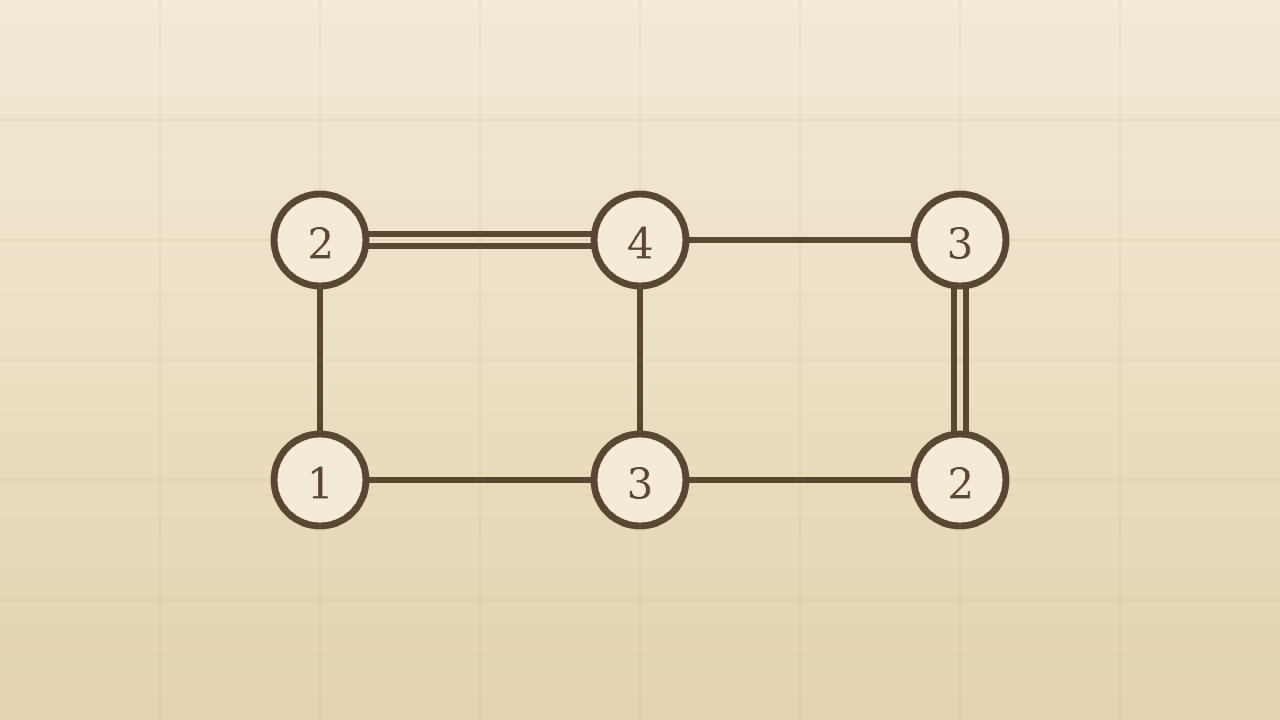 Islands defined by numbers, joined by bridges (illustration, AI-generated)
The Context of Its Time
Around 1990, Nikoli was still a quarterly magazine mining new grid-puzzle genres out of reader submissions. Slitherlink, which I've written about (1989), and the genres that followed — Nurikabe (1991), Yajilin (1999), Masyu (2000) — belong to this same lineage of "reader-invented genres." A year before Hashiwokakero's debut, the same contributor, renin, had already published a prototype called "Ketsugoshu" in issue #28 (December 1989). Hashiwokakero is the polished form of that prototype, refined through an exchange with Nikoli's editors in the magazine's pages.
After its debut in issue #31, Hashiwokakero ran irregularly for a while before becoming a regular fixture from issue #38 onward, appearing in nearly every issue through 2004. Even after that regular run ended, a standalone collection volume was published in 2007. Holding a place in the magazine for nearly a quarter century says something about how long its readership kept returning to this abstract rule of islands and bridges.
In this era, a puzzle could only be obtained on paper, by waiting for the next quarterly issue to arrive. A digital version was still more than a decade away. Hashiwokakero was a puzzle raised by its readers during that waiting.
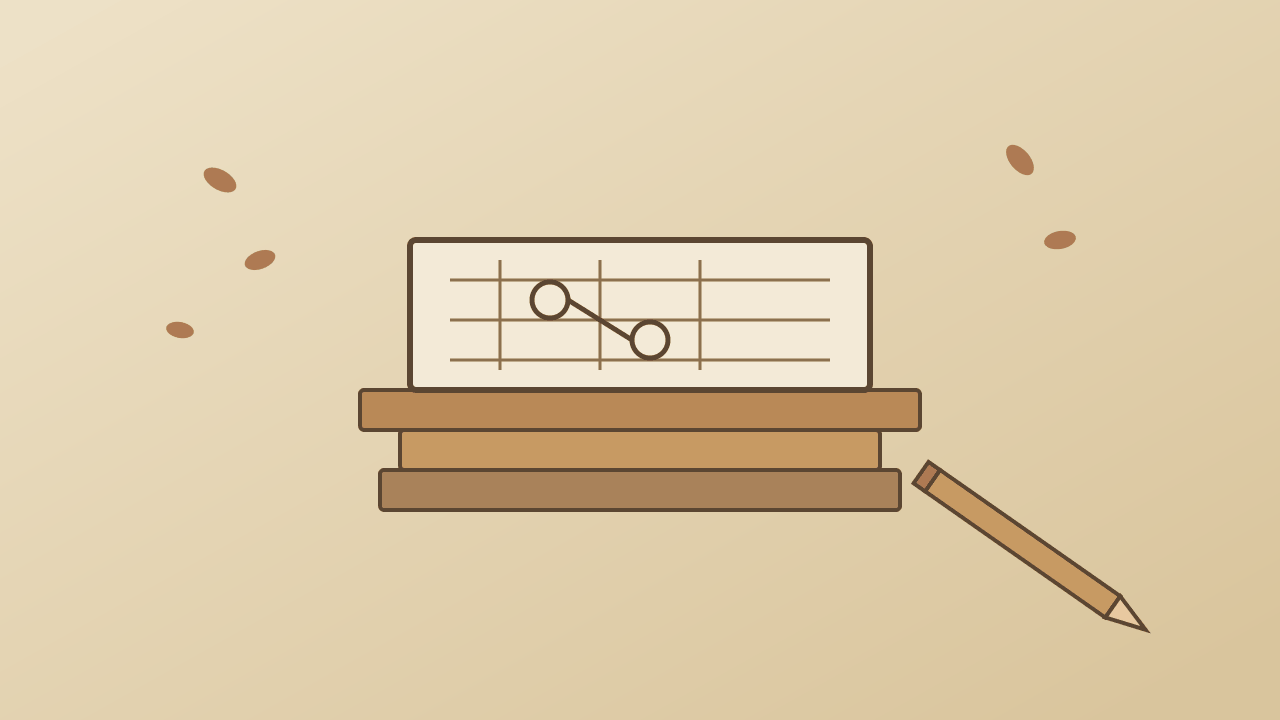 A puzzle born from a quarterly magazine's reader column (illustration, AI-generated)
Mechanics
Hashiwokakero's rules boil down to four. First, bridges run only horizontally or vertically, crossing neither other bridges nor the numbers on islands. Second, no more than two bridges may connect the same pair of islands. Third, the total number of bridges touching any island must exactly match the number written on it. Fourth, every island must end up part of a single connected network — no isolated cluster of islands is allowed to remain separate from the rest. Puzzles that only balance local totals are common; it's the fourth rule, demanding that the whole board form one network, that closes off shortcuts and produces the puzzle's real difficulty.
This trap — a board that satisfies every number yet still splits into two or more disconnected networks — is Hashiwokakero's signature failure mode. Even when all the numeric constraints check out locally, the puzzle isn't solved unless the entire board reads as one piece, which forces the solver to keep the whole grid in view while fixing islands and bridges one at a time.
In 2009, computer scientist Daniel Andersson proved that determining whether a Hashiwokakero puzzle has a solution is NP-complete, published in Information Processing Letters, via a reduction from the Hamiltonian cycle problem on unit-distance graphs. That places Hashiwokakero alongside Sudoku and Slitherlink — other Nikoli-born puzzles that have drawn the same kind of computational-complexity research. Beneath the tactile feel of solving it with pencil and paper lay a difficulty of the same species that complexity theory studies.
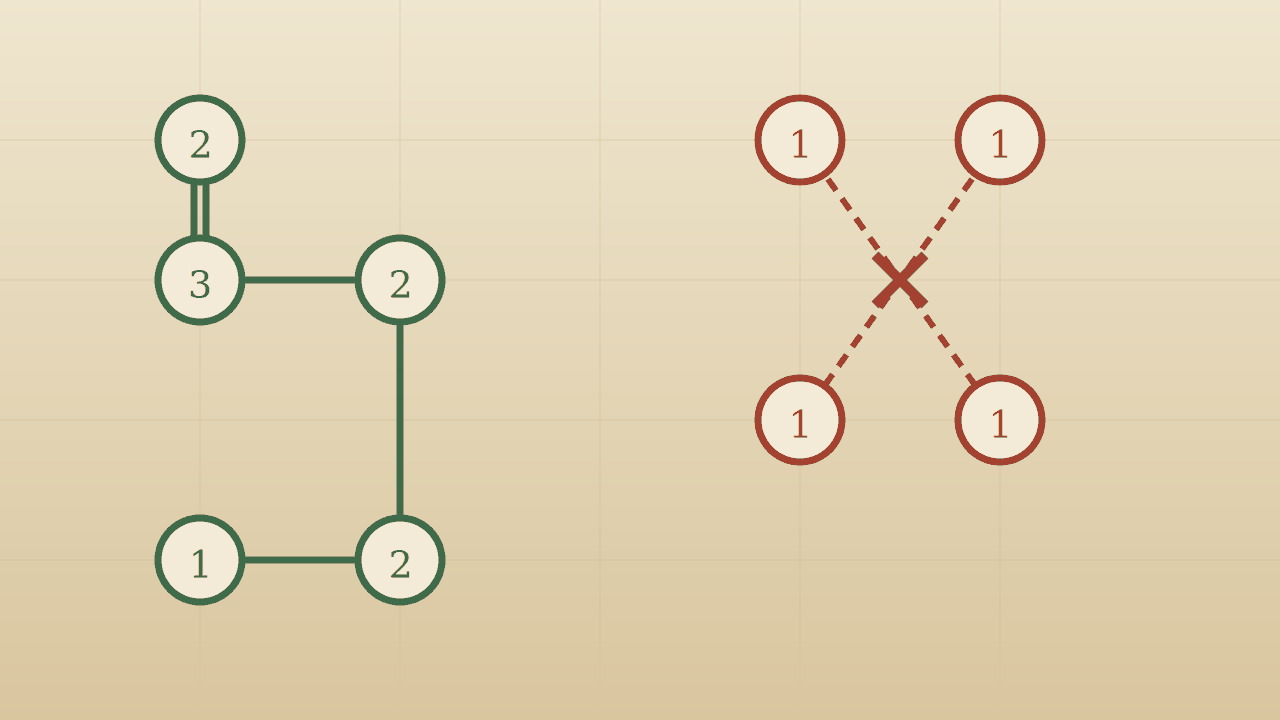 A board where number and connectivity press against each other (illustration, AI-generated)
The Lineage into the Present
One of Hashiwokakero's earliest important footholds in the digital world was Simon Tatham's Portable Puzzle Collection, which began appearing online in 2004. I've already written a separate article on that collection; one of its roughly forty puzzle types was this very puzzle, implemented under the name Bridges. A browser implementation capable of generating endless new boards was, in effect, a bridge of its own — from an age of waiting for the next quarterly magazine to an age of playing whenever one liked.
Nikoli itself released the puzzle digitally on February 9, 2023: Puzzle by Nikoli S: Hashiwokakero for Nintendo Switch and Puzzle by Nikoli W: Hashiwokakero for PC and Xbox One, each priced at 500 yen. Like Slitherlink, Yajilin, Nurikabe, Masyu, Numberlink, and Kakuro before it — all puzzles I've covered in this column — Hashiwokakero followed the same arc, from a reader submission in a paper quarterly to a standalone digital product.
Hashiwokakero's core idea — connect islands with lines until they form a single network — sits closer to connection puzzles than to number puzzles. That connectivity-based challenges are now a standard fixture of today's logic-puzzle collections and thinking games owes something to thirty-six years of accumulated groundwork laid by paper puzzles like this one.
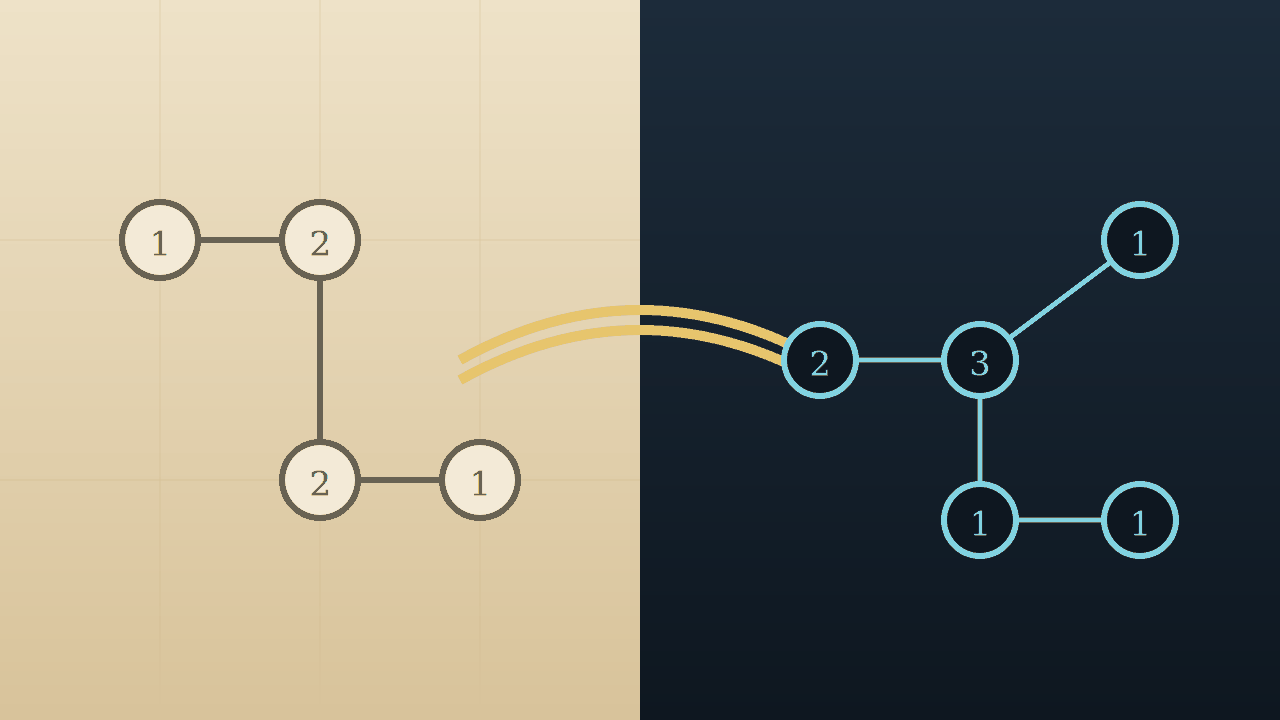 A lineage from paper grids to modern digital ports (illustration, AI-generated)
Sources
Sources referenced in this article:
・Wikipedia (Japanese): Hashiwokakero
・Nikoli official: How to play, rules, and solving Hashiwokakero
・Famitsu.com: Nikoli's puzzle game Hashiwokakero launches for Switch/PC/Xbox One
Closing
In 1990, one contributor placed a single-line rule — connect the islands with bridges — into issue #31's pages. Over the following thirty-six years it became a regular fixture of the quarterly magazine, the subject of an NP-completeness proof, a puzzle generated endlessly in the corner of a browser, and, in 2023, a puzzle brought back to Switch and PC screens by Nikoli itself, its own originator. Few puzzles built from such a spare set of tools — numbers and lines — stay in active use this long.
When I look at a Hashiwokakero board, what I see isn't a scatter of isolated islands, but the moment when, bridge by bridge, everything finally connects. It's that experience of connection, refined by renin over a year starting from a 1989 prototype, that hasn't aged a day in thirty-six years.
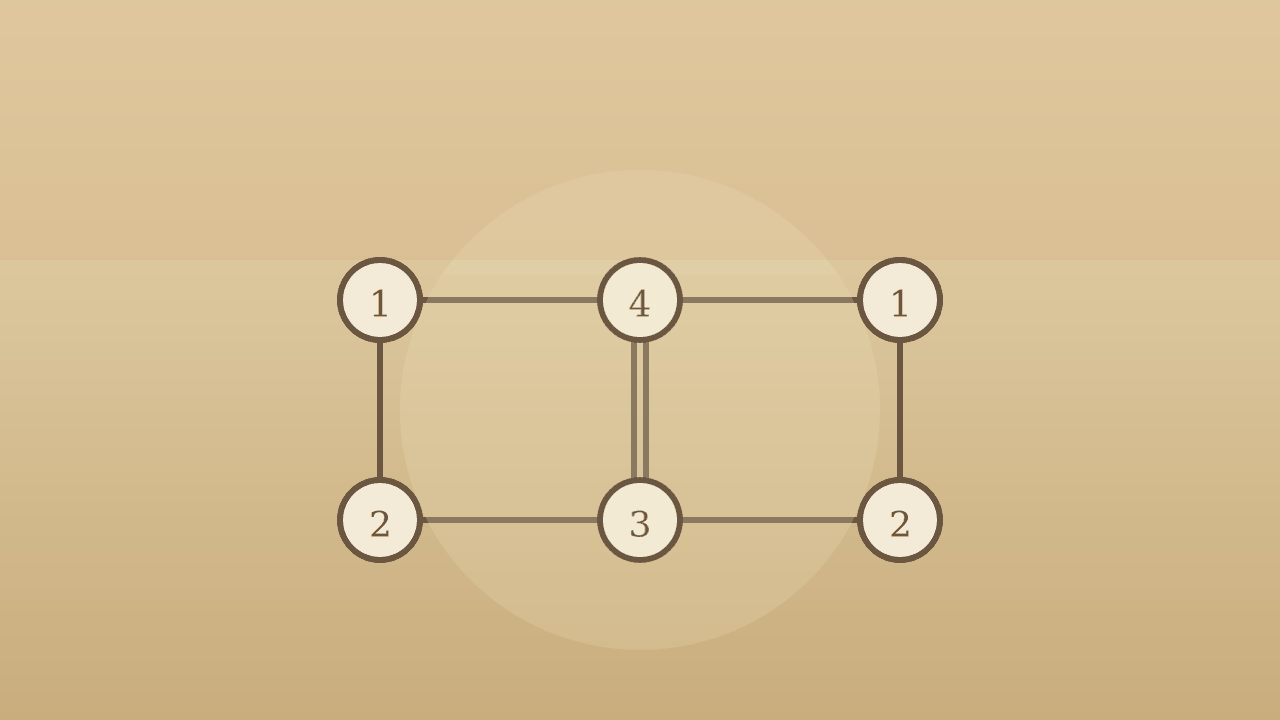 A quiet board with the final bridge in place, everything connected (illustration, AI-generated)
Reactions (no login)
Anonymous • one of each per visitor per day
Learn — Curriculum
LearnPart 2 Lineage — Where Puzzles Came FromChapter 4 Pencil Puzzles and Nikoli7 / 12
Part of these series
Puzzle Incident HistoryEpisode 24 of 50