REVIEW · 2014-03-17
LYNE
Connect, don't cross, fill the board
First Impressions
The first thing you notice reading LYNE's Steam reviews is how quiet the praise is. 'Deceptively simple,' 'relaxing,' 'chill,' 'calming' — the top helpful positive reviews reach for adjectives you rarely see attached to a puzzle game. Everyone says the rules click in seconds. With 7,172 all-language reviews at 95% positive, and 3,539 English ones at the same 95% (both Overwhelmingly Positive, snapshot 2026-07-23), that calm is very thick.
What interests me as a designer is that 'clicks in seconds' testimony itself. Connect same-coloured shapes, fill the board, never cross a line — the game folds almost everything into one verb, connect. In Puzzlebyrinth's vocabulary this is verb subtraction taken to an extreme, with observation resolution maxed out from the very first tile. Players call it simple not because the teaching is clever, but because there is barely anything to teach.
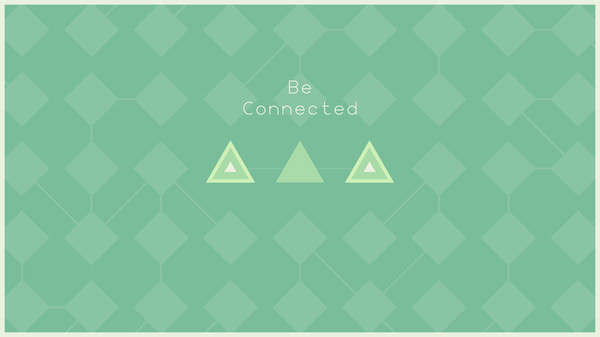 LYNE library hero image — Steam store key art
Putting the Mechanics into Words
Cross-referencing the helpful reviews with explainer pieces, the mechanics reconstruct cleanly. Same-coloured shapes must be joined by a single line; that line has to cover every tile on the board and may never cross itself. Each colour has a start and an end, and you can leave one half-drawn to work another. The device reviewers keep naming as the difficulty knob is the octagonal block: the one tile a line may cross, and only as many times as the number printed on it.
The elegant part is that this octagon is the single exception cut into the one grammar rule, 'lines don't cross.' Bowker doesn't add verbs; he opens exactly one kind of hole in an existing prohibition, and deciding when and how often to thread it detonates a combinatorial explosion. Where Understand makes you deduce the rules and Hexcells Infinite stacks numeric implications, LYNE builds depth from a single tension: lines fighting over space.
 LYNE gameplay: joining same-coloured shapes without crossing — Steam store screenshot
Place in the Lineage
Reviewers place LYNE inside a lineage rather than on its own. GAMERamble calls it 'Numberlink-style' logic; the store bundles it with Hook and SiNKR. For most players it lives on the shelf marked 'minimalist / ambient puzzle of the 2010s.'
Fair enough, but the design's real singularity is its delivery. On top of 650 handcrafted puzzles, an infinite stream of procedurally generated dailies arrives, and reviewers note the difficulty steps up by weekday (Mondays easy, Fridays hardest). How you blend handcrafted and generated content is exactly the question I raised in handcrafted vs procedural levels. Where a contemporary like SquareCells bet on finite authorship, LYNE bet on time — a slightly different board every day — and reviewers still logging dailies years later suggest the bet paid off.
 LYNE main store capsule — Steam store key art
The Texture of Difficulty
Difficulty is where the pool splits. One camp loves that there is no timer and no penalty, exactly the 'calms your soul' pitch. The other reports late boards hard enough to make you 'swear at the monitor' — even glowing reviews half-admit it — and Cult of Mac flatly called it 'a stressful game in disguise.' There is a forum thread literally titled 'this game is too hard!' The recurring negative note is that long sessions turn repetitive and the late game drifts toward trial-and-error.
As design, the split is no contradiction. The single choice 'no hints, no punishment' reads as a safety net to one player and as missing guidance to another. I'd sort the walls into three kinds: pure combinatorial scale (more tiles, more colours), the local puzzle of rationing octagon crossings, and a different beast — the monotony that only sets in over long stretches, the standing risk of generated content. So this is not good-versus-bad but a question of range: whom the game is for.
 LYNE portrait library poster — Steam store key art
Sources
This piece was written from the Steam store page and its attached user reviews and discussion boards as of 2026-07-23. Individual reviews are paraphrased, not quoted.
・Steam: LYNE (7,172 all-language reviews at 95% positive; 3,539 English at 95%; both Overwhelmingly Positive; Recent: Very Positive)
・Read helpful-sorted positive reviews (e.g. a detailed True Blue Reviews write-up), negative-leaning voices, and the 'this game is too hard!' discussion thread.
・Critic context from GAMERamble, Esports Edition, and Cult of Mac, which called it 'a stressful game in disguise.'
Closing
Taken together, LYNE's reviews are unified by a quiet intensity. Steam sits at 95% positive; from a design standpoint I land at 8.2. The gap isn't disagreement — the trick of building depth from one exception is lovely, but I've marked down the way late difficulty leans on sheer scale, and the fact that generated content and monotony share a border.
Between HowLongToBeat and the reviews, clearing the 650 built-in puzzles runs about 8-10 hours, with the dailies effectively endless after that. At roughly three dollars, the 'value per content' everyone cites isn't hype. It's for people who want to quietly fill a board with lines, not those chasing story or spectacle — the same readers who, like Sokobond fans, prize doing a lot with very few rules.
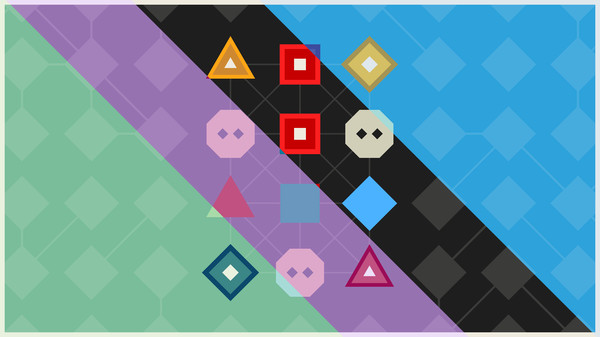 LYNE store header image — Steam store key art
Where are you with this game?
Press one and the game goes on your shelf. You can see it on your account page.
Reactions (no login)
Anonymous • one of each per visitor per day
Read next
Related reviews
Hexcells Infinite
A Minesweeper-lineage logic puzzle: find the hidden blue cells on a hex grid using only adjacency counts, line hints and consecutive/non-consecutive markers — pure deduction, no guessing. Matthew Brown's third entry layers an endless puzzle generator over 36 hand-made boards.
Lumino City
A hand-built point-and-click adventure whose entire city was constructed from paper and card, then photographed to become the screen. You climb a tower-like town looking for your grandfather, fixing windmills, gears and fuse boxes to bring the power back. Made by State of Play, the British studio behind Lume.
Broken Age
A village girl chosen as a sacrifice and a boy aboard a spaceship run by an overprotective computer. Switch freely between their two stories, combining objects to solve puzzles, in a hand-painted point-and-click adventure — built in two acts by Tim Schafer's Double Fine on crowdfunded money.


