REVIEW · 2023-10-24
Scene Investigators
A deduction exam with no answer key — where 948 reviews split
First Impressions
Scene Investigators launched on 24 October 2023, an observation-deduction game developed and published by EQ Studios — the same studio as The Painscreek Killings. You sit a licensing exam for investigators: walk reconstructed crime scenes in first person, study the evidence, and type answers into a terminal in your own words. No hints, no confirmation of right or wrong. The store description calls this the 70/30 principle — thirty percent of the evidence is missing by design, and you are to bridge the gap with calculated assumptions.
As of the 2026-08-14 snapshot the Steam tally stands at 74% of 948 reviews, labelled Mostly Positive, with the last 30 days at 83% of 12. The Metacritic score shown on the store page is 76 from six critics, with a 7.2 user score — the professionals rate it slightly above the general pool. This is not a game that sank; it is a game that split, which for a meta-review is the more interesting shape.
Sort the reviews by helpfulness and the split becomes a diagram: recommended and not-recommended alternate near the top, and both camps reach for the same vocabulary — no hand-holding, leaps of logic, guessing. The same words describe the same design, as praise on one side and as indictment on the other. This piece reads the gap between the shared vocabulary and the divided verdicts.
 Key art of Scene Investigators — Steam store key art
Putting the Mechanics into Words
What the helpful positive reviews keep returning to is one claim: this game lets you do actual detective work. One praises it for refusing to spoon-feed information; another calls the misdirection artfully placed, with threads deliberately strung across multiple scenes. Reports of co-op deduction with a friend, and of handwritten paper notes deepening the immersion, recur across languages.
In this site's vocabulary the game has two verbs: look, and write. No inventory, no dialogue, barely any routing. The load-bearing choice is the answer format. Return of the Obra Dinn had you lock identity, fate and culprit from menus; The Case of the Golden Idol gave you a word bank. This game removes even the word bank and has you type free text into a blank — subtracting the scaffolding of options itself, and testing your resolution of observation down to the choice of words.
The negative side names the same structure differently. Typing is called annoying; synonymous phrasings get rejected; character names trip the parser. The most common complaint targets the questions themselves — they ask things unrelated to what actually happened. And because there is no right/wrong feedback, a miss cannot be diagnosed: bad observation, or a misread question? At that point the experience slides from deduction into guesswork. The negative reviews are, in effect, a precise write-up of the side effects of free-text subtraction.
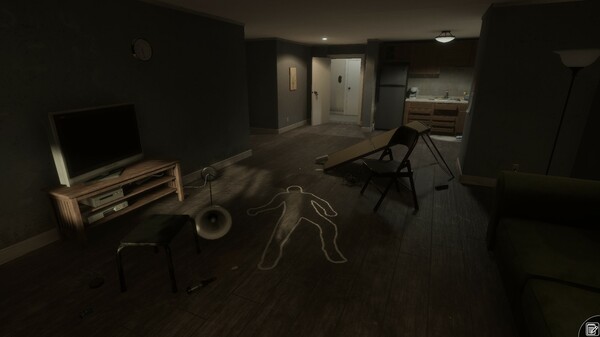 In-game view of Scene Investigators — Steam store screenshot
The Texture of Difficulty
At the centre of the split sits the developer's own store text: the 70/30 principle. Thirty percent of the evidence is gone; bridge it with calculated assumptions. The positive camp buys exactly this gap and calls the game hardcore, honest deduction. The negative camp calls the same gap unreasonable leaps of logic and guesses with no guarantee. There is no mismatch between the developer's description and the players' experience — the declared gap itself is what sorts reviewers into those who will jump and those who won't.
Sort the reviews by the kind of difficulty they describe and three layers appear: getting stuck because you missed something (observation), the strain of connecting evidence to evidence (inference), and the struggle to hit the wording and granularity a question expects (the exam layer). The positive camp is proud of the first two; the negative camp's complaints concentrate almost entirely on the third. The dispute is not whether the game is too hard, but whether its difficulty lives inside the design or outside it.
Both camps agree the chapters are uneven. The Missing, the disappearance case, is singled out as the high point even in negative reviews, while later chapters draw the charge of demanding over-extrapolation from supporters too. Hours-on-record in the reviews scatter roughly from 4 to 10 — where you get stuck becomes how long the game is. I rate the difficulty 4 (Hard): there is no hint system, and every impasse is yours to see your way out of.
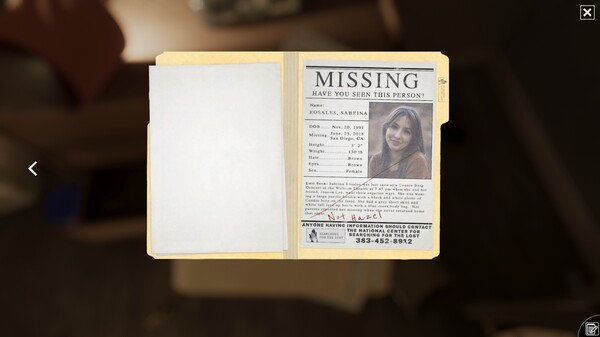 Image shown under the “Calculated Assumptions – 70/30 Principle” heading of the Steam store description — Steam store image
Place in the Lineage
The baseline every comparison uses is the studio's own The Painscreek Killings. Negative reviews reach for it almost as a formula: the earlier game let you walk, unlock and read until the story finally resolved into an image; this one removed the story's closure along with the thirty percent of evidence — answer every question correctly and you are still not told what happened. This site has often argued that subtraction creates flavour; the negative camp's reading is that here it subtracts the narrative reward as well.
Placed in the lineage, the game's position is defined by the absence of an answer key. Obra Dinn's three-point locks click shut and tell you; Golden Idol's vocabulary slots push back with a fit; even Unheard grades you at the end of a chapter. This game never plays that confirmation sound. Withholding verification across the entire system is rare even in this genre, and it is the biggest bet on the table.
Professional critics take the bet more warmly than the user pool. Richard Hoover at Adventure Game Hotspot scored it 85%, praising mysteries that pull no punches and the way you keep theorizing about the facts away from the game. Metacritic sits at 76 against Steam's 74% and a 7.2 user score. Readers who grade within the genre's context reward the ambition; buyers who grade with price, input friction and bugs included dock points — the offset between the two is itself a map of who this design is for.
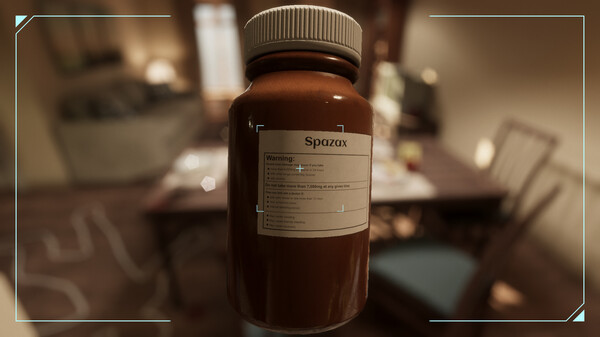 Image shown under the “Telling Stories Through the Environment” heading of the Steam store description — Steam store image
Sources
This piece was written from the Steam user reviews as they stood on 2026-08-14.
· Steam: Scene Investigators (Overall 74% positive of 948 reviews, labelled Mostly Positive; last 30 days at 83% of 12)
· Read via WebFetch: roughly 25 reviews, recommended and not recommended, from the top three pages sorted by all-time helpfulness, plus about 8 of the most recent.
· Professional coverage: Adventure Game Hotspot's review (85%, Richard Hoover); Metacritic consulted for the 76 metascore (6 critics) and 7.2 user score.
· Tallies were cross-checked and asset URLs verified against SteamDB and Steambase.
Closing
The range is clear. If you want to own your reasoning, welcome an exam with no confirm button, and enjoy pressing handwritten hypotheses against a friend's, this lands far harder than 74% of 948 suggests. If you need the reveal, the feedback, the story closed, start from The Painscreek Killings or Obra Dinn instead — this game never had that reader in mind.
Against Steam's overall 74% I score it 7.0. Removing the answer key from the whole system is a genuine attempt to push this genre's design one step forward, and I buy it. But the wording-matching and text-recognition friction — difficulty outside the design — measurably dilutes the purity of that bet. The recent 83% over the last 30 days reads like the audience narrowing to the readers the exam was written for. For anyone who treats filling in the missing thirty percent as a privilege rather than a burden, this is their game.
 Key art of Scene Investigators — Steam store key art
Where are you with this game?
Press one and the game goes on your shelf. You can see it on your account page.
Reactions (no login)
Anonymous • one of each per visitor per day
Read next

Related reviews
The Painscreek Killings
A first-person detective game in which you play a journalist combing the abandoned town of Painscreek — hunting keys, notes and diaries to solve a cold murder case. No quest markers, no hint system; your own notebook is the only tool. Made and published in 2017 by EQ Studios.
The Rise of the Golden Idol
A 2D deduction adventure where you click through frozen crime scenes and drop harvested words into blanks to reconstruct who did what, why, and in what order. A standalone sequel to The Case of the Golden Idol, set across twenty linked cases in the 1970s.
The Roottrees are Dead
A first-person deduction puzzle: scour the early, dial-up-era Internet plus books and articles to establish who is truly blood-related to a crashed dynasty, filling in the blanks of their family tree. Evil Trout Inc.'s reworking of a free Global Game Jam browser game.


