HISTORY · 2026-09-16
Peg Solitaire (1697) — The Day a Game With No Inventor Became the Math of Proving "Unsolvable"
How a courtly jumping-elimination puzzle acquired a proof tool called the pagoda function, and a handheld puzzle game, 285 years later
Introduction — Reducing Thirty-One Pegs to One
This is a game whose inventor's name has not come down to us. Pegs stand in a cross-shaped arrangement of 33 (or 37) holes. You jump one peg over an adjacent peg into an empty hole beyond it, removing the peg you jumped. A peg with no empty hole to land in cannot move. Win by reducing the board to a single peg.
That is the entire rule. Yet without reading several moves ahead from the very first jump, a peg strands itself in a corner and the board locks up. I want to treat this game as an unusual case in puzzle history: it has been played for nearly 330 years without any named author.
More than that, this board passed through the hands of mathematicians and, along the way, produced a tool for proving why certain arrangements cannot be solved at all. A simple rule of jumping and removing turned into both a proof technique and a handheld puzzle game.
 Impression of pegs on a cross-shaped board (illustration, AI-generated)
Context — The Court of Louis XIV, and a Vanished Prisoner's Legend
The earliest record of this game dates to 1697. The August issue of the French court periodical Mercure Galant described the board's shape and rules, along with sample problems. This is the oldest surviving reference in print, set during the reign of Louis XIV, at the height of Versailles court culture.
In 1707, an engraving by Claude-Auguste Berey depicted Anne de Rohan-Chabot, Princesse de Soubise, playing the game. It suggests the pastime was already established among court women as a social diversion.
The widely repeated tale that a prisoner in the Bastille invented it out of boredom deserves caution. Puzzle historian John Beasley traced the story to its earliest known source and found it in an 1801 book by English antiquarian Joseph Strutt — over a century after the supposed event, and English rather than French. Beasley's verdict: without an earlier French source, "anyone who repeats this tale... should regard himself as perpetuating myth rather than history."
 Impression of a 17th-century French court hall (illustration, AI-generated)
Mechanics — Two Boards Born From One Rule of Jumping and Removing
The board pictured in the 1697 record has 37 holes and is known as the French board, its outline close to an octagon with clipped corners. France still plays this 37-hole board as its standard today.
The familiar 33-hole cross-shaped "English" board appears in the written record later. German scholar Johann Christian Wiegleb's 1779 book Unterricht in der natürlichen Magie documents this 33-hole layout — a trace of the French pastime crossing borders and changing shape as it settled elsewhere.
The rule is only jumping and removing, yet finding a solution is far from trivial. For the classic problem — start with only the center hole empty, end with a single peg back in the center — Englishman Ernest Bergholt found an 18-move solution in 1912. That this could not be done in fewer moves was proven more than half a century later, in 1964, by puzzle historian John Beasley himself.
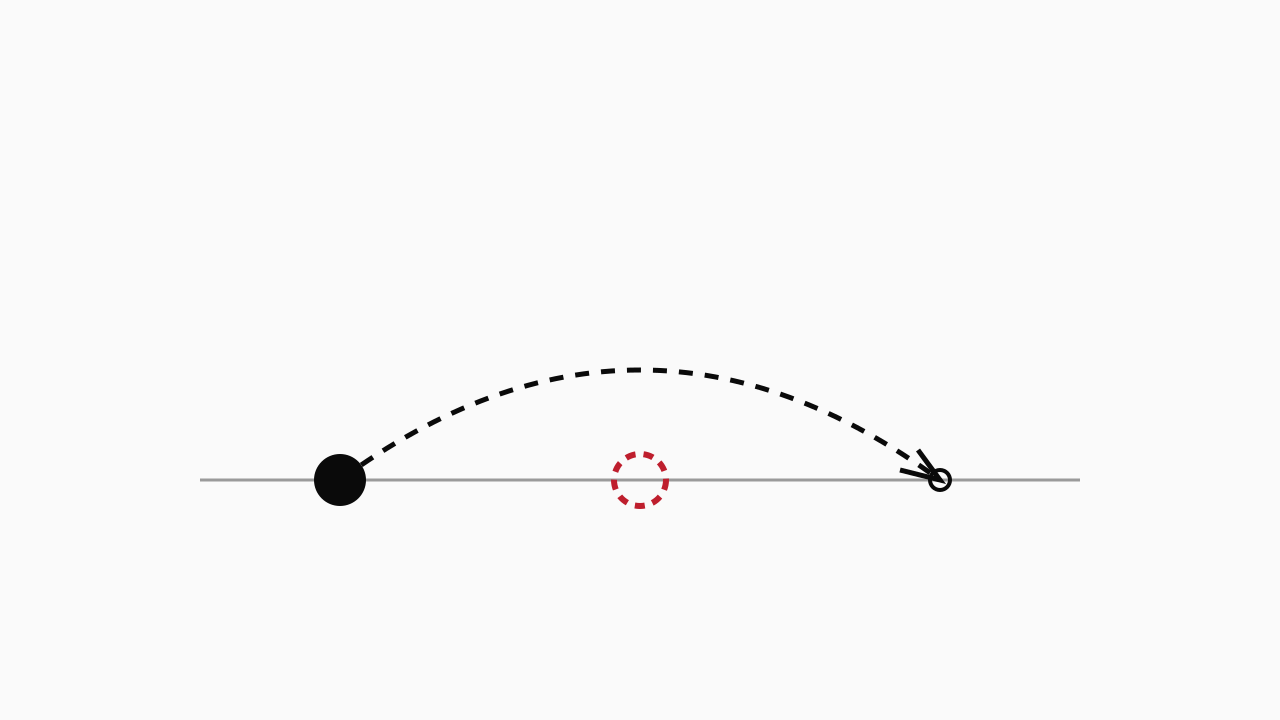 Impression of pegs jumping and vanishing across the board (illustration, AI-generated)
Legacy — From the Pagoda Function to a Professor Layton Puzzle
In 1982, mathematicians Elwyn Berlekamp, John Conway, and Richard Guy shone a serious mathematical light on Peg Solitaire in Winning Ways for Your Mathematical Plays. Their "pagoda function" assigns weights across the board, letting you prove certain positions are unreachable in principle, without exhaustively searching every possible move. It was the first time "solvable or not" could be shown without brute force.
This mathematical analysis was later compiled into John Beasley's 1985 book The Ins and Outs of Peg Solitaire (Oxford University Press), long the standard reference on the game's history. Beasley himself later admitted that parts of his own historical account had been "quite misguided." I find something fitting in a historian who keeps correcting his own earlier work — that, too, is a kind of lineage.
One of the last major stages this board appeared on was Professor Layton and the Diabolical Box in 2007. This Nintendo DS puzzle game includes six puzzles built on the English 33-hole board, the final one being the traditional single-peg-in-the-center configuration. This site earlier covered the preceding title, Professor Layton and the Curious Village (2007). A courtly game from 1697 had been carried, almost unchanged, into a handheld console 310 years later.
Proving on paper whether a board can be solved, before anyone actually plays it — the idea the pagoda function opened up echoes distantly in how puzzle games are designed today. The now-ordinary practice of checking, by program, that a generated board is guaranteed solvable before release: I read its first sprout as already present on this board, more than three centuries ago.
 Impression of a thread linking the old board to a modern screen (illustration, AI-generated)
Sources
Sources consulted for this article:
・Wikipedia (Japanese): Peg solitaire
・Wikipedia: Anne de Rohan-Chabot
・John Beasley: An Update to the History of Peg Solitaire
・Wikipedia: Winning Ways for Your Mathematical Plays
Closing — An Invention With No Inventor
No record tells us who invented Peg Solitaire. What survives is a year — 1697 — and a legend built up around it, one that seems to have been added later by someone filling in a good story out of boredom, more likely than the prisoner it claims.
And yet the rule itself has barely changed in nearly 330 years of play. Jump, remove, and leave exactly one behind. I think it's this plainness that let a nameless invention outlive its inventor.
 Impression of a board with just one peg remaining (illustration, AI-generated)
Reactions (no login)
Anonymous • one of each per visitor per day
関連シリーズ
Puzzle Incident History第38回 / 全40回