HISTORY · 2026-09-09
Himitsu-bako (1894) — The Souvenir That Never Explains How to Open It
When did a security mechanism become a game? A craftsman whose name is spelled two different ways, depending on the source
Introduction — A Box That Never Explains Itself
In 1894, in a hot-spring town in Hakone, a wooden box took its finished form. Its surface was covered in geometric marquetry — pieces of differently colored wood fitted together — and the lid would only open after its panels were slid in a fixed sequence.
No instructions came with it. Whoever received the box had only their own hands to rely on in finding the correct order. Its name was himitsu-bako — the secret box.
Today we call this same kind of play an "escape room" or a "puzzle hunt." But that same grammar was already carved into this box 132 years ago. I want to reread it not merely as a souvenir, but as a blueprint for the play of discovering a hidden procedure.
 Impression of a secret box hiding its mechanism beneath marquetry (illustration, AI-generated)
Context — A Craft Raised by a Post Town on the Tōkaidō
Yosegi-zaiku marquetry itself predates the secret box by nearly half a century. Ishikawa Nihei, a craftsman from Hatajuku, is said to have devised the technique of fitting together differently colored woods into trays and boxes during the Kōka era (1845–1848).
Hakone was both a post town on the Tōkaidō, the road connecting Edo and Kyoto, and a hot-spring resort. Travelers stopped here along their journey and bought souvenirs. Yosegi-zaiku grew to meet that demand.
By the time the secret box appeared in Meiji 27 (1894), yosegi-zaiku was already an established souvenir craft. In an era when a plain wooden box was no longer novel, one more move was added: making it hard to open. That, as I read it, is what the secret box was.
 Impression of the Tōkaidō road through Hakone (illustration, AI-generated)
Mechanics — When the Pattern Hides the Seam
The mechanism is simple in principle. Panels on the surface or sides must slide in a fixed order, or the box will not open. Get one move wrong, and you start over from the beginning.
What's clever is that the marquetry pattern doubles as a disguise. The geometric design covering the surface also hides the seams between the sliding panels. Decoration and security worked as one, within a single technique.
Secret boxes made in Hakone today are still classified by how many moves it takes to open them, and sold with labels like "4-move mechanism" or "12-move mechanism" — the more moves, the higher the price. Marking difficulty with a number is an idea that hasn't changed, even now.
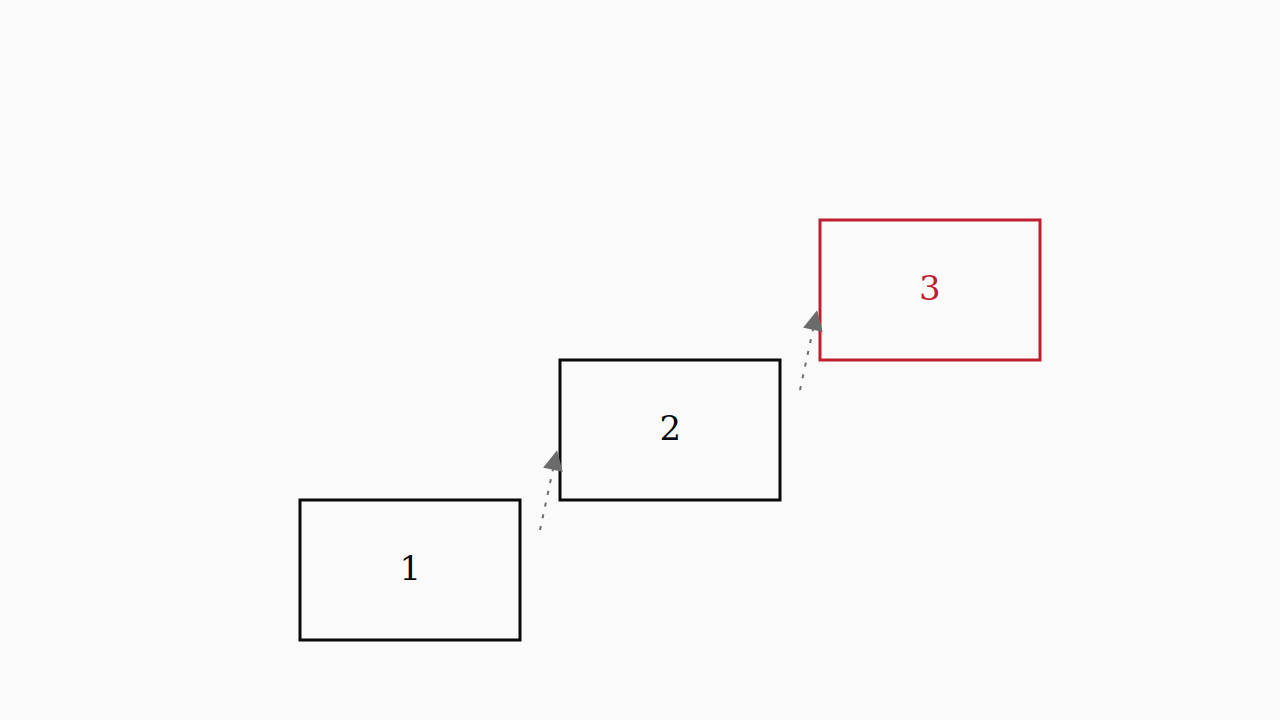 Impression of a step-by-step opening sequence (illustration, AI-generated)
Legacy — A Grammar of Discovery Without Instructions
During the Taishō era (1912–1926), secret boxes were exported to the West and became known as "Japan's mysterious box." The number of craftsmen at home kept shrinking, but the tradition never died out.
In 1981, Akio Kamei began making a new kind of secret box under the name "Yasube," freeing the box from its fixed rectangular shape. In 1999, craftsmen in Odawara formed the Karakuri Creation Group, describing their own work as carrying forward the charm of the secret box while pushing it toward new forms.
The grammar of "finding a hidden, correct sequence on your own, with no instructions" is still alive today, under different names. Collectors abroad call this category of puzzle a "sequential discovery puzzle," and count the secret box among its roots. I read this site's own earlier pieces on Crimson Room and the Real Escape Game as the same grammar carried over into screens and physical rooms.
That said, I have not yet found a record of either developer naming the secret box as a direct source. So I won't claim causation. I'll only say this: a modern escape-room game like Escape Simulator, released on Steam in 2021, stands on the same grammar.
 Impression of an old mechanism carried forward into new forms (illustration, AI-generated)
Sources
Sources referenced in this article:
・Wikipedia (Japanese): Himitsu-bako
・Wikipedia (Japanese): Yosegi-zaiku
・Hakone Town Tourist Association, YOSEGIZAIKU: History of Hakone Marquetry
・Hakone Maruyama Bussan (marquetry specialty shop): What Is a Himitsu-bako
・Karakuri Creation Group: About Karakuri Boxes
・Kubiya Games: The History of the Japanese Puzzle Box
Closing — A Skeleton Built to Be Solved Without Teaching
What the secret box demonstrated is this: play needs no written explanation. Move your hands, watch what changes, and remember what failed. That alone lets a person work out a mechanism no one taught them.
132 years ago, a craftsman in Hakone sealed that principle into a single wooden box. Today it lives on, in different forms, inside escape games on a screen and inside metal puzzles alike. Change the name, change the material — the skeleton of play doesn't disappear so easily. That is the history I read out of this one box.
 Impression of a closed box, waiting to be solved (illustration, AI-generated)
Reactions (no login)
Anonymous • one of each per visitor per day
関連シリーズ
Puzzle Incident History第33回 / 全40回
Read next
Related reviews
The 7th Guest: 25th Anniversary Edition
Ein Puzzle-Adventure aus der Ich-Perspektive: Sechs eingeladene Gäste kommen in ein verlassenes Herrenhaus, in dem einundzwanzig raumgroße Vorrichtungen zwischen ihnen und dem Geheimnis des Hauses stehen. Dies ist MojoTouchs Neuauflage von 2019 des Meilensteins von Trilobyte aus dem Jahr 1993, der mit gefilmten Schauspielern und vorgerenderten Kulissen zeigte, was eine CD-ROM alles fassen konnte.
Zero Escape: The Nonary Games
Zwei Mystery-Adventures von Spike Chunsoft in einem Paket: Neun Menschen sind in einer Anlage eingesperrt und müssen durch nummerierte Türen entkommen. Enthalten sind das ursprünglich für den DS erschienene Nine Hours, Nine Persons, Nine Doors und der Nachfolger Virtue's Last Reward, die Escape-Room-Abschnitte aus der Ich-Perspektive mit verzweigten Romanpassagen abwechseln.
Machinika: Museum
Eine Ego-Perspektiv-Rätselbox, in der man Geräte unbekannter außerirdischer Herkunft, die in ein Museum gebracht wurden, scannt, ins Innere blickt und fehlende Teile nachdruckt, bis sie wieder laufen. Ein kurzes Werk von Littlefield Studio, das sieben Maschinen nacheinander öffnet, mit dem Gestus einer Science-Fiction-Archäologie.


