HISTORY · 2026-10-06
Hexaflexagon (1939) — Paper Scraps Trimmed from a Notebook Grew a Hidden Face
Stone's discovery, a committee of four, Gardner's article, and a doorway to mathematics
Introduction — A hexagon born from trimmed paper scraps
This is a paper pastime that appeared at Princeton University in the United States in 1939. Fold a long strip of paper in a set pattern and you get a hexagon. Fold that hexagon again, and a hidden face comes to the front.
It is called a flexagon, a blend of “flex” and “polygon.” All it takes is paper and glue.
It was found by Arthur Stone, an English graduate student. He and his colleagues then grew the discovery into mathematics.
 A paper hexagon whose faces swap when folded (illustration, AI-generated)
Context — A notebook that didn't fit, and a committee of four
It began with a mismatch in paper sizes. The English paper Stone brought did not fit his American binder. He trimmed the edges and played with folding the narrow strips. That first shape was the trihexaflexagon, which has three faces.
Colleagues joined in: Bryant Tuckerman, Richard Feynman and John Tukey. The four came to be called the Flexagon Committee. Feynman later won the Nobel Prize in Physics, and Tukey became a major figure in statistics.
Tuckerman devised a way to bring out every hidden face. It is now called the Tuckerman traverse. A complete theory is said to have been worked out in 1940 by Tukey and Feynman.
That theory did not reach the public at once. A tidy published treatment came much later, so a gap of nearly twenty years lies between the pastime and its write-up.
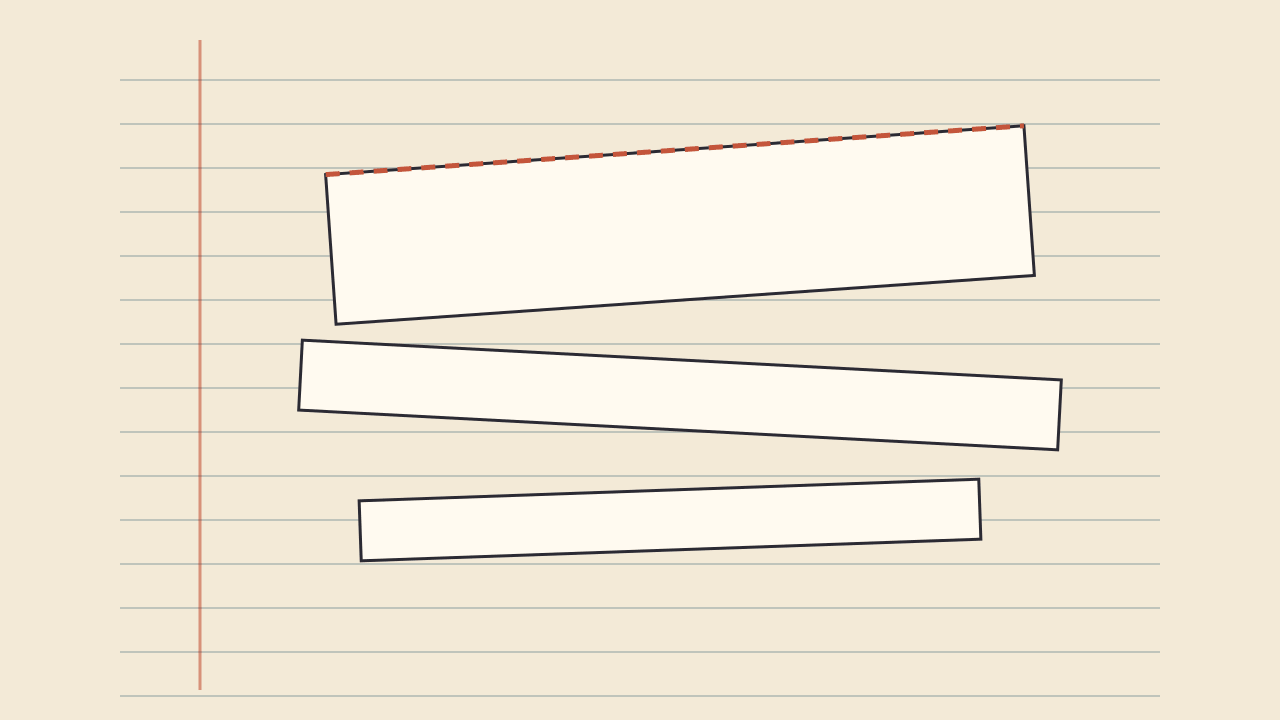 Strips of paper trimmed from a notebook in 1939 (illustration, AI-generated)
Mechanics — Fold, open, and hunt for the hidden face
The basic form is a strip of paper made of joined triangles. Fold it down into a regular hexagon. The trihexaflexagon has three faces, and the later hexahexaflexagon has six.
The play is simple. Fold the hexagon and open its center. A face you could not see appears. Repeating the same move does not always bring faces in a fixed order.
This is the heart of it. You cannot know which face comes next until you move, and some faces are hard to reach by ordinary flexing.
So the player is searching for states not yet seen. Tuckerman's procedure gave that search a path. This is my own reading, but it is close to the thinking behind later state-exploring puzzles.
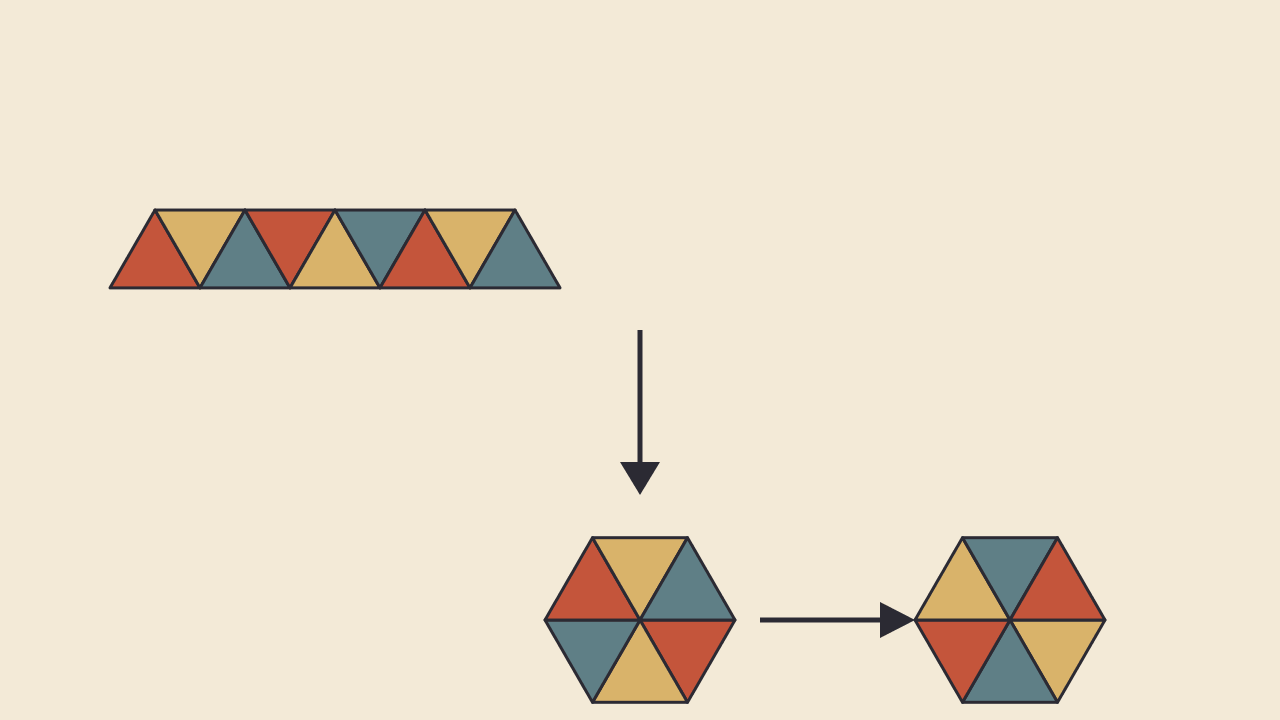 From strip to hexagon to a new face (diagram, illustration, AI-generated)
Legacy — From a magazine column to a patent, and on to video
The person who spread the flexagon widely was Martin Gardner. He wrote about it in the December 1956 issue of Scientific American. Gardner is reported to have interviewed Tukey and Tuckerman at Princeton.
The article drew a great response. The “Mathematical Games” column, which ran for the next 25 years, is said to have started with it. A paper pastime became a doorway for readers who enjoy mathematics.
It was also used commercially. A record shows that in 1955 an engineering company used hexaflexagons to advertise its service-award banquet. In 1959 a U.S. patent was granted for the hexahexaflexagon.
In 1962 Conrad and Hartline compiled a report at a serious mathematical level. In recent years many people met flexagons through videos by the mathematician Vi Hart. The pastime can still start from a single sheet of paper.
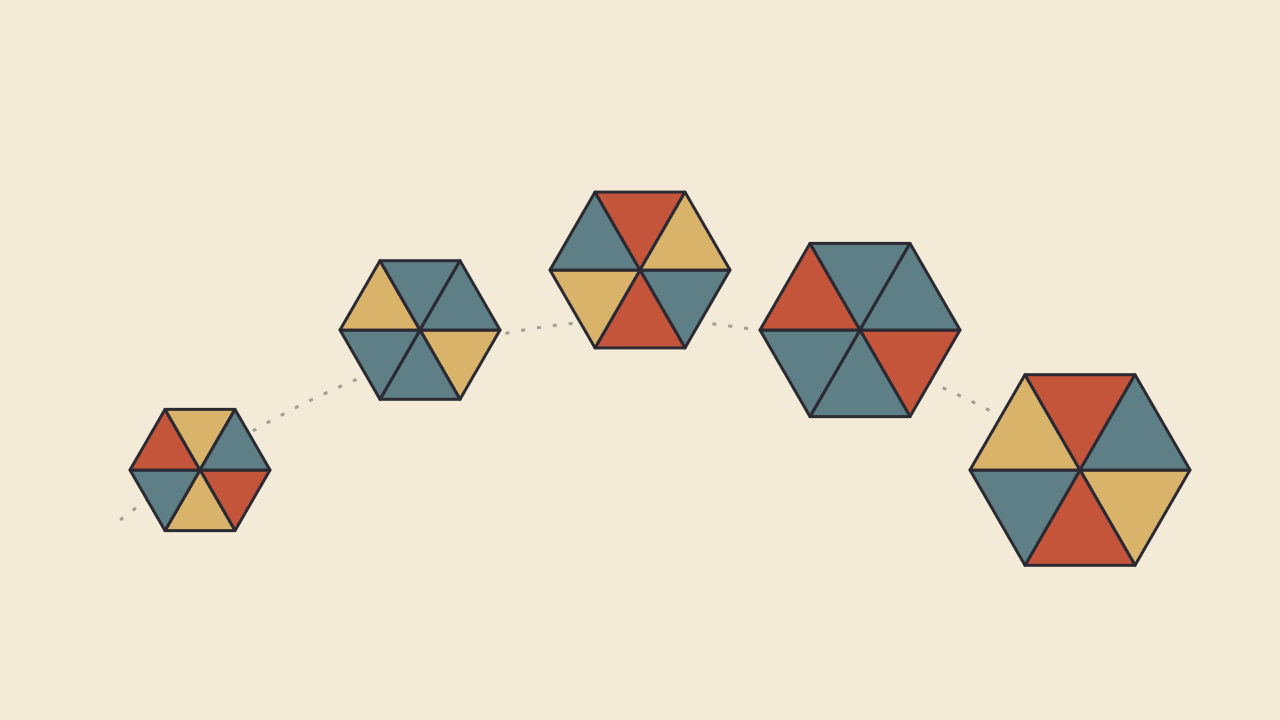 The lineage from a paper pastime to mathematics and the public (illustration, AI-generated)
References
Sources consulted for this article:
・The Public Paperfolding History Project: History of Hexaflexagons
・Conrad & Hartline (1962) — Flexagons, Erik Demaine's archive
Closing — A doorway to mathematics that began with scrap paper
The paper scraps of 1939 could easily have been thrown away. But someone folded them, friends joined in, and others recorded it. Those three may be what lets a pastime last.
What history shows through this work is plain: mathematics does not only come from grand instruments. It can begin with a sheet of paper that would not fit a binder.
Is there a trimmed scrap of paper on your desk too? Try folding it once.
 A paper hexagon resting on a desk (illustration, AI-generated)
Reactions (no login)
Anonymous • one of each per visitor per day
Part of these series
Puzzle Incident HistoryEpisode 53 of 53