ESSAY · 2026-07-21
If You Can Always Undo, Do Your Choices Still Mean Anything?
An imagined dialogue between Sartre and Nietzsche on the reversible move
The night I added an undo button, my hand froze
It was the night I built an undo button into my own puzzle. Except the thing I'm making is a Baba Is You–style puzzle, where you rewrite the rules themselves. What the player pushes around aren't pawns — they're word blocks laid on the board: ROCK IS PUSH, BABA IS YOU. You reassemble the very laws of the world. So undo isn't merely walking a move back; it rewinds an entire world whose physics you had rewritten. The coding took five minutes, but I spent the better part of an hour over a whisky deciding whether to switch it on. If you can write and erase the laws without limit, is any decision you made in there really a decision? I wrote something close to this once, in "The Ethics of Undo," but tonight's question has more bone to it: in a world where you can redo, do choices mean anything? I couldn't settle it, so I summoned the two of them into the margin of my drawing notebook and let them argue it out face to face. These are not their real words, of course — an imagined dialogue in my head, inferred from their own writings.
In the margin of my notebook, the two start talking
Sartre. To choose is to declare, with that one move, what you are — to the world. A declaration you can retract is no declaration. And when you choose, you do not choose yourself alone; you hold up an image of "a person who chooses this way" for all of humanity. I called this commitment. A gesture you can pull back with one tap of the Z key carries no responsibility, and no self to bear it.
Nietzsche. Responsibility, holding up an image for all — what a heavy load you shoulder. But your weight comes from outside, from the eyes of others. Mine comes from within. One night a demon whispers: "this move will return, exactly the same, forever." Does your stomach clench, or do you leap for joy? Only there do you learn whether the move is truly yours. Whether it can be undone is still a surface question.
Sartre. Weight from within, fine. But your "eternity" is a thing of the imagination — you can step off it whenever you like. A real choice you cannot step off. That is precisely why there is anguish. When you push a rule block knowing undo exists, that anguish never arises. And a choice without anguish is only the performance of a choice.
Nietzsche. Interesting. Then tell me — do you choose for the sake of anguish? To stand up straight only because the guillotine is there is what I called slave morality. My question faces the other way: even with no guillotine, can you still say "this I choose"? It is precisely under the safety net of undo that a choice which is not coerced — a free affirmation — is put to the test. Only the one who leaps though the net is there is truly leaping.
Sartre. Sophistry. A leap under the net is only a game shaped like a leap. One who cannot fall has staked nothing. And where nothing is staked, how could a self ever dwell?
Nietzsche. Again you crawl back to the gambling house of "only once." I am not speaking of stakes; I am speaking of style. In The Gay Science I urged: give style to your character. Countless undos are a pencil that can erase a clumsy line. Erase, redraw, and the one line left at the end — if you can say of it "this is right," the fact that you could have erased it does not stain it. On the contrary: because you could have erased it and did not, that line becomes your style.
Sartre. …I'll grant the pencil. But you have skipped the crucial point: the instant you "leave the line at the end." Unless someone decides "I will erase no more," the drawing stays a draft forever. That decision is exactly what I call choice.
Nietzsche. There, to my surprise, we agree. The instant of commitment is needed. Only I would place it not as a duty but as a festival. The maker should prepare the instant in which you can laugh and say, "this, forever."
Sartre. Then our order to the maker comes out in the same words. Let them undo without limit — but make them draw, in their own voice, the line that says "no more taking back."
Nietzsche. Agreed. Only you call it the line of responsibility, and I call it the line of affirmation. The same single line, lit from a different angle.
By the end, the two of them were pointing at the same single line under different names. My board still has no commit button. I set the pen down and add one line to the notebook — "Undo: unlimited. Commit: once, and heavy."
Takeaway — undo freely, commit with pride
I noticed one thing. Baba Is You has no commit button at all. And yet undo-spamming doesn't collapse into brute force, because the goal — the moment you touch "BABA IS WIN" while "BABA IS YOU" still holds — functions as the commit. You could undo, but take that step and the level closes. The very "line" the two of them argued their way toward, that game had drawn not with a button but with the win condition itself. The takeaway as a maker fits in one line: place undo not to "make it never happened" but to make you ask, "is this really the move?" Let taking back be unlimited — just make the commit once, and a touch heavier.
For myself, I lean a little toward Nietzsche. Being able to undo doesn't dilute a choice; what dilutes it is a design that treats the commit lightly. But Sartre's blow — "unless someone says 'no more erasing,' the drawing stays a draft" — I'll be keeping in my notebook for a long while.
I want to ask you: in this dialogue, whose side gets your vote? Is a move you can take back no longer a choice (Sartre)? Or is the move you re-chose, though you could have gone back, the real one (Nietzsche)? Or — were the two of them pointing at the same line all along? Tell me in the comments. The next fragment: "Is difficulty unkind? — the philosophy of fairness." Once again, I'll sit two philosophers down face to face.
References: Jean-Paul Sartre, Existentialism Is a Humanism (trans. Ibuki Takehiko et al., Jimbun Shoin — existence precedes essence; condemned to be free; commitment; anguish) / Friedrich Nietzsche, The Gay Science (trans. Shida Shozo, Chikuma Gakugei Bunko — eternal recurrence §341 "the greatest weight"; amor fati §276; give style to your character §290).
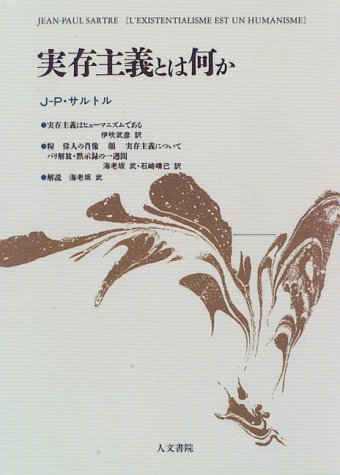 Jean-Paul Sartre, Existentialism Is a Humanism (Jimbun Shoin, Japanese ed.)
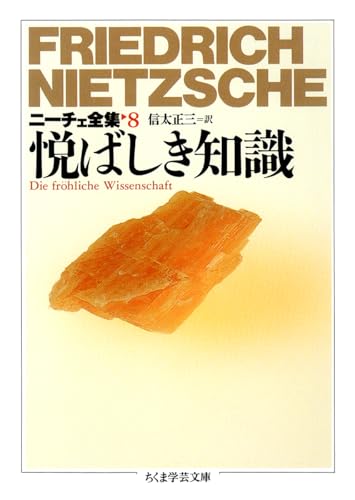 Friedrich Nietzsche, The Gay Science (Chikuma Gakugei Bunko, Japanese ed.)As an Amazon Associate, Puzzlebyrinth earns from qualifying purchases.
Reactions (no login)
Anonymous • one of each per visitor per day
Learn — Curriculum
LearnPart 4 Difficulty — Designing the Learning Curve and FailureChapter 11 Hints, Undo, Dead Ends3 / 10
Part of these series
The Nature of PlayEpisode 6 of 20