ESSAY · 2026-07-28
Is Difficulty Unkind? The Philosophy of Fairness
An imagined dialogue between Rawls and Nietzsche on difficulty
The night someone called my puzzle "unkind"
One night I planted a stage in my puzzle that almost no one solves on the first try. A friend playtesting it gave up after thirty minutes and muttered, "Isn't this a bit unkind?" Unkind. The word lodged itself in me, and the whisky went down faster. Is making something hard a meanness aimed at the player — or a gift held out to them? What was on my mind was Sekiro: Shadows Die Twice (FromSoftware, 2019, directed by Hidetaka Miyazaki), a game with no difficulty settings whatsoever. At launch, the argument over whether it should have an easy mode caught fire worldwide. Add one and you are kind; leave it out and you are unkind — it refused to reduce that cleanly, and that is what nagged at me. So in the margin of my drafting notebook I summoned two thinkers who would answer this question in opposite ways, and sat them down face to face. These are not, of course, their real words — only an imagined dialogue in my head, inferred from each one's own writing.
In the notebook margin, the two argue over difficulty
Rawls. Before you set the difficulty, put on a veil. Assume you have no idea what kind of player you will turn out to be — sharp reflexes or hands that won't obey, all day to play or ten minutes — and choose only the rules you could still accept. I called this the veil of ignorance, justice as fairness. Design from that seat and you will surely leave one door open — an assist option — for the version of yourself who can't quite manage the inputs.
Nietzsche. "For the version of yourself who can't manage" — there it is, that tone. You measure the world by its most disadvantaged. That is precisely the morality of pity I rejected. The wall is not a punishment; it is a gift. In Twilight of the Idols I engraved it: "What does not kill me makes me stronger." To strip out difficulty is, wearing the face of kindness, to steal from a person the chance to become stronger. Don't add a door. Tell them to jump.
Rawls. The chance to grow — fine. But you only ever look at those who can jump. I set out the difference principle like this: an inequality is permitted only when it also raises the share of the least advantaged. To someone kept from the wall by the luck of the reflexes they were dealt, that wall grants no benefit at all. It merely shuts them out. Calling exclusion a "gift" is not a word that comes from the one being dealt out of the game.
Nietzsche. The luck of the deal, is it. Then let me ask: are you not making an enemy of difficulty itself? What I want gone is not difficulty but unfairness. Killed by pure randomness, killed without even knowing the cause of death — that is no act of overcoming, only an accident. The hardship I mean is the hardship you infallibly absorb by jumping: a wall that means something. You blur the two together, and so "the wall shuts people out" muddies the water.
Rawls. …There, unexpectedly, we agree. What I want to protect under the name of fairness is exactly that: that the cause of death be legible; that no one be killed unfairly by luck alone; that the same information be open to everyone. I have never once said "lower the difficulty." I said "erase the unfairness." A high wall may stay. But only as a wall where anyone can see why they fell.
Nietzsche. Then the monster we both want driven out is one and the same — the death you cannot learn from. You call it injustice; I call it mediocrity. Different name tags, but the direction we want to kick it seems to be the same.
Rawls. Still, a fork remains. Once the hardship is fair, you want to hand it over closed and say, "try to clear this." I think that if it is fair, the wall may stay high — but for the person whose body cannot clear it, I want to line up just one more door: an assist option. Lining up a choice does not take the wall away from those who want to jump.
Nietzsche. A choice, is it. That is not far from my "give style to your own character." The trouble is when the door stands open by default. A design that whispers before the jump, "this is unfair, shall we lower it?" opens the gift before it is delivered. The wall looks unfair before the jump and turns into a gift only after. Kindness, rushing ahead, can break that order.
Rawls. On the matter of order I concede. Then the instruction to the maker settles into one line: don't lower the wall, cut only the unfairness. Provide the door — but until the player knocks on it themselves, don't open it and show it to them.
Nietzsche. On that I agree. What I add is a single line — behind the door, too, always place a view that only the one who jumped can see. A view that makes the one who cleared it smile and say, "glad I climbed."
By the time I noticed, the two were kicking out not "difficulty" but "unfairness," side by side — Rawls in the name of fairness, Nietzsche in the name of affirmation. My prototype stage still has no readout that shows the cause of death. The thing my friend called "unkind" was, most likely, not the difficulty but that. I picked up the pen and added a line to the notebook: "The wall can stay high. But show, in one clean stroke, why they fell."
Takeaway — keep the wall high, take the unfairness to zero
Here is what I noticed. When a player rages that a game is "unkind," the anger is usually not aimed at difficulty itself. An illegible cause of death, being carried off by luck alone, being made to repeat the same failure — that is unfairness. Sekiro has no difficulty slider. That so many people still climb to the end is because, built around the deflect (parry), almost every killing blow arrives in a form where you can read why you died. Not unfair — just high. My takeaway as a maker is one line: you don't have to cut the difficulty. The only thing to cut is the unfairness. Let the wall be high — but always show, once and clearly, why they fell.
I lean half a step toward Rawls. For those not dealt the hands or the hours, there may as well be one door. But I keep Nietzsche's jab — "don't open the gift before the jump" — pinned in the notebook. I'll place the assist. I'll just leave it closed by default.
Let me ask you. That word "unkind" — was it a complaint about difficulty, or a complaint about unfairness? And which do you feel is more "fair": a game that imposes one difficulty on everyone, or a game that leaves the lowering door open from the start? Tell me in the comments. Next fragment: "Is a win you got by luck really 'your' win? The philosophy of chance and desert." Once again, I'll seat two philosophers face to face.
References: John Rawls, A Theory of Justice, Revised ed. (trans. Kawamoto, Fukuma & Kamishima; Kinokuniya — justice as fairness, the veil of ignorance, the difference principle) / Friedrich Nietzsche, Twilight of the Idols (trans. Murai; Kawade Bunko — "what does not kill me makes me stronger," from "Maxims and Arrows," and the critique of the morality of pity). The game referenced is Sekiro: Shadows Die Twice (FromSoftware, 2019).
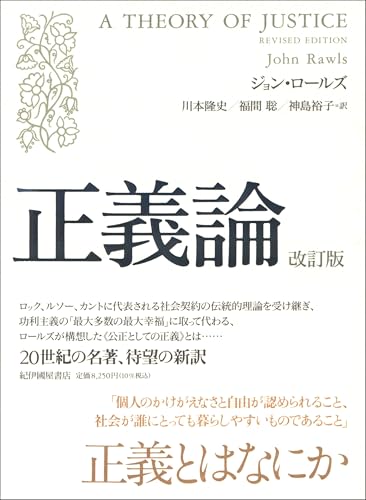 John Rawls, A Theory of Justice, Revised ed. (Kinokuniya, Japanese ed.)
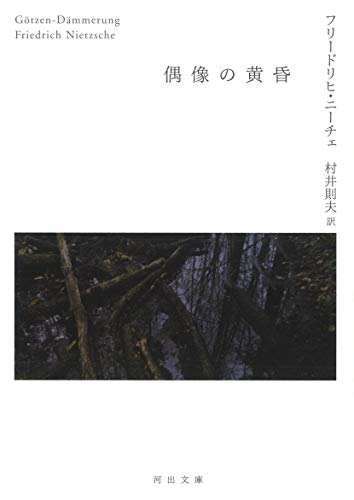 Friedrich Nietzsche, Twilight of the Idols (Kawade Bunko, Japanese ed.)As an Amazon Associate, Puzzlebyrinth earns from qualifying purchases.
Reactions (no login)
Anonymous • one of each per visitor per day
Learn — Curriculum
LearnPart 4 Difficulty — Designing the Learning Curve and FailureChapter 12 Measuring Difficulty8 / 10
Part of these series
The Nature of PlayEpisode 7 of 20