ESSAY · 2026-07-31
Reading Homo Ludens Chapter by Chapter — The One Condition Under Which War Can Still Be Play
"The Nature of Play" reading log, part 3. Huizinga's 'play and war', read through the eyes of someone building a versus mode
After competition comes war — that's the logical next step
Last time, in the reading log, we read Huizinga's agon — his 'contest.' Competition, he says, is play with honor at stake. When I finished, an obvious question was left over. If competition heats up until you're 'defeating' the other person — until it becomes war — surely that's no longer play? A sip of whisky. In my drafting notebook there's just one line: 'The mood of a versus mode — how do I design it?'
Whenever I try to add something competitive to my own site, my hand stops right here. Scores and rankings I can still explain, as last time, as 'a wager of honor.' But the moment you pit person against person directly, something else suddenly mixes in. Taunting, name-and-shame, the winner's contempt. Is that a continuation of play, or the end of it?
In Homo Ludens, Huizinga writes about exactly that boundary, in the chapter on play and war. Nothing seems further from play than war. And yet he says a fight that meets certain conditions is a form of play. Tonight I read those conditions with a maker's eyes.
A fight bound by rules isn't slaughter — it's a contest
Huizinga's claim runs like this. As long as war is a struggle over rights or honor between adversaries who recognize each other as 'the enemy,' it is a form of agon — of contest. You declare war, observe the etiquette of opening hostilities, exchange promises of truce, and agree in advance on how the matter will be settled. On this single point — 'fighting according to agreed terms' — war, he says, shares its skeleton with play.
He cites the Iliad. In the middle of the Trojan War, Paris and Menelaus halt both armies to fight in single combat. Both sides swear that the winner's claim will stand, and they duel while the spectators — the whole army — look on. This is not massacre; it is a match with rules and witnesses. The medieval European trial by combat worked the same way: it shrank a dispute down to a single fight and let victory decide right from wrong.
One more term, and only one. The ordeal — a rite in which, say, a suspect grips hot iron and guilt is read from how the burn heals, with the gods supposed to decide the outcome. Huizinga sees here a trace of an age when contest, chance, and judgment were not yet separated. This instinct to entrust 'rightness' to a match is, I think, almost continuous with today's 'let's settle this on skill.'
A fair fight means letting your opponent stand as an equal
This, I think, is the core of the chapter. For a fight to be play, you must recognize your opponent as an equal. To be able to share rules is to treat the other as a being qualified to stand on the same ground. The knight's 'honorable battle' and the samurai's etiquette share the same root — instead of despising the enemy, you honor them.
Which means the reverse too: the instant you stop recognizing the other as an equal, war stops being play. Huizinga writes that a war that regards the enemy as 'barbarians, not even human' and wipes them out has no play-element left. No rules, no honor, no witnesses needed — just destruction. He watched modern total war with a sour face precisely because the power to make play, to make culture, had drained out of it.
What makes me sit up straight as a maker is that this line is drawn not by 'the amount of violence' but by 'how you treat the other.' However fiercely you clash, as long as you keep your opponent standing as an equal person, it can stay play. And however mild the match, if the design is built to look down on the other, that place is already outside play.
This condition — 'recognizing the other as an equal' — runs straight back to Huizinga's magic circle, which we read in the very first installment of this series. Inside the magic circle, even the enemy becomes 'someone playing together within the same circle.' So when a fight is play, the person in front of you is not 'a target to be annihilated' but 'a co-performer who has taken on the same rules.' The instant you forget this one point, the design of a versus mode tilts all too easily toward the grim.
Case study — For Honor and the code the players wrote themselves
Let me check this against a real game. For Honor (developed by Ubisoft Montreal, 2017). It's a competitive action game in which knights, Vikings, and samurai cross blades, built around 'The Art of Battle,' a swordplay system where you read attack and defense across three directions — top, left, right. The very title means 'For Honor.' Its Duel mode, where two players test skill alone one-on-one, looks like a modern version of the Paris-and-Menelaus single combat.
What's interesting about 'The Art of Battle' is that you place both attack and defense on top, left, or right by reading and matching your opponent's stance. In other words, the duel becomes, at once, a trial of strength and a joint act of 'reading each other's intent.' It isn't a game where you can swing while ignoring the other; it's a game that forces you to watch them closely — giving Huizinga's 'a contest between equals' its literal form at the level of the controls.
Here's the interesting part. Beyond the rulebook the developers wrote, this game has an 'honor code' that arose spontaneously among the players. Don't 'gank' — cut in from the side during a one-on-one; go easy on 'ledging,' cornering someone against a cliff to knock them off; wait for a fallen opponent to get back up. None of this is written in the rules, yet many players keep it. Huizinga's 'fighting according to agreed terms' stands up again, this time outside the official rules.
And over this code, the community is split. On one side: 'honoring the code is the only way to see who's truly better.' On the other: 'ganking is part of the game too' — 'it's For Honor, not with honor.' This is exactly the site where the 'agreement to recognize the other as an equal' that Huizinga said keeps play a contest is being negotiated right now. Outside the line the makers drew, the players are redrawing their own magic circle.
The moment a competitive game stops being play
So when you build a versus mode, the scariest thing isn't 'the intensity of the violence' but 'a design that won't let players recognize each other as equals.' Pay-to-win, where the wallet all but decides the match; funnels that put the loser on display to be laughed at; a build where only the taunt emotes are suspiciously well-stocked. Each one embeds, before any win or loss, the mood that 'it's fine to look down on the other.' That is close to the war Huizinga described, with the play drained out.
Conversely, a good competitive game always has devices that lift the opponent up. The culture of a post-match handshake or 'GG' (good game); matchmaking that brings skill levels close; a UI that treats surrender or forfeiting as etiquette rather than shame. Just as For Honor's players wrote their own code, the question is whether the design side can build in the premise that 'the opponent is an equal person.' On this hangs whether a versus mode can stay a contest.
Let me state my own position in one line — before a leaderboard, I want to build something that honors the opponent's face. Winning and losing can come after. This is continuous with last time's agon (the wager of honor): you can stake honor only because you acknowledge the one you're staking it against.
Takeaway — design equality before you design winning
I'll keep this takeaway to one line too. If you're designing a versus mode, put the mechanism that 'lets the opponent stand as an equal person' before the mechanism of winning and losing. The precision of matchmaking, the etiquette of surrender, a funnel where the winner can't look down. A versus mode without that stretched taut will tumble outside play, however flashy it is.
I set down the whisky glass and added three lines under 'the mood of a versus mode' in my notebook. '(1) show the opponent as an equal, (2) make courtesy richer than taunts, (3) don't make losing a shame.' Just as For Honor's players raised honor outside the official rules, I should be able to build it in from inside the official rules. That's it for tonight.
One last thing I want to ask you. In a game where you thought 'that match felt good,' what was it that made the opponent look like an equal? The precision of matchmaking? A one-word emote after the match? Or just the memory that the other side fought fair? Tell me in the comments. Next time, back in the full slot and the case-study format: Pascal's 'divertissement' meets the smartphone puzzle you open on your commute. Why do people open a small board to fill their boredom?
References: Johan Huizinga, Homo Ludens (trans. Hideo Takahashi, Chuko Bunko), from the chapter on play and war. For Honor was developed by Ubisoft Montreal and published by Ubisoft (2017).
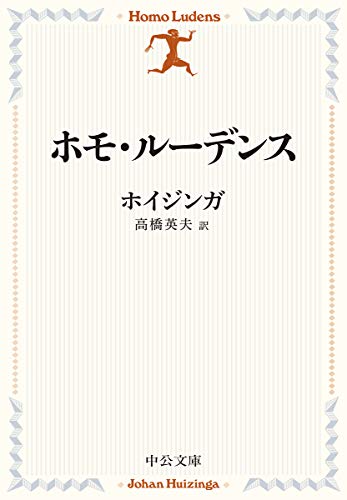 Johan Huizinga, Homo Ludens (Japanese ed., Chuko Bunko)The cover images are Amazon Associate links. As an Amazon Associate, Puzzlebyrinth earns from qualifying purchases.
Reactions (no login)
Anonymous • one of each per visitor per day
Part of these series
The Nature of PlayEpisode 8 of 20