ESSAY · 2026-08-04
Is a Win by Luck “My” Win? — The Philosophy of Alea and Desert
An imagined dialogue between Caillois and Aristotle on luck and credit
The night I was told, “That was luck, right?”
Late at night, whisky in hand, I was grinding Balatro (developed by LocalThunk, published by Playstack, 2024), a roguelike where you stack score by playing poker hands. The shop draws happened to line up, the jokers chained, and I posted several times my personal best. Delighted, I fired the result screen off to a friend. The reply came back in four words: “That was luck, right?” …Luck. True, that draw was luck. But I’m the one who won. Or — is the one who won really me? Can I call what chance dealt me my victory? My hand stilled, and the glass emptied again. In the margin of my drafting notebook I summoned two people who would answer this opposite ways, and sat them across from each other: Roger Caillois, who calls chance prime real estate of play, and Aristotle, who holds that victory lives in a person’s activity, not in luck. These aren’t their real words, of course. It’s an imagined dialogue in my head, inferred from their books.
In the notebook margin, the two put “a win by luck” on trial
Caillois. Winning by luck is a fine kind of play. In Man, Play and Games I split play into four: agôn (competition), alea (chance), mimicry (simulation), and ilinx (vertigo). Your Balatro is a blend of competition and chance, but that one big score was pure alea. And the essence of alea is to set skill, effort, and qualification entirely aside and simply surrender to fate. In an instant you can seize what a lifetime of labor might never reach — that is alea’s singular flavor. So stand tall. That was play in the fullest sense.
Aristotle. That it is play, I grant. But you just said, yourself, that you “set skill and effort aside.” Then I ask: how can what you set aside become that person’s credit — their desert? In the Nicomachean Ethics I wrote that praise (epainos) goes to virtue and to what issues from the person. For the good things fortune brings, we may bless (makarizein) but we do not praise. The lucky man (eutychēs) and the man who lives well (eudaimōn) bear different names. That victory happened to you; it did not come from you.
Caillois. “Came from you” — that is where you are old-fashioned, Aristotle. You measure everything by one yardstick: virtue, activity. But the player of alea chooses, deliberately, to step off that very yardstick. Against agôn, where skill decides the world, alea zeroes out skill and makes everyone equal before chance. The wager creates, for an instant, a pure equality reality never grants. To let go of one’s credit — that renunciation is the active move the player of alea has chosen. It looks passive, but it is a choice.
Aristotle. Ah — so you play the card of “choosing.” Then that choice (prohairesis) is indeed yours. Deciding to sit at the table, resolving to bear the loss — that is voluntary, and it does come from you. But that is precisely my point. What is yours is the decision to enter the wager, not the pips that came up. The decision can be praised; the pips can only be blessed. Are you not, right now, gluing the credit for the win onto the courage to take part, as if they were one sheet?
Caillois. Gluing, is it. Yet pure alea is rarer than you think. Roulette is pure alea; Balatro is not. What to keep and what to discard, which jokers to bundle with — the player is designing the very width of luck. I wrote it too: agôn and alea often join hands within the same game. If so, then your “only the decision is yours” hands you, at this table, a good deal of territory. The pips are luck’s, but making them likelier was skill.
Aristotle. There — unexpectedly — is where I yield. Gladly, even. If skill narrows the width of luck, that narrowness is a product of your activity (energeia). But I attach one condition. In the Nicomachean Ethics I wrote: “one swallow does not make a spring, nor does a single day.” Just as happiness is not settled in a day, skill is not proven by a single win. Take that personal-best strike alone and luck’s share of it is large. But run it a hundred times and come out ahead, and what shows there is not luck — it is you.
Caillois. Agreed. The fog of a single alea lifts across repetition. The more rounds you play, the thinner grows the luck that once made everyone equal, until the bedrock of agôn — of skill — shows through from below. So my answer to your question is this. “Is that one strike my win?” — half of it belongs to luck. “Am I good at Balatro?” — that belongs to you alone, you who sat down at the table again and again.
Before I knew it, the two had quietly set “a single throw” and “a long win-rate” on two separate plates. Caillois praised luck in the name of equality; Aristotle counted skill in the name of activity. And yet neither of them called a single draw a “credit.” What I had sent my friend was one screenshot — a single throw. The reason “That was luck, right?” stung was probably that it was the very frame where luck’s share was largest. I pick up the pen and add a line to the drafting notebook: “One throw belongs to luck. What is mine lies in the number of throws.”
Takeaway — one throw is luck’s, the win-rate is yours
Here is something I noticed. The gap between the moment a player goes cold — “this is a luck game” — and the moment they lean in — “luck and all, it’s fun” — usually lies in whether skill can touch the width of luck. Balatro is drenched in luck yet beloved because, though the draw is luck, what you discard and what you bundle moves your win-rate. Pure luck only “happens”; luck you can manage can be “chosen.” My one-line takeaway as a maker: you don’t have to zero out luck. Just leave one handhold on its width for the player. Design it so the pips belong to luck and the way you bet belongs to the person, cleanly split.
I lean half a step toward Aristotle. I still hesitate to call a single win a credit. But I keep Caillois’s jab in the drafting notebook: “the equality of letting go of credit is a refuge for those worn out by the world of skill.” So I won’t erase the luck side. I’ll just be sure to show, alongside it, the side you can call your own — a win-rate, a personal-best history you can look back on later.
I want to ask you. That one win by luck — do you count it as “your victory,” or set it apart as “luck’s victory”? And — a game decided by a single draw, versus a game where your true strength shows over a hundred runs: which one feels like a “skill game” to you? Tell me in the comments. The next Fragments piece: “Whom does cheating in a single-player game betray? — The philosophy of promises and self-deception.” When you cheat in a game you play alone, whose promise is being broken — I’ll sit two more thinkers face to face.
References: Roger Caillois, Man, Play and Games (trans. Tada & Tsukazaki; Kodansha Academic Library — the four categories of play, agôn/alea/mimicry/ilinx, and the argument that alea, the play of chance, renounces skill and makes all equal before luck) / Aristotle, Nicomachean Ethics, vol. 1 (trans. Watanabe & Tachibana; Kobunsha Classics — happiness as activity of the soul in accordance with virtue, praise directed to virtue and voluntary action, “one swallow does not make a spring”). The game referenced is Balatro (LocalThunk, Playstack, 2024).
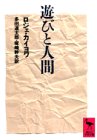 Roger Caillois, Man, Play and Games (Japanese ed., Kodansha)
 Aristotle, Nicomachean Ethics, vol. 1 (Japanese ed., Kobunsha)As an Amazon Associate, Puzzlebyrinth earns from qualifying purchases.
Reactions (no login)
Anonymous • one of each per visitor per day
Part of these series
The Nature of PlayEpisode 9 of 20