REVIEW · 2017-01-05
MHRD
From one NAND gate to a CPU, in a design room with no instruments
First Impressions
Across all languages and all purchase types, Steam counts 399 positive out of 450 reviews: about 89%, labelled Very Positive (snapshot 2026-09-19). The store page itself shows 88% of 437. For a small text-only game from 2017, that is a comfortable number.
The interesting part is the other 51. Read them together and the complaint collapses into a single point: you cannot see inside the thing you built. No debugging, no visualisation. A long test log comes back and nothing else. Sketch it on paper or lose the thread.
The positive side reports the same absence and files it differently. One review describes a rich landscape of electrons and reasoning, living and breathing inside the reviewer's head. Another lists no hand-holding and no hints as a feature. Same missing instrument: one side calls it a gap, the other calls it a relocation.
 Key art for MHRD — Steam store key art
Putting the Mechanics into Words
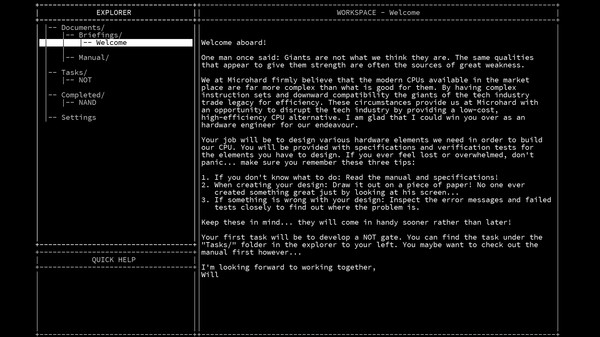
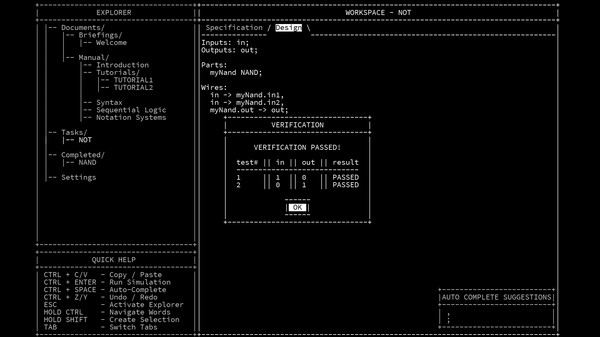
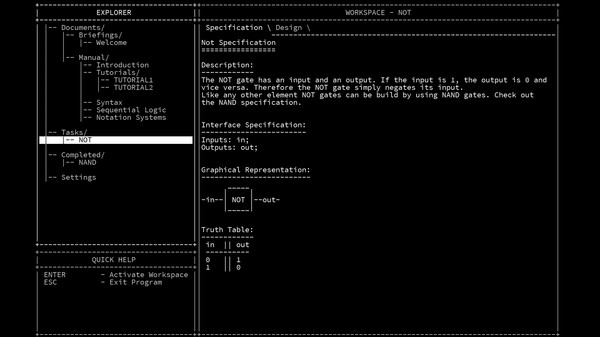
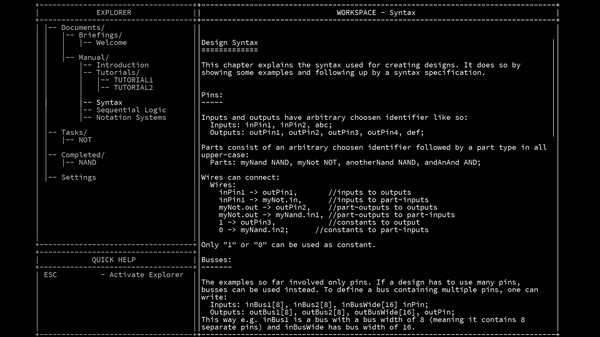
Pull the verbs out of the review pool and one survives: connect. You are a new hire at a fictional company called Microhard, you read a specification, and you write the wiring in a small hardware description language. The one component you start with is a NAND gate.
Need an AND? Build it out of NANDs. The AND you built becomes a part you can call in the next task. The vocabulary starts almost empty and grows only by what you have solved. I have used the phrase subtraction of verbs before; this is the far end of it.
Two things hold the stack up. Ted, a fictional colleague who takes over the repetitive wiring, mentioned warmly across the reviews. And a hard rule that each design must fit on one screen.
The negative side calls that rule arbitrary and complains there is no room even for comments. But if a design does not fit, you have to factor it out into a part, and that pressure enforces hierarchy by itself. The cramped feeling and the teaching effect come from the same line.
 MHRD in play — screenshot 1 as listed on the Steam store page (Steam store screenshot)
Teaching
The proper noun that appears most often here is not another game. It is a textbook: Nisan and Schocken's NAND to Tetris. Even positive reviewers note that the game never credits it, which tells you how closely the task order is felt to follow that course.
Two steps in that order are missing. The D flip-flop arrives finished, without the SR latch being taught first. And the stretch from the decoder to the CPU is described again and again as a sudden jump. In a game built on stacking, two blocks are handed over pre-assembled.
So the game has two addresses at once. To a reader with a logic design background it reads, in the negative side's words, like a bad homework assignment. To a reader with no programming experience it gets steep without warning. The best fit is someone who knows the names but has never wired them up. The middle of the curve is well made; both ends are rough.
 MHRD in play — screenshot 2 as listed on the Steam store page (Steam store screenshot)
The Texture of Difficulty
Sort the ways people got stuck and three kinds separate out. One: not understanding the logic. Two: the labour of transcribing something you already understand into the syntax. Three: it does not work and you cannot see where.
Only the first is welcomed. On the second, reviewers describe transcribing connections and then spell-checking their own text. The weight of the 51 negative reviews sits squarely on the third. No waveform, no stepping, no way to inspect an intermediate value. You get a verdict and a long test log. One reviewer points out there is not even a clock signal.
In design terms, the game puts observation resolution outside itself. A puzzle normally guarantees, by showing you the board, that you know what is happening right now. This one declines, and moves the simulator into the player's head. At small scale that becomes the positive side's living, breathing landscape.
At CPU scale the number of states you must hold explodes. The combinatorial explosion happens in the player's working memory, not in the circuit. The seam between the 89% and the 51 runs more or less along that line.
 MHRD in play — screenshot 3 as listed on the Steam store page (Steam store screenshot)
Place in the Lineage
The shifting comparison set is the best thing in this review pool. Reviews from around 2017 measure the game between the free NAND to Tetris course and Zachtronics: TIS-100 and Shenzhen I/O. Not up to that level was close to a stock phrase.
In the recent reviews the ruler has been swapped. The name that comes up now is Turing Complete, sometimes as a single sentence saying it does all of this better. MHRD has not moved since 2017. The standard around it did.
Look at what actually changed and it is not the subject matter, it is the instruments. What the later games added was not new logic but a screen where you can watch the wiring and a way to inspect values mid-run. Silicon Zeroes, released the same year, already showed the same build-a-CPU subject as a visible board, so the all-text approach was a choice even in 2017. In the programming lineage, the past decade advanced the tools rather than the problems, and this review pool records that shift in chronological order.
 MHRD in play — screenshot 4 as listed on the Steam store page (Steam store screenshot)
Reviews Consulted
This piece was written from the Steam store page and the Steam review API as of 2026-09-19. No review text is quoted; the recurring claims are reconstructed.
・Steam: MHRD (counting all languages and all purchase types gives 399 of 450 = about 89%, labelled Very Positive; the store page shows 88% of 437, snapshot 2026-09-19)
・30 reviews read in total: the 12 most helpful positive, the 10 most helpful negative, and the 8 most recent. Completion times were taken from the recorded playtimes of those 8 (27 to 526 minutes, median around 230) together with the figures reviewers state in their own text (2h15m to 5h12m).
・Developer, publisher, release date and description follow the Steam store listing. Images are the screenshot URLs and header image returned by Steam's appdetails API, copied verbatim. This session's network could not open the image files themselves, so only the existence of each URL was verified and the captions deliberately make no claim about what is shown.
Closing
Against Steam's 89% I give it 7.5. What I take off is not difficulty but instrumentation. The absence of a debugger here does not push the thinking deeper; it outsources verification to paper and pen.
The other deduction is the ending. You finish designing a CPU and the CPU never runs. Nothing is assembled with memory, nothing is programmed. You know each individual component works, writes the negative side. It just ended, untriumphantly, writes the positive side. Those are the same sentence. Skipping the join at the end of a stacking curriculum removes the whole reward.
Even so, the core is real: start from one NAND gate and arrive, by your own hand, at the schematic of a CPU. Four hours or so is short, but it is a coherent length for delivering only that core. What is argued over is the instruments and the ending, not the core. After 51 negative reviews, that impression did not change.
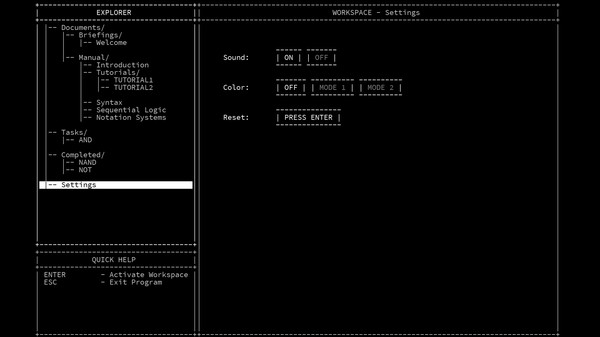 MHRD in play — screenshot 5 as listed on the Steam store page (Steam store screenshot)
Where are you with this game?
Press one and the game goes on your shelf. You can see it on your account page.
Reactions (no login)
Anonymous • one of each per visitor per day
Read next
Related reviews
Silicon Zeroes
An open-ended puzzle set in a 1960s Silicon Valley startup, where you wire simple parts — adders, multiplexers, latches — into a working CPU with instruction decoding and pipelining. From PleasingFungus Games, maker of Manufactoria, a CPU-design game that hides the bits and shows only how the parts behave.
Tametsi
A 2D deduction puzzle where you flag hidden mines using only each tile's adjacency clues. It strips the luck from Minesweeper and layers colours, row/column totals and non-square tilings across 100-plus boards hand-built by Grip Top Games.
Bridge Constructor Portal
A 2D physics puzzler in which you build bridges and ramps across 60 Aperture Science test chambers and thread vehicles through fixed portals and gels to the exit. ClockStone's entry in the Bridge Constructor series, built with Portal's own art and lore on loan from Valve.


