REVIEW · 2023-05-23
Planet of Lana
What is left after the difficulty is subtracted
First Impressions
The vocabulary on the positive side is barely game vocabulary at all. Beautiful. Stunning. Like Ghibli. A child of LIMBO and INSIDE. Across the most helpful positive reviews, the praise points at the picture and the sound. When the puzzles come up, they are usually dispatched in three words: clever but simple.
The negative vocabulary, by contrast, is almost all about time. Repetitive. Monotonous. Overstays its welcome. Just walking forward. One negative review writes the game off as a walking simulation; another counts one particular puzzle recurring about ten times.
What is interesting is that the two sides are not looking at different things. The four to five hours one side calls just long enough is the same span the other side was bored of after two. Same material, different ruler. This piece follows the difference between the rulers.
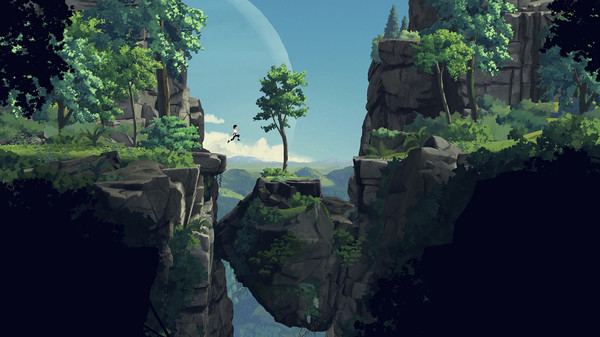 Planet of Lana in play — image 1 as listed on the Steam store page (Steam store screenshot)
The World
Wishfully present the game as a story about the bond between a girl and her companion. The short store description mentions nature against machines and the pair's connection. It does not mention puzzles.
The positive side takes that frame at face value. The scenery looks painted, the score is excellent, the wildlife is identifiable by sound alone. The dialogue is in an invented language with no translation, and reviewers keep reporting that the feeling lands anyway.
Part of the negative side names that same invented language as the disappointment: a language was built and then barely used, and the heroine calls her sister's name so often that the cue wears out. In our terms, the world has a high information density but little information worth reading. Much to look at, little to parse.
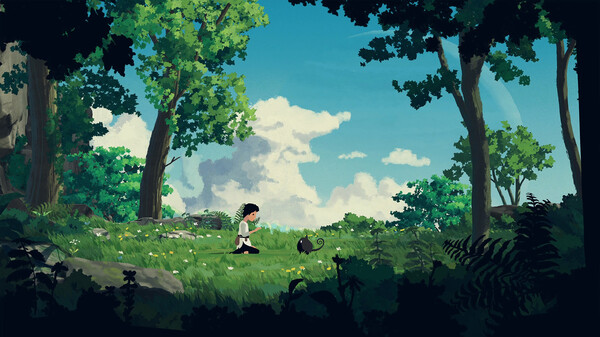 Planet of Lana in play — image 2 as listed on the Steam store page (Steam store screenshot)
Putting the Mechanics into Words
The verb list is short. Walk, climb, push, and point the companion at something. That is close to everything the reviews describe. Pointed somewhere, the companion goes there, drops a rope, or works on the local wildlife. One pair of hands, two pieces on the board.
The recurring positive compliment — that the companion is used well — is what we would call splitting the verb. You reach a place your own hands cannot by taking one detour through an order. It extends range without adding verbs, much as Brothers - A Tale of Two Sons did with two sticks.
What does not happen afterwards is combination. This is exactly where the negative side writes that there are too few kinds of puzzle. Only the target of the pointing changes; the grammar is fully laid out inside the first hour. The lid is on the combinatorial explosion from the start.
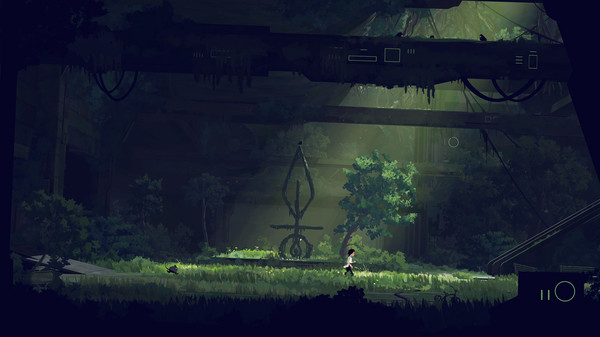 Planet of Lana in play — image 3 as listed on the Steam store page (Steam store screenshot)
The Texture of Difficulty
On difficulty the two sides agree, which is rare. It is easy. What splits them is whether that counts as a virtue or a fault.
Read closely, the negative complaint comes in two layers: the answer is obvious on sight, and that obvious answer then has to be executed precisely inside a narrow time window. The most helpful negative reviews put both in the same paragraph.
So the game subtracted the difficulty of finding a solution and kept the difficulty of performing one. The subtraction reached the thinking and never reached the hands. Set against LIMBO and INSIDE, which trimmed both with the same gesture, this one is uneven.
One negative review calls the result an awkward middle ground: no resistance for practised players, real precision demands for inexperienced ones. The problem is not the amount of difficulty but where it was left.
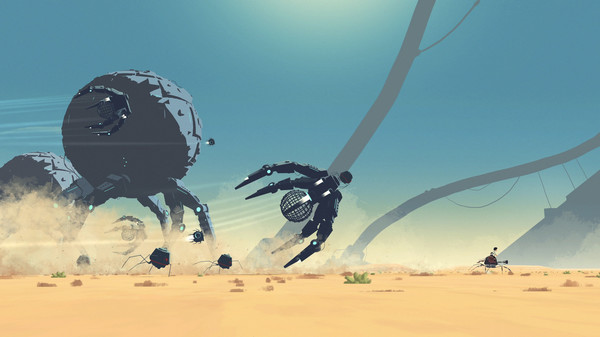 Planet of Lana in play — image 4 as listed on the Steam store page (Steam store screenshot)
Pacing
The most frequently counted thing in these reviews is time. Four to six hours. Four without rushing; eight if you chase the collectibles. The median lands around five.
The positive side welcomes that length: it does not outstay its welcome, it finished in one sitting, it is something to play with a drink in hand. The long walking stretches are received as rest between the tense parts.
The negative side describes the same stretches as pressing forward for half the game. The path runs straight, and the structure does not change when the scenery does. What one side calls rest, the other calls padding.
Neither reading is wrong. For rest to work as rest, there has to be tension on either side of it. The monotony the negative side felt probably came not from the walking but from the fact that what was asked of them before and after the walk was the same. When the learning curve lies flat, empty space stops reading as empty space.
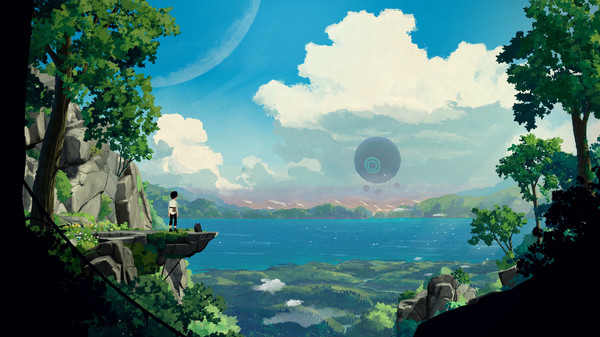 Planet of Lana in play — image 5 as listed on the Steam store page (Steam store screenshot)
Reviews Consulted
This piece was written by reading the user reviews on the Steam store page as of 2026-09-26. No review text is quoted directly; typical claims are reconstructed.
・Steam: Planet of Lana (9,951 of 10,698 reviews positive across all languages = about 93%, labelled Very Positive)
・Read in full: the 12 most helpful positive reviews, the 10 most helpful negative reviews, and 18 recent reviews — 40 in total. Aggregate figures come from the query_summary returned by Steam's review API.
・The developer's own framing was taken from the store description returned by Steam's appdetails API, which also reports a Metacritic score of 80.
・The images are the store screenshot URLs returned by Steam's appdetails API, used verbatim. This environment could not reach Steam's image hosts, so their contents could not be inspected; the captions therefore do not identify what is shown.
Closing
Steam's overall figure is 9,951 positive out of 10,698, about 93 percent, labelled Very Positive as of 2026-09-26. My own score is 7.0, well below that.
The gap is easy to explain. The 93 percent is a vote for the art, the sound and the story of the companion; what I am scoring is whether the design meshes. Even the negative reviews concede the art and the sound. That is not where the argument is.
As design, the game deliberately lowered the difficulty of thinking and spent the savings on story and scenery. That call is defensible — the same lineage as Somerville. What undercuts it is the precision the controls still demand after the lowering.
It suits someone who wants to be taken somewhere for five hours rather than someone who came to solve things. For the latter there is not much on offer here. The Steam review pool states that line fairly honestly.
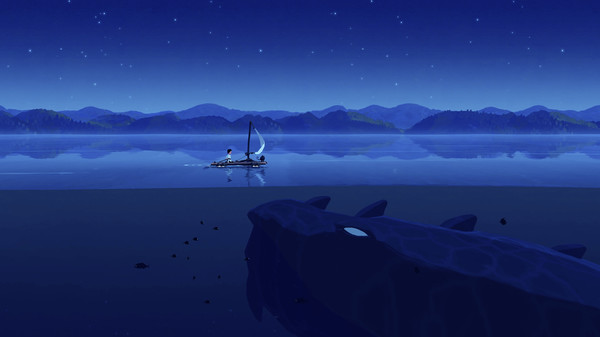 Planet of Lana in play — image 6 as listed on the Steam store page (Steam store screenshot)
Where are you with this game?
Press one and the game goes on your shelf. You can see it on your account page.
Reactions (no login)
Anonymous • one of each per visitor per day
Read next
Related reviews
Teslagrad 2
A 2D puzzle-platformer that climbs an abandoned tower above a northern fjord by flipping magnetic poles and carrying momentum. Rain Games keeps the wordless storytelling and painted backdrops of the original, but steers from stop-and-think puzzles toward sliding and flow.
Underground Blossom
A point-and-click escape puzzle that rides down seven metro stations through the life of a woman named Laura. You buy a ticket, search each room, and reassemble the pieces of her memory. A 2023 release from Rusty Lake, the studio behind the Cube Escape series.
Terra Nil
A reverse city builder: seed a dead landscape with scrubbers, rivers and forests until wildlife moves in, then recycle every machine you built and leave without a trace. A quiet, hand-painted game from Free Lives and Clockwork Acorn.


