REVIEW · 2020-05-28
The House of Da Vinci 2
The controls the store calls redesigned are the thing reviewers fight about
First Impressions
Steam labels it Very Positive: 2,052 of 2,260 reviews are positive across all languages and purchase types, about 91% (snapshot 2026-09-28). Narrowed to English it drops to 88% of 863. Either way it sits above the first game.
The interesting part is that the yardstick has changed. Reviews of the first game measured it against The Room. Reviews of the sequel measure it against the first game: better in every aspect, a complete advancement. The series has become its own reference point.
What exactly improved varies by writer. The cursor now responds to interactable objects, there is voice acting, the machines look denser. These are finishing touches rather than changes to the skeleton.
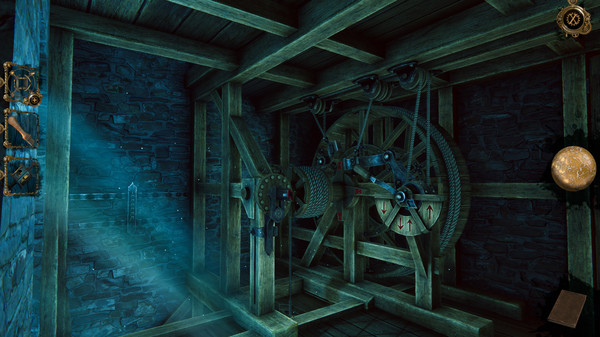 The House of Da Vinci 2 in play — image 1 as listed on the Steam store page (Steam store screenshot)
Putting the Mechanics into Words
The verb list is short: look closer, turn or pull, slot an item in. On top of that sits the Oculus Perpetua, which the store describes as a device for reaching into the past to reshape the present. The first game's Oculus Temporis was an instrument of seeing; this one is an instrument of acting.
The positive vocabulary clusters on the moment a mechanism opens: grand complications of a pocketwatch unfolding, machines springing to life, the child who wants to press any button in sight. The praise is about the feel of opening, not the content of the puzzle.
The negative vocabulary points at the same property. Microscopic hidden switches, pixel hunting, objects tucked into shadow, grasping at straws. Both sides are describing one thing: the room never tells you where the puzzle ends. One side calls that exploration, the other calls it padding.
Asking for a finer observation resolution is a legitimate choice — Machinika Museum asks for it too. The question is whether the screen can keep up with the resolution being demanded. Nearly every complaint in the pool lands there.
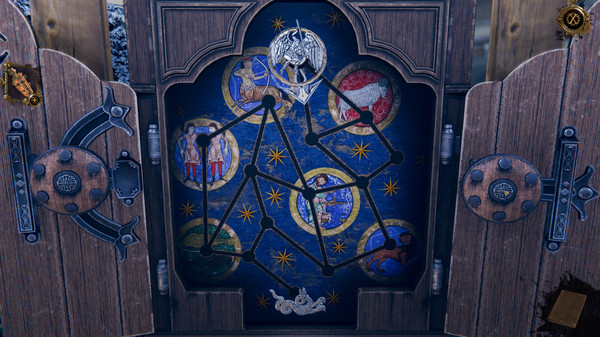 The House of Da Vinci 2 in play — image 2 as listed on the Steam store page (Steam store screenshot)
Feel of the Controls
The store's feature list promises redesigned, intuitive controls. The most repeated claim in the negative pool is about the controls. Fighting it for the entire game. The camera is awful. Positive reviewers add the same caveat more gently: the mouse is wonky, the controls rob back what the puzzles earn.
The symptom matches the first game. Where two stages of zoom are needed you stop at one and keep clicking until you hit the right pixel. You believe you tried something you never actually reached, so a correct solution still goes nowhere. Recent reviews add that the camera still behaves like the mobile build and makes them dizzy.
One reviewer wrote that hiding a clue by not letting the camera point at it is cheating. I think that is exactly right. In a game built on observation the camera is not presentation, it is the input device. If the camera decides what is visible, its limits become part of the difficulty, and a solve stops feeling earned.
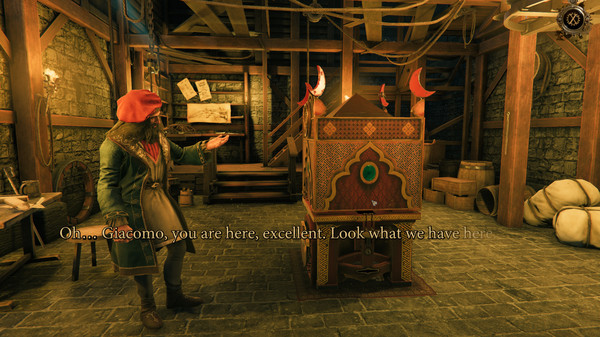 The House of Da Vinci 2 in play — image 3 as listed on the Steam store page (Steam store screenshot)
The Texture of Difficulty
Difficulty ratings do not so much split as fly to both ends. One reviewer reports that nothing was truly taxing. Another describes beating their head against walls, or herding angry cats.
Collect the places people got stuck and two kinds of difficulty separate out. Mechanical difficulty — gear order, symbol mapping, operating sequences — is broadly praised. Difficulty of discovery — working out what is even touchable — collects almost all of the complaints.
Several reviewers admit they solved symbol puzzles by methodically trying every combination. When brute force is the shortest path, that is not difficulty, it is length. Recent complaints about chapter six's endless rotation describe the same fatigue.
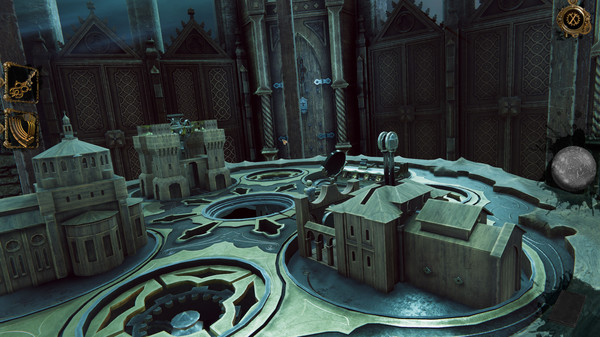 The House of Da Vinci 2 in play — image 4 as listed on the Steam store page (Steam store screenshot)
Design Craft
The craft is clearest in the reveals: mechanisms unlatching with sound, one device chaining into the next, proper ultrawide support. At showing handmade machinery, this studio is consistently good.
The hint system is not. The line that stayed with me came from a reviewer who recommended the game: the hints are useless, they restate what you already know. A hint that names the goal but not the observation cannot help in a game whose difficulty lives in observation. It reads as a step back from the tiered hints of the first game. The same reviewer notes there is no way to reset a puzzle.
Even the positive side wants less story. Just hand me my weird machines. The ending is called bizarre and inconclusive, the final cutscene a ten-minute slideshow. Where Quern - Undying Thoughts dissolves its telling into the scenery, this sequel adds chases and dialogue instead — an added layer on a series that grew strong by subtracting.
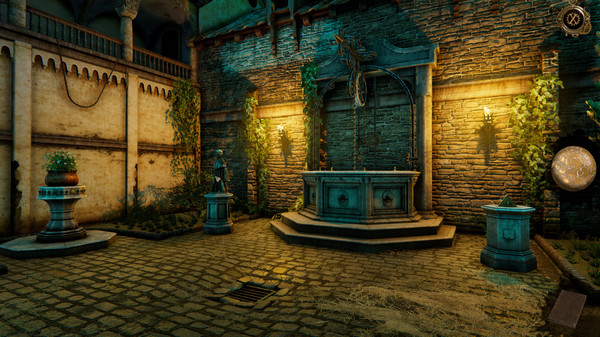 The House of Da Vinci 2 in play — image 5 as listed on the Steam store page (Steam store screenshot)
Sources
This piece was written by reading the user reviews on the Steam store page as of 2026-09-28. No review text is quoted directly; recurring claims are reconstructed.
・Steam: The House of Da Vinci 2 (Very Positive. 2,052 of 2,260 reviews positive across all languages and purchase types, about 91%; the English pool is 88% of 863)
・Read in full: the 20 most helpful positive reviews, the 10 most helpful negative reviews, and 8 recent ones (roughly 38 once duplicates are removed). Aggregate figures come from the query_summary returned by Steam's review API.
・The developer's own framing was taken from the store page's short description and feature list, which includes the phrase about redesigned, intuitive controls.
・The images are the store screenshot URLs returned by Steam's appdetails API, used verbatim. This environment could not reach Steam's image hosts, so their contents could not be inspected; the captions therefore do not identify what is depicted.
Closing
Steam sits at roughly 91% positive; my own design score is 7.6. Credit for the feel of opening handmade machinery and the consistency of the presentation. Deductions because the game demands a fine observation resolution that its camera and zoom cannot support. The number rose from the first game because the finish improved, not because that problem was solved.
Playtimes recorded in reviews run from four to sixteen hours, with a median near ten. Since the experience of difficulty genuinely varies, I have placed it in the middle.
If you like sitting with a mechanism, it still holds up. If your baseline is the crisp, bounded feel of The Room Three, the hunting will irritate you to the end. And if the controls were your only complaint about the first game — they carried over.
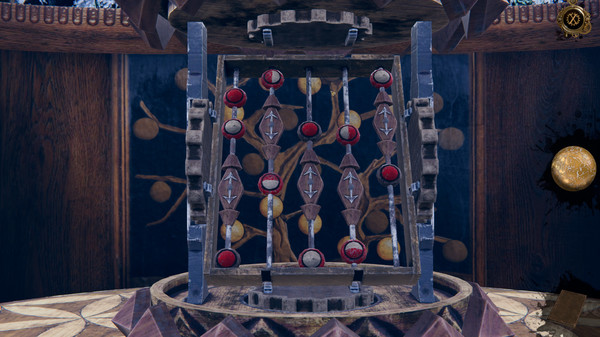 The House of Da Vinci 2 in play — image 6 as listed on the Steam store page (Steam store screenshot)
Where are you with this game?
Press one and the game goes on your shelf. You can see it on your account page.
Reactions (no login)
Anonymous • one of each per visitor per day
Read next

Related reviews
The House of Da Vinci
A first-person escape puzzler set in Florence, 1506: in the workshop of a vanished Leonardo you use a lens that sees inside objects and a device that replays the past, opening one wood-and-brass contraption after another. Built around nesting — every solved mechanism opens into a further one — by Slovakia's Blue Brain Games, 2017.
Tiny Room Stories: Town Mystery
An escape-room puzzle game in which a private detective, summoned to the deserted town of Redcliff, inspects diorama-like rooms that can be rotated and viewed from any angle, opening keys and combination locks while searching for his father. Made at a very small scale by Kiary Games and ported from mobile.
There Is No Game: Wrong Dimension
A meta point-and-click in which a narrator insists there is no game while you drag and click the furniture of the game itself — title screen, menus, cursor. Each chapter jumps into a parody of a different genre. Made by Draw Me A Pixel.


