REVIEW · 2020-08-06
There Is No Game: Wrong Dimension
A design you cannot refuse hints from — 598 negatives all point at one place
First Impressions
There Is No Game: Wrong Dimension sits at 97.7% positive on Steam: 25,464 of 26,062 reviews, labelled Overwhelmingly Positive (snapshot 2026-09-09). The number looks closed.
Open the helpful positives, though, and something odd happens. Close to half of the top entries are written in the game's own voice — there is no review, nothing to see here. The form of criticism has been colonised by the work. The score is legible; what it is scoring is not.
The 598 negatives are far more uniform. Nine of the ten most helpful negative reviews point at the same thing: a narrator who talks too much.
So the pool is not split over whether the game is funny. It is split over how to take the guide who never leaves your side. That is the part worth reading as design.
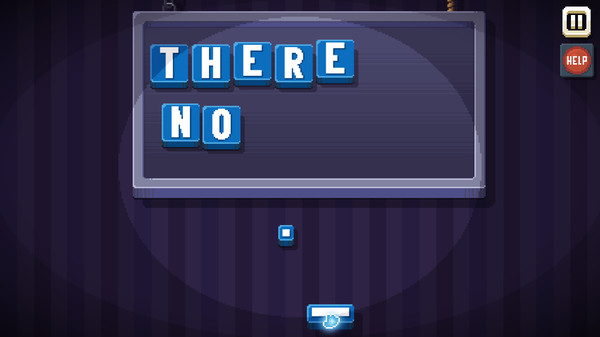 In-game view of There Is No Game: Wrong Dimension — Steam store screenshot
Putting the Mechanics into Words
The recurring praise words are creative, clever, meta, think outside the box. Vague, as praise goes. It is worth restating what they are pointing at.
They are pointing at where the verbs live. In an ordinary puzzle the pieces sit inside the board and you operate the board. This game moves the board one layer out: the title screen, the loading bar, the menu and the cursor itself become the things you handle.
You get two verbs — click, and drag. The subtraction is severe. What multiplies is the nouns. Where most puzzles hold the verbs steady and add boards, this one keeps adding definitions of what counts as a board.
So the demand is less deduction than observation resolution: a habit of looking at the parts of a screen you have trained yourself to ignore. It belongs on the same shelf as Pony Island and Inscryption.
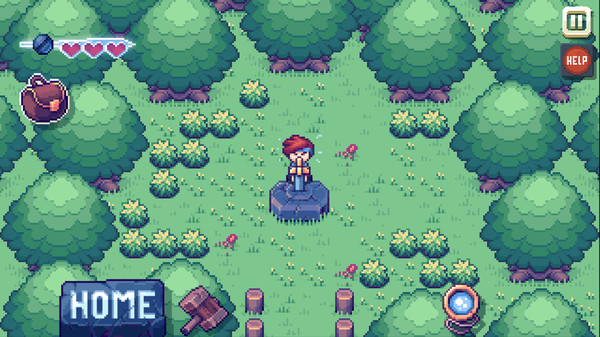 One of the store's in-game views — Steam store screenshot
Designing the Learning Curve
The negative side converges on one object: the narrator. He answers while you are still solving. He explains his own jokes. He drains the satisfaction. Different words, one target.
The awkward part is that the positives are praising the same voice — the performance, the banter, the late-game feeling. For them he is the work. One component is the charm and the flaw at once.
Read as design, the hint layer and the entertainment layer here are made of the same material. The narrator is both walkthrough and character, so the hints cannot be switched off on their own. Silence him and the story goes with him.
The learning curve is therefore flattened close to level: you are met before you can get stuck. I read that as a choice, not a failure. To protect the pace of a comedy, the game evicted being stuck from its own design.
The reach narrows accordingly. If you came for surprise and jokes it lands exactly. If your reward is the moment a wall gives way, the reward has been removed in advance. Neither reading is a mistake.
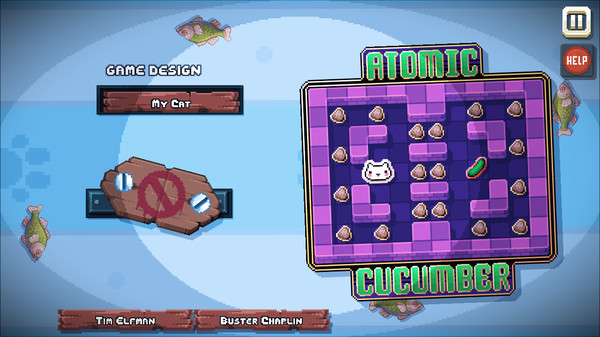 Another in-game view from the store page — Steam store screenshot
Pacing and Length
The second pillar of the dissent is the unskippable cutscene. Drag, slog, flow-breaking. One review claims the scenes inflate the length by half.
The structure explains it. Each chapter parodies a different genre, and several negatives report the same shape: the first two or three chapters are the best, then it declines. Even some positives concede that it overstays.
This is a structural weakness of parody itself. To mock something tedious you must first reproduce the tedium for the player. The longer the reproduction, the more fatigue outlasts the joke. One reviewer put it precisely: the game makes you play the bad experience it is making fun of.
The length is not extreme. The median playtime across the reviews I read is about five and a half hours, close to the store's own estimate. Next to a short piece like Please, Don't Touch Anything, though, it is long for a comedy to sustain.
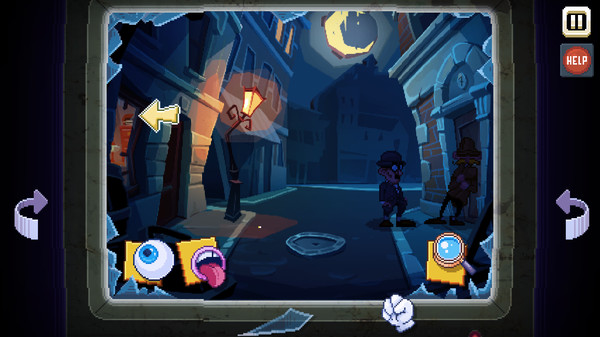 One of the store's in-game views — Steam store screenshot
Reviews Consulted
This piece was written from the user reviews on the Steam store page as of 2026-09-09. No review text is quoted directly; recurring claims are reconstructed instead.
・Steam: There Is No Game: Wrong Dimension (Overwhelmingly Positive, 25,464 of 26,062 reviews positive = 97.7%)
・Read via WebFetch: the top 10 helpful positive reviews, the top 10 helpful negative reviews, and the 8 most recent reviews (28 in total)
・Wikipedia: There Is No Game: Wrong Dimension (jam-game origin, credits, Metacritic aggregate)
・On the images: this run could not reach Steam's image servers, so the pictures could not be opened and inspected. The captions are therefore kept generic rather than describing contents I could not verify.
Closing
The press aggregate is reported as 89 on Metacritic (PC), and the professional axis leans on surprise and humour. The user complaints sit in a layer that only surfaces after five hours — pushed hints, unskippable scenes. They are not the kind of flaw a short demo exposes.
The origin matters too. The game is reported to have grown out of a 2015 game jam entry. Stretching a fifteen-minute piece to five hours lines up uncomfortably well with the word the negatives keep using: padding.
I give it 8.0, below Steam's 97.7%, for one reason: there is no way to refuse the hints. The invention is real — like OneShot, it makes you handle what sits outside the frame — but the player does not get to set the speed at which the invention is enjoyed.
Who it is for is clear: anyone who wants surprise, jokes, and the feel of prodding the machinery of a screen. Who it is not for is equally clear: anyone whose reward is the time spent stuck and the way out found alone. That time has been deliberately removed.
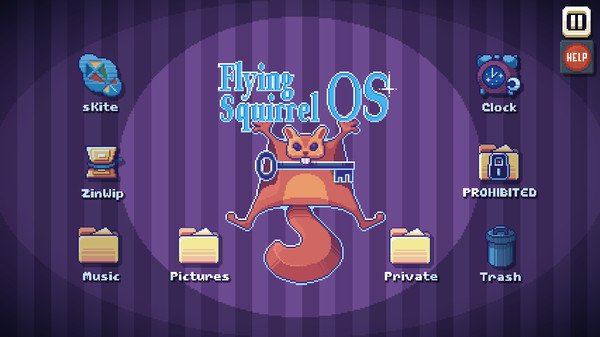 Another in-game view from the store page — Steam store screenshot
Where are you with this game?
Press one and the game goes on your shelf. You can see it on your account page.
Reactions (no login)
Anonymous • one of each per visitor per day
Read next

Related reviews
Röki
A point-and-click adventure through a snowbound forest drawn from Nordic folklore, following Tove as she gathers and combines objects to search for her sister. Polygon Treehouse's game has no combat and no fail state, carried instead by hand-drawn landscapes and a story about loss.
Evan's Remains
A 2D puzzle adventure built from single-screen block puzzles — platforms that vanish once you step off them, blocks that switch other blocks on and off — carrying the story of Dysis, a girl searching for a missing boy named Evan. A game by maitan69.
Happy Game
A point-and-click adventure that walks a sleeping boy through three chapters of nightmare. You pull, turn and pick at the screen to open the way forward, and what waits there is smiley faces, pink bunnies and rooms the colour of blood. Amanita Design's first turn toward horror, scored by the Czech band DVA.


