SOUNDTRACK · 2026-10-01
Soundtrack: Planet of Lana — When the melody does the narrating
Takeshi Furukawa
Introduction — In a world without dialogue, the melody is the narrator
The music of Planet of Lana (2023, Wishfully) hands the job of narrator to a single melody, because the story has no spoken lines. The composer is Takeshi Furukawa, known for The Last Guardian, and he pitched himself to this project.
You play Lana, a girl, with a strange creature called Mui, chasing her kidnapped sister Elo across a ruined planet. It is a polished 2D adventure with light puzzles; our reviewer Komugi rates the difficulty “easy” (Planet of Lana review). That is exactly why the music carries so much of the emotion. With a black coffee, I want to take it apart.
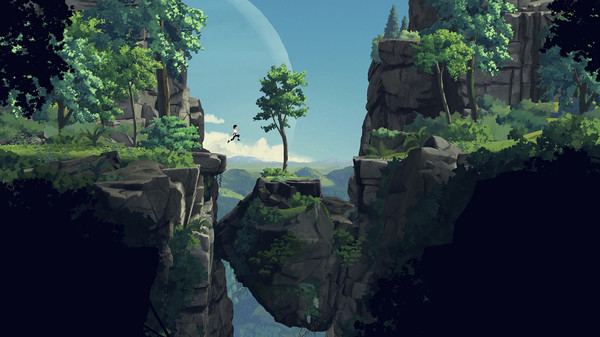 Planet of Lana gameplay (Steam store page)
The hidden link to the experience — one unprompted email
How he got the job is unusual. According to GamesRadar, co-founder Klas Martin Eriksson said that Furukawa “emailed us out of the blue based on an image of the game,” and that it was the first time he had ever done that.
Eriksson also said the music plays “a pretty integral part of the story” (details withheld). The team had considered a dialogue-free story from the start, telling it through body language and sound. A composer who could hear music from a single image joined them there.
In the Laced Records interview, the method is “show, don’t tell.” The two co-directors passed over gameplay captures and Furukawa wrote to them, spotting the game like a film: music here, sound design there.
Puzzle-specific design — a theme a beginner can play, and tension through repetition
The soundtrack’s biggest trait is how plain its themes are. On WSHU’s Music Respawn, Furukawa said he wanted melodies simple enough for a beginning piano student, like his daughter, to play.
In the Laced Records piece he names John Williams, Jerry Goldsmith and James Horner as influences, and says melodies are “idiomatic to the orchestra.” Strings are the foundation, with colors built around them.
Tense scenes use a different tool. In “Scout Bot” and “Planetarium,” short patterns repeat while layers build slowly, a minimalist approach. When a figure repeats, the listener notices fine differences, and the energy holds without turning monotonous.
The Hungarian Studio Orchestra recorded the score, with Furukawa conducting from the piano. Singer Siobhan Wilson joins for the end credits.
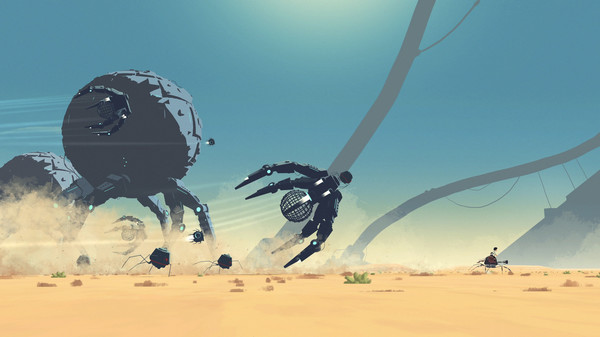 Another scene from Planet of Lana (Steam store page)
Analogy with the puzzle — quiet while solving, singing once solved
The puzzles in Planet of Lana ask for short thinking. You move a device, lean on Mui, and go on. Unlike long-think games, the hands rarely stop.
So the music stays modest right before a pause. The melody appears briefly to match the picture and fades as you move. It is quiet while you solve, and the theme stands when the view opens up. That order fits the tempo of insight followed by release.
My reading: this is music that accompanies travel, not thinking. Silence suits long thought; melody suits a journey. This game chose the latter.
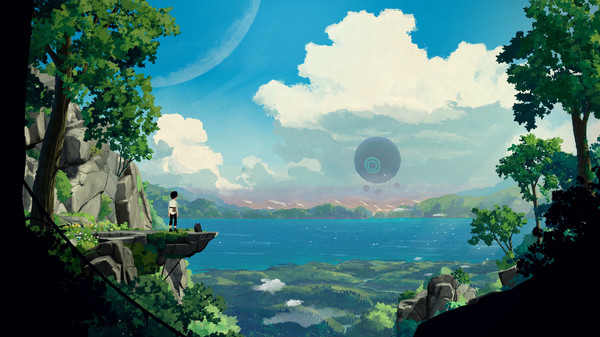 A landscape in Planet of Lana (Steam store page)
Tracks to hear
Start with “Meet Mui,” a cue named for meeting Mui. This is the official release (SonySoundtracksVEVO), and it shows the theme in its plainest form.
Then “End Credits,” where singer Siobhan Wilson joins and gathers the journey into one line. Also an official release (SonySoundtracksVEVO).
The album is on major streaming services. Do listen to the repetition-driven tension of “Scout Bot” and “Planetarium” as well.
Closing — what I would steal for my own tracks
What I would steal: narrow the theme down to something anyone can hum. Complex harmony can come later. If the first melody is simple, the track stays recognizable even when instruments and layers change per scene.
The other: switch to repetition only where tension is needed. Push with layers, not melody. The same material can draw both peaks and valleys.
On the release of the sequel, Planet of Lana II (August 2026, Milan Records), Furukawa said: “Long after we put down the controller, it is the melody that continues the story in our memory.” A line worth keeping in mind for anyone making a dialogue-free game.
For another wordless game, compare it with the INSIDE soundtrack. Both choose not to speak, but they use sound in opposite ways.
Sources
・Laced Records: Takeshi Furukawa bet big on bold melodies for Planet of Lana
・GamesRadar+: The Last Guardian composer took one look at Planet of Lana and reached out on the spot
・WSHU Music Respawn: Takeshi Furukawa's compelling soundtrack for Planet of Lana
・Milan Records: Planet of Lana II: Children of the Leaf (Original Soundtrack)
・YouTube(SonySoundtracksVEVO): Meet Mui
・YouTube(SonySoundtracksVEVO): End Credits
・Note: images are screenshots from the Steam store page; captions are kept generic because the scene content was not individually confirmed.
Reactions (no login)
Anonymous • one of each per visitor per day
関連シリーズ
Puzzle Soundtracks第111回 / 全111回
Read next
Related reviews
Tetris Effect: Connected
Le jeu de blocs qui tombent que tout le monde connaît, avec des règles laissées strictement intactes. Sur plus de trente niveaux, la musique et la lumière réagissent au moindre geste. Deux ajouts seulement : une « Zone » qui fige le temps et permet d'effacer plus de quatre lignes d'un coup, et un mode coopératif à trois où les plateaux se rejoignent. Signé Enhance, le studio de Tetsuya Mizuguchi.
FRACT OSC
Un puzzle d'exploration musicale a la premiere personne : on parcourt une vaste ruine faite de synthetiseurs, on actionne des noeuds lumineux et des dispositifs sonores pour reveiller la machinerie et la musique endormies. Presque aucune instruction ; comprendre ce qui est interactif est deja l'enigme. Phosfiend Systems, 2014, laureat du prix de design audio de l'IndieCade.

