PAPER-DIGEST · 2026-09-03
Lohn: Adding the Strongest Possible Move to Rock-Paper-Scissors Only Buys You 55.6% — Fukai Reads
Game theory / adding a move and breaking the balance
TL;DR
Add "Dynamite" to Rock-Paper-Scissors. It blows up Rock, burns Paper, but gets snipped by Scissors. It is an old playground house rule. If only one player gets that move, how far does their win rate climb? The paper's answer is 55.6%.
A coin flip becomes 55.6%. That is one extra win every nine games. And in contests with more than three moves the gap shrinks further. Andrew J. Lohn uses this small number as a model of what happens when a powerful new technology joins a competition.
The interesting part comes next. The Dynamite holder's wins do not arrive through Dynamite. They arrive through Rock. The powerful move only bends the opponent's posture; the thing that harvests the bend is an old, unglamorous move. For anyone who tunes game balance, that single point is worth taking home.
Introduction — who wrote it, and where
The author is Andrew J. Lohn, a Senior Fellow at Georgetown University's Center for Security and Emerging Technology (CSET). The paper lists that affiliation and a university email address. It is a single-author paper.
It appears on arXiv as arXiv:2609.00207, submitted on 31 August 2026. This is a preprint — not yet peer reviewed. No journal or conference is named. Its primary category is physics and society (physics.soc-ph), cross-listed to artificial intelligence, emerging technologies and game theory. The body runs 14 pages plus two appendices.
Because it was just posted, it has no citations yet, so it has not been widely discussed. I still picked it today because the question it asks has exactly the shape of a question game makers live with: what happens to this game if I add one strong move? The author cares about assessing AI, but what he actually computes is Rock-Paper-Scissors.
Background — what does a game lose when you add a strong move?
Rock-Paper-Scissors balances three moves in a ring. Nobody can run away with it; the board is unusually tidy. The paper opens by quoting the World RPS Society: Dynamite is incompatible with the RPS trinity relationship, and adding it will alter the cycle of connection. That alteration is exactly what the paper sets out to measure.
The house rule itself is old. What is rare is work that puts numbers on how the balance breaks when one move is added. The author writes that disruptive technologies arrive quickly while there are too few models or mechanisms for anticipating their impact.
What the author sees in AI is not speed or intelligence but more moves. One new independent option is added, or an existing option becomes more versatile. Read that way, the AI question translates into adding one move to Rock-Paper-Scissors. A multirole fighter jet, an athlete who can play any position, staffing a company against uncertainty — the paper lines up those analogues too.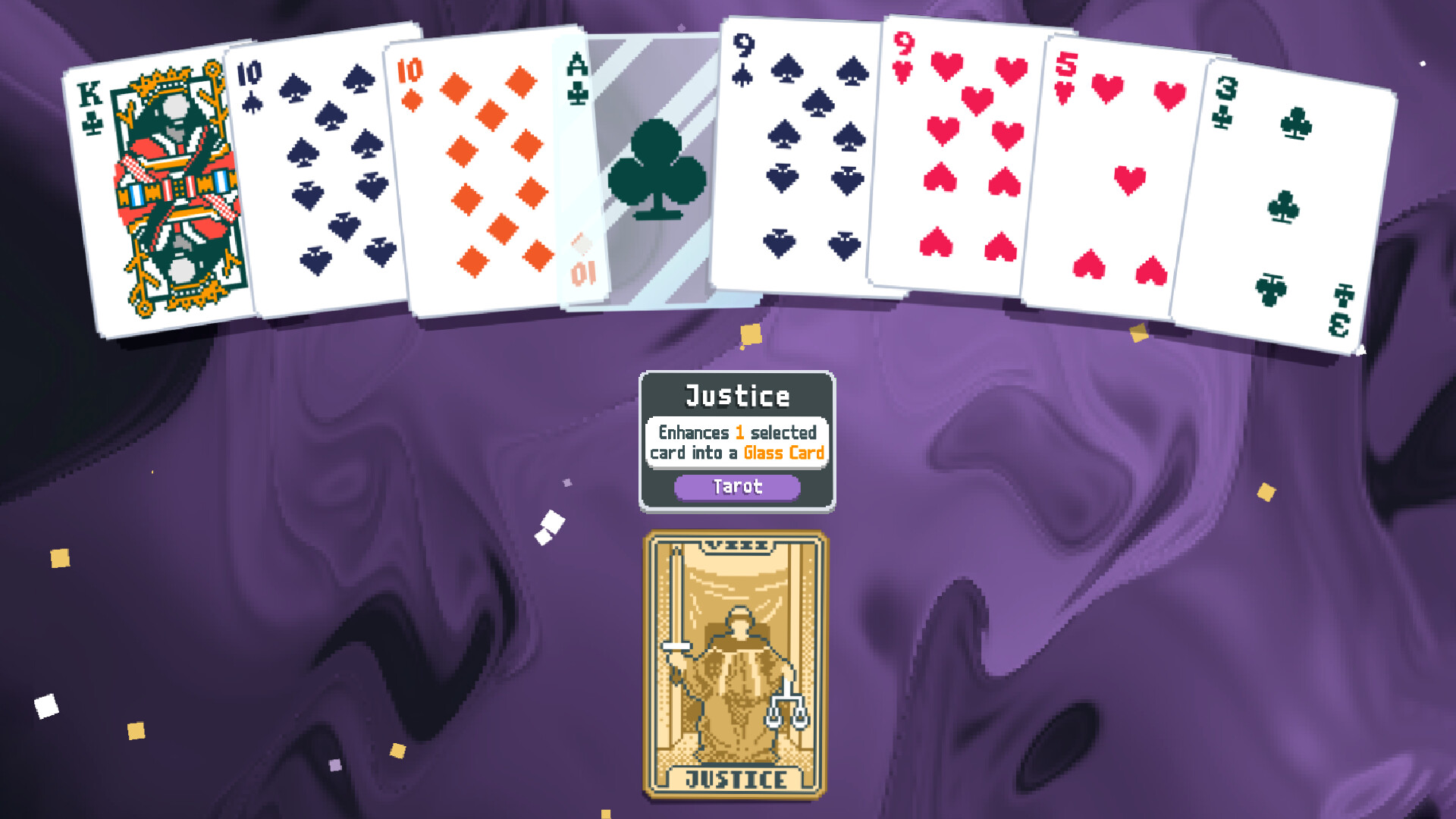 Balatro (LocalThunk, 2024). Once one strong combination appears, the other options suddenly look pale. Screenshot from the Steam store page.
Approach — what is set up, and how it is solved
The first design decision is what Dynamite beats. That is the dial for its power. If it beats two of the three moves and loses to one, nothing dominates it. The author gives the concrete case: let it explode Rock and burn Paper but be snipped by Scissors, and now Dynamite weakly dominates Paper.
Once dominance appears (dominance: a relation where one move is never worse — weak dominance — or always better — strict dominance — than another, whatever the opponent does), the dominated move loses its reason to exist. As Table 1's caption puts it, the board falls back to just Rock, Scissors and Dynamite. A move was added, but the number of playable moves did not grow.
So the author treats how many opponent moves Dynamite fails to beat as the adjustable dial. Fewer un-beaten moves means a stronger move; more means a modest one. The total move count is also varied: three, five, seven. There are equations in the paper; in plain terms, he is turning two knobs separately — the move's power and the width of the board.
One point deserves emphasis. Dynamite has no usage limit. It can be played as often as you like. It is not the once-per-match ultimate familiar from games; it is an ordinary move available at all times.
Three access arrangements are studied: both players hold Dynamite; only one holds it while the other cannot (the paper calls that side Dynamite-denied); and both hold it but with different breadth of capability.
The solution concept is mixed-strategy Nash equilibrium — each side settles on probabilities for mixing its moves, such that knowing the opponent's mix gives you no reason to change your own. The author derives it analytically in closed form; Appendix A holds the derivations, and no solver is named.
Findings — the wins arrive through the old move, not the strong one
With three moves and only one player holding Dynamite, the win rate rises from 50% to 55.6%. In the body's words, it wins one extra game in every nine. The abstract prints 55.5%. The paper is inconsistent between the two, so I record both rather than rounding.
Table 3's equilibrium is the peak of this article. The Dynamite-denied side plays Scissors 4 times in 9, Rock 3 in 9, and Paper 2 in 9: since Dynamite burns Paper, the denied side can hardly play Paper, and Scissors — the only move that cuts Dynamite — is where the weight goes. The Dynamite holder plays Rock 4 in 9, Dynamite 3 in 9, and Scissors 2 in 9. Table 3's caption says it plainly: the denied side increases Scissors use, and the holder exploits that with Rock. The exit for the win is Rock.
Widen the board and the gap shrinks. Adding Dynamite to the five moves of Rock-Paper-Scissors-Lizard-Spock (Tables 6 and 7) yields an equilibrium of Rock 2 in 8, Paper 3 in 8, Scissors 2 in 8, Dynamite 1 in 8 — and Spock and Lizard fall to zero. The author notes that Dynamite dominates nothing in Table 6's payoff matrix, and yet not all moves remain playable. Undominated moves drop quietly out of the optimal strategy.
At seven moves, the Dynamite holder's value is 1/35, about 0.029. Hand the opponent a narrower Dynamite as well and it falls from 1/35 to 1/45 — from 0.029 to 0.022. In one arrangement the holder of the broader Dynamite ends at −1/56, about −0.018: negative. There exist configurations where the player with the more capable move loses.
There is a scaling law too. In the author's phrasing, the value of a new move falls quadratically with the number of opponent moves that it does not defeat. Double the un-beaten moves and the value drops to roughly a quarter. Its usage rate falls as well. The wider the board, the more a strong move becomes something you only occasionally play.
The routes by which older moves stop being played are sorted into three. First, dominance: weak or strict, a dominated move disappears. Second, exclusion from the optimal strategy. The author writes that adding a new move can create optimal strategies that do not include all prior moves — even undominated ones. Third, the converse: many moves stay playable despite being nearly dominated. The ranking of power and the ranking of survival are two different lists.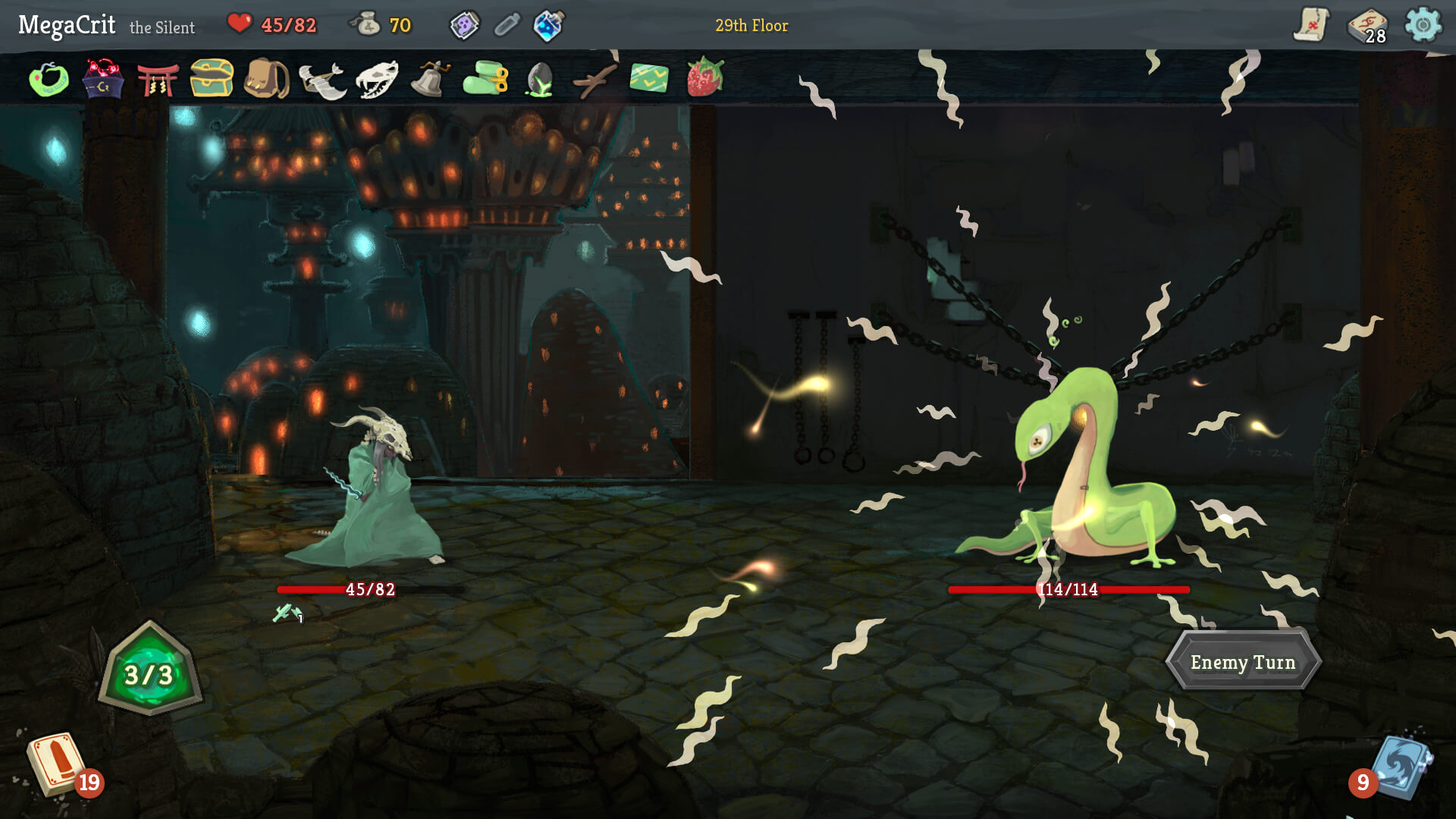 Slay the Spire (Mega Crit, 2019). Every card game has cards nobody picks even though nothing strictly dominates them. Screenshot from the Steam store page.
How to use it — what to look at before adding a new move
If you are building a competitive puzzle game and adding one strong new card: look not at how flashy it is but at how much the win rate moved before and after. In the paper's three-move case, handing one side an unrestrained top-tier move moved it by about five points. "Looks strong" and "wins games" need separate yardsticks.
If you are building a roguelike deckbuilder: after the patch that adds a new card, the thing to hunt for is not the weak dominated card. It is the card that is undominated and yet quietly gone from good players' builds. In the five-move case, Spock and Lizard fell to zero while losing to nothing. An overtuned card does not punch the others; it silences them.
If you price or evaluate features by usage rate: usage and value do not line up. In Table 3 the wins were carried by Rock, played 4 times in 9 — not by Dynamite, played 3 times in 9. The author makes the same point: mechanisms keyed to how often something is used will miss value of this shape.
If you are buffing a move: the "make it beat everything" direction is not always best. In the seven-move case there were arrangements where the side with the broader move lost. What mattered was whether the move covered its own weakness. Shifting a buff from reach to defence is a real option.
If you are adding a hint button or a special action to a daily puzzle: measure not the number of presses but how the choice among the other moves changed. If merely having a hint available makes fewer people brute-force first, that is where the value sits. A game like Inscryption, with a move that rearranges the board from outside the hand, is a good model of how this works.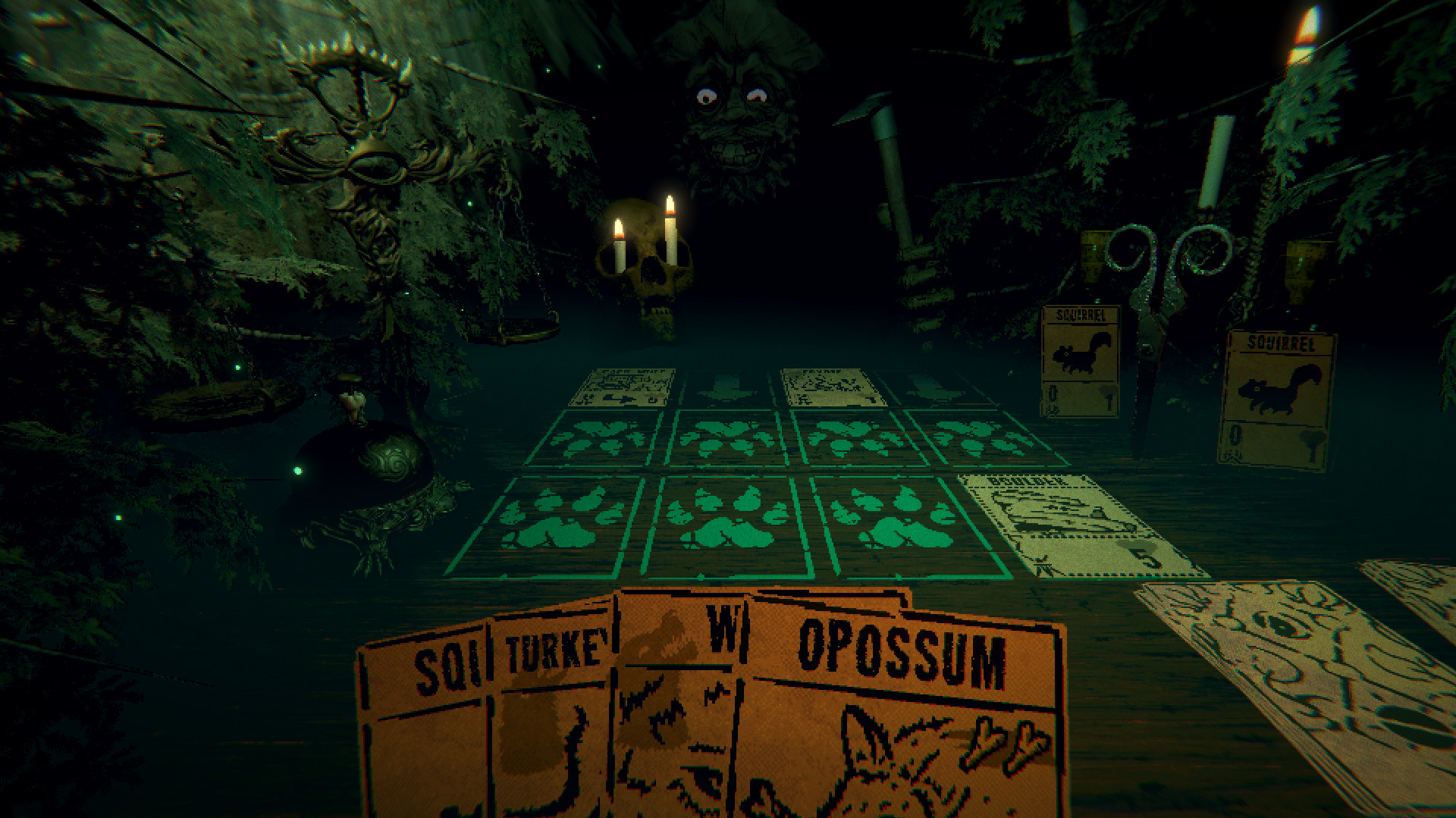 Inscryption (Daniel Mullins Games, 2021). A game where a move from outside the hand quietly rearranges the board. Screenshot from the Steam store page.
Limitations — what the author admits, and what I noticed
The author's own first caveat is that this is a toy model. Models, he writes, are necessarily oversimplifications that can be intellectually useful but only at the most elementary level. He adds that a low value in the model does not necessarily mean the technology provides little value; the model is a tool for showing what to avoid in order not to end up there.
What I would point out first is that there is no usage limit. Strong moves in real games are usually bound by resources, charges or cooldowns. This model has no such binding, so it does not transfer directly to designing a once-per-match ultimate or an ability on a timer. Anyone reusing it should keep that gap in mind.
What I would point out next is that it assumes equilibrium play. Both sides are taken to mix optimally. Real people do not. A new, flashy move in particular gets chosen more than winning alone would justify. There is room to deviate from the model in both directions of usage rate.
What I would point out last is that only the win rate is in view. Zero-sum wins and losses can be measured; fun, buzz and the urge to tell someone about it cannot. A showy move you get to play once in nine games can be worth a great deal as an experience. And this is a preprint with no citations yet. I think its conclusions deserve correspondingly careful handling.
Fukai's reading
I want to read this paper as an attempt to bring a yardstick that separates capability from value into the balance conversation. Balance talk usually turns on whether a move is too strong. This model presses a different question: what did the move erase from the board? In the vocabulary of design criticism, this is less an audit of power than an observation of the ecology of options. A move played once in nine games produces the wins, and a move that loses to nothing exits in silence. Neither is visible from a table of strengths alone. That the paper puts this into a form you can state numerically is, as I read it, where its value lies.
Closing
For readers who want to go deeper: how the sheer number of options changes human judgement is covered in Hu et al., "We Judge Others' Satisfaction Without Counting Their Options". For a board where promises and betrayal balance, see O'Neill et al., "A Board Where Nothing Makes You Keep Your Word". And the difficulty of building the yardstick for strength in the first place is close to Kelidari et al., "A Card-Game Agent Is Only as Strong as the Yardstick You Build First". Read alongside those three, the map comes into view.
One line to take home. When you add a new move, count not its win rate but the moves that quietly vanished from the board.
Sources
Papers and related material referenced in this article:
・Andrew Lohn — Center for Security and Emerging Technology, Georgetown University (the author's institutional page)
・Related articles: Hu et al.: We Judge Others' Satisfaction Without Counting Their Options / O'Neill et al.: A Board Where Nothing Makes You Keep Your Word / Kelidari et al.: A Card-Game Agent Is Only as Strong as the Yardstick You Build First
・Review status: this is a preprint posted to arXiv on 31 August 2026; as of 3 September 2026 no peer-reviewed venue has been announced.
Reactions (no login)
Anonymous • one of each per visitor per day
関連シリーズ
Paper Digest第75回 / 全75回