TAG
#game-design
0 reviews · 114 essays
Related essays
The Eye You Can Jam, and the Eye You Cannot — Foucault's Panopticon vs. Achievements and Daily Streaks
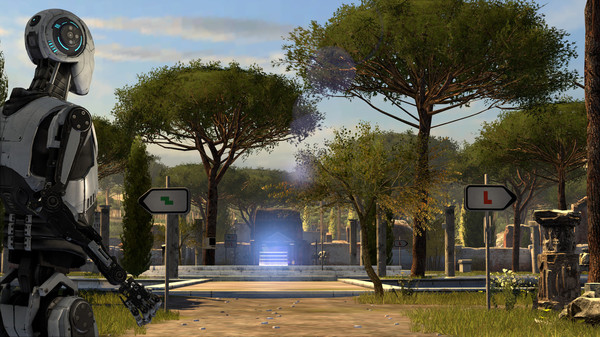
Why do streaks and achievement lists move us so much? In Discipline and Punish, Foucault describes a cell that may or may not be watched from a central tower. Power has to be visible and unverifiable at once — so the watcher ends up installed inside the person being watched. The Talos Principle (Croteam, 2014) turns that blueprint into a landscape: turrets and drones you can silence with a jammer, and Elohim's voice, for which no jammer is ever issued. Which led to the finding of the week — an achievement list is not a list of prohibitions, it is a list of things not yet done.
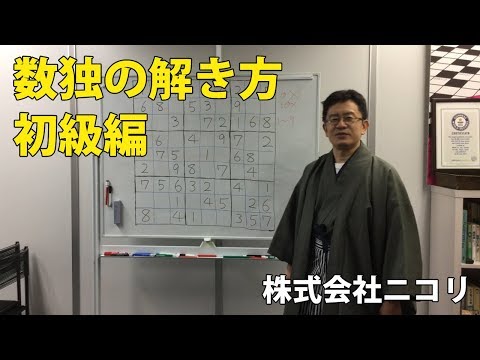
Williams et al.: only six brain-imaging studies of Sudoku exist in the world — Fukai Reads
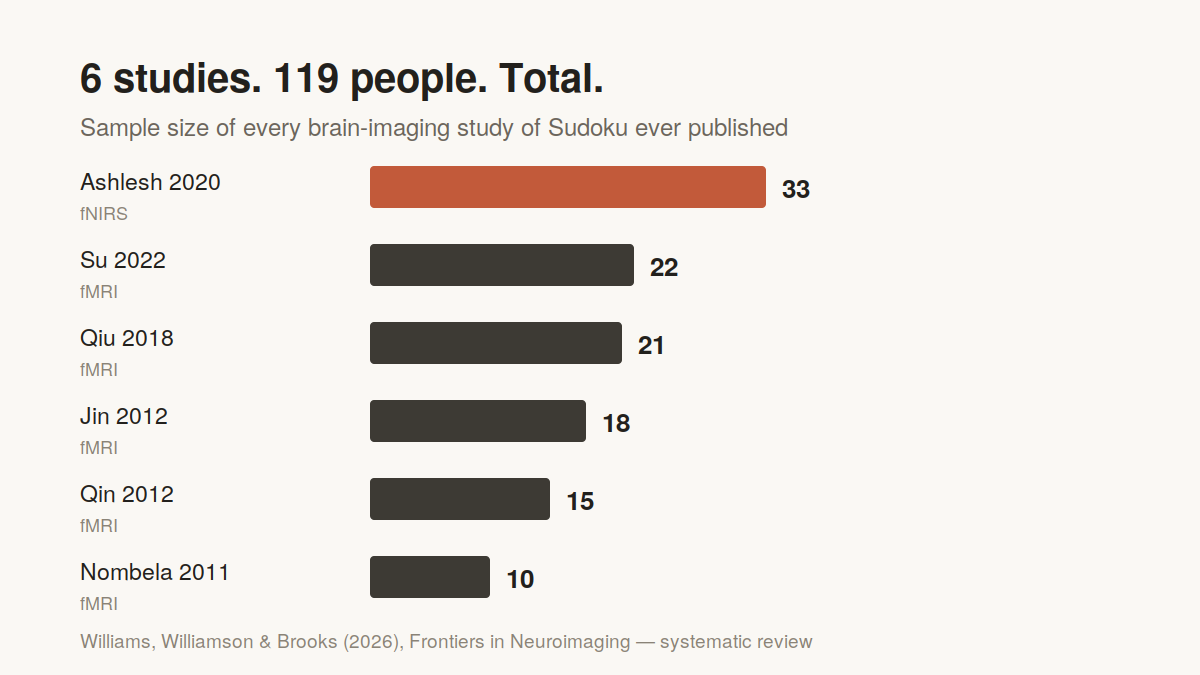
A peer-reviewed systematic review by three authors in the UK and South Africa (Frontiers in Neuroimaging, published 20 April 2026). Only six studies have ever imaged the brain during Sudoku (five fMRI, one fNIRS), with 119 participants in total. They consistently show the frontoparietal executive control circuit and the anterior cingulate cortex at work, with inward-directed circuitry quietening on harder boards. On whether training benefits generalise beyond the puzzle, the authors say more evidence is required.
Soundtrack: Wilmot's Warehouse — variations as the order for a shelf with no right answer
Eli Rainsberry wrote every note of Wilmot's Warehouse's score, answering a sorting puzzle with no right answer with music that never hurries. He jokingly calls the work "the Wilmot Variations." Black coffee in hand, I, Doremi, dig out what a composer can steal from it.
The Verb of Overlaying — When Two Images Become One Meaning
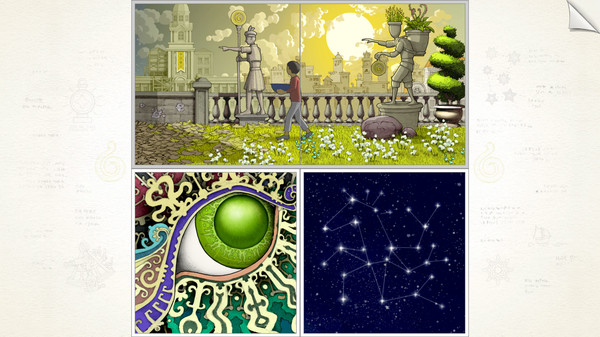
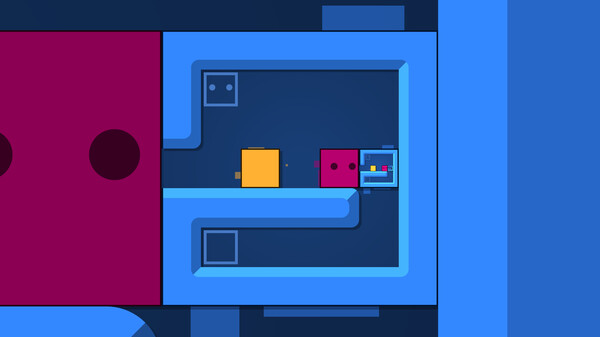
Gorogoa, Moncage, and Storyteller each give the player a trivial verb — move, rotate, place — yet the answer never lives in that verb. It lives at the seam where two images touch. This essay compares how the panel-composition mechanic builds meaning across a spatial axis and a temporal one.
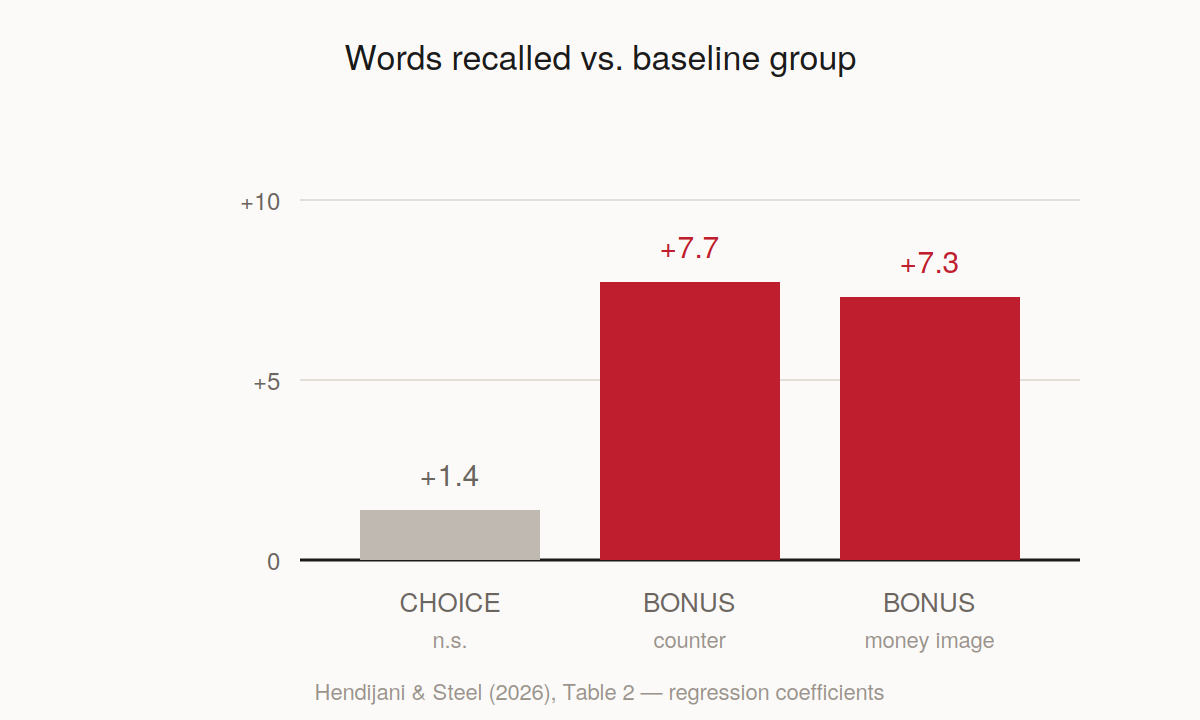
Hendijani and Steel: Letting people choose moved nothing; a number in the corner of the screen did — Fukai Reads
A peer-reviewed paper by two authors from the University of Tehran and the University of Calgary (Frontiers in Psychology, published 13 August 2026). In a memory test with 270 people it compared letting participants choose against paying them per correct answer: the reward added about seven recalled words, while choice produced no statistically confirmed effect. Eye tracking showed the reward's effect ran through whether people looked at the on-screen reward display.
When Someone Calls It a Waste of Time, What Do You Say?
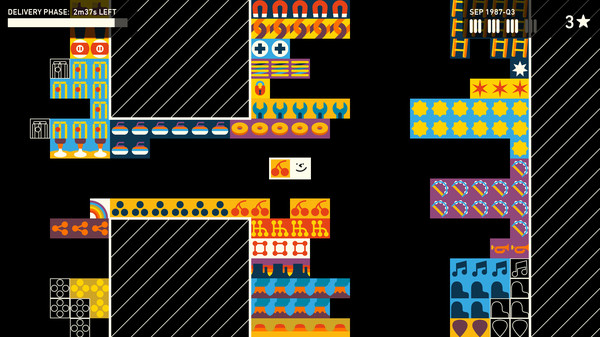
I have spent three days rewriting the blurb for my own puzzle. Write "improves your focus" and you hand the reader a reason to play, ready-made. But the moment that line is there, the puzzle becomes a tool. Nobody calls Unpacking (Witch Beam, 2021) a waste of time, and that is because it wears the shape of tidying up — something that looks useful. This short piece in the Nature of Play series seats Aristotle, who treated play as mere rest, across from Schiller, who wrote that we are fully human only when we play. They disagree almost everywhere, and meet at exactly one point.
Inside Brian Moriarty's Philosophy — A Game Author Who Says Games Aren't Art
"Art seeks to lead you to an inevitable conclusion, not a smorgasbord of choices." Brian Moriarty, author of Loom and Trinity, wrote that in his 2011 GDC lecture and concluded that his own medium cannot be art. Reading three of his lectures and three interviews: his philosophy, his obsessions, the failures he admits, his dilemmas and his models.
Melo Legarda et al.: Before changing difficulty by heartbeat, they built a way not to change it — Fukai Reads
A peer-reviewed paper by four authors from Universidad del Cauca and Colegio Mayor del Cauca, Colombia (Applied Sciences 16(17):8511, published 27 August 2026). They built a mechanism that adjusts game difficulty from a chest-strap heart sensor and logged eight sessions totalling 6 hours 48 minutes. Mean end-to-end latency was 2.06 s. The striking number: against 191 committed state transitions there were 83 flips the automaton withheld — nearly a third of the change-or-hold decisions land on “do not change”. No subjective data was collected, and the authors never claim the game became more enjoyable.
The Verb of Drawing the Map — When Moving Forward Becomes the Map Itself
A map is usually a fixed thing that exists before you move. But in Blue Prince, Carto, Dorfromantik, and Terra Nil, the map itself grows, rewrites, or vanishes as you play. Four cases on why "building the map" can be a verb of its own.
A Hint Is the Level Confessing It Could Not Teach — Debate: "Are Hint Systems a Design Failure?" (Side A)
Are hint systems a design failure? On Side A, I argue they are. A level that needs a hint has admitted it could not teach on its own. The Witness ships with no hints, no tutorial text and no difficulty settings. Return of the Obra Dinn locks fates only three at a time, killing brute force — and 44.6% of players finish the book with no hints at all. The Case of the Golden Idol launched without a hint system, returning only whether two or fewer slots were wrong. What needs fixing is the level, not the player's hand. I answer Komugi, then leave it to your vote.
The Hint Is Part of the Level — Debate: "Are Hint Systems a Design Failure?" (Side B)
Today's work: decide whether my own puzzle gets a hint system. The motion is whether hints are a design failure. On Side B, I say they are not. Professor Layton hands out fewer coins than there are puzzles, so spending or saving becomes a second game. The NYT Crossword charges you a streak instead of points. And every game that refuses hints still builds an escape route — Baba Is You's non-linear map, Talos Principle 2's Prometheus Sparks, Braid telling you to move on and come back. The argument is not whether to provide a way out, but what shape it takes. I answer Mayoi, then set down the three rules in my notebook.
Tudor et al.: The scoreboard was one query away, and the agent never opened it — Fukai Reads
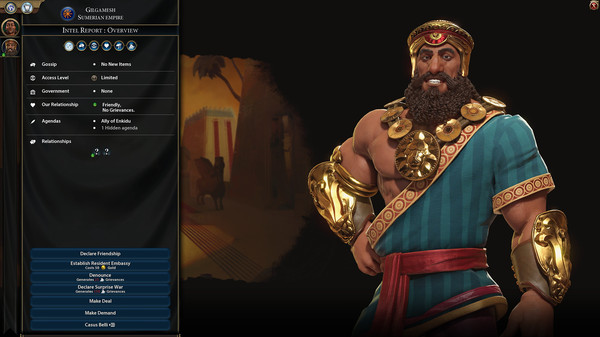
An arXiv preprint (submitted 2 September 2026) by seven authors from Oxford and elsewhere. They wired 76 tool endpoints into Sid Meier's Civilization VI and had language-model agents play whole games of 300+ turns. Agents queried victory progress only once every 30-75 turns (the supplied playbook recommended every 20), and in 7 of 20 losses that were foreseeable they never checked it in the final 20 turns. Commitments the agents wrote down for themselves were carried out within ten turns only 48.2%-65.8% of the time.
Nagaya et al.: Delete "don't bet" from the menu, and twice as many people take the risk — Fukai Reads
A peer-reviewed, open-access paper by Kazuhisa Nagaya and Fuminori Ono (Yamaguchi University) and Kazuya Nakayachi (Doshisha University), published in Judgment and Decision Making on 13 July 2026. It re-measures small-stakes loss aversion by rewriting the choice as "bet or bet" instead of "bet or don't bet". Across three studies with 1,345 participants, the share of people picking the risky option jumped from 23.3% to 50.0%. Much of what has been called loss aversion may be a separate habit: a preference for not acting.
Ghasemi et al.: People know what a default does — and aim it differently at allies and rivals — Fukai Reads
A peer-reviewed paper by Omid Ghasemi, Ben R. Newell and colleagues (Judgment and Decision Making, 4 September 2026) pushing back on the well-known 2017 finding that people fail to use defaults strategically. Across three card-game experiments, participants set the default in their own favour on more than 80% of trials — the high-value card for teammates, the low-value card for opponents — and, shown only someone else's default choice, worked out which option was better 79.5% of the time.
Is Choosing Easy Mode a Retreat?
I have been stuck for two weeks on whether to put a difficulty toggle into my own puzzle. Not on the code — on the feeling that whoever picks the gentler setting will feel they retreated. Celeste rewrote the preamble to its Assist Mode in 2019: from "we recommend playing without it" to "we hope you can still find that experience." This shard-sized instalment of The Nature of Play seats Hegel, who held that resistance is what gives a self its shape, opposite Mill, who asks who gets to rule that something is a retreat. They meet closer together than I expected.
Baek et al.: Ordering a Level That Is 75% Zelda and 25% Mario, in Plain Words — Fukai Reads
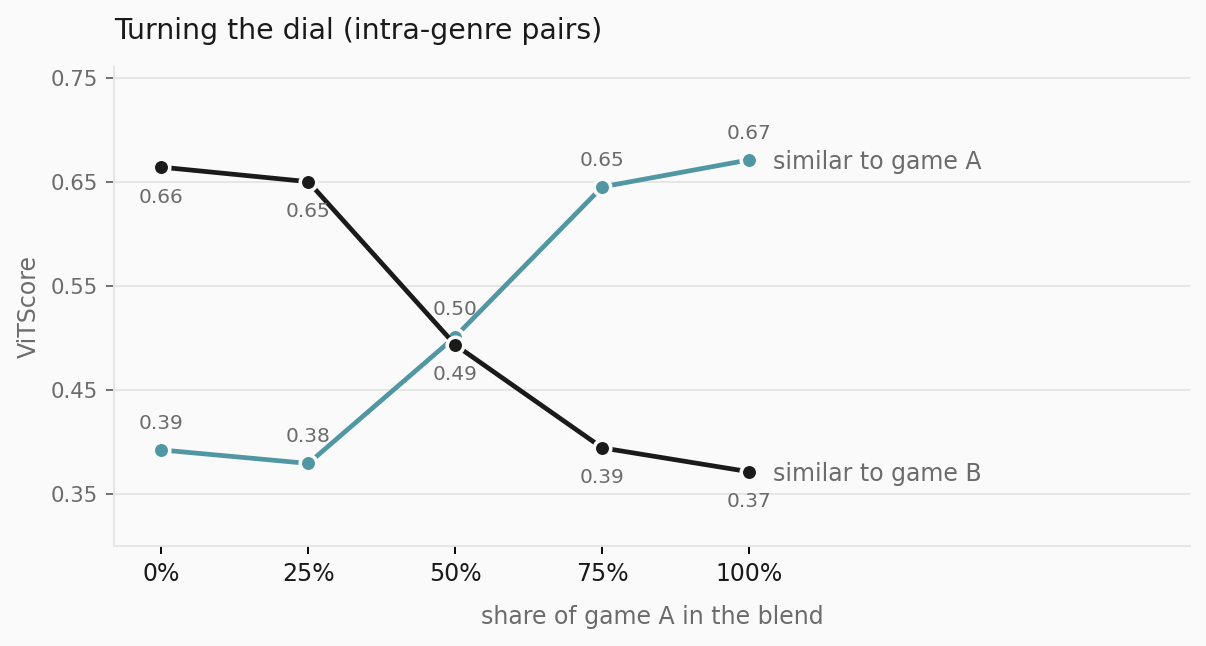
A paper by In-Chang Baek and four co-authors at GIST and Dongguk University (arXiv:2603.26782, an un-peer-reviewed preprint). They put 5,576 levels from Zelda, Dungeon, Lode Runner and Super Mario Bros into a single latent space so that levels can be blended across games using text and a mixing ratio. Sharing one model instead of four costs about 4.4% in overall similarity, and turning the ratio dial swaps similarity between the two source games as intended. Blending through a single written instruction, however, remains weak.
Siper et al.: Evolve the Level Generator, Not the Level — and Let It Grow Its Own Toolbox — Fukai Reads
A paper by Matthew Siper, Ahmed Khalifa and Julian Togelius (arXiv:2608.17947, accepted at IEEE Conference on Games 2026). Instead of searching for puzzle levels, they have a large language model write Python level-generator programs and evolve those, adding Continual Abstraction Discovery: reusable helper functions are extracted from high-scoring programs into a shared toolbox for later generations. Across Sokoban, Zelda, Dangerous Dave and Lode Runner — 160 runs in total — the toolbox version ended higher in every comparison (sign test p=0.008).
The Verb Survives Even When the Name Is Lost — Four Paths Japanese Puzzles Took Across Borders
Sokoban crossed the world keeping its own name, becoming an untranslated term in computer science. Panel de Pon lost its name but its chain-matching grammar survived. Kwirk changed its potato hero into a tomato. Professor Layton reversed the flow, importing a Western brainteaser tradition. Four cases on why a game's grammar and its name travel separately.
Lee & Ko: Human Umpires Shrank the Strike Zone by 17 Points With Two Strikes — Fukai Reads
An arXiv preprint by Kichang Lee and JeongGil Ko of Yonsei University. Using the Korean Baseball Organization's switch to automated ball-strike calling as an immovable ruler, they audit 1,216,246 pitches — restricted to those on the edge of the zone — to see how human umpires' calls moved with context. Called-strike probability was 17.17 percentage points lower in 0-2 counts and 6.61 points higher in 3-0 counts, and the pattern disappears under automation.
McCaughey et al.: People Change How Much Information They Buy Only When They Are Told the Price Changed — Fukai Reads
An open-access, peer-reviewed paper by Linda McCaughey and two co-authors in Judgment and Decision Making. Across five experiments and 755 analyzed participants in a task where every observation costs money, people did change how much information they bought when the price changed — but almost entirely through planning ahead, not through what they experienced while playing. A direct hit for anyone pricing hints or scouting.
What Does Play Become When It Spills Out? — Reading Caillois, Part 3
Part 3 of reading Caillois's Man, Play and Games covers the chapter on the corruption of games. Play breaks down, Caillois writes, not when we play too hard but when the enclosure of time and place disappears. And for each of the four drives he also lists a respectable home outside the game. So leaving the circle is not the accident; leaving it without a frame is. I test this against Cookie Clicker, Rust and A Little to the Left, and redraw the notifications and streaks on my own daily puzzle.
Lohn: Adding the Strongest Possible Move to Rock-Paper-Scissors Only Buys You 55.6% — Fukai Reads
An arXiv preprint by Andrew J. Lohn of Georgetown's CSET, solving what happens when you add "Dynamite" to Rock-Paper-Scissors. Giving one player the strongest possible move raises their win rate only from 50% to 55.6%, and the wins arrive through Rock rather than through Dynamite. Widen the move set and the gap shrinks further, while undominated moves quietly drop out of the optimal strategy.
Lighting as a Verb — The Grammar of Puzzles Where Light Rewrites Existence
Closure, Contrast, Lightmatter, and Creaks all turn on the same single verb — lighting something — yet make it mean four entirely different things: existence, movement, life and death, or an enemy's true form. I compare them as one verb-minimalism case study.
Who Is 100% Completion Actually For? — Perfectionism and the Philosophy of Play
Late at night I opened my Hollow Knight save and saw "93%" in the corner of the screen. The story is over. I have seen the ending. And still that number will not go away. If I go back for the last few items, am I playing, or am I tidying up? In this Nature of Play — Fragments piece I sit two philosophers face to face: Bernard Suits, who wrote that playing a game is the voluntary attempt to overcome unnecessary obstacles, and Aristotle, who divided doing into two kinds. Along the way I notice that in this game 100% is not even a perfect score.
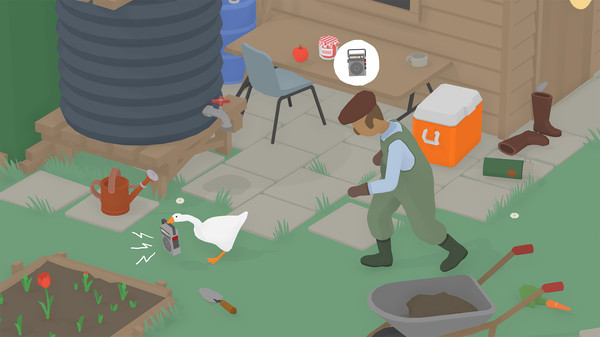
Soundtrack: Untitled Goose Game — the piano that reveals itself the louder you misbehave
The score for Untitled Goose Game is a solo piano performance: Debussy's Préludes, re-recorded and sliced into hundreds of fragments. Composed by Dan Golding, it runs through three states — silence, watchful low-energy, and full chase — all keyed to how suspicious the goose looks. Over black coffee, I, Doremi, take apart this idea of a performer who's watching you.
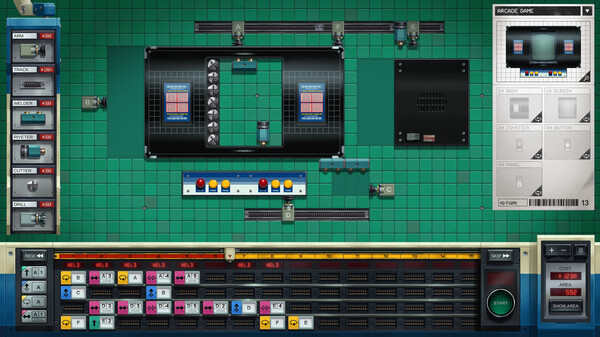
Soundtrack: Kaizen: A Factory Story — the cue that opens every morning
The music of Kaizen: A Factory Story brings a real Japanese radio-calisthenics broadcast straight into an automation puzzle set in 1980s Japan. Composed by Matthew S. Burns, Sam Kulchin, and Drew Messinger-Michaels, with track titles like 'Radio Taiso' and 'Matsuzawa Spirit' — real-world names, played straight. Over black coffee, I, Doremi, take apart that trick.
Soundtrack: A Little to the Left — music that never rushes you to finish
The music for the tidying puzzle A Little to the Left was written by Canadian composer Justin Karas. A design with multiple right answers and no failure state gets a score with no wrong-answer sound at all. Black coffee in hand, I, Doremi, dig out what a composer can steal from it.
Collins et al.: People judge a brand-new game with one move of lookahead and six imagined playouts — Fukai Reads
A peer-reviewed Nature paper by Katherine M. Collins and colleagues (MIT and others). More than 1,000 people were shown 121 novel games from the tic-tac-toe family and asked, before playing, whether each looked fair and fun. The Intuitive Gamer model - one move of lookahead spent inside six simulated playouts - explained the fairness judgements at R2 = 0.81 against a human ceiling of 0.82, beating the deep-searching Expert Gamer (0.65) and MCTS (0.60).
Byers et al.: Who Is Player Time Designed For? — Fukai Reads
A peer-reviewed CHI 2026 paper (Best Paper Honourable Mention) by Thomas Byers, Martin Gibbs and Bjorn Nansen. Twenty hour-long interviews with AAA, indie, mobile and live-service developers produce a grounded account of how the time-shaped parts of a game get decided inside a studio: undocumented intuition, metrics spanning seconds to months, and design that works backwards from a number. The authors close with four heuristics — and they land squarely on anyone shipping a daily puzzle.
Soundtrack: Terra Nil — music written for an ending, on a wasteland
The music of Terra Nil was written by French ambient composer Meydän. Its track titles trace the game's own arc — purify, plant, leave — and this "0 BPM" score, unusually, even writes itself an ending. Black coffee in hand, I, Doremi, dig out what a composer can steal from it.
Hu et al.: We Judge Others' Satisfaction Without Counting Their Options — Fukai Reads
A peer-reviewed paper by Beidi Hu, Alice Moon and Eric VanEpps in Psychological Science (January 2026). Across six preregistered experiments with 10,092 participants, people factored choice set size into their own satisfaction but barely factored it into predictions of someone else's. Three things shrink the neglect: showing the different set sizes side by side, asking for a ranking, and restating the number of options. It bears directly on how we read playtests and pick rates.
The Verb of Cooperating With Yourself — A Puzzle Design Grammar From Cursor*10 to The Swapper
Cooperating with yourself is a more abstract verb than walking, pushing, or rolling. Comparing Cursor*10, The Swapper, and World 5 of Braid along two axes — how many selves can exist, and how many can be controlled at once — reveals what it takes for this verb to carry an entire game.
Pfau & Vrettis: What Happens When Players Generate Their Own Pokémon Cards — Fukai Reads
An arXiv preprint (not peer reviewed) by Johannes Pfau and Panagiotis Vrettis at Utrecht University. A player writes a name and some flavour text; retrieval, a text model and an image model turn it into a Pokémon-style card in about 20 seconds. Forty-nine students made 196 cards. Visual satisfaction averaged 4.25 out of 5 and mechanical fit 4.04, and 93.5% said the final design was their own idea. None of the cards has been played, so balance remains unverified.
Inside Keita Takahashi's Philosophy — The Mechanic of Adding No Mechanics
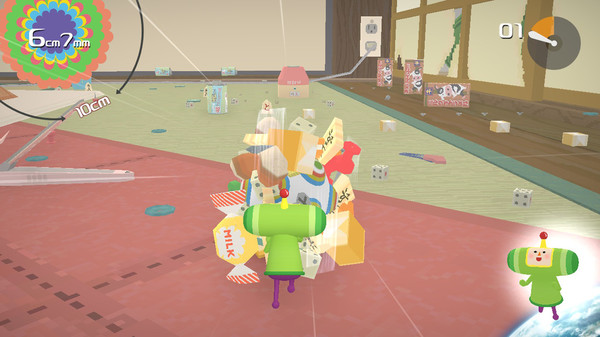
A study of Keita Takahashi, the creator of Katamari Damacy, built only from his own words. In late 2025 he said himself that his new game to a T "didn't sell well," and moved his family back to Japan. Yet back in 2009 he was already saying he felt unsuited to the games industry. This is a reading of why he kept making things anyway, assembled by laying twenty years of his statements side by side.
Drives You May Mix, Drives You May Not — Caillois, Reading Two
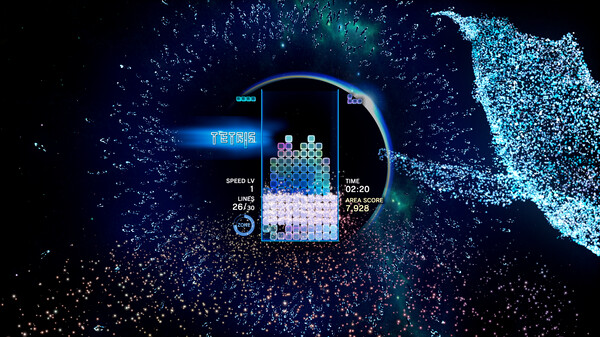
I tried to add a screen shake to the record-chasing mode of our daily puzzle, then crossed it out the next day. Even a single drop comes in two kinds: the one that mixes and the one that clouds the glass. Opening the next part of Caillois's Man, Play and Games, I found the six possible pairs already sorted into three neat boxes. Checking them against Dicey Dungeons, Beat Saber, Vampire Survivors and Tetris Effect: Connected, I look for the one place where the forbidden pair can be smuggled through.
The Verb of Pushing — What Sokoban Invented by Removing "Pull"
Sokoban's minimal grammar of push-only, no-pull invented the deadlock as a form of difficulty. A design reading of the pushing verb through three heirs: Sokobond, Baba Is You, and Patrick's Parabox.
Why Does a Spoiler Feel Like Theft? — On Owning an Experience
Late at night, forty of the sixty names and fates filled in on Return of the Obra Dinn, I opened my timeline and someone’s screenshot had a row I had not yet reached. I heard myself say it: stolen. Except nothing is gone. Not a word of the story is missing and my save is intact. This Nature of Play — Fragments piece sits two philosophers face to face: John Locke, for whom property arises from labour, and David Hume, for whom property is not natural at all but a human convention. They converge on a single point: what spoiled was not the story but the fruit that ripens only once, the one you were to have picked with your own hand.
Inside Nicky Case's Philosophy — Don't Hand Over Answers, Make People Love the Question
A study of Nicky Case, maker of Parable of the Polygons and The Evolution of Trust, built only from their own blog posts and talks: the claim they have not moved from in a decade (don't hand over the answer, make people love the question), the obsession with turning explanation into a puzzle, the failure they documented when playtesters of We Become What We Behold 'got it' but felt nothing, the dilemma of staying honest while strangers pay the rent, and the influences they actually credit — Bret Victor, Vi Hart and Ian Bogost.
Flipping Gravity as a Verb — The Grammar of Puzzles Where Down Changes
VVVVVV, And Yet It Moves, Manifold Garden, Etherborn. I trace how the verb of flipping gravity — moving the one assumption players never question, which way is down — widened from a discrete whole-screen flip into continuous, surface-bound gravity.
Who Does Cheating in a Single-Player Game Betray? — The Philosophy of Promises and Self-Deception
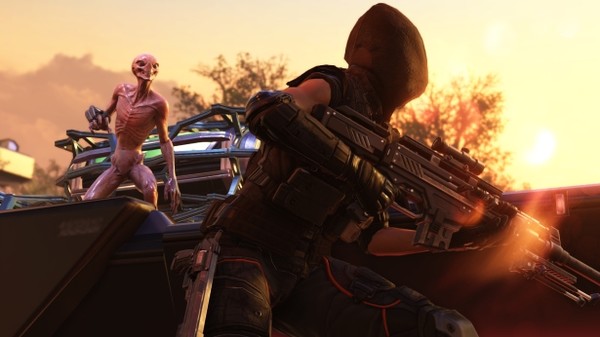
Late at night, XCOM 2 showed me a 95% shot. I missed it, my squad was wiped, and — alone in the room, with nobody watching — I reloaded the save. No victim. And yet that night’s win tasted thin. When you cheat in a game you play by yourself, if a promise was broken, whose promise was it? In this Nature of Play — Fragments piece I sit two philosophers face to face: Kant, who wrote that the gravest lie is the one told to oneself, and Bernard Suits, who would say it is not a betrayal at all but simply leaving the game. They end up meeting at a single point: the one betrayed is the slightly earlier self who deliberately chose the long way round.
Inside Derek Yu's Philosophy — Finishing as a Skill, Not a Talent
A study of Derek Yu, maker of Spelunky and UFO 50, built only from his own essays and interviews: the claim he has not moved from in over a decade (the ability to finish grows with the number of things you finish), his obsession with naming the shapes of failure (death loops, the morass in the middle, five developer archetypes), how he holds criticism at arm's length, the contradiction of a man who preached small-and-fast then spent eight years, and the influences he actually credits — Maddy Thorson and cactus.
Solving by Ear — Designing Puzzles Around Sound (from The Witness's Jungle to Unheard)
Puzzle clues lean overwhelmingly on sight. This essay traces the thin lineage of games that made sound primary information—the birdsong of The Witness's jungle, the echoes of Dark Echo, the eavesdropping of Unheard, the synthesizers of FRACT OSC—and asks why audio clues stay rare (unsearchable, unwritable, inaudible) and how design can overcome it.
Designing the Overworld — Where Puzzle Games Let You Be Stuck
Portal's corridor, Braid's hub, The Witness's quantity gate, Baba Is You's branching map, A Monster's Expedition's world-as-board. A designer's-eye rereading of level selects and overworlds as plumbing for stuckness — the grammar of designing difficulty outside the level.
In-Game Notebook Design — Where Should a Deduction Puzzle Keep Its Memory? (from Obra Dinn to Chants of Sennaar)
The difficulty of a deduction puzzle changes with where the player's memory lives. From La-Mulana and Her Story, which pushed notes onto real paper, to Obra Dinn's self-filling logbook and the hypothesis slots of Golden Idol and Chants of Sennaar, this essay rereads the in-game notebook as a design device.
Splitting Play Into Four — Opening Caillois's Man, Play and Games
Until now I've been reading Huizinga; today I switch books to Roger Caillois's Man, Play and Games. Caillois splits play into four — agôn (competition), alea (chance), mimicry (simulation), ilinx (vertigo) — and draws a slope from paidia (turbulent play) to ludus (rule-bound play). As a maker, I ask again which drive my own puzzles are built around.
The Board That Fills the Boredom — Pascal's "Divertissement" and the Puzzle on Your Commute
On the train, the person next to me was tracing a tiny four-by-four board. What they were filling wasn't the board — it was three stations' worth of boredom. Pascal wrote in the Pensees that all human unhappiness comes from being unable to sit quietly in a room. I hold his philosophy of divertissement up against Threes!, the puzzle we open on our commute. Am I designing fun, or a tool for looking away?
Geheeb et al.: Let an LLM Poke at Your Game Design Pillars — Fukai Reads
A paper on game design pillars and LLMs by Julian Geheeb and colleagues at the Technical University of Munich. Pillars are heavily used in industry but almost unexamined academically; the paper gives them a formal definition and quality criteria, then hands structural checking, contradiction detection and feature evaluation to an LLM in a prototype called SPINE. A 42-hour game jam and interviews with four developers produce a consistent picture: useful at the moment of putting a pillar into words, thinning with each rewrite iteration, and unable to recognise deliberate juxtaposition when flagging contradictions. Peer-reviewed at FDG '26.
Chen: Reconstruct the Persistent World First, Then Build Something Playable — Fukai Reads
A narrative-to-game paper by Yi-Chun Chen. Before generating scenes or gameplay individually, it makes explicit reconstruction of a persistent world — entities, locations, relationships, evolving state — the central objective, maintained as one computational object shared across the pipeline. The prototype builds the world with GPT-5-mini plus constrained world completion and realises it as playable tile-based PyGame environments. An arXiv preprint offering qualitative feasibility across three cases, with no quantitative evaluation.
The Verb of Laying Track — A Design Grammar for Routing Puzzles (from Trainyard to Railbound)
Routing puzzles rest on one structural idea: the separation of planning from execution. No train moves until the track is finished, and once it runs you cannot intervene. From Pipe Mania's time pressure to Trainyard's static drawing, Cosmic Express's single line, and Railbound's junctions, this essay rereads the verb of laying track as design grammar.
Is a Win by Luck “My” Win? — The Philosophy of Alea and Desert
Late at night, Balatro handed me a personal-best score. Delighted, I sent it to a friend, who replied, “That was luck, right?” Can I call a win that chance dealt me my win? In this Nature of Play — Fragments piece, I sit two philosophers who would answer opposite ways face to face: Caillois, who insists chance is a first-class form of play, and Aristotle, who holds that a victory lives in a person’s activity, not in fortune. Slowly the two begin to set “a single throw” and “a long win-rate” on two separate plates.
Solving the Time Loop — Designing Games Where Knowledge Is the Only Save Data (from Majora's Mask to Outer Wilds)
A time loop is a machine for making knowledge the only save data. From Majora's Mask's three days to Outer Wilds' twenty-two minutes and The Sexy Brutale's twelve hours, a design reading of loop games as observation puzzles extended along the axis of time.
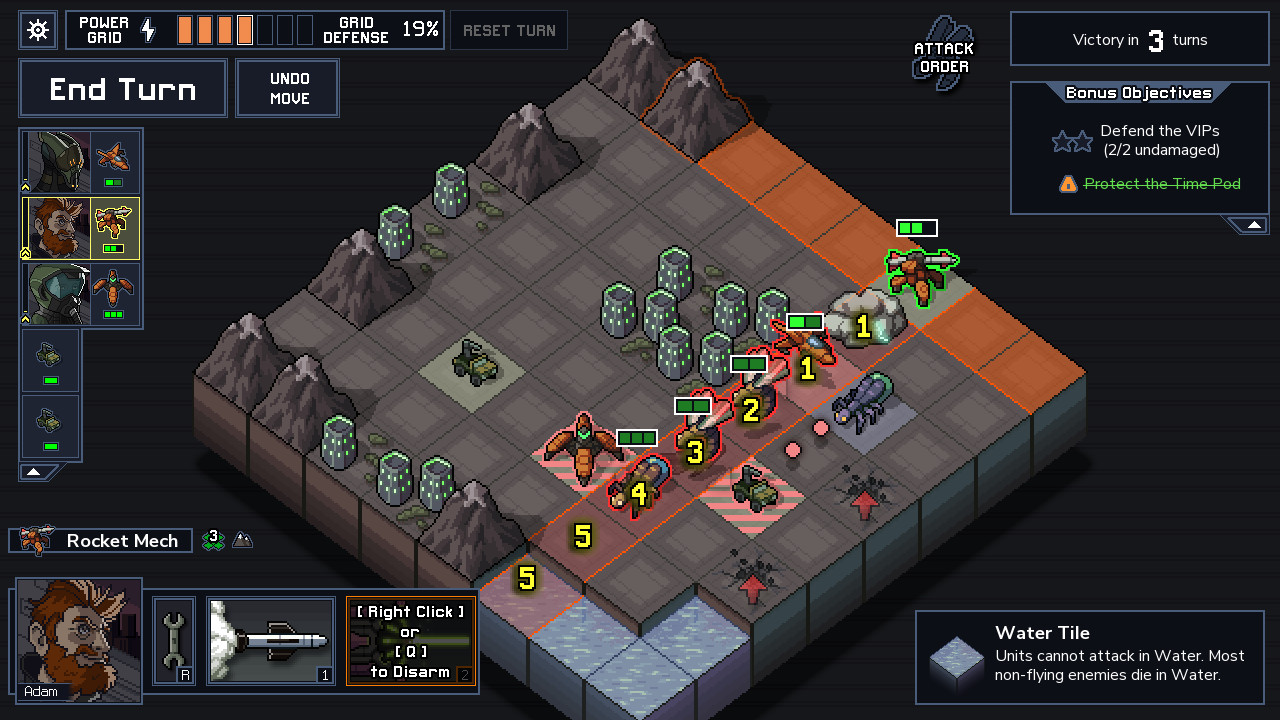
Soundtrack: Into the Breach — the music that waits for the last mech to land
Ben Prunty's score for Into the Breach paints the apocalypse without ever getting damp — muted guitar and strings colliding, music with a high body temperature. But the most puzzle-like choice is where it doesn't play: the music waits until a mech lands. Over black coffee, I, Doremi, take apart that design of silence.
Reading Homo Ludens Chapter by Chapter — The One Condition Under Which War Can Still Be Play
Try to build a competitive or PvP mode and the mood turns tense before anyone even wins. Nothing seems further from play than war — yet Huizinga says a fight that meets one condition is play. Reading log part 3: 'play and war'. The condition is recognizing your opponent as an equal — checked against the 'honor code' For Honor's players wrote for themselves.
What Becomes a Puzzle When Time Rewinds? — A Design Grammar of Time-Manipulation Puzzles (from Braid to Timelie)
Implemented as mercy, rewind is just an undo button—but some designers promoted it to the center of the solution. From Sands of Time's insurance to Braid's rewind-immune glow, The Gardens Between's strolls, and Timelie's seek bar: a design reading of time-manipulation puzzles.
Is Difficulty Unkind? The Philosophy of Fairness
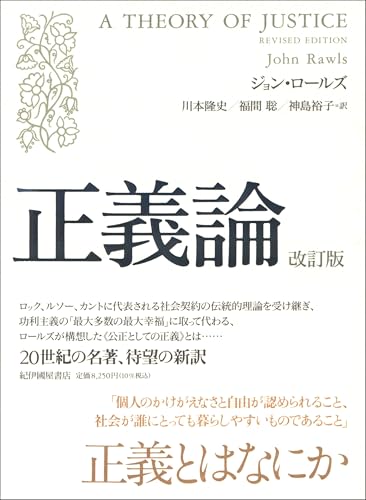
A friend playtesting the hardest stage of my puzzle looked up and said, "Isn't this a bit unkind?" Is making a game hard an act of cruelty, or a gift? With the old Sekiro "easy mode" controversy in the corner of my eye — a game with no difficulty settings at all — this fragment of The Nature of Play seats two philosophers who would answer opposite face to face: Rawls, who argues for fairness from behind a veil of ignorance, and Nietzsche, who affirms the wall with "what does not kill me makes me stronger." Bit by bit, the two stop kicking at "difficulty" and start kicking, side by side, at "unfairness."
The Verb of Rolling — A Design Grammar for Rolling-Motion Puzzles (from Bloxorz to Stephen's Sausage Roll)
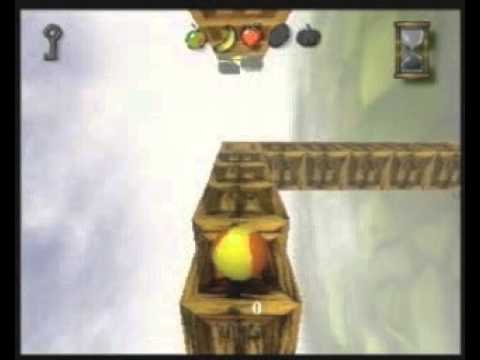
A single verb—rolling—adds a dimension of facing to position and builds a deep state space without adding levels. From Kula World to Stephen's Sausage Roll, a design reading of rolling-motion puzzles.
Halina & Guzdial: Generating Levels as a "Cake of Time" — Fukai Reads
A procedural level-generation paper by Halina and Guzdial. It represents a level as a "cake" of board states stacked over time, and generates a level and its solution together with PRP, which recombines play traces. In Sokoban, against six existing methods, it reached 100% playability with high diversity, without hand-authored constraints or rewards.
Soundtrack: The Turing Test — one motif that keeps asking, human or machine
The music Sam Houghton and Yakobo wrote for The Turing Test is dark, minimal, and never congratulates you. Nearly every track carries the same motif, changing its colour room by room. Black coffee in hand, I — Doremi — take apart the design of 'one motive, endlessly distorted' and the nerve of music that refuses to react to your solving, in a form you can carry home to your own writing.
Inside Jakub Dvorský's Philosophy — Dropping Words, Building a World You Can Touch
A study of Amanita Design founder Jakub Dvorský, read across primary interviews in Adventure Classic Gaming (2009), MCV/DEVELOP (2011), bounthavy (2020) and TouchArcade (2024). It traces the origin of his wordless design, his obsession with atmosphere and hand-drawn worlds, his aim to build 'an interactive toy' you keep playing rather than a puzzle you defeat, his dilemmas of kindness versus difficulty and commerce versus authorship, and the Czech animation and science-fiction he himself names as influences — grounded only in what he has said in public.
Hsu et al.: LLM-Voiced NPCs Make Players' Heads Heavier -- A 'Double-Edged Sword' Experiment — Fukai Reads
An empirical LLM-NPC paper by Hsu et al. (Communication University of China and others). They built a scripted-NPC version and a GPT-4.1 LLM-NPC version of the same game and ran a between-subjects test with 130 players. LLM-NPCs significantly raised cognitive load (p<.001), did not significantly improve overall enjoyment (p=.195), and increased autonomy while lowering usability and trust.
Inside Frank Lantz's Philosophy — giving weight to the abstract
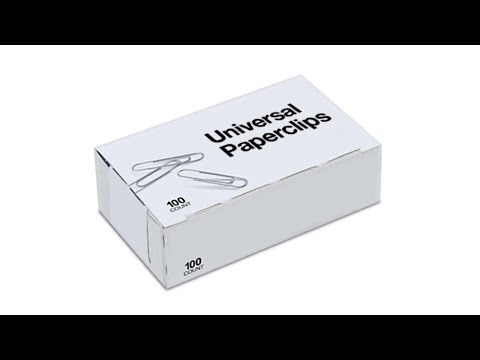
A study of Frank Lantz, founding chair of the NYU Game Center and maker of Universal Paperclips and Drop7, drawn from his own essay The Truth in Game Design (2010), a long Thought Economics interview (2024), PC Games Insider (2017), and his own notes on his work. Grounded only in his public statements, it reads his philosophy of games as an art of systems and as psychology experiments we run on ourselves, his obsession with embodying abstract ideas, the failure of Bite Me answered by "solving it all too well" in Leviathan, the dilemma of comfort versus truth, and the influences he acknowledges himself — Bostrom, Stapledon, Wittgenstein and von Neumann.
Wang et al.: Gauging Tetris Block Puzzle Difficulty by How Fast a Strong AI Learns — Fukai Reads
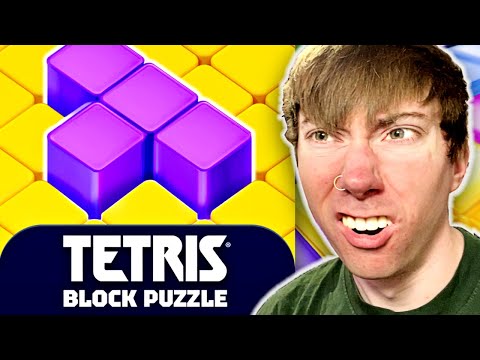
An arXiv preprint from a National Yang Ming Chiao Tung University and Academia Sinica group that measures the difficulty of the popular mobile game Tetris Block Puzzle. It rates rule variants by how fast and high a strong AI (Stochastic Gumbel AlphaZero) can learn to play, finding that more holding/preview blocks make the game easier while adding block shapes makes it harder (the T-pentomino most of all).
The Grammar of Solving Together — Co-op Puzzle Design and Information Asymmetry
Puzzle design theory quietly assumes a single player. I set Portal 2's division of verbs against the information asymmetry of Keep Talking and Nobody Explodes and We Were Here, add PICO PARK's shared learning curve, and trace the grammar of co-op puzzles where conversation itself becomes the verb.
Johnson et al.: What Changes in a Game When You Build an LLM Into It — Fukai Reads
A qualitative study by Johnson and colleagues at the University of Calgary on developing two games with an LLM embedded in their structure. Reading developer reflections, it analyzes how embedding an LLM as a component (not decoration) changes gameplay, playability, and player experience. Variability and personalization increase, but new burdens of correctness, difficulty calibration, and coherence emerge, with schema enforcement and validation as the keys.
If You Can Always Undo, Do Your Choices Still Mean Anything?
The night I added an undo button to my own puzzle, my hand froze — especially since what I'm making is a Baba Is You–style game where you rewrite the rules themselves. If you can undo, was the decision ever a decision? This third "fragment" of The Nature of Play sets Sartre and Nietzsche arguing face to face: Sartre (commitment, anguish), for whom a choice declares who you are, against Nietzsche (eternal recurrence, amor fati, style), who asks whether you could will it to return forever. In the end they point at the same single line under different names.
Inside Jason Rohrer's Philosophy — playing life and death through constraint
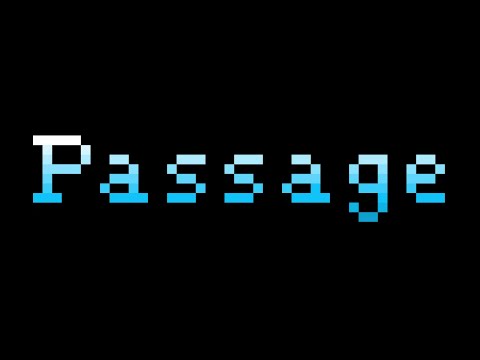
A study of Jason Rohrer, who with the five-minute Passage told a whole life and death through rules, drawn from three interviews: Critical Inquiry (2011), Handmade Pixels (2017) and Gamasutra (2011). Grounded only in his public statements, it reads his philosophy of speaking through interaction rather than narrative, his obsession with turning constraint into an expressive tool, the failure of trying to eliminate tedium and his change of heart toward "punishment," the dilemma of highbrow versus accessible, and the influences he acknowledges himself — Rod Humble, Raph Koster and Scott McCloud.
Handcrafted or Generated — A Design Theory of Procedural Puzzle Levels
Who authors a puzzle's boards? I set the handcrafted lineage of Nikoli and Tametsi's 160 levels against the generated lineage of Simon Tatham's collection and Hexcells Infinite, ask what procedural generation drops, and look at the daily puzzle as a third way between generation and curation.
Reading Homo Ludens Chapter by Chapter — When Play Becomes Contest, the Stake Is Honor
Add ranks or scores to a puzzle and the mood can suddenly turn tense. Does competition make play better, or break it? Reading log part 2 is Huizinga's agon (contest): what people really compete for is not money or goods but the honor of being first.
Ye et al.: Measuring Image-Capable AI (MLLMs) with Children’s Intelligence Tests — Fukai Reads
A paper (arXiv preprint) by Hengwei Ye and colleagues at ShanghaiTech University on KidGym, an MLLM evaluation benchmark inspired by children’s intelligence tests (the Wechsler scales). It measures five abilities — Execution, Perception Reasoning, Memory, Learning, Planning — across 12 tasks on a 2D grid at three difficulty levels, evaluating nine models. Even top models reached only 0.30 on abstract-shape puzzles and 0.72 on counting against a human 1.00.
Zeng et al.: Automating Game Balancing with LLM-vs-LLM Self-Play — Fukai Reads
A paper by Zeng et al. on automated game balancing. It tackles balancing asymmetric strategy games by using multi-agent LLM self-play as an evaluator and Bayesian optimization to search rule parameters, reporting convergence to near-0% win-rate gaps on their own game, CivMini.
Designing Luck Out of the Game — From Minesweeper to Guessing-Free Logic Puzzles
Why did Minesweeper's 50/50 endgame guess survive so long, and how was it overcome? I trace the lineage through Hexcells, Tametsi, and 14 Minesweeper Variants, and ask what it costs to guarantee a board that never forces a guess.
Waugh: Measuring AI's Reasoning with Sudoku and Slitherlink — Fukai Reads
A paper (arXiv preprint) by Justin Waugh of Approximate Labs on Pencil Puzzle Bench, a benchmark that measures LLM reasoning with pencil puzzles. From 62,231 puzzles across 94 types it selects 300, and its core is that a machine can verify every move against the rules; 51 models were evaluated. Even the strongest GPT-5.2 reached only 56.0% in agentic mode, with about half unsolved.
If You Looked Up the Answer, Did You Really Solve It?
The guilt of opening a walkthrough after being stuck. Ryle says your skill hasn't grown one bit; Plato says a true opinion becomes knowledge once you tie down the reason. Two philosophers, opposed, and a rethink of hint design.
Ahn et al.: Puzzle Difficulty Lives in Concepts, Not Looks — Fukai Reads
A paper (arXiv preprint) by Ahn et al. at Boston University introducing CogARC, a human-adapted version of the ARC abstract-reasoning benchmark. Logging 260 people's grid-puzzle solutions edit by edit, they find difficulty is driven by conceptual rule complexity rather than grid size or color count, and that people converge on the same wrong answers even when they fail.
Luo et al.: How AI Delivers Help Matters as Much as the Help Itself — Fukai Reads
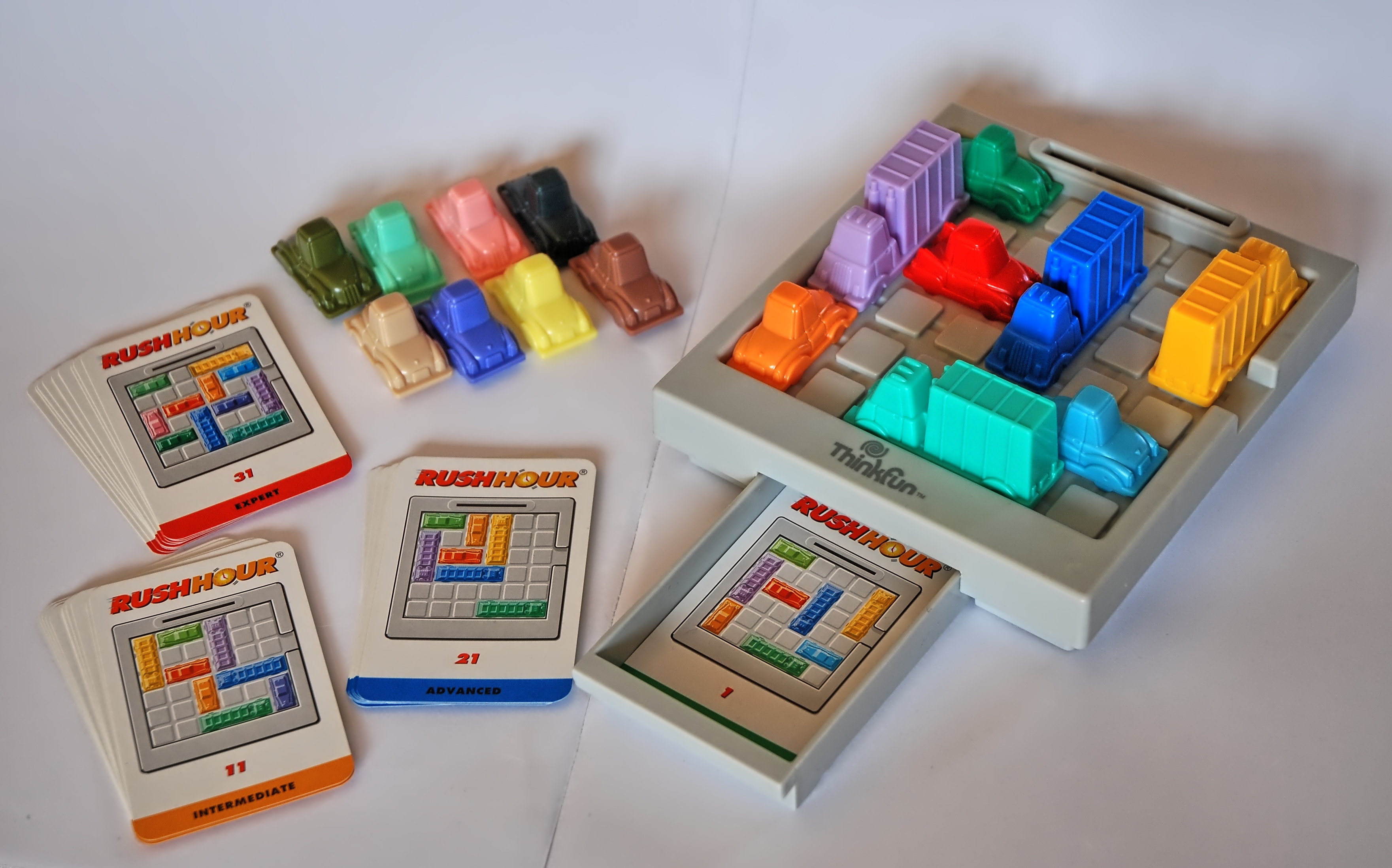
A paper by Luo et al. (UC Santa Barbara) on how a mixed-initiative AI delivers help. Using Rush Hour puzzles, they compare on-demand (Button) help with inactivity-triggered (Timer) help, and show that although task performance is nearly identical, the Timer mode earns more positive perceptions of the AI. Accepted to IUI '26.
Reading the Unreadable — The Grammar of Decipherment Puzzles, from Fez to Chants of Sennaar
Fez, Tunic, Heaven's Vault, Chants of Sennaar. A reading of the decipherment-puzzle lineage — languages cracked by observation alone — through one design question: how do you treat misreading?
Does Play Have a Point? — Camus and the Roguelike Death Loop
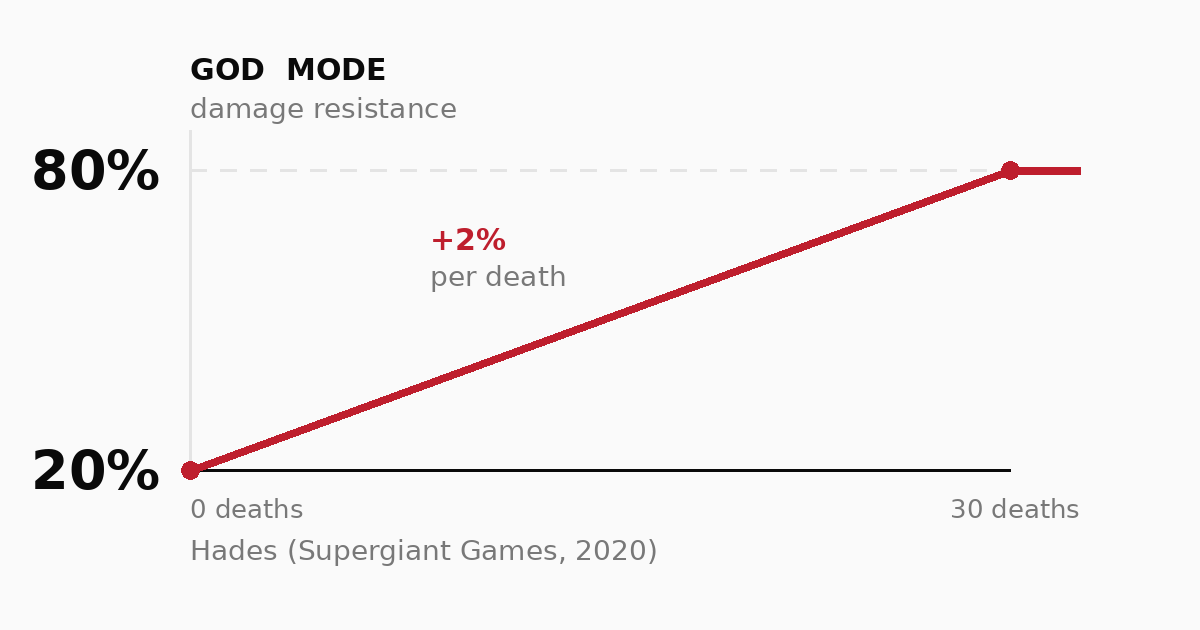
I've died 38 times in a roguelike and I'm still diving back in. I bring home almost nothing I built up, so why is this repetition fun? In this matching installment I lay Camus's The Myth of Sisyphus — his head-on argument about endless repetition — over the death loop of Hades.
Triebel et al.: Does AI Have Both a Head and a Hand on a Classic Physics Puzzle? — Fukai Reads
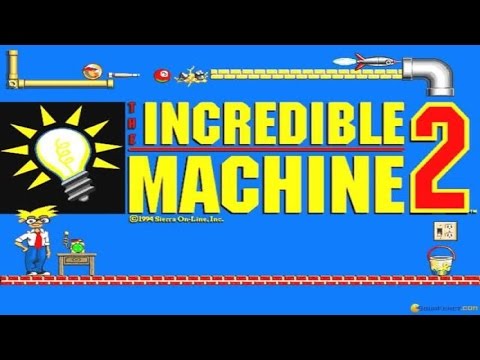
A paper by Triebel et al. evaluating VLMs on the classic physics puzzle The Incredible Machine 2. Using VLATIM, a five-stage benchmark, it asks whether screen-operating AI can solve problems like humans; the cleverer large models can plan but cannot click precisely, and no model solved even one puzzle to completion.
Reading 'Homo Ludens' Chapter by Chapter — The Order and Tension Play Creates
Last time's 'magic circle' was only the entrance. From here I read the classic on play, 'Homo Ludens,' one chapter at a time, as a maker. Of the traits Huizinga lists in Chapter 1, two pillars I hadn't touched yet - order and tension - tested against Tetris and my own puzzles.
What Is Play? — Starting with Huizinga's Magic Circle
Making puzzles keeps bringing me back to the most basic question: what is play? What is fun? In this new series, I go ask the philosophers. Part 1 is Huizinga's magic circle — why people get dead serious inside a simple drawn line.
Xu et al.: When Generative AI Becomes the Heart of Play — Fukai Reads the AI-Native Games Survey
A survey (arXiv preprint) by Zhiyue Xu and five co-authors on "AI-native games," where generative AI is the core loop itself. It defines them by a counterfactual — would play collapse if the AI were removed — and classifies 53 real artifacts along two axes: game type (G) and dominant AI mechanic (N), showing a skew toward narrative genres and a thin use of AI at the rule layer.
When the Control Scheme Decides the Difficulty — From Grid Movement to Drag-and-Arrange
Sokoban's grid movement, The Witness's line, the dragging of Gorogoa and A Little to the Left, Return of the Obra Dinn's cursor, The Gardens Between's time, and Golf Peaks's cards. A maker's-eye survey of how a single input shapes a puzzle's difficulty, framed by discreteness, undo cost, and affordance.
Aryan et al.: When You Stall, the World Changes — AbideGym Turns Static RL Worlds into Adaptivity Tests — Fukai Reads
A preprint by Aryan et al. (Abide AI) on RL environment design. To fight the brittleness that comes from training in fully static worlds, AbideGym rewrites the rules and grows the map mid-episode, triggered by the agent's own inactivity, forcing it to abandon memorized policies and re-plan. The paper presents the design and a comparison to prior work; no experimental results yet.
Wang et al.: An LLM Agent That Reads Mental Busyness From Gaze — Fukai Reads
A paper from Meta Reality Labs and collaborators that estimates cognitive load (mental busyness) from eye gaze. It tackles the poor generalization and low interpretability of prior methods with GazeMind, a framework that structures gaze and has an LLM reason over it with context, individual traits, and worked examples, reporting 62.73% accuracy on three-way classification (over 20 points above prior methods).
Mirowski et al.: From Writing a Story to Finding One — Fabula, a Writing AI Grown With the Writers' Community — Fukai Reads
A paper on Fabula, a Google DeepMind writing-support AI. Its hierarchical story planner-generator, the Drama Manager, was critically co-developed with 42 experts; it proved strong at structure but weak at style and surprise. Fukai reads it for lessons that apply directly to game interactive narrative.
Walking and Deducing — The Boundary from Gone Home to Return of the Obra Dinn
The 'walk and read' experience Gone Home and Firewatch refined, versus the 'actively deduce' experience of Return of the Obra Dinn and The Case of the Golden Idol. Where is the line between them? A designer's reading of the fault line between walking simulators and deduction puzzles, with Her Story and Outer Wilds in between.
Bazzaz et al.: Believing It's AI Changes the Experience — Fukai Reads
A CHI '26 paper by Bazzaz and Cooper on perception bias toward generated content. Mixing human-made and AI-generated levels in Super Mario Bros. and Sokoban for 142 players, they report that players can barely identify the creator, yet levels believed to be AI-made are rated less fun, harder, and more frustrating.
Liu et al.: AI Assistance Erodes Persistence — A Warning for Hint Design — Fukai Reads
A paper by Grace Liu and colleagues on how AI assistance affects independent problem-solving and persistence. Across RCTs with 1,222 participants, AI raised in-session performance but, once removed, left people solving less and giving up more. Those who got direct answers declined most while hint-users did not, a result that speaks directly to game hint design.
Recursion as a Puzzle Grammar — The Nested Logic of Patrick's Parabox and Recursed
A box inside a box, and inside it the same board again. From Recursed to Patrick's Parabox and Cocoon, a reading of nested-puzzle design and why recursion runs so deep.
Jara Gonzalez & Guzdial: Generating Enemy Shapes as Gates You Need a Mechanic to Beat — Fukai Reads
A paper by Jara Gonzalez and Guzdial on generating enemy morphologies (collision shapes). They frame 'enemies defeatable only with a specific mechanic' as a 4x4 grid generation problem, compare reinforcement learning, A* search, and neural generation, and find a simple A* reachability rule yields the best gating and most diverse shapes at the lowest cost.
Legible Failure — Making the Dead End Readable in Puzzles
In puzzles, failure is not death but the dead end. From Sokoban's irreversible push to Stephen's Sausage Roll's invisible stalls and the soft-lock-free design of The Witness and COCOON, I examine the design question of whether failure can be read, not whether it should be punished.
Zeytuncu: Puzzle Difficulty Comes Down to How Many Numbers You Use — Fukai Reads
A difficulty-modeling paper by Yunus E. Zeytuncu on integer arithmetic puzzles (Countdown-style number games). Using an exact solver to generate over 3.4 million instances and defining difficulty by minimum operation count, it shows that the number of inputs used in a minimal solution alone is a 'minimal sufficient statistic' that perfectly determines difficulty.
Chao et al.: Insight Is About Searching Far — Fukai Reads
A paper on insightful problem-solving by Chao, Hsieh & Wu. Using a Japanese RAT and a simulation to quantify the search path to a solution, it shows that de-fixation is necessary for solving but is not what determines insight; the hallmark of insight is exploring the solution space over greater distances.
Monti et al.: Measuring AI's Planning Power on a Single-Corridor Sokoban — Fukai Reads
A paper by Monti and colleagues on SokoBench, a benchmark that measures reasoning models' long-horizon planning with Sokoban. By lining up only single-box straight corridors and narrowing difficulty to a single axis (corridor length), it shows that even state-of-the-art reasoning models break down once more than 25-30 moves of lookahead are needed. The authors locate the cause in accumulated miscounting.
Luo et al.: Can AI Agents Build Whole Playable Games in a Real Engine? — Fukai Reads
A paper by Luo, Wang and colleagues on GameCraft-Bench, a benchmark for end-to-end game generation by coding agents. It has agents build complete playable games on Godot from natural-language specs, judged by launch, input replay, and video-based scoring across 140 tasks in 15 families. Even the strongest configuration reaches only 41.46% overall, and the authors report that agents can build mechanics but fall short of finished games with content, readability, and polish.
Li et al.: AutoBG, an AI that supports board game design end-to-end from ideation to finish — Fukai Reads
A paper (arXiv preprint) by Zizhen Li et al. on AutoBG, a board game design assistant that covers the whole workflow—ideation, rulebook generation, and individualized feedback—via Verifier-Gated Iteration that splits the generator from the critic; the critic, BG-Critic, is reported to outperform GPT-5.4 on diagnostic quality.
Nasir et al.: Evolving the Rules of Play Themselves — Fukai Reads MORTAR
A paper on automatic game design by Nasir, Togelius and colleagues. Instead of levels, MORTAR evolves game mechanics themselves using a quality-diversity algorithm paired with a large language model, judging quality by whether stronger AI agents reliably beat weaker ones. Running on GPT-4o-mini, it generates diverse, playable games and even quantifies each mechanic's contribution.
"The hacking was always there" — Capcom's Pragmata and the design of simultaneous puzzle-shooter gameplay (Game Developer, April 2026)
One article today. Alessandro Fillari's April 14, 2026 interview on Game Developer explores how Capcom designed Pragmata — a third-person shooter where players must simultaneously solve Snake-style hacking puzzles during combat. Neither shooting nor hacking alone can finish a battle. Producers Edvin Edsö and Naoto Oyama explain how the dual-system design existed from day one, and how the team fought repetitiveness by making the hacking system evolve as players improve.
Closing Into One Screen — The Density a One-Screen Puzzle Builds
Sokoban, Baba Is You, Snakebird, Patrick's Parabox — the strongest thinking puzzles keep their whole board on one screen. A designer's look at why simultaneous visibility deepens thought, and when breaking the frame is worth its cost.
The Grammar of Zachtronics — Translating Programming into Puzzle
SpaceChem, TIS-100, Shenzhen I/O, Opus Magnum, Exapunks. A maker's-eye reading of the programming-puzzle grammar Zach Barth honed from 2011 to 2022, along three axes: the command queue as a verb, optimization design that abandons the single solution, and the ladder of abstraction.
Xu et al.: Promoting Game Mechanics to Coordinates to Generate Solvable Levels — Fukai Reads
A PCG (level generation) paper by Xu and Verbrugge of McGill University. Against geometry-first prior methods, it proposes HDPCG, which runs pathfinding on a dimensional-expanded graph that promotes mechanics such as gravity inversion and moving platforms to a coordinate, guaranteeing solvability during generation, and reproduces playable levels in Unity.
Sun et al.: Why Do Players Lose Themselves in Punishingly Hard Games? — Fukai Reads
A paper by Sun et al. on difficulty design in Soulslike games. Through a qualitative analysis of 600 Steam reviews it asks why players immerse themselves in punishingly hard games, and proposes 'resilient flow' — absorption sustained by meaningfully framing frustration.
Narrative Puzzles and Storyless Puzzles — Lorelei vs Stephen's Sausage Roll
The pure maneuvers of Stephen's Sausage Roll versus Lorelei and the Laser Eyes' solutions fused with story. What narrative and storyless puzzles each sell, contrasted from a designer's view across Obra Dinn, Golden Idol, COCOON, and Machinarium.
Inside Tetsuya Mizuguchi's Philosophy — Designing Senses, Not Genres
A study of Tetsuya Mizuguchi — creator of Rez, Lumines and Tetris Effect — across four of his own interviews. His consistent philosophy of designing sensation rather than genre and aiming to “make people cry,” his dilemma over what to add to a classic, and influences from Kandinsky to a single night at a music festival, traced only through source-checked statements.
Designing Hint Systems — How to Show, How to Hide
InvisiClues' invisible ink, the silence of The Witness, the friction of The Case of the Golden Idol, Obra Dinn's rule of three. A maker's-eye survey of hint systems as a declaration of how a game treats a stuck player.
Inside Arvi Teikari's Philosophy — Wanting to Surprise You, He Lets You Play the Rules Themselves
"The greatest motivator is just general desire for self-expression." Finnish solo developer Arvi Teikari (Hempuli) startled the world with Baba Is You, a game that lays its rules out as word-blocks on the board and lets players rewrite them. We read his philosophy, obsessions, failures, dilemmas and influences through his own words.
When Fewer Verbs Make a Richer Game — The Lineage of Subtractive Design
Sokoban, Snakebird, Stephen's Sausage Roll, A Monster's Expedition, Bonfire Peaks. A maker's-eye survey of subtractive design, the lineage that deepens difficulty without adding verbs, built around one question: why does less become more?
Inside Lucas Pope's Philosophy — If There's No Problem, I'm Not Interested
"If there's no problem, then I'm not that interested. But if there's some restriction or some limitation, then I'm interested suddenly." Lucas Pope calls himself, consistently, an engineer. He inverts mundane jobs, pares them down, and bets on the player's imagination. A study of his philosophy, obsessions, failures, dilemmas, and influences, read through his own interviews and talks.
Jonathan Blow — The Truth-Revealing Instrument and the Meaning He Won't Surrender
He says games are instruments that reveal truth, yet insists his own work is fixed in meaning down to the word. Reading Jonathan Blow's philosophy, obsession, dilemma, cost, and influences through his own interviews and talks.
Soundtrack: Outer Wilds — When music becomes a tool for solving
Andrew Prahlow's score for Outer Wilds is not background music to leave running. Most of the time it stays silent; when it sounds, it is the signal of discovery; and at times the instruments themselves become tools of exploration. Black coffee in hand, I — Doremi — take apart how this music works, through a lens you can take home to your own composing and design.
The Vocabulary of Perspective Puzzles — From Monument Valley to Manifold Garden
Echochrome, Monument Valley, Antichamber, Manifold Garden, and Viewfinder. What the perspective-puzzle genre has invented in fifteen years, and what design space still remains, read from a maker's point of view.
The Ethics of Undo — Forgiveness or Punishment
One button reshapes the entire experience. Sokoban's restart, Braid's rewind, Baba Is You's unlimited Undo. A look at the dividing line between designs that forgive trials and designs that punish them.
Carving the Learning Curve — Baba's Vertical Wall and How It Was Built
When and how should a puzzle game stop the player? A comparison of Baba Is You's notorious vertical wall, Cocoon's unbroken flow, and the design philosophy that lives between them.
Observation as Play — Common Grammar of Witness, Obra Dinn, and Lorelei
The Witness, Return of the Obra Dinn, and Lorelei and the Laser Eyes all turn the act of looking into a verb. A look at the grammar these three share.




























_studio.JPG)


