HISTORY · 2026-07-28
Yajilin (1999) — A Board Where Two Rule-Systems Were Grafted Together
How Nikoli made loop-drawing grammar and black-cell-counting grammar coexist in a single grid
Introduction
In July 1999, Puzzle Communication Nikoli issue #86 (the "Summer" issue) introduced a new puzzle format. Certain cells on the grid carry a number and an arrow. The number tells you how many black cells lie in the direction the arrow points — and from that clue alone, you must connect every remaining cell into a single unbroken loop. The format was named Yajilin. English Wikipedia records the name as a contraction of yajirushi (矢印, "arrow") and the English word "link."
Yajilin's novelty wasn't really the invention of an entirely new rule. The rule of drawing exactly one loop had already been established by Slitherlink a decade earlier, in 1989, and the constraint that black cells may never touch each other echoed an idea Nurikabe already used. What Yajilin actually brought to the table was grafting the loop-drawing rule onto a device borrowed from another Nikoli puzzle published just before it, Yajisan-Kazusan: cells where an arrow and a number share the same square. What Nikoli's editorial staff did in 1999 was less an invention than an act of combining rule-parts they already had on hand.
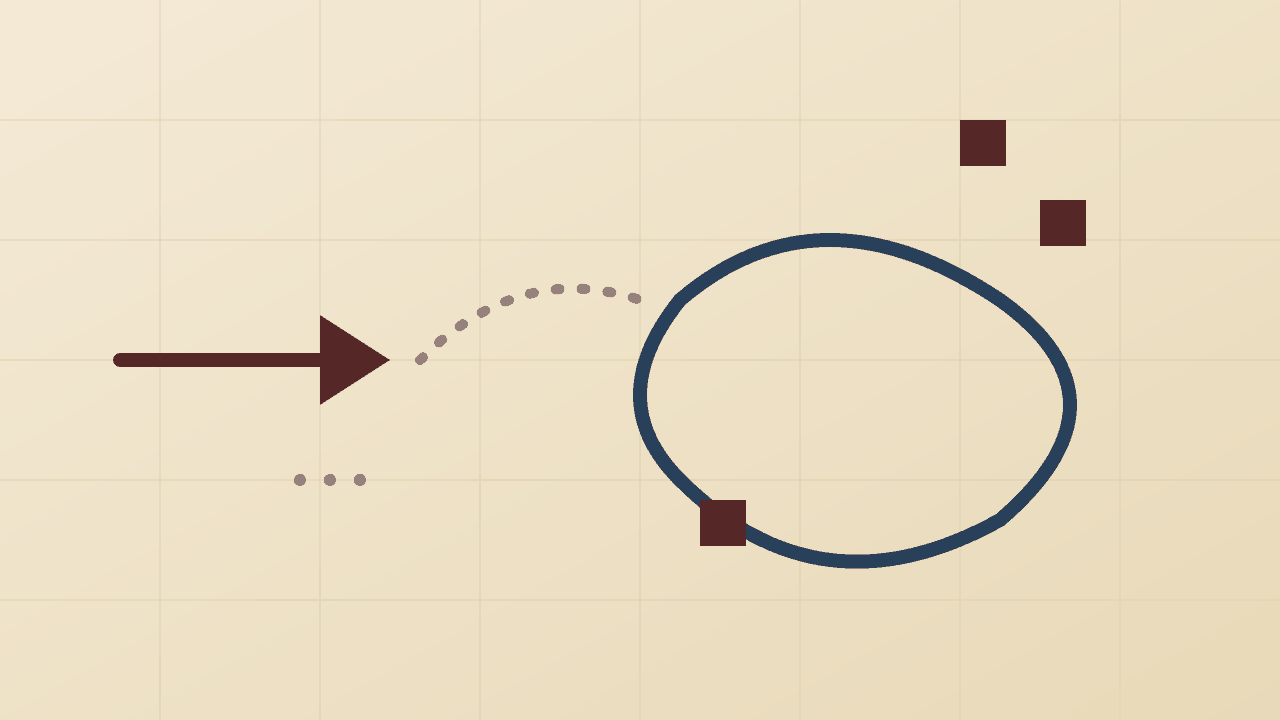 An arrow grafted into a loop (illustration, AI-generated)
The Era
Place 1999 within Nikoli's own history. Fifteen years had passed since the magazine began running "Number Place," the puzzle that would become Sudoku, and ten years since Slitherlink's debut. But Sudoku's worldwide craze in the English-speaking world was still more than five years away — it was in 2004 that Wayne Gould found the puzzle in a Japanese bookstore, mass-produced grids by computer, and brought them to a London newspaper. In 1999, Nikoli was still a workshop for puzzle craftspeople, running almost entirely on domestic reader submissions and its own print pages.
The puzzle Yajilin borrowed its parts from, Yajisan-Kazusan, had appeared only a little earlier and carried an unusual twist even by Nikoli's standards: alongside cells where an arrow and number shared a square, some of its clues were simply lies. Yajilin borrowed only the look of that arrow-and-number cell, rewrote its content so every clue was guaranteed true, and layered the single-loop rule on top. Within the same stretch of the magazine's pages, puzzles were lending each other parts.
The way Yajilin was rolled out also shows a gradualism typical of Nikoli at the time. After its debut in issue #86, it was treated for a while like any other new puzzle format. According to Japanese Wikipedia, it became a fixed one-page feature starting with issue #107, and only grew into a larger presence after a special feature in issue #115. Rather than becoming a flagship puzzle overnight, it spent well over a dozen issues expanding its place in the magazine while the editors gauged reader response.
 A 1999 puzzle culture built from reader submissions and print pages (illustration, AI-generated)
Mechanics
Solving actually calls on two distinct kinds of reasoning. The first is loop reasoning: the line drawn across the grid must form a single connected path, with no branches and no crossings. Wherever a cell carries a line, it enters from one side and exits from the opposite one. This kind of reasoning had already been familiar to Nikoli's readers since Slitherlink's debut in 1989.
The second is black-cell reasoning. A cell carrying an arrow and a number reports how many black cells lie in that direction, but black cells may never touch each other along an edge, and number cells themselves can never be black and are never crossed by the loop. This "no touching black cells" constraint resembles Nurikabe's own black-cell rule, but Japanese Wikipedia notes that because Yajilin must also satisfy the completion of a single loop, the constraint on its black cells ends up stronger than Nurikabe's alone.
Solvers fill the grid by switching between these two modes of reasoning. At one point they reach for connectivity logic — can a loop segment pass through here? — and at another, counting logic — this cell has no choice but to be black. Being able to move back and forth between two different kinds of proof within a single grid was, itself, the design Yajilin put forward.
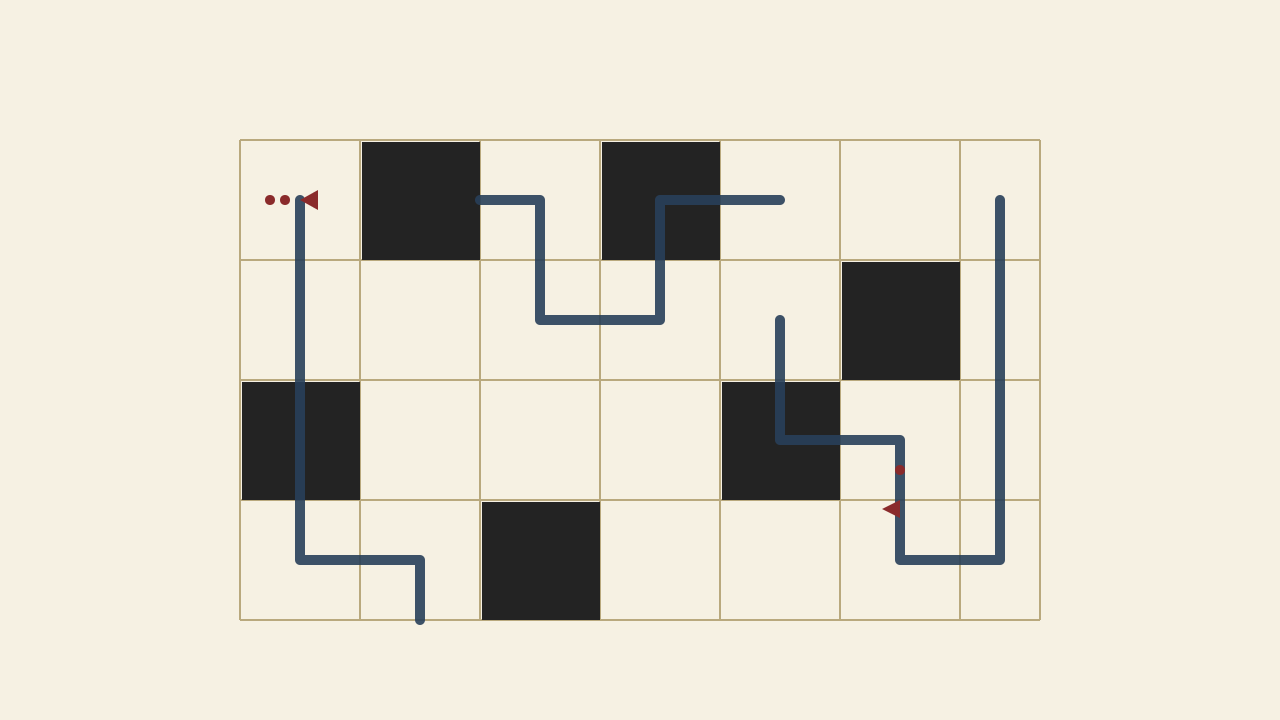 A board where two kinds of reasoning coexist (illustration, AI-generated)
Lineage to the Present
Yajilin's move overseas wasn't slow at all. Introduced in English under the name "Arrow Ring," it was already used in the 2005 US qualifying round for the World Puzzle Championship — just six years after its debut, it had reached the stage of international competitive puzzling.
Official ports to consoles and PC continued without a gap. HAMSTER distributes Yajilin for Xbox/Windows as part of its "Puzzle by Nikoli W" line, and a PlayStation Vita release, "Nikoli no Puzzle V: Yajilin," existed as well. Both were built under Nikoli's supervision, turning the grid into something that could be mechanically mass-produced.
Then, between 2025 and 2026, developer Leon Cross released a mobile app called Loopr — dedicated to Yajilin alone, with difficulty-tiered daily challenges, solve streaks, and a weekly oversized grid: a "daily ritual" format built solely around this one puzzle, not unlike the one this site uses for its own daily puzzles. I could not find any example of Yajilin itself appearing as a standalone title on Steam's storefront. Its borrowed parts, though, have each survived independently on Steam: Slitherlink as Slither Link Plus, Nurikabe as Nurikabe and Nurikabe World. I found no primary source that states outright "Yajilin influenced a Steam title" — so here I record only what has actually happened.
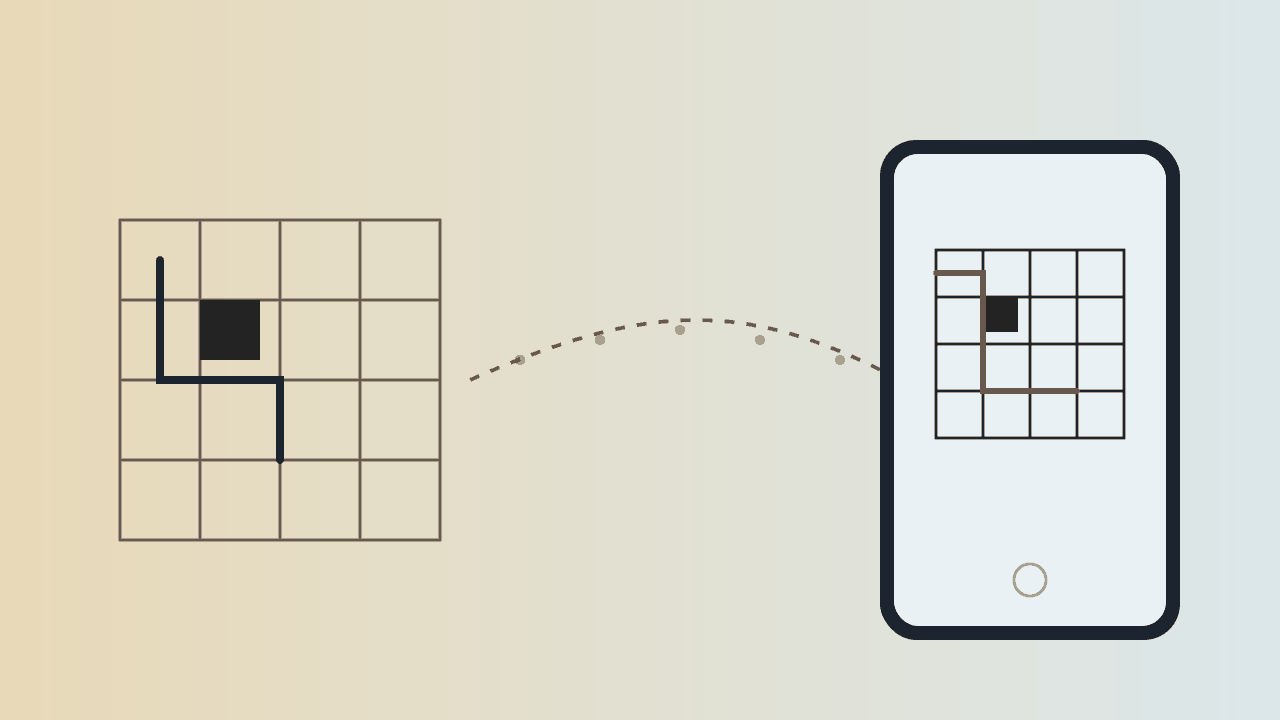 A paper grid's lineage branching toward the screen (illustration, AI-generated)
Sources
Sources consulted for this article:
・Wikipedia (Japanese): Yajilin
・Wikipedia: Puzzle Communication Nikoli
・Nikoli official site (Japanese): How to play Yajilin
・Nikoli official site (English): Yajilin
・Xbox: Puzzle by Nikoli W Yajilin (Windows), by HAMSTER Corporation
Closing
Revisiting Yajilin's history, what stays with me is that this grid proved not "a new rule," but the fact that rules can be grafted together. Nikoli already possessed both the grammar of loop-drawing and the grammar of counting black cells by 1999. What Yajilin did was let those two grammars coexist on a single board.
Today, the idea of combining existing systems to build a new puzzle or game is no longer unusual. But I want to record here that, in 1999, on a paper magazine in an era before the internet had fully spread, the experiment of making two rules share a single grid had already been carried out.
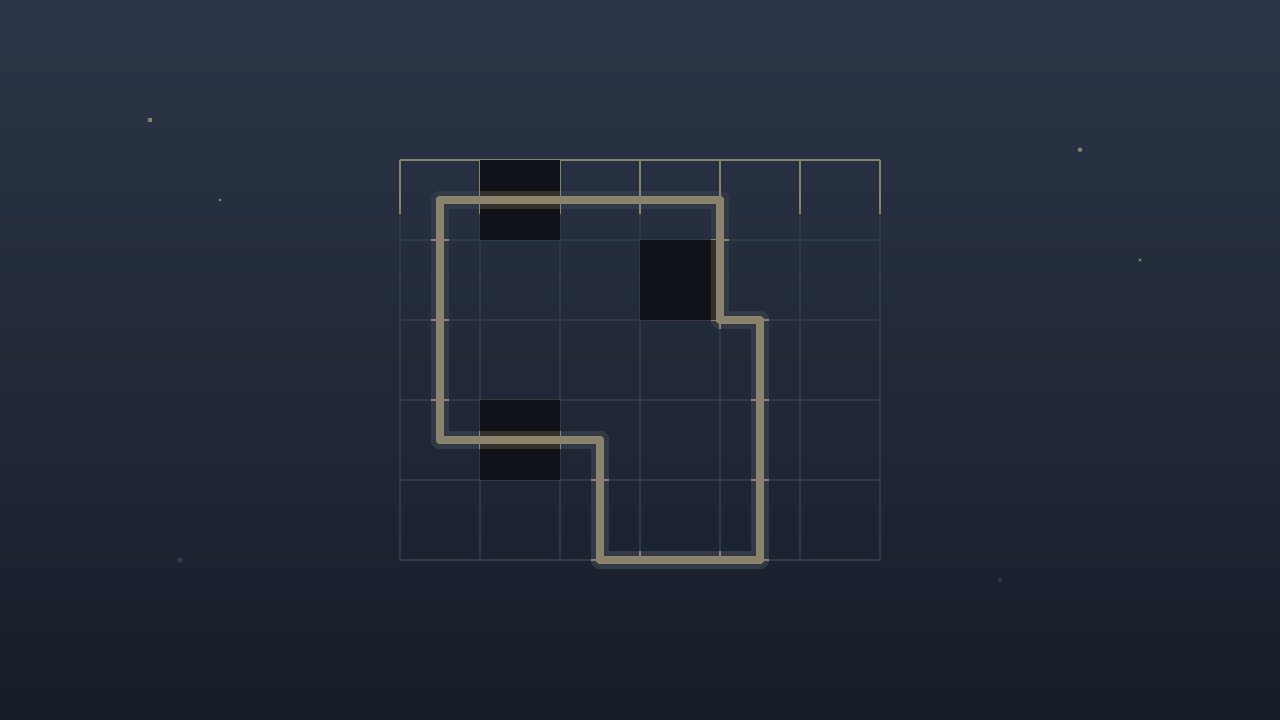 Two grafted rules resting quietly on one board (illustration, AI-generated)
Reactions (no login)
Anonymous • one of each per visitor per day
Learn — Curriculum
LearnPartie 2 Lineage — Where Puzzles Came FromChapitre 4 Pencil Puzzles and Nikoli9 / 12
関連シリーズ
Puzzle Incident History第15回 / 全40回