ESSAY · 2026-09-30
The Verb of Switching Polarity — Puzzle Design Grammar of Attract and Repel (From Teslagrad to Mind Over Magnet)
The same binary force becomes exploration, single-room logic, or a failed imitation
Introduction
A magnet is a binary force. Pull two poles together and they attract; flip one and they repel. That is the entire input. Yet this single verb has produced a Metroidvania, a single-screen logic puzzle, and one derivative that never found its own voice.
The site's mechanics glossary lists ten games under "Magnetism & Gravity" as of September 2026. The same polarity-switch rule turns into a platformer here, a storage puzzle there, a first-person escape game elsewhere. It sits close to what I covered in The Verb of Flipping Gravity, but magnetism manipulates distance rather than direction, opening a different combinatorial space.
Three games: Teslagrad, Mind Over Magnet, and Magnetic: Cage Closed. One grew polarity into a grammar of exploration and story. One distilled it into a single room of pure logic. One borrowed the verb but never found its own meaning for it.
Teslagrad — Turning Magnetism Into a Tower's Memory, Not a Maze
Teslagrad, released in 2013 by Norway's Rain Games, gives its silent protagonist a gauntlet that switches red and blue polarity while climbing a mysterious tower. There is no dialogue anywhere. The story is told entirely through environmental detail, mechanical theater, and hidden scrolls left by a father.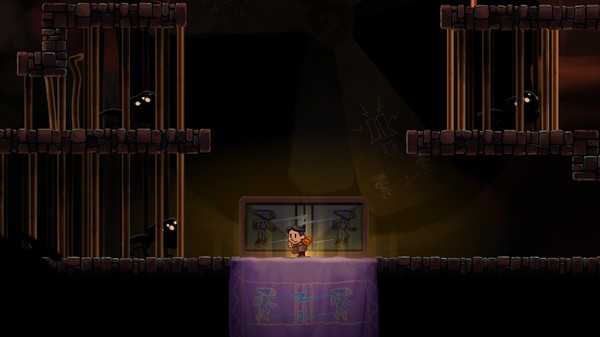 Teslagrad (via Steam store)
Magnetism becomes the grammar of movement itself here. Early puzzles just repel platforms into place, but teleportation and a polarity-reversing cloak arrive later, each still rooted in the same attract-or-repel switch. What expands is not the verb — it is the range of things the verb can touch.
A sequel, Teslagrad 2, followed in 2023, adding momentum as a new variable to the same polarity verb a decade later. Spending ten years growing a single verb is itself a striking design stance.
Mind Over Magnet — One Move: Throw the Magnet
Mind Over Magnet (2024) is the first commercial game by Mark Brown, who runs the game-design critique channel Game Maker's Toolkit. Players guide a character named Universal and a robot, Magnus, throwing a magnet to attract or repel metal crates. That is the entire move set.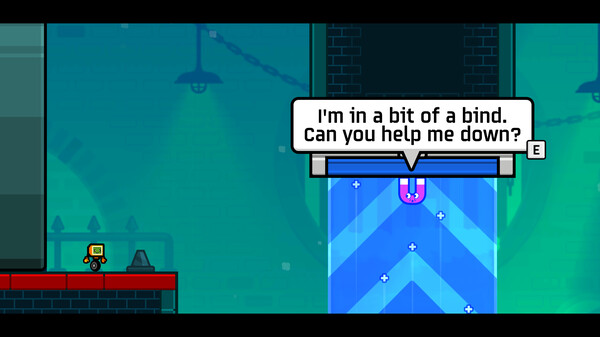 Mind Over Magnet (via Steam store)
Nearly every puzzle fits inside one screen. Where Teslagrad sends players climbing outward, Mind Over Magnet asks how deep a single verb can go within one room. Brown, inspired by Valve's in-game developer commentary, even built a similar commentary mode into his own game.
What was pitched in late 2021 took three unplanned years to finish, with the genre and art style rebuilt more than once along the way. A binary rule this simple takes surprisingly long to fully understand — a difficulty every single-verb design seems to share.
Magnetic: Cage Closed — A Borrowed Verb, Still a Borrowed Grammar
Magnetic: Cage Closed (2015, Guru Games) casts a death-row prisoner escaping an authoritarian facility with a magnet gun offering three power settings to attract or repel surfaces, launching crates and gliding across magnetic pads.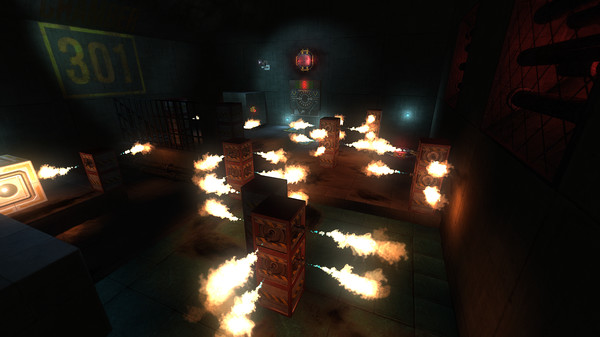 Magnetic: Cage Closed (via Steam store)
It was pitched as "Portal meets The Cube," and reviewers described its warden as "GLaDOS without the humor or charm." The magnetism verb itself worked fine — but the world and voice wrapped around it stayed borrowed from somewhere else.
Set beside Teslagrad and Mind Over Magnet, the gap is clear. Inventing a verb is not enough — it only becomes a grammar once you can explain why this world, in this voice, needed that verb at all.
Why the Same Binary Force Becomes Exploration, a Single Room, or a Failure
Comparing all three, the richness is not in magnetism itself. Attract-or-repel is just one binary switch. The richness comes from where a designer chooses to place that switch.
Teslagrad placed it inside vertical exploration; Mind Over Magnet placed it inside a single solvable room. Change the shape of the space and the same binary produces an entirely different learning curve. Magnetic: Cage Closed, by contrast, kept its space borrowed — Portal's corridors, Manhunt's tension — and never explained why its own verb had to exist there.
These three games suggest that single-verb design is not about inventing a verb. It is about owning the pairing of verb and space all the way through.
Closing
Magnetism is an invisible force, which makes translating it into visible motion entirely the designer's responsibility. Teslagrad handed that responsibility to environment and story; Mind Over Magnet handed it to sheer economy of moves.
If I built a puzzle with this verb next, I would keep the magnet's strength and range hidden from the start, letting players build their own hypothesis and test it against the board. The pleasure I want is not confirmation — it is holding a hypothesis at all.
Reactions (no login)
Anonymous • one of each per visitor per day
関連シリーズ
Read next

Related reviews
Teslagrad 2
Ein 2D-Puzzle-Platformer, in dem man magnetische Pole umschaltet und mit Schwung einen Turm erklimmt, der über einer nördlichen Fjordlandschaft aufragt. Rain Games behält die textlose Erzählweise und die handgemalten Hintergründe des Vorgängers bei, steuert aber vom „Anhalten und Nachdenken" hin zum „Gleiten und Vorankommen".
Magrunner: Dark Pulse
Ein First-Person-Puzzlespiel: Ein Magtech-Handschuh lädt Würfel und Plattformen so auf, dass gleiche Farben sich anziehen und gegensätzliche sich abstoßen – durch über 40 Testräume. Frogwares' Spiel von 2013 gießt Lovecrafts Cthulhu-Mythos in eine Portal-Form.
Teslagrad
Ein handgezeichneter 2D-Puzzle-Platformer über den Aufstieg durch einen verlassenen Tesla-Turm mit magnetischer Polarität - gleiche Pole stoßen sich ab, entgegengesetzte ziehen sich an - und einem Blink durch elektrische Barrieren. Ohne Text oder Dialog; die Geschichte wird allein über Wandbilder und Hintergründe erzählt. Von Rain Games (Norwegen).


