ESSAY · 2026-08-18
Why Does a Spoiler Feel Like Theft? — On Owning an Experience
An imagined dialogue between Locke and Hume about a fruit that ripens only once
The Night I Said “Stolen” Though Nothing Was Gone
Late at night, whisky in hand, I was working through Return of the Obra Dinn (developed by Lucas Pope, published by 3909 LLC, 2018). It is a game in which you fill a notebook with the names and fates of the sixty souls who sailed on a lost ship, one at a time. I had about forty of them down when my hand stopped, and I opened my timeline meaning only to take a break. Somebody’s post scrolled by. In the corner of their screenshot was a row I had not yet filled in. I looked away, too late. Once you have read something, you cannot un-read it. And that was when I heard myself say it out loud: stolen. … Except that makes no sense. Nothing is gone. Not a single word is missing from the story. My save file is intact and the remaining twenty are still sitting there. Nothing of mine passed into the hands of the person who posted it. When I wrote “Can You Say You Solved It If You Looked Up the Answer?” in this Fragments column, I came at it from the side of knowledge. Tonight I want to come at it from the side of ownership. So I called two men into the margin of my drafting notebook and sat them face to face: John Locke, who wrote that property arises out of labour, and David Hume, who wrote that property is not dealt out by nature but arises from human convention. These are not their actual words, of course. It is an imagined dialogue in my head, inferred from what each of them wrote.
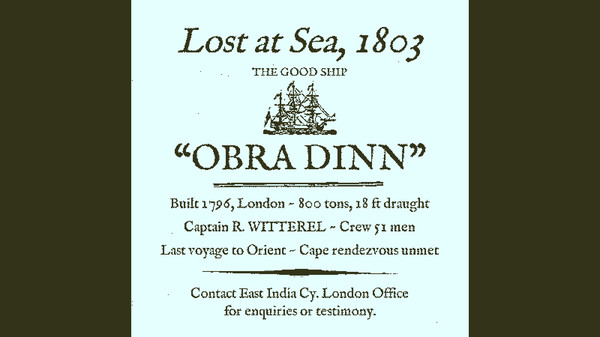 Return of the Obra Dinn (from the official Steam screenshots)
In the Margin of My Notebook, Two Philosophers Inspect the Word “Theft”
Locke. Let us begin by inspecting the word you spoke: theft. In chapter five of the second of my Two Treatises I wrote that the labour of a man’s body and the work of his hands are properly his own. When he takes something out of the common store and mixes his labour with it, it becomes his property. The story of that ship is not yours. It is nobody’s. But what you assembled by matching forty names to forty fates — that is the work of your hands. The labour that was mixed in belongs to the one who mixed it. So your tongue had its reasons for reaching for the word theft.
Hume. That is where your premise fails, Locke. You begin from property; I begin by doubting it. In Book 3 of my Treatise of Human Nature I wrote that the sense of justice and injustice is not derived from nature, but arises artificially, though necessarily, from education and human conventions. Property is not a card dealt by nature. Consider two men who pull the oars of a boat: they do it by an agreement or convention, though they have never given promises to each other. So it is with languages, and so it is with gold and silver becoming the common measures of exchange. The custom of not blurting out the ending in front of someone who has not played yet is exactly the same kind of thing. Nobody signed anything. It is kept all the same. So what he tasted was not being robbed. It was someone standing outside the convention.
Locke. Outside the convention. A thin way to put it. … Still, I grant you one fact in your favour. Nothing was subtracted from him. Not a word of the story is missing, and nothing passed into the hands of the person who posted. In a theft, something must have moved to the taker. If nothing moved, it was no theft. But wait — my fifth chapter has one further limit. One may take only so long as there is enough, and as good, left in common for others. And: nothing was made by God for man to spoil or destroy. … There it is. It was not a theft. It was a spoiling.
Hume. Spoiled. That word I can use alongside you. Though what spoiled was not the story. It was the fruit he was to have picked with his own hand, the one that ripens only once. And note, Locke, that the moment you chose that word your reasoning stepped half a pace towards mine. If this were a matter of property right, he could demand restitution. But no one can give it back. When we are angry about something that cannot be given back, the anger is not about a right infringed; it is about having our turn skipped. My conventions are, in the end, conventions about turns. You and I will both pass in front of somebody’s first time. We learned through repeated inconvenience that it pays not to walk ahead of it.
Locke. Turns. Not a bad word. But your convention cannot fully explain why the anger runs so hot. If a convention is merely broken, we feel the inconvenience and shrug. He said stolen. That is not the vocabulary of profit and loss. What he lost, in that moment, was the destination of a hand already in motion. The matching of forty names had begun. The word theft came to his lips precisely because the labour was already under way.
Hume. … That I will grant. A broken convention provokes fierce anger when nothing can be put back afterwards. Steal money and you may be made to return it. But his remaining twenty cannot be returned to him by anyone. Of the three laws I set down — the stability of possession, its transference by consent, and the performance of promises — only the first is of any use here; the other two are unavailable. Transference and performance are the kind of thing that can arrive late and still serve. A first time is not. That is why the custom must be stricter than the law. If it were not stricter, it would not be kept at all.
Locke. Then we have come to the same door by different roads. I say: do not spoil. You say: do not skip the turn. What was stolen was not the story. It was the fruit that ripens only once, the one he was to have assembled with his own hands. And the moment he set his hand to it, half of it was already his.
At which point I remembered something inconvenient. I am a person who spends every day designing the paths and the hints for puzzles. My job is to build a staircase for whoever is stuck, and every step of that staircase knocks a little of somebody’s once-ripening fruit to the ground. A hint is kind, and a hint is permanent. What has been opened cannot be un-opened. The source of spoilage is not only other people’s timelines; some of it is on my own desk. I picked up my pen and added a line to the notebook: “A spoiler does not take. It spoils. So put the fence where his own hand reaches it — before anyone else’s does.”
The Takeaway — Hints, One Step at a Time, Opening Only for Whoever Pressed
Here is the thing I noticed. Obra Dinn has a feature that looks at first like an inconvenience. When you write down a crew member’s name and fate, the game does not tell you on the spot whether you are right. Correct fates are validated only once three of them line up (with the last six near the end coming in pairs). Wouldn’t it be easier, I thought at first, to check them one at a time? No — the opposite. In a game that confirmed one at a time, I would have brute-forced my guesses: run through the candidate names in order and watch for the one that locks in. That is not an unfriendly design. It is a fence that stops the player from spoiling herself. Now that I say it out loud: resistance to spoilers cannot be built out of hiding information alone. It can also be built by handing the timing of confirmation back to the player.
The takeaway for a maker is one line: cut hints into single steps, and place them so they open only for the person who pressed. A step needs to be exactly one pace high. A hint that shows the whole answer on a single sheet is not kindness; it is spoilage. And keep the other idea on the desk too — not confirming answers one at a time and instantly. Not to block brute force, but to protect the person playing from the version of herself who wants to fall back on it.
I stand half a pace towards Locke. I think Hume is right about turns: the custom is not a right but a convention we keep because it pays us each in turn. But on a designer’s desk, the line that actually does work is “do not spoil.” I cannot author the convention between readers. I can build the fence that stops the rot on my side of it.
So I want to ask you. Is a spoiler a theft, or a spoiling? And — is an answer you found by opening a hint yourself filed in the same place as an answer somebody told you first, or somewhere else entirely? Tell me in the comments. The next Fragments piece: “Why Do We Feel Guilty Towards an NPC? — Ethics Towards Fiction.” About the nights we apologise, in front of a screen, to someone who was never there. I will sit two more of them face to face.
References: John Locke, Two Treatises of Government (Japanese ed., trans. Takashi Kato, Iwanami Bunko — Second Treatise, chapter 5, “Of Property”: that the labour of one’s body and the work of one’s hands are properly one’s own; the mixing of labour with the common store; the proviso that enough, and as good, be left in common for others; and the limit that nothing was made by God for man to spoil or destroy). / David Hume, A Treatise of Human Nature, Book 3: Of Morals (Japanese ed., trans. Toshihiko Ise, Toru Ishikawa and Koichi Nakagama, Hosei University Press — that justice is an artificial virtue; that the stability of possession arises gradually out of human convention; the image of two men matching their oars without having given promises; and the three laws of the stability of possession, its transference by consent, and the performance of promises). The game matched here is Return of the Obra Dinn (Lucas Pope, 3909 LLC, 2018).
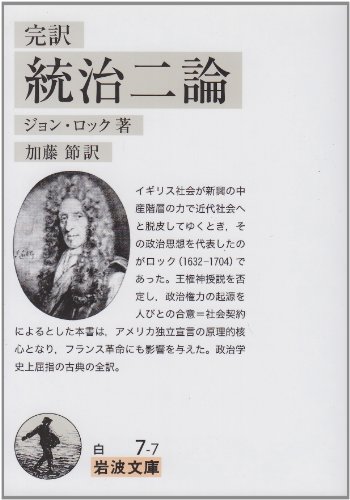 John Locke, Two Treatises of Government (Japanese ed., trans. Takashi Kato, Iwanami Bunko)
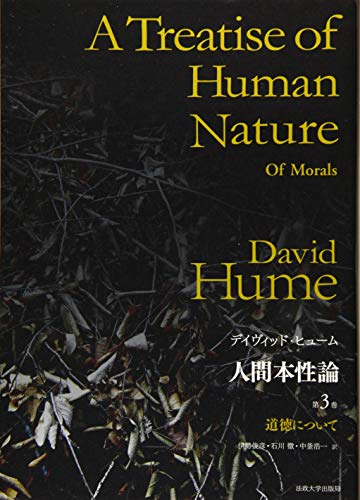 David Hume, A Treatise of Human Nature, Book 3: Of Morals (Japanese ed., trans. Ise, Ishikawa and Nakagama, Hosei University Press)The cover images are Amazon Associate links. As an Amazon Associate, Puzzlebyrinth earns from qualifying purchases.
Reactions (no login)
Anonymous • one of each per visitor per day
Part of these series
The Nature of PlayEpisode 14 of 24