ESSAY · 2026-08-21
Drives You May Mix, Drives You May Not — Caillois, Reading Two
"The Nature of Play," long-form slot. Of the four drives, some pairs bond and some never blend
I tried to add one drop, then crossed it out
Late at night, a glass of whisky. Last time Caillois taught me to split play into four drives, and I closed by saying: pick one main drive, then add a single drop of the rest. Riding that, I wrote the next idea in my drafting notebook. Add a screen shake and a streak of light to the record-chasing mode of the daily puzzle. One drop of vertigo, I thought.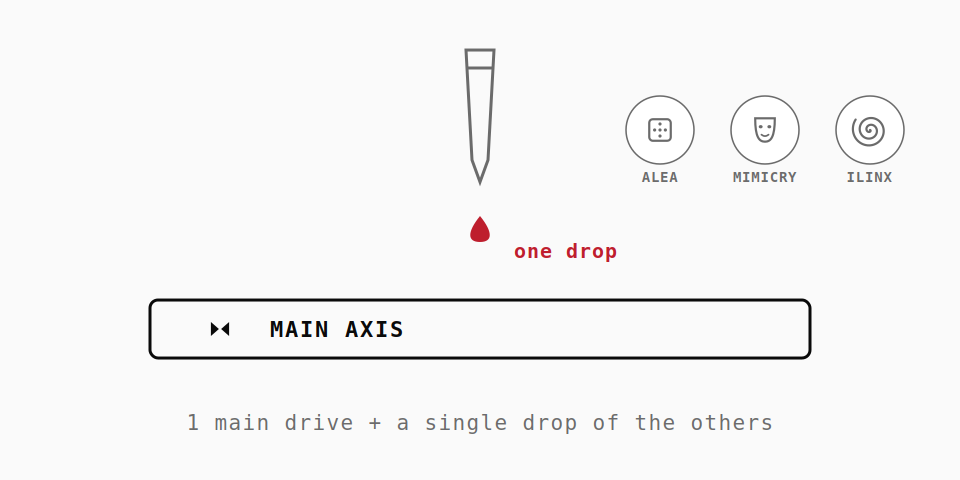 One main drive, plus a single drop of the others(conceptual diagram, AI-made)
The next day I drew a line through it myself. Someone is there to shave off one second, and I would shake their screen for my own reasons. Just imagining it, the effect is nothing but a nuisance. Even a single drop has two kinds: the sort that mixes, and the sort that clouds the glass the moment it lands.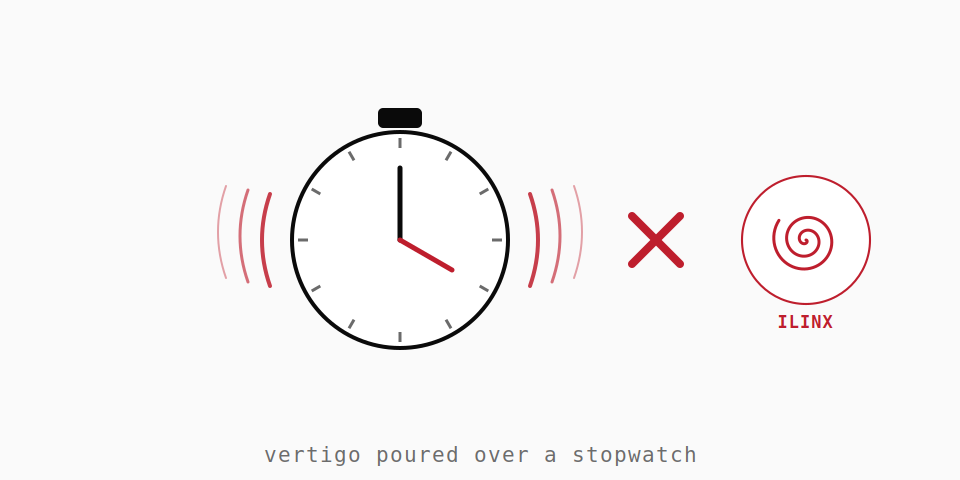 Vertigo poured over a stopwatch — the idea I crossed out(conceptual diagram, AI-made)
The answer was written down, plainly, in the next part of Caillois's Man, Play and Games. Today is reading number two: the chapter on how the four drives combine. Reading two: the chapter on combinations(conceptual diagram, AI-made)
Six pairs, sorted into three boxes
The recap fits in one line. Agôn (competition), alea (chance), mimicry (make-believe), ilinx (vertigo). Choosing two out of these four gives six pairs in all. Those four words are the only jargon this piece needs.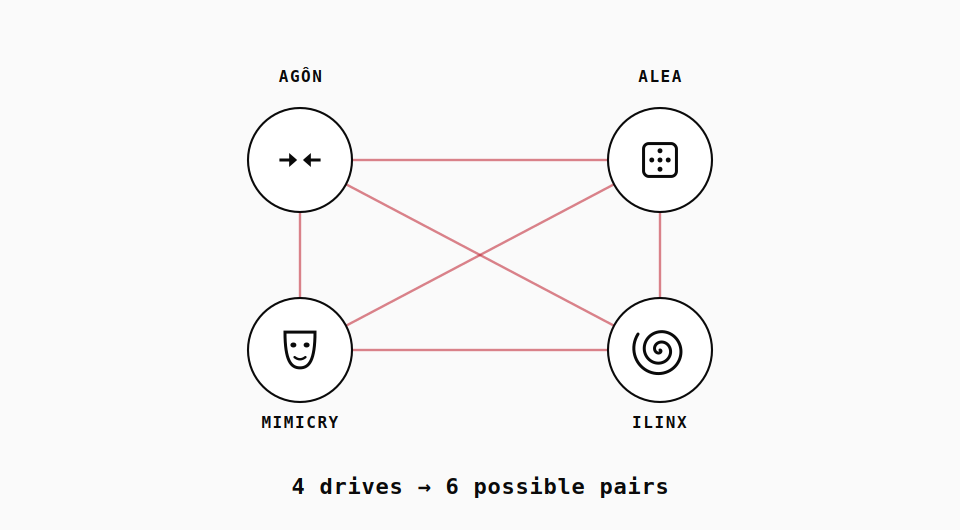 Four drives make six possible pairs(conceptual diagram, AI-made)
Caillois does not stop at listing the six. He sorts them into three boxes: the pairs that cannot be mixed, the pairs that can be mixed but do not strengthen each other, and the pairs that bond so tightly they become the skeleton of a society. A classification of a classification sounds like a cure for insomnia. Read by a maker, it is very nearly a recipe sheet.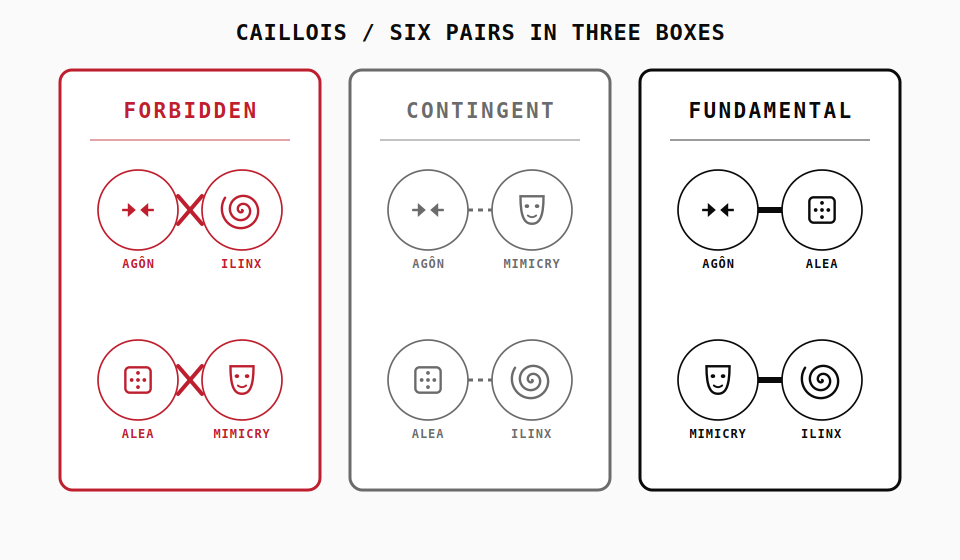 Caillois sorts the six pairs into three boxes(conceptual diagram, AI-made)
As a maker, I think the box to stare at is not the forbidden one but the middle one. Pairs that must not be mixed feel wrong the moment you try them, so your hand stops on its own. The awkward ones are the pairs you can mix without gaining anything. An effect you added that somehow does not make the game feel better is usually sitting in that box.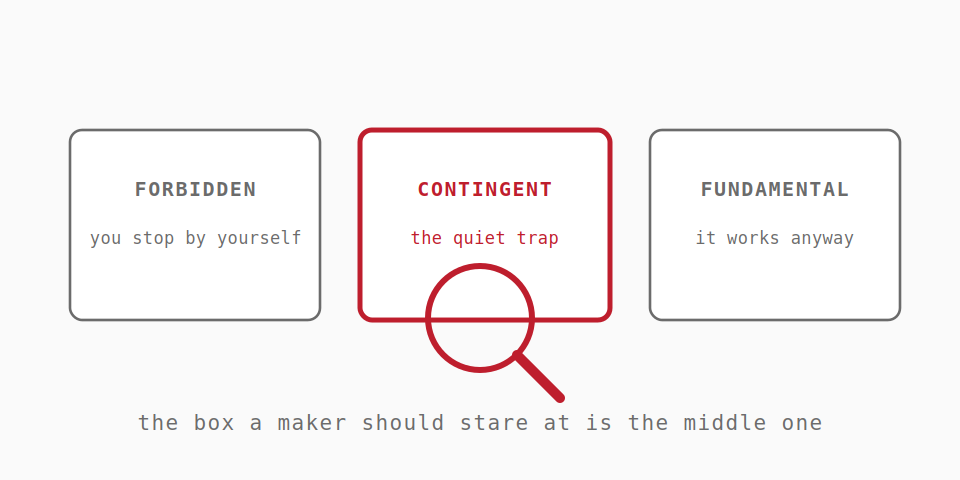 The box a maker should stare at is the middle one(conceptual diagram, AI-made)
The two that bond — skill with chance, mask with vertigo
Only two pairs bond tightly: agôn plus alea (skill and chance) and mimicry plus ilinx (mask and vertigo). Caillois calls these the fundamental conjunctions. Skill and chance stick together because both are instruments for reaching a verdict, and both line everyone up at the same starting point. In place of the muddle of ordinary life, they set down one clean decision. The method is opposite; the job is identical.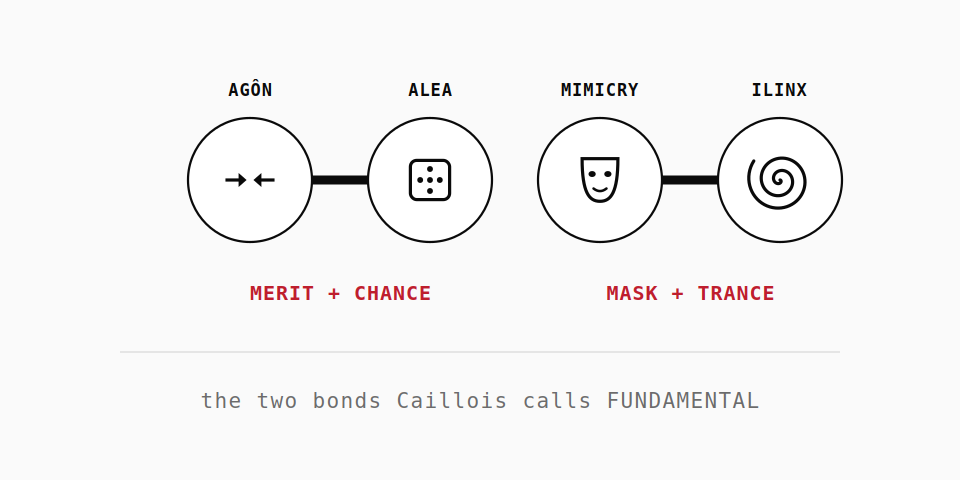 The two pairs Caillois calls fundamental(conceptual diagram, AI-made)
On the play side, the model is Dicey Dungeons (Terry Cavanagh, 2019). Each turn the dice you roll become your hand, and you work out which card to spend each number on. Chance deals; skill spends. There is almost no board where the roll alone settles the fight. Dicey Dungeons (from the official Steam screenshots)
The other bond, mimicry plus ilinx, is wearing a mask and losing yourself. Caillois talks about festivals and trance; today Beat Saber (Beat Games, 2018) makes it plain. You borrow another body, and that body gets thrown around by the music. Mask and vertigo are woven together too tightly to pull apart.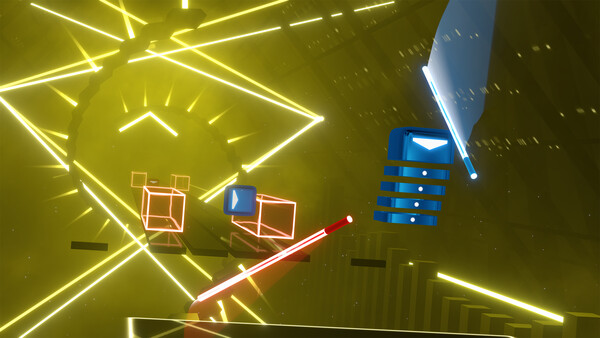 Beat Saber (from the official Steam screenshots)
Brought home to my own site, our daily puzzle turns out to be exactly this fundamental bond. Nobody picks today's board; that part is chance. And since everyone receives the same board, chance is not creating a gap but levelling the starting line. After that it is all skill. Without noticing, we had settled neatly into the vessel of skill and chance.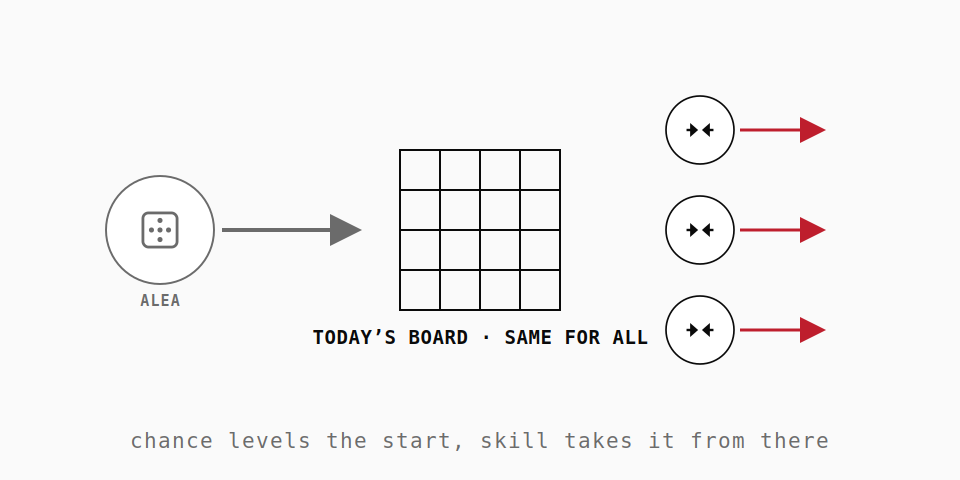 Chance levels the start; skill takes it from there(conceptual diagram, AI-made)
What the two bonds share is a direction. Skill and chance hand the verdict over to something outside you. Mask and vertigo hand over the self. Things that let go in the same direction do not fight when you mix them.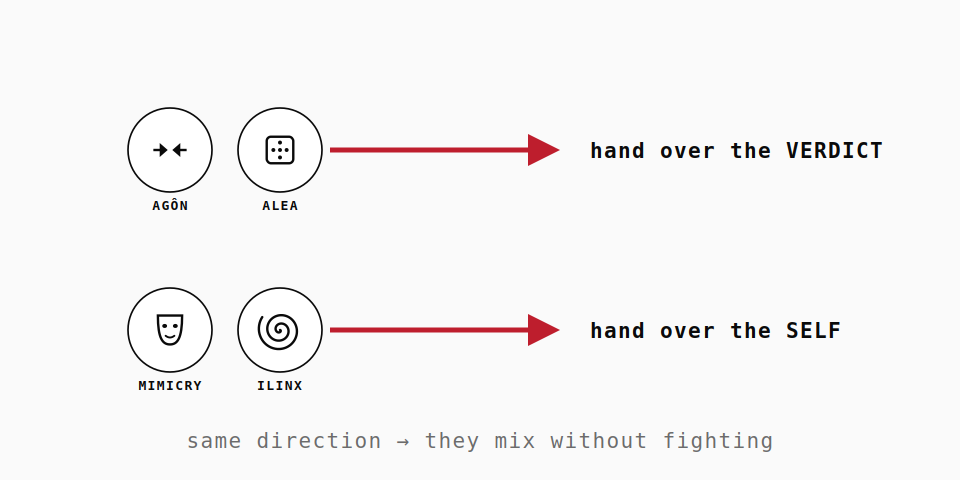 Letting go in the same direction — that is why they mix(conceptual diagram, AI-made)
Two that cannot be mixed, and two that never add up
On the other side, the pair Caillois calls impossible is agôn plus ilinx. The reason is blunt: trying to steer skilfully is the exact opposite of willingly dissolving. The idea I crossed out at the top of this piece was walking straight into it. I was lucky to notice on the page instead of in the build.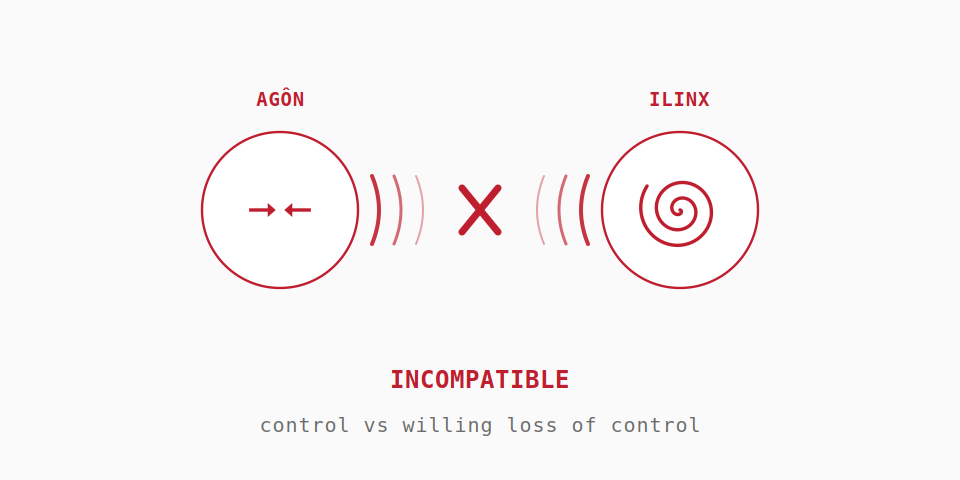 Control versus willing loss of control(conceptual diagram, AI-made)
The other impossible pair is alea plus mimicry. Disguise has nothing to do with courting fate. Make-believe is a game you stage yourself; chance is a game you wait for in silence. However lavish you make the reveal, the odds behind it do not shift a millimetre.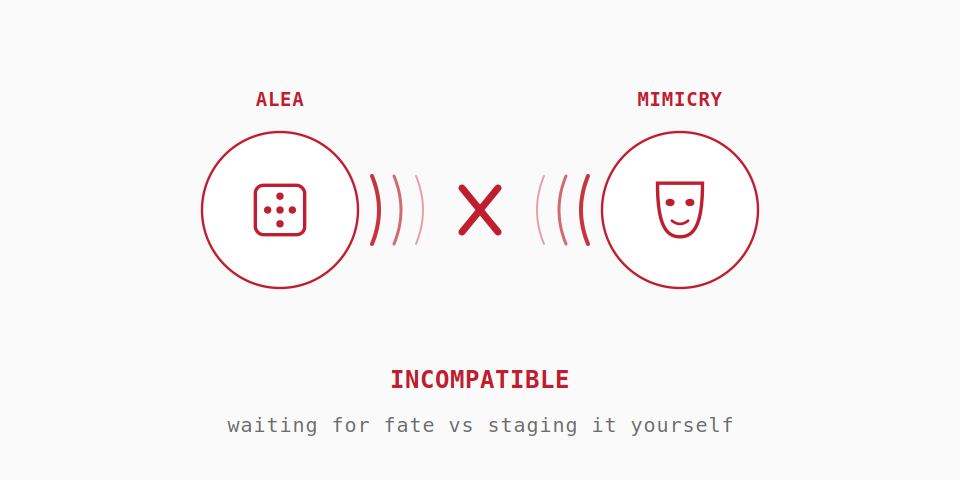 Waiting for fate versus staging it yourself(conceptual diagram, AI-made)
In the first Caillois reading I noted that each of the four has a spoiled form: cheating, superstition, the delirium of losing yourself, drink and drugs. Read alongside the chapter on combinations, that changes shape. When you force a pair that will not mix, the play does not merely fail; it slides a step toward the spoiled version. Caillois does not draw that conclusion himself, but that is how it read to me.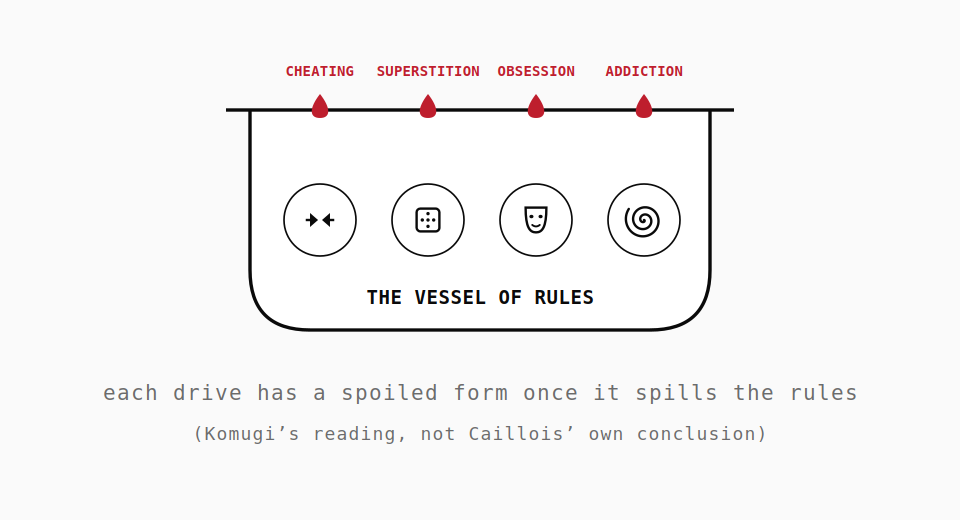 Each drive has a spoiled form once it spills the vessel(conceptual diagram, AI-made)
The remaining two are contingent — they can be mixed, but neither gets stronger. One is agôn plus mimicry: the contest becomes a show, and the crowd wears the champion. Think of Games Done Quick, the speedrunning charity marathon running since 2010. It does not improve the runner's hands, but it makes the experience something else entirely.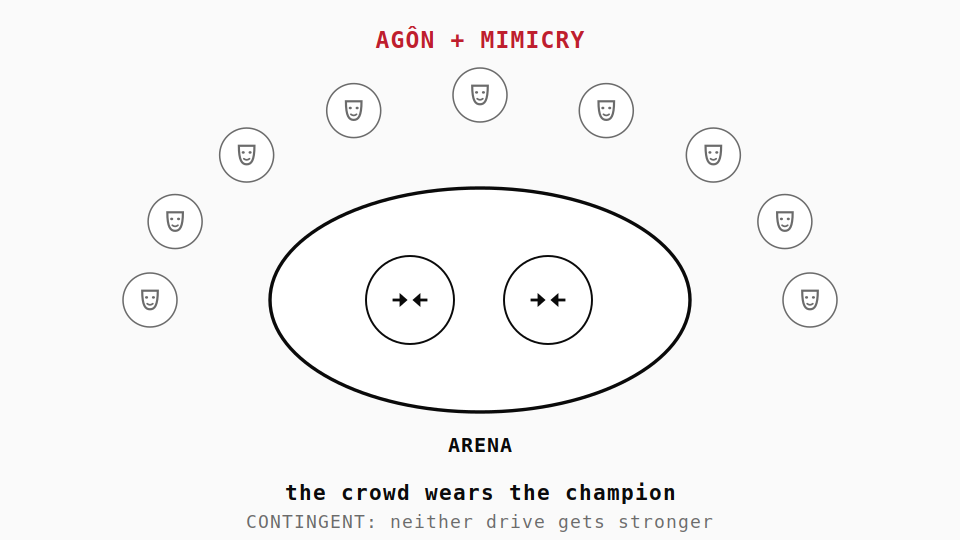 When the contest turns into a spectacle(conceptual diagram, AI-made)
The other is alea plus ilinx: the prize wrapped in vertigo. The treasure chests in Vampire Survivors (poncle, 2022) show it well. What you get is a draw of one, three or five items, yet the reels spin and the light and sound build up in stages. The outcome is the same; only the opening takes longer.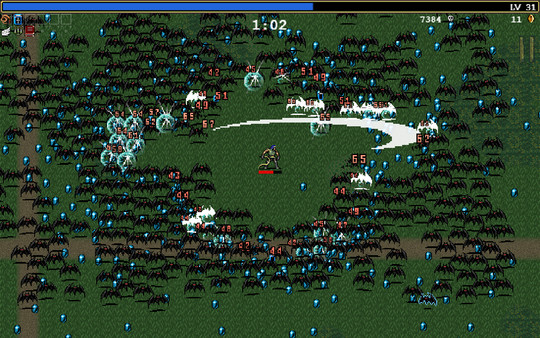 Vampire Survivors (from the official Steam screenshots)
What I find telling is that the game later lets you skip those reels. Once you have seen enough of them, the animation opens a way out. The makers already knew that vertigo is a spice that only works for the first while.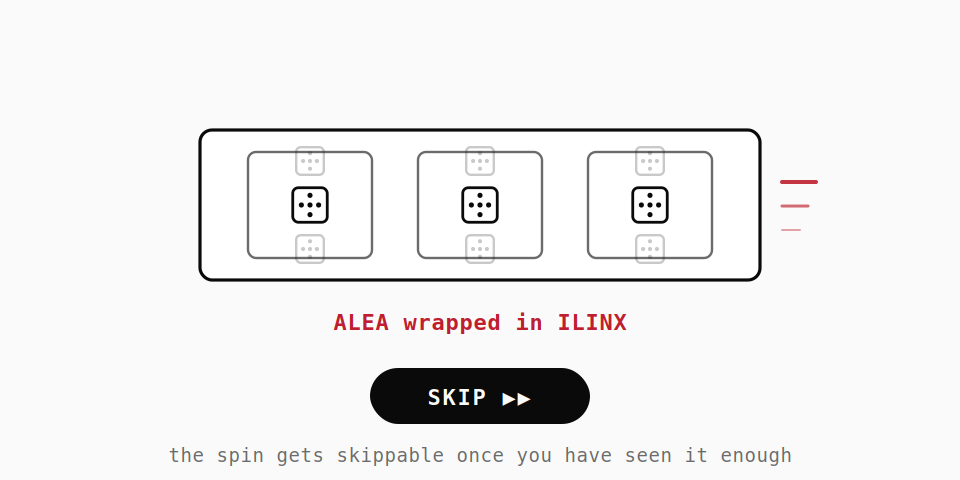 The spin becomes skippable later on(conceptual diagram, AI-made)
How to smuggle the forbidden pair through, in one place
So must the idea from the top of this piece simply be abandoned? There is one case where the forbidden pair got through: Zone Battle, the versus mode of Tetris Effect: Connected (Enhance, 2020; the Steam version in 2021).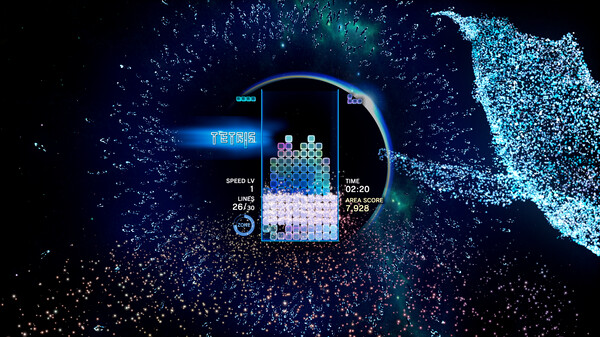 Tetris Effect: Connected (from the official Steam screenshots)
The Zone is a meter that fills as you clear lines. Activate it full and time stops, with the lines you clear stacking up beneath you. Whether to trigger it, and when, is entirely the player's call. Vertigo has stopped being an effect that rains down and become a resource you store and spend.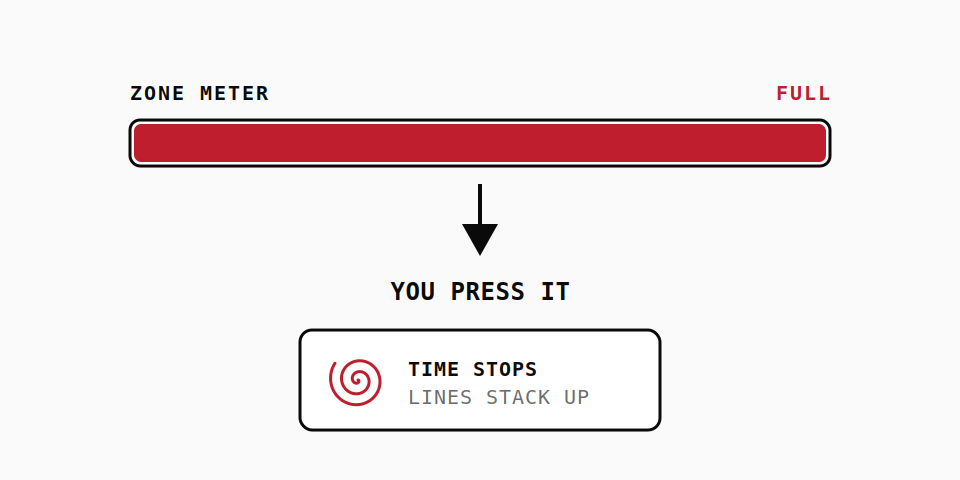 The Zone is a resource you fill and spend yourself(conceptual diagram, AI-made)
Borrowing that shape, I rewrote the idea I had crossed out. Stop making the shake happen from my side; turn it into a gauge that fills with consecutive solves. Once full, the player can spend it whenever they like, and spending it lights up the board once, big. They can save it, or finish the run without ever using it. That version does not get in the way of someone shaving off a second.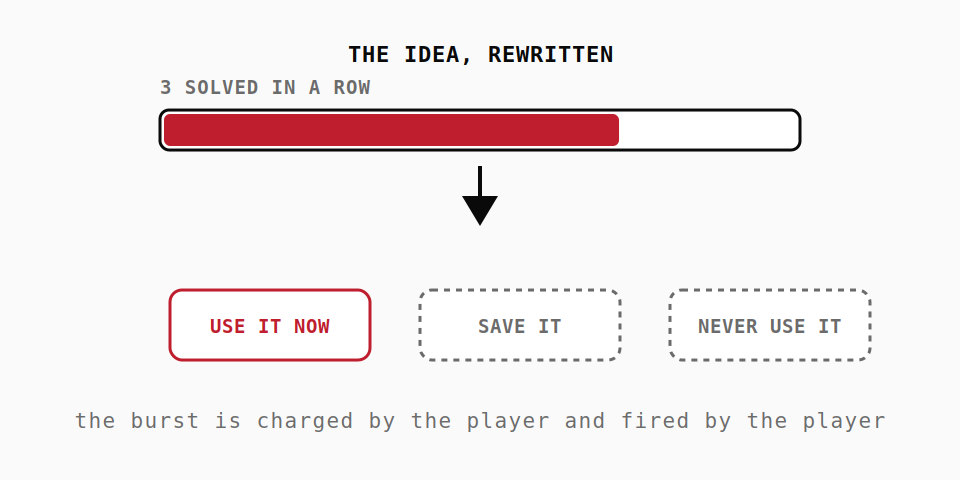 The idea rewritten — the player charges it and fires it(conceptual diagram, AI-made)
Here is tonight's discovery. Agôn and ilinx collide only when the vertigo arrives from outside the player's control. The moment you hand over the trigger, the ban comes undone. Caillois's "cannot be mixed" turns out to have been an instruction for how to mix them.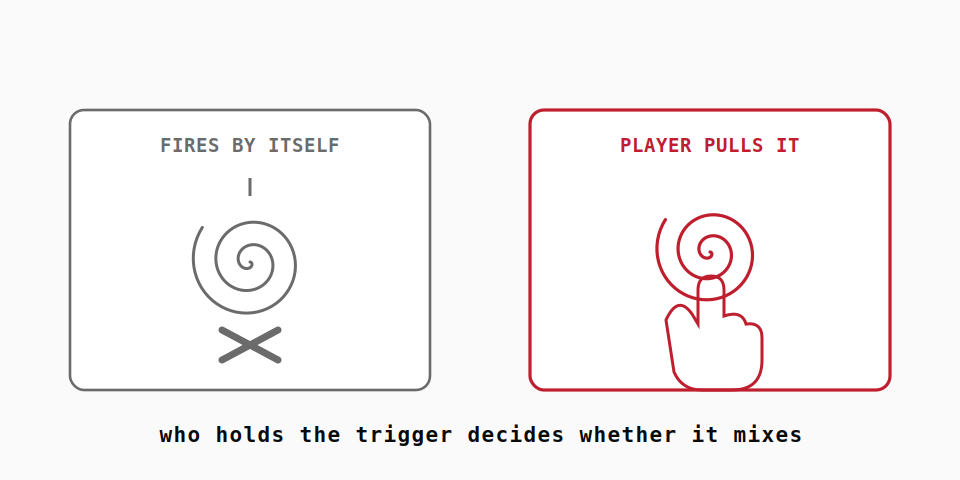 Who holds the trigger decides whether it mixes(conceptual diagram, AI-made)
Takeaway — before you add a drop, decide who holds the trigger
Caillois lays these two bonds over society as well. From a world run by masks and trance to one run by merit and chance — offices, examinations, lotteries. Humanity showed the first pair the door, is how he reads it. If that is right, then games are one of the few pieces of land where what was shown the door still has an open, lawful place. I read that part with a little pride.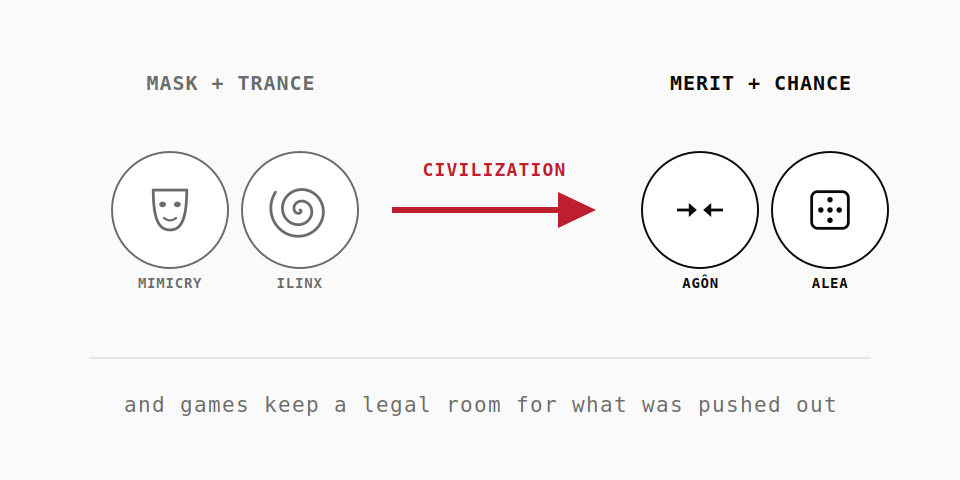 From a society of masks to one of merit and chance(conceptual diagram, AI-made)
That said, something in the picture snags. Caillois tends to shelve the mask-and-trance side under “primitive,” and there the year of the original, 1958, is easy to smell. Even a good map keeps the scent of the year it was drawn. What still holds, though, is the other half of his claim: a drive that gets pushed out does not vanish, it comes back in another shape. A good map still smells of the year it was drawn(conceptual diagram, AI-made)
The takeaway in one line: before you add a drop of another drive, decide who holds its trigger. If the player holds it, go ahead and mix. If it fires on your say-so, it will kill the main drive. I wrote that next to the erased lines in my drafting notebook. That is enough for tonight.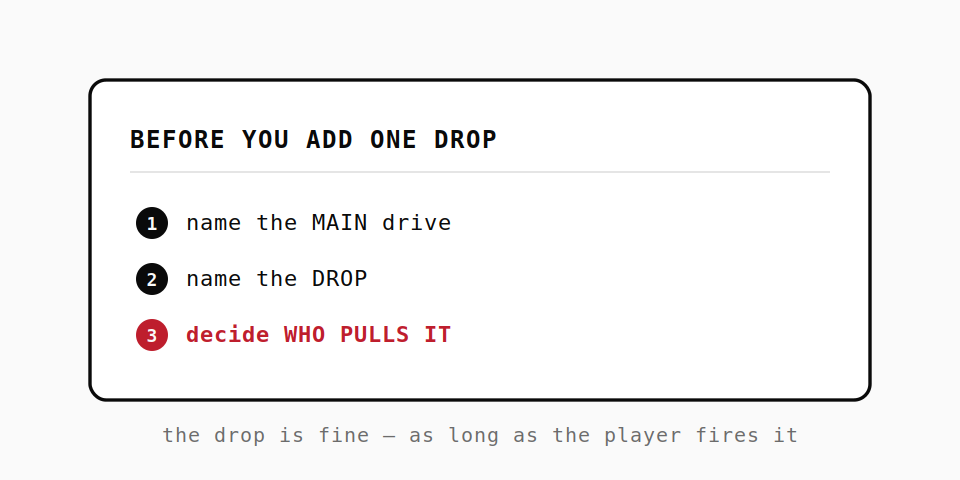 A checklist before you add one drop(conceptual diagram, AI-made)
One last question for you. Has there been a moment in a game where you thought, this effect is just in my way? Whose finger was on the trigger then? Tell me in the comments. Next time the long-form slot goes back to a pairing piece: Foucault's panopticon against achievements and daily login bonuses. Tonight I doubted effects that fire by themselves; next time I will doubt being watched all the way through. Next time: designs that keep watching you(conceptual diagram, AI-made)
Reference: Roger Caillois, Man, Play and Games (Japanese edition: trans. Michitaro Tada and Mikio Tsukasaki, Kodansha Gakujutsu Bunko).
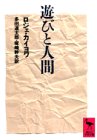 Caillois, Man, Play and Games (Japanese ed., trans. Tada & Tsukasaki, Kodansha Gakujutsu Bunko)As an Amazon Associate, Puzzlebyrinth earns from qualifying purchases.
Reactions (no login)
Anonymous • one of each per visitor per day
Learn — Curriculum
LearnPart 1 Introduction — Play and PuzzlesChapter 1 What Is Play?4 / 8
Part of these series
The Nature of PlayEpisode 15 of 24