ESSAY · 2026-08-08
Splitting Play Into Four — Opening Caillois's Man, Play and Games
"The Nature of Play," long-form slot. Changing books after Huizinga, to split fun into four drives
The players had split into two camps
Late at night, a glass of whiskey. Scrolling through my own site's play logs, I noticed the players had split into two camps. One chases times and ranks, hungry for a new personal best every day. The other pokes at today's board for a while and closes it with a shrug, cleared or not. The same puzzle, touched with such different feelings. Can I really call both of these, together, "play"?
Until now I'd been reading Huizinga: play is a magic circle drawn outside everyday life. As for being inside the circle, both the time-attackers and the shruggers are in the same one. But what they want inside it is completely different. Huizinga showed me "what play is" in a single picture, yet he didn't do much to divide "how many kinds of play there are." So today I switch books, and open Roger Caillois's Man, Play and Games (first published 1958).
Caillois had a bone to pick with Huizinga
Caillois was a French sociologist, and Man, Play and Games is written as a reply to Huizinga's Homo Ludens. With deep respect, he still had a clear objection: "You only look at competition — agôn. You've pushed chance — alea — too far out of play." Where Huizinga looked down a little on dice and lotteries, Caillois insists that chance is play too. As a reading log, it's fun to enter through this objection to the master.
Caillois splits all play into four drives. Agôn (competition — pitting skill against skill), alea (chance — handing the outcome to luck), mimicry (simulation — becoming someone else), ilinx (vertigo — letting your senses be shaken until you're dizzy). The only specialist terms I'll use in this piece are these four. They look forbidding in Greek and Latin, but the contents are almost disappointingly everyday. Rock-paper-scissors, the lottery, playing pretend, spinning until you stagger — all of it lands in one of the four.
Why would a maker pounce this hard on a sociologist's taxonomy? The reason is simple. The two camps from the top — the time-chasers and the shruggers — can be cleanly dissected with these four words. What the time-chasers want is agôn (competition); what the shruggers soak in is the edge of ilinx (vertigo) and mimicry (role-play). The same board presses a different drive's switch depending on the person. Half of “this isn't fun,” I suspect, really means “the drive I want to press doesn't sound in this design.”
Matching four games to the four drives
What's interesting to a maker is that this four-way split lands cleanly on today's games. High-purity agôn is, for example, TETRIS 99 (Arika, 2019). Ninety-nine players line up under the same conditions and aim to be the last one standing on skill alone. Shaving away every gap where luck could slip in is the ideal form of agôn.
Alea is the reverse: play where you let go of skill and hand the result to luck. Gacha and lotteries are that. But pure alea makes the player passive — just pull, just wait. So today's games rarely serve alea neat; they usually mix it with agôn. In Slay the Spire (Mega Crit, 2019) the cards you draw are luck (alea), but how you wring those cards dry is skill (agôn). As Caillois says, an interesting game is usually a blend of one thing and another.
Mimicry is play where you become another life. Running someone else's household in The Sims (Maxis, 2000), we're acting as someone who isn't us. Ilinx is play where you shake your senses on purpose and get drunk on it. That feeling of being swallowed by sound and light and entering "the zone" in Tetris Effect (Enhance, 2018) is a vertigo continuous with spinning bats and roller coasters. What's striking is that even with the same Tetris, 99 is competition (agôn) and Effect is vertigo (ilinx) — the vessel is the same, but the drive it shakes is different.
Caillois goes further: each of the four has a “corrupted form.” Agôn slides into violence and cheating, alea into superstition and dependency, mimicry into a self-losing delirium, ilinx into drink and drugs. Pulled toward games: pay-to-win, buying victory with money, is corrupted agôn, and a gacha you can't stop pulling is corrupted alea. The same drive stays play while it sits inside the vessel of rules, and turns to poison the moment it overflows. What a maker is really designing, maybe, is the side of that “vessel that keeps it from overflowing.”
From paidia to ludus — the slope running through play
Caillois's other invention, added to Huizinga, is a single slope that runs vertically through the four. One end he calls paidia (turbulence, improvisation, rule-less horsing around), the other ludus (play built up tight with rules and effort). Even within the same agôn, yelling "who can run farther?" in the park leans toward paidia, while the 100-meter dash in track and field leans toward ludus. Play splits into four and, at the same time, is always climbing up and down this slope.
This doubles as an explanation of how a puzzle feels in the hand. The first day you touch it, poking cells without even knowing the rules — that's paidia. Once you're used to it and start chasing fewest moves or a personal best — that's already ludus. The maker's job, I think, is to lay this slope down gently. Show a beginner the steep ludus cliff right away and they about-face and leave; keep them rolling around in paidia forever and they get bored. The "ritual that draws the magic circle" I wrote about before was about the circle's entrance; paidia → ludus is about the slope — how far up you let them climb once they're inside.
Pulling it toward my own site, there are handles all along this slope — at the foot and at the summit. A tutorial that lets you touch first without teaching the rules, an undo where a mistake doesn't break the board — those are handles on the paidia side. Conversely, a timer, a move counter, a leaderboard, achievements — those are handles on the ludus side. You don't have to show them all from the start. First reassure them with paidia and draw them deep into the circle, then quietly hold out the ludus handles once they're used to it. The order in which you place these handles is, I think, what a difficulty curve really is.
Takeaway — what a puzzle is borrowing
Today's finding is this. "Fun" isn't one lump; it's made of at least four separate drives. When a maker says "I want it to be more fun," they often can't say which of the four they want to strengthen. If I write the takeaway in one line: write down on paper, once, which of the four your puzzle is built around, and then ask whether you can add just a single drop of the other three.
My own daily puzzle, for instance: its core is agôn + ludus (skill and rules). But you don't pick "today's board" yourself — the daily prompt borrows a very thin layer of alea (chance). The sound effect at the moment you solve it, the animation that bursts open, is a single drop of ilinx (vertigo). Fix one main axis, and blend in the other drives a drop at a time. Reading Caillois, what I'd been doing unconsciously finally got a name. I drew the four-way table in my sketchbook and fit my own games into it one by one. That's it for tonight.
One last question for you. The game you're playing most right now — which of agôn, alea, mimicry, or ilinx is its main axis? And what's the single "drop" quietly mixed in? Tell me in the comments. Next time, in the long-form slot, a matching piece: Wittgenstein's "language-games" × Baba Is You. Today I cleanly split play into four — next time I'll do the opposite and doubt whether "game" can be tied up in a single word at all.
References: Roger Caillois, Man, Play and Games (University of Illinois Press / in Japanese: trans. Michitaro Tada and Mikio Tsukazaki, Kodansha Gakujutsu Bunko); Johan Huizinga, Homo Ludens (Routledge / in Japanese: trans. Hideo Takahashi, Chuko Bunko).
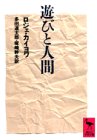 Roger Caillois, Man, Play and Games (Japanese ed., Kodansha Gakujutsu Bunko)
 Johan Huizinga, Homo Ludens (Japanese ed., Chuko Bunko)The cover images are Amazon Associate links. As an Amazon Associate, Puzzlebyrinth earns from qualifying purchases.
Reactions (no login)
Anonymous • one of each per visitor per day
Learn — Curriculum
LearnPart 1 Introduction — Play and PuzzlesChapter 1 What Is Play?3 / 8
Part of these series
The Nature of PlayEpisode 11 of 20