ESSAY · 2026-10-02
Correct, but Not Beautiful — Kant's "Purposiveness Without Purpose" × Hexcells Infinite
"The Nature of Play," long-form slot. Every generated board has exactly one answer, yet it feels colder than the 36 hand-made ones. Kant's Critique of Judgment has a name for the difference
Every board the generator makes is correct. Not one is beautiful
This week my board generator for the daily puzzle finally works. Every board it spits out has exactly one answer, no guessing required. I ran 300 boards in testing, and zero were unsolvable.
The method is simple. Build the answer first, then add number clues. If two or more answers are still possible, add one more. Once only one remains, stop. Leave it running overnight, and by morning there's a stack of correct boards.
And yet I don't want to keep a single one. When I copy them into my sketch notebook, the page looks dead. I took a sip of whisky, looked at one more, and closed the notebook anyway.
Correctness is guaranteed. Something else is missing. When we call a board "beautiful," what sits on top of being correct?
Tonight I'm taking that question to Kant: the Critique of Judgment, from 1790. It wasn't written for puzzles. But few books have broken down "what is beautiful?" this patiently.
For Kant, beauty "seems made for something, but isn't for anything"
Kant's most famous phrase here is "purposiveness without purpose." It sounds intimidating, but I think it describes a fairly ordinary feeling.
In my own words: "It's well made. It feels like it was shaped just right for something. But I can't say what for." That's the state in which we find something beautiful.
Kant gives a clear example (what follows is my summary). Stone tools dug up from ancient graves have a hole, as if for fitting a handle. From the shape, you can tell they were made to be useful. Still, we don't call them "beautiful."
The moment we see a tool, we look at its shape from the side of its purpose. A tulip, on the other hand, is beautiful. It is perfectly ordered, but we don't connect that order to any use.
Kant's examples of "free beauty" are fun too: flowers, many birds, leafy patterns on wallpaper, improvised music with no theme. All things you can enjoy without asking what they represent. I think a puzzle board sits quite close to that list.
There's one more point that matters for this series. In front of something beautiful, Kant writes, our power to imagine and our power to understand are in a state of "free play." We aren't reaching a conclusion. We're enjoying the two powers meshing with each other.
In a series hunting for the nature of play, the word "play" just turned up at the center of beauty. I can't walk past that.
Hexcells Infinite has two kinds of boards, at two different temperatures
The game I'm checking this against is Hexcells Infinite (Matthew Brown, 2014). It's a logic puzzle where you pin down hidden blue cells on a hex grid using nothing but number clues. Besides 36 boards hand-made by the designer, it has a mode that generates random boards.
A number in a cell tells you how many blue cells surround it. A number at the end of a column tells you how many blues are in that line. Add a symbol to a number, and it even tells you whether those blues are connected or apart. No guessing needed. Everything can be worked out by reasoning.
What makes this game interesting is that boards with the same rules and the same look sit side by side, made in two different ways. Only the making differs. That makes them easy to compare.
Read what players say, and many describe the hand-made and generated boards as running at "different temperatures" (we touched on this in our review too). The generated boards solve fine. But they feel distant.
Kant's stone tools give that difference a name. A generator usually starts from a finished answer and adds clues until the board has only one solution. So every clue has an obvious purpose: to remove one ambiguity.
Players can see right through it. This number was placed to settle that cell over there. The clues start to look like tools.
The hand-made boards are different. On a good stage, a clue does more than it needs to. One number echoes the answer in a distant column. Near the end, a single number sitting in a corner kicks in as if it had been waiting for this moment all along. It's useful. But it doesn't look like it's there only for that.
Here's what I noticed. The generated boards don't feel cold because they lack purpose. They feel cold because they have too much of it. Every cell can be explained by "it was needed." A board that explains itself too well leaves no room for the imagination to play.
The generator hands our power to understand a perfect score. But the power to imagine has nothing to do. The play Kant describes doesn't start unless both powers are moving.
A neatly ordered board gets boring in three days
So should I just add some order that can't be explained? The quick fix is mirror symmetry. I tried it. Tidy a generated board into a symmetric one, and for a moment it looks lovely.
Only for a moment. Kant got here first as well (again, my summary). Strict, almost mathematical regularity doesn't keep you entertained for long. If anything, it breeds boredom.
Kant cites the account of a traveler in Sumatra. Coming across a pepper garden in neat rows in the middle of the wild forest, he found it charming. But that was because the forest was all around. Spend a whole day inside the tidy garden, and you'd want to head back to the forest.
A symmetric board is that pepper garden. The first one feels great. By the third day, you can read the shape of the answer before you solve it. The moment you see the rule, the rule becomes a "purpose" too.
I actually solved them myself three days running. On the third day, by the time I'd filled the left half, I could read the right half. The rest wasn't solving so much as copying.
In Huizinga reading #1, we read that play creates order. Add Kant, and it turns out that order includes the part you can't fully read. It's ordered, yet you can never quite state why it's ordered that way. That's why the play keeps going.
Takeaway — give one clue a reason other than "it was needed"
If you want to use this in design, here it is. Put one clue on the board for a reason other than making the answer unique. And don't say what that reason is.
For example, place the number that decides the final move somewhere visible from the very start. While you're solving, it looks like decoration; right before the end, its meaning flips. A generator can't aim for this. It only checks whether a clue is needed.
So I'm not throwing the generator away. I'll let it make 300 correct boards, then take them apart by hand. Pull out one needed clue and put an "echoing" clue in its place. It doubles the work. But a board I'd want to keep can probably only come from there.
When I place the new clue, I make it work twice: once along the way, and once at the end. A number that works only once turns back into a tool.
A board that is merely correct isn't worth putting out every day. On this point I won't budge.
My position: seventy percent with Kant. But what Kant found most beautiful were natural things, like flowers. A puzzle made by a person is always born with a purpose. Can something born with a purpose hide it all the way to the end? I still have my doubts.
In Caillois reading #4, I wrote about putting "a place for losing" next to the leaderboard. Tonight's conclusion is a little similar: leave one spot on the board whose job you can't tell.
So I want to ask you. Of all the boards you've solved, which one felt beautiful, and where was the beauty? The final move? The shape? Or something you somehow can't explain? Tell me in the comments.
Next time, the long-form slot returns to the classic-reading format. We'll read Caillois #5, "the resurgence in the modern world."
About images: this time I couldn't connect to Steam's image servers, so I couldn't check the screenshots with my own eyes. My rule is not to post images I haven't checked, so there are no game images in this piece.
Reference: Immanuel Kant, Critique of Judgment, vol. 1 (Japanese translation by Hideo Shinoda, Iwanami Bunko).
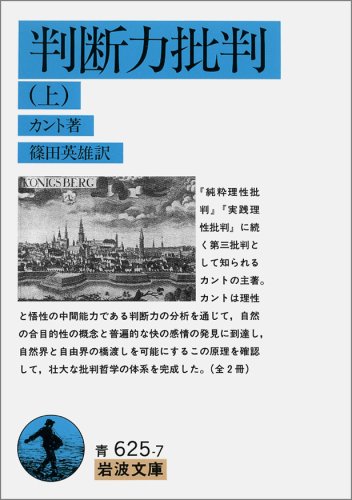 Immanuel Kant, Critique of Judgment, vol. 1 (Japanese edition, trans. Hideo Shinoda, Iwanami Bunko)As an Amazon Associate, Puzzlebyrinth earns from qualifying purchases.
Reactions (no login)
Anonymous • one of each per visitor per day
Part of these series
The Nature of PlayEpisode 24 of 24
Read next
Related reviews
shapez 2
A 3D factory-building puzzle: mine geometric shapes, carry them on belts, and combine cutting, rotating, stacking and painting until they match the order. No enemies, no time limits and no building costs — just platforms scattered across three layers of space, in tobspr Games' sequel to shapez.
SUPERHOT: MIND CONTROL DELETE
The sequel to SUPERHOT, the first-person action puzzle where time only moves when you move. It drops the hand-built one-screen levels for randomly dealt rooms fought in runs, and adds abilities you pick up along the way. The third game from SUPERHOT Team.
Desktop Dungeons: Rewind
A turn-based puzzle-roguelike on a single screen of dungeon, where revealing unexplored tiles is what heals you, so every fight is a resource problem. QCF Design's 3D remake of their 2013 Desktop Dungeons, with a rewind for taking moves back and the kingdom-building layer carried over.


