REVIEW · 2022-03-18
Syberia: The World Before
When 'far too hard' and 'there are no puzzles' are aimed at the same game — reading the inside of an 89.6%
First Impressions
I did not play this one; I am reading how its reviews split. The numbers first. Steambase counts 5,017 Steam reviews, 4,494 positive against 523 negative — 89.6% positive, sitting in the 'Very Positive' band (snapshot taken 2026-08-17). Nine in ten recommend it.
Yet set the two highest-rated voices side by side and something odd happens. The top positive review (129 found it helpful) says the puzzles are unreasonably hard and that single ones ate hours. The top negatives (112, 166 and 67 helpful) say this is not a point-and-click adventure at all, that play consists of clicking hotspots and exhausting dialogue, and that no real puzzle exists in it. Facing the same game, one side says it cannot get through and the other says there is nothing there to get through.
Taste does not explain that. Neither does disagreement about the amount of difficulty. What I want to follow here is a question of distribution: how the difficulty was allocated across the game. This title stands exactly astride the line I drew in Walking Sims and Deduction Games.
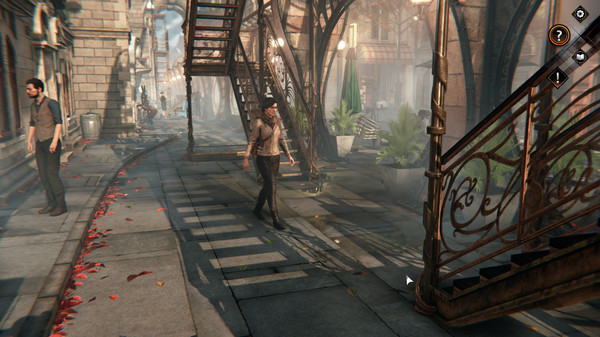 Syberia: The World Before — Steam store asset
The Feel of the Story
The vocabulary on the positive side is remarkably consistent: beautiful, moving, bittersweet — and almost everyone mentions the score. Many name the dual-timeline structure itself as a strength. Reviewers also return again and again to the reported death of series creator Benoît Sokal before release, and read the game not only as a game but as a farewell. The phrase 'a fitting send-off' recurs in near-identical form across independent reviews.
The negative side looks at the same story from elsewhere. Kate, they say, is pushed out of the centre of her own story and becomes an escort to somebody else's chronicle; the previous game's cliffhanger goes unanswered; the twentieth-century war sits in the background while the antagonist never gets past being evil because he is evil. One long review even speculates the script was repurposed from another project — a reviewer's conjecture, not a confirmed fact.
Read as design, the dispute is not about the quality of the story but about the verbs that carry it. In the first two games Kate advanced the story by assembling mechanisms: reasoning and progress were bound into the same action. Here that bundle comes apart — progress is a click, and reasoning happens somewhere else. As I argued in Narrative Puzzles and Abstract Puzzles, a narrative puzzle is strongest when solving and learning land on the same move. Where that overlap thins, the better the story, the louder the question of why it needed to be a game.
 Syberia: The World Before — Steam store asset
The Texture of Difficulty
Collect the accounts of getting stuck and they form two peaks. On one side: hours lost to a single puzzle, with a mechanical-instrument sequence named repeatedly as the heaviest. On the other: move this left and that right, QTE-like, five hours in and everything so far has been very easy. Japanese-language reviews split the same way, with 'the difficulty was well balanced' and 'not for anyone wanting resistance' both collecting high helpful counts. Completion times reported in reviews cluster around 10–17 hours, with one putting it at roughly 13.
Both hold at once if you stop treating this as a question of average and treat it as a question of variance. The game concentrates its difficulty into a small number of assembly set-pieces and flattens nearly everything else to zero. Where the distribution is bimodal, players report whichever tail they landed in. In a game that has levelled most of its questions, nobody ever experiences the average. 'Too hard' and 'too easy' are the same observation taken from opposite ends of one curve.
Dig once more and the easiness turns out to be about resolution of observation, not about move counts. Interactable objects are highlighted, the journal writes out the next objective, a hint system waits in reserve. As I argued in Is Difficulty Unkind? The Philosophy of Fairness, fairness is decided by notification design rather than by quantity of difficulty. This game pushed notification close to perfect, and in doing so deleted the act of looking at the board. What was 'where do I look' in the first two games has shrunk to 'which one do I turn'. The few concentrated set-pieces feel heavy because that is where the cost of observation suddenly returns.
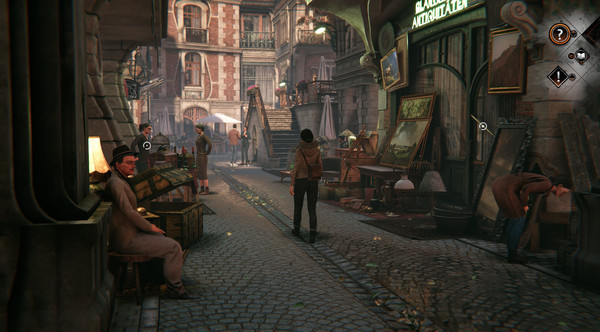 Syberia: The World Before — Steam store asset
Design Craft
One complaint barely surfaces in English and stands as its own axis in Japanese: the quality of the localisation. Characters' registers swap between scenes, terminology does not line up with the earlier games, plain errors survive. Several Japanese reviews name the story as the game's greatest strength and then report that the corridor into that story is broken. An aggregate of 89.6% shows none of this language-specific friction.
Complaints about the plumbing appear in both languages. Saving is autosave-only with no chapter select, so there is no way back to a scene once passed. Dialogue and cutscenes cannot be skipped, and a sequence clicked into by accident plays to the end. One negative review with 24 helpful votes withholds its recommendation on that point alone.
Laid out as design, those two pull in opposite directions. Hints and the journal exist to stop you stalling; unskippable scenes and the missing chapter select exist to stop you replaying. As I wrote in Designing Hint Systems, a good hint spends none of the player's time while leaving the choice intact. This game carefully removed the friction of moving forward and left the freedom to move back behind. A design that slides forward but will not rewind is also a decision to treat the story as a single screening. The complaints about movement and camera — walking in unintended directions, a camera that will not obey — appear even in the top positive review, and suggest the debt taken on in the move to 3D has carried over from the previous entry.
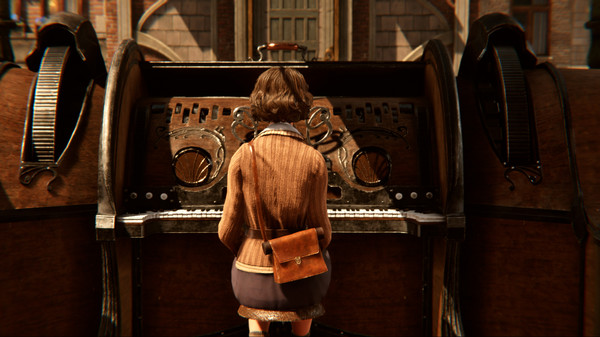 Syberia: The World Before — Steam store asset
Place in the Lineage
The proper nouns the reviews reach for stay almost entirely inside the series. The standard positive formula is that this is an order of magnitude better than Syberia 3; the bolder ones say it matches and sometimes surpasses the original. The negative side invokes that same first game and its sequel to say those were hard and this is not. Everyone measures against the same two titles and disagrees about the verdict.
The disagreement is really about the denominator. Put Syberia 3 underneath and this is an obvious recovery; put the original underneath and it is an obvious retreat. A game rebuilt in response to criticism is often held to both yardsticks at once, and the marks for fixing the last failure are tallied separately from the marks for reaching the source.
That the negative side's favourite label is 'walking simulator' is telling. It is not an insult about quality but a reclassification of genre — and the same word turns up approvingly among those recommending it. With Deponia I watched critics and players twist in opposite directions. The twist here is not between critics and players but between genre labels. The game did not move; the shelf it sits on did.
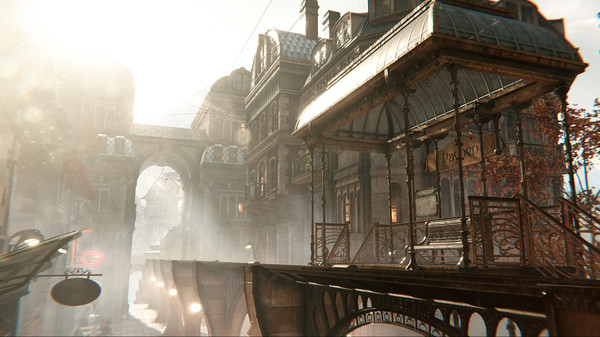 Syberia: The World Before — Steam store asset
Reviews Consulted
This piece was written from the Steam user reviews and press coverage available on 2026-08-17. No review text is quoted directly; recurring claims have been reconstructed instead.
· Steam: Syberia: The World Before (89.6% positive of 5,017 reviews per Steambase — 4,494 positive against 523 negative, 'Very Positive' label, snapshot 2026-08-17)
· the top 10 positive reviews by helpfulness, the top 10 negative reviews, the top 10 under the Japanese-language filter and the recent listing — roughly 26 reviews once duplicates are removed.
· Press: the GameCritics review (7/10)
· Note: aggregate figures differ by source. On the same day SteamDB showed 86.5% positive; this piece uses the Steambase number, which states its denominator and breakdown. Individual reviews were read through the Steam Community listings owing to access constraints on the store side.
Closing
One thing the aggregate hides. The complaints against this game have different contents in different languages. English negatives concentrate on the absence of puzzles and on Kate being sidelined; Japanese negatives concentrate on the register of the translation and on the save system. Behind a single 89.6% sit two maps of dissatisfaction that barely overlap. An aggregate folds a game into one number, and what got folded in differs by reader.
From a design standpoint I put it at 7.4, harsher than Steam's 89.6%. The deduction is not for the story or the art but for the distribution of difficulty. Gathering the difficulty into a handful of set-pieces and levelling the rest is a coherent decision for a game that does not want to stop its story. But the length of that levelled time eats into what the series has promised under its own name. The credit side is equally clear: rebuilding the reliability of progression after the previous entry, and providing a recap for newcomers, is careful work as a relaunch.
It suits players who want to see a story of travel and parting through to the end, or who walked away at the last game and were looking for a way back. It does not suit players who start a game to have their observation tested. Here that test arrives in only a small fraction of the running time; the rest is beautiful, careful, and paved so that nobody gets lost. There is nothing wrong with walking a paved road. Whether to call it a labyrinth is a separate judgement.
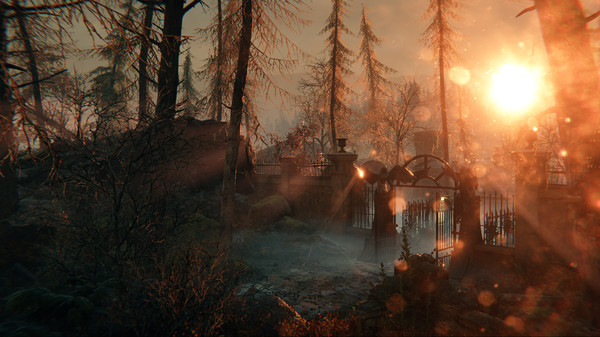 Syberia: The World Before — Steam store asset
Where are you with this game?
Press one and the game goes on your shelf. You can see it on your account page.
Reactions (no login)
Anonymous • one of each per visitor per day
Read next
Related reviews
Lost in Play
A hand-drawn point-and-click adventure told entirely without words. The siblings Toto and Gal make their way home through fifteen scenes built out of a child's imagination, picking things up, combining them, and solving a different little minigame in almost every room. From Happy Juice Games.
The Last Campfire
A 3D puzzle adventure in which Ember, a small lost flame, walks an underground world and works through the small contraptions blocking the stranded souls it finds there. A storybook-shaped project from Hello Games, the studio behind No Man's Sky.
The Centennial Case: A Shijima Story
A mystery adventure told in live action, following a chain of killings that has haunted one family for a century. You collect clue words from each scene and slot them into hypothesis sentences, tying four cases across four eras into a single thread. From Square Enix.


