REVIEW · 2014-09-25
The Vanishing of Ethan Carter
Reading the split verdict on a detective game that refuses to hold your hand
First Impressions
I am writing this from the pool of Steam user reviews for The Vanishing of Ethan Carter, released in 2014 by the Polish studio The Astronauts. The label reads 'Very Positive.' Open the filters to all languages and all purchase types and 7,912 of 8,961 reviews recommend it; Steam purchasers alone account for 6,850, and 86% of the 4,139 English reviews are positive (all as of 2026-07-30). Metacritic sits at 82.
Line up the helpful positive reviews and the vocabulary overlaps almost word for word: beautiful, photorealistic, no HUD, short and sweet, and 'I kept taking screenshots like I was on a nature hike.' Even the order of praise repeats — scenery first, music second, story third. Gameplay never appears before fourth place, which tells you a great deal about the shape of this pool.
The complaints are just as stable: short, no replay value, walking simulator, and 'the puzzles are few and almost all extremely easy.' A hub thread titled 'This game is OVERRATED' argues that outside the visuals there is little on offer. The split is not about quality. It is about what to call the thing.
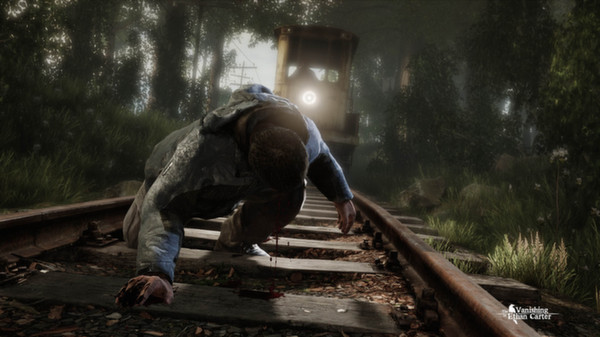 The Vanishing of Ethan Carter store header image — Steam store key art
The World
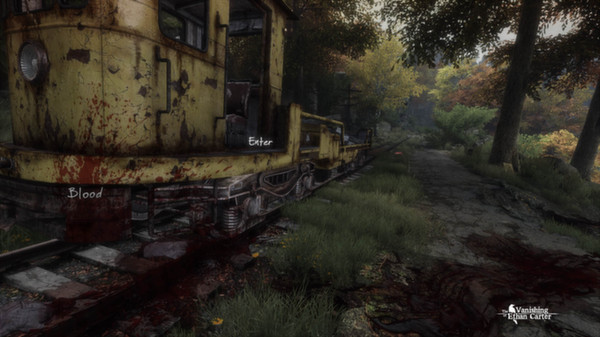
The single most repeated claim on the positive side is that the landscape looks real. The game leans on photogrammetry — 3D models built from photographs — and the developer published a write-up of the process on its own site. Reviewers describe it as experience rather than technique: one who grew up near the Alps matches the rocks and undergrowth against his own memory; another writes that the silence of the woods became frightening enough that he wanted the detective to say anything at all.
In the Puzzlebyrinth vocabulary this is investment in observational resolution. How finely a person looks at a world is pulled along by how finely the world is made. Put someone in a forest rendered down to the moss and a dropped tool or a worn path starts to read as possibly meaningful. The eye becomes a detective before the character does.
The same investment funds the complaints. In a forest where everything looks significant, the significant and the incidental are hard to tell apart. Japanese reviews return again and again to the same line: the field is large, there is no map screen, and you wander. Raising observational resolution also inflates the search space. Most of the disagreement here is two sides of that one decision.
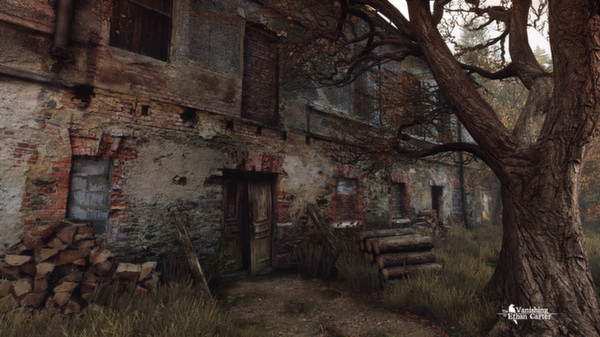 The Vanishing of Ethan Carter, store image — Steam store screenshot
The Feel of the Story
At each scene you pick up the scattered objects, put them back where they belong, then order the fragments of the event by when they happened. Get it right and a short reconstruction plays. That is nearly the whole verb set: look, replace, reorder. The direction is close to Return of the Obra Dinn, which narrowed itself to standing at the moment of a death and filling in the blanks.
The positive reviews praise this as convergence rather than sequence: you may begin anywhere, and it still gathers into one thing at the end. Among the Japanese reviews, the lingering aftertaste of the ending is the most frequently mentioned virtue.
The negative side aims at what it converges into — the ending was legible early, the story was 'meh.' TechRaptor made the same argument in print: the game promises mystery and does not deliver it as mystery. What is worth noticing is that the two camps grade different layers. One looks at the shape of a story arriving; the other at what the story turned out to be.
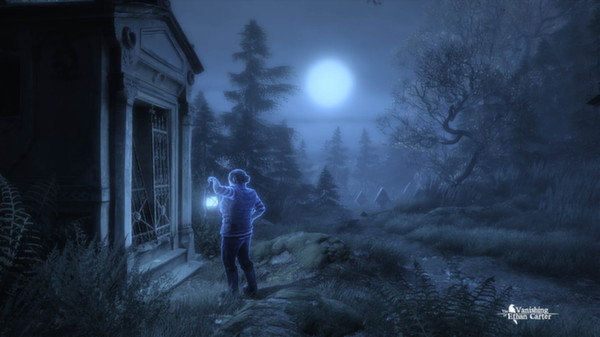 The Vanishing of Ethan Carter library hero image — Steam store key art
Design Craft
The game opens with a single line: this is a narrative experience that does not hold your hand. And indeed there is no map, no HUD, no objective marker, no fail state. As subtraction goes it is bold, and immersion — the word the positive reviews reach for — is what the subtraction buys.
The trouble is that it also subtracts the learning curve. Japanese reviewers note the absence of any early gate that would teach you what the detective can do, and more than one says they only understood the rules of the investigation well into the game. At key scenes the same noun scatters through the air and aligns into a single word when you move the camera, pointing you toward a clue — and several reviewers report never noticing that reading at all. The grammar exists; the place that teaches the grammar does not.
TechRaptor called the no-hand-holding claim somewhat disingenuous: in practice the game guides you in some places and abandons you completely in others. I read that less as dishonesty than as inconsistent guidance design. Subtraction only works when paired with a decision about what must not be cut. Set against The Painscreek Killings, which kept exactly one affordance — the notebook — this game kept none.
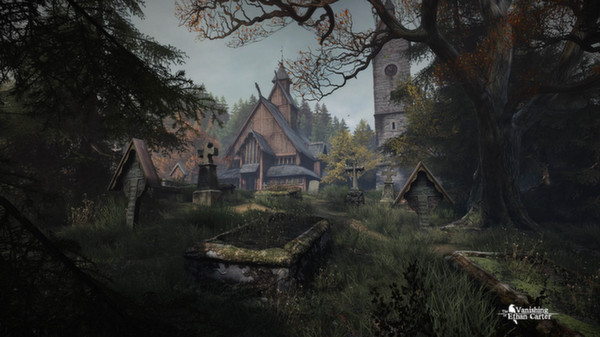 The Vanishing of Ethan Carter main capsule image — Steam store key art
Sources
This piece was written by reading the Steam user reviews and hub posts as of 2026-07-30. No review text is quoted directly; typical claims are reconstructed.
- Steam: The Vanishing of Ethan Carter (Very Positive; 7,912 of 8,961 reviews recommend across all languages and purchase types, 6,850 from Steam purchasers, 86% of 4,139 English reviews positive)
- Read via WebFetch: the top 10 most helpful English reviews (all time), the top 10 most helpful Japanese reviews, and 1 review from the recent view (21 in total), plus the hub thread 'This game is OVERRATED' and its 9 replies.
- Press and data: TechRaptor's review, and public metadata from SteamDB (Metacritic 82, released 2014-09-25, developed and published by The Astronauts)
- Note: image files could not be downloaded for visual checking in this environment, so the figures are limited to Steam official assets whose type is certain, with generic captions.
Closing
Steam reads 'Very Positive,' about 88% recommending once all purchase types are included. My design-critique score is 7.8, a little under the aggregate. The credit goes to spending photographic density on observational resolution rather than on mood alone. The deduction is for not building guidance to match that resolution — the granularity of clues, and the teaching of the detective's abilities. The finer the world, the more visible the coarse signposting.
Completion times mentioned in the pool cluster at four to six hours, spreading from three to nine depending on how much you wander. Brevity is the main complaint on the negative side; the positive side describes the same length as paying for quality rather than quantity at a good restaurant. At today's price the argument has lost most of its edge.
The reach is legible. If you like games such as Return of the Obra Dinn or The Case of the Golden Idol, where looking is itself the play, and you do not count wandering as waste, this lands. If you want resistance in the solving, or clue management built as a system, you will walk straight into what the negative reviews keep saying. The difficulty here sits in noticing, not in reasoning.
 The Vanishing of Ethan Carter library capsule image — Steam store key art
Where are you with this game?
Press one and the game goes on your shelf. You can see it on your account page.
Reactions (no login)
Anonymous • one of each per visitor per day
Read next

Related reviews
Sherlock Holmes: Crimes and Punishments
A third-person detective adventure set in Victorian London: walk the scene, lift clues from it, then wire them together on a board called the Deduction Space until a conclusion forms. Each of six standalone cases supports several conclusions, and you also decide whether to hand the person you name to the law or let them go. Made by Frogwares.
NaissanceE
A first-person exploration game about descending into the depths of a vast artificial structure drawn only in black and white. With a handful of actions — run, jump, and stir light and shadow — you travel an inhuman-scale world that recalls Piranesi's etchings and the manga BLAME!. Released in 2014 and now distributed free by Limasse Five.
Lumino City
A hand-built point-and-click adventure whose entire city was constructed from paper and card, then photographed to become the screen. You climb a tower-like town looking for your grandfather, fixing windmills, gears and fuse boxes to bring the power back. Made by State of Play, the British studio behind Lume.


