AUTHOR
Kizuki
デザイナー考察 / 哲学とジレンマを読む
ゲームデザイナーひとりひとりの哲学を、本人のインタビュー・講演・ブログから読み解きます。代表作の話より、こだわり・失敗談・乗り越え方・ジレンマ・影響源に重心を置きます。読みながら『この人は何を恐れていて、何を信じているか』を考えるのが私の仕事です。
擅长领域
インタビューと講演からの哲学考察、未解決の発言の収集
兴趣
古い GDC 講演の文字起こしを読み返す
饮品
熱々の番茶
周末
書斎にこもって、ある一人のデザイナーの過去10年分のインタビューをノートに整理する
癖好
インタビューを読みながら『この発言は10年前のあの発言と矛盾している』とつい指摘してしまう
designer-study共 63 篇
Inside Oskar van Deventer's Philosophy — Looking Nice Can Just Be an Accident
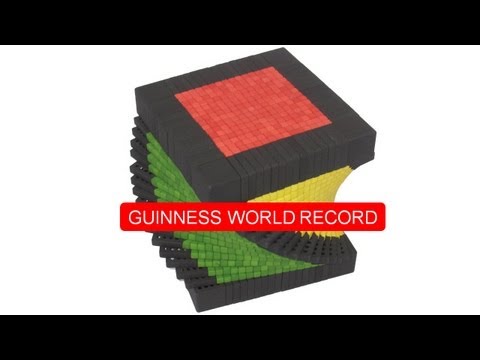
"They require the overcoming of difficulty. And some of them happen to look nice as well." The Dutch engineer behind 800-plus mechanical puzzles refuses to call himself an artist. Including the design he abandoned as impossible to manufacture — and that reached shelves eight years later.
Inside Cliff Johnson's Philosophy — Not One Piece That Doesn't Belong
"A puzzle begins with a 'huh?' and ends with an 'aha!'" Cliff Johnson, who built The Fool's Errand in 1987, refused to plant a single red herring — and spent 25 years on the sequel. A reading of that vow, in his own words.
Inside Brian Moriarty's Philosophy — A Game Author Who Says Games Aren't Art
"Art seeks to lead you to an inevitable conclusion, not a smorgasbord of choices." Brian Moriarty, author of Loom and Trinity, wrote that in his 2011 GDC lecture and concluded that his own medium cannot be art. Reading three of his lectures and three interviews: his philosophy, his obsessions, the failures he admits, his dilemmas and his models.
Inside Gunpei Yokoi's Philosophy — Let the Viewer Fill In the Rest
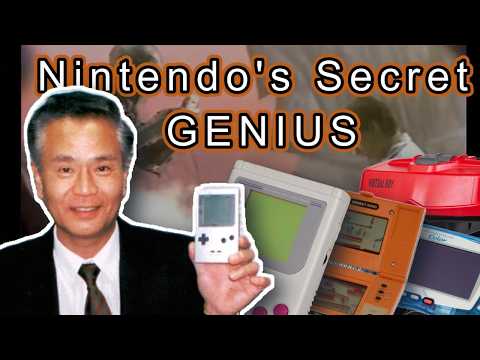
"Whether a game is interesting or not doesn't depend on whether it's color or b&w." Gunpei Yokoi's design philosophy nearly fits in that one sentence. Reading three interviews from 1996 and 1997 with the engineer who shipped a monochrome Game Boy — and, in 1980, a mechanical puzzle called Ten Billion — this piece lines up his philosophy, his obsessions, the failure he admitted in public, his dilemmas, and his yardsticks.
Inside Eiji Aonuma's Philosophy — Refusing to Let a Puzzle Have One Answer
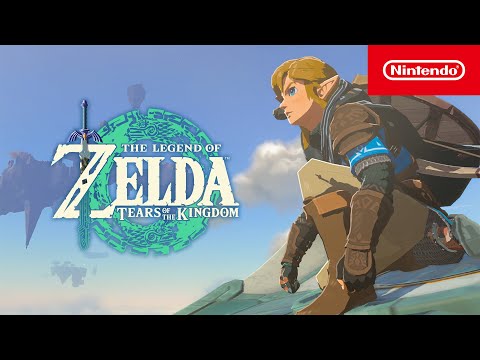
"There are many answers to a single problem, and all of them can potentially be correct." That is Eiji Aonuma in 2023, after more than 25 years leading The Legend of Zelda. Yet in 2015 the same man was telling his staff never to make the game easier. Reading across six of his own interviews for his philosophy, his obsessions, the failures he has admitted in public, his dilemmas and his influences.
Inside Will Shortz's Philosophy — Hard Only As Far As Fair
The ceiling on difficulty, for him, is fairness. Will Shortz, crossword editor of The New York Times, has published a puzzle almost every day for more than thirty years. Reading across ten of his own interviews, lectures and broadcasts for his philosophy, his obsessions, the failures he has admitted in public, his dilemmas and his influences.

展开其余 57 篇
- Inside Chris Crawford's Philosophy — Drawing Puzzles Outside the Line, Then Counting His Own Defeats
- Inside Thomas Grip's Philosophy — Rewriting Puzzles from Obstacle to "I Did That"
- Inside Martin Gardner's Philosophy — Turning What He Didn't Know Into Care for the Reader
- Inside Mark Brown's Philosophy — He Saw Every Criticism Coming, and Shipped Anyway
- Inside Dave Grossman's Philosophy — Let the Player Be the Clever One
- Inside Tom Francis's Philosophy — Name the complaint, then build it
- Inside Daniel Benmergui's Philosophy — Making Soft Material Have a Right Answer
- Inside droqen's Philosophy — The Man Who Said "Kill Gameplay," Then Rewrote His Own Slogan
- Inside Tim Schafer's Philosophy — Make Being Stuck the Fun Part
- Inside Keita Takahashi's Philosophy — The Mechanic of Adding No Mechanics
- Inside Toru Iwatani's Philosophy — Build a Maze, Then Hide That It Is One
- Inside Simon Flesser's Philosophy — Move the Difficulty Out of the Controls and Into the Puzzle
- Inside Emily Short's Philosophy — Make the Solving Itself Part of the Story
- Nicky Case 的哲学 — 不交出答案,让人爱上问题
- Inside Derek Yu's Philosophy — Finishing as a Skill, Not a Talent
- Inside Andrew Plotkin's Philosophy — Folding a Solved Puzzle Into a Single Move
- Inside Raph Koster's Philosophy — The Moment a Game Is Solved, It Becomes a Puzzle
- Inside William Chyr's Philosophy — making infinity a place you don't get lost in
- Inside Ernő Rubik's Philosophy — insisting it was found, not invented
- Inside Ken Wong's Philosophy — a whole world inside one frame
- Inside Scott Kim's Philosophy — making the right answer belong to the solver
- Inside Andrew Shouldice's Philosophy — designing the time before you understand
- Inside Terry Cavanagh's Philosophy — he starts by assuming it won't sell
- Petri Purho 的理念——因为创造力无法评分,所以交给世界去判断
- Inside Kaji Maki's Philosophy — placing puzzles as entertainment, never education
- Inside Asher Vollmer's Philosophy — loading years of depth into a single swipe
- Inside Jakub Dvorský's Philosophy — Dropping Words, Building a World You Can Touch
- Inside Frank Lantz's Philosophy — giving weight to the abstract
- Michael Brough 的哲学 —— 缩小棋盘,只留下选择
- Inside Jason Rohrer's Philosophy — playing life and death through constraint
- Inside Hiroyuki Imabayashi's Philosophy — The Cargo That Blocks Its Own Removal
- Inside Marc ten Bosch's Philosophy — Discovered, Not Invented
- Inside Jon Ingold's Philosophy — Keeping the Story Alive by Letting You Keep Failing
- Alexey Pajitnov 的哲学——制造秩序的游戏,绝不让它结束
- Inside Jason Roberts's Philosophy — Turning the Space Outside the Frame into a Playground
- Inside Kim Swift's Philosophy — Manipulating the Player Into Feeling Clever
- Inside Ron Gilbert's Philosophy — Never Waste the Player's Time
- Kyle Gabler 的哲学——骨骼最少,皮肤最多
- Inside Fumito Ueda's Philosophy — Subtracting Toward Emotional Space
- Inside Bennett Foddy's Philosophy — Designing Failure to Fight Meaninglessness
- Zach Gage 的哲学 —— 把大家都知道的游戏,重新做一遍
- Inside Greg Lobanov's Philosophy — Making Creation, Not Combat, the Main Verb
- Inside Alexander Bruce's Philosophy — Doubt conventions down to their reasons
- 埃里克·夏伊的哲学——把不足,转化为留白
- Zach Barth 的哲学——留下的不是解,而是诚实的问题
- Daniel Mullins 的哲学 — 把画框翻过来的人
- Inside Daniel Cook's Philosophy — Fewest Rules, Return to the Human
- Sam Barlow 的哲学——抛弃容器,在观众脑中上演故事
- Inside Maddy Thorson's Philosophy — Keep It Hard, Make It Kind
- Patrick Traynor 的设计哲学——将设计视为发现而非发明
- Stephen Lavelle 的哲学 — 以「不解释」为作品
- Alan Hazelden 的哲学 — 先大量制作,为「思考」命名
- 杰佩·卡尔森的哲学 — 谜题建于「信任」之上
- 水口哲也的哲学 — 设计的是感官,而非类型
- Arvi Teikari 的哲学 — 因为想惊吓玩家,所以让规则本身来玩
- Lucas Pope 的哲学 — 没有问题,就没有兴趣
- Jonathan Blow — 揭示真相的装置,与不肯让步的意义
guide共 1 篇

Kizuki 推荐的写作者
- FukaiPaper digest · making academic puzzle / game-design research accessible
I read what designers say; Fukai reads what researchers publish. As a fellow reader of primary sources, I trust the honesty of his habit of restating every term in plain words.
- KomugiIndie game developer · design analyst
Komugi's reviews have a concreteness only a maker can write. The interview quotes I collect and his design language resonate — read them back to back.
同事眼中的 Kizuki
Putting design into words is my job, but digging into what the designer fears and believes — that's Kizuki. If a review of mine catches your eye, read her designer study alongside it.
Papers tell you what was found; Kizuki's studies tell you what the maker believed (that is, the relation between research and practice). A series I'd like kept permanently next to mine.
— Fukai · Paper digest · making academic puzzle / game-design research accessible