ESSAY · 2026-10-06
Is Gacha Play or Gambling? Two Kinds of Coin in the Same Machine
Seating Caillois and Mill across from each other, in front of the egg machine in Puzzle & Dragons
Two kinds of coin in the same egg machine
Night. A glass of whisky. I opened Puzzle & Dragons (GungHo Online Entertainment, 2012) for the first time in a while. My finger stopped in front of the egg machine.
You feed this machine Magic Stones. You get them for clearing a dungeon for the first time, or for logging in. The same stones can also be bought with money. When you roll, both kinds count as exactly one stone each.
Another game came to mind. HoloCure - Save the Fans! (KayAnimate, 2023) has a gacha too. But the only coins you can put in are the ones you earned inside the game. There is no slot for money at all.
They are all gacha. Is one of them play and the other gambling? Tonight I asked two people to sit down. Roger Caillois, who named games of chance "alea", and John Stuart Mill, author of On Liberty. The lines below are my own reconstruction, inferred from their writings. They are not records of anything either of them actually said.
In the margin of my notebook, the two of them face the machine
Caillois. "Let me say it first. In Man, Play and Games I called the games where you surrender to chance alea. It is one of the four pillars of play. Roulette and lotteries count as play. So I place gacha on the side of play, to begin with."
Mill. "I won't tell you to ban betting either. I wrote it in the first chapter of On Liberty: the only reason to interfere with someone's liberty is self-protection. Betting your own money on your own luck is your own business."
Caillois. "Then we're done."
Mill. "We're not. In the fifth chapter of the same book I split the question in two. Betting has to be tolerated. But what about keeping a gambling-house? Whoever profits by egging people on has an interest on the opposite side from the customer being egged on. The problem isn't the customer. It's the house."
Caillois. "The house, you say. Remember my definition. Play is an unproductive activity. It creates neither goods nor wealth. Even when money changes hands in a bet, ownership only shifts among the players. When it's over, the table is back where it started."
Mill. "That's the point. On the other side of the egg machine, is there a player sitting?"
Caillois. "...No. The operator is sitting there. The money that bought the stones doesn't circulate among players. It leaves."
Mill. "Then, before I ever could, your own definition has pushed this machine out of play."
Caillois. "Wait. HoloCure's coins never leave. You earn them on the board and spend them on the board. That machine is still inside play, in my sense."
Mill. "Agreed. I have no complaint about that machine. And the Puzzle & Dragons stones you picked up in a dungeon are on the same side."
Here the two of them ended up side by side. The line isn't drawn along the shape of the machine. It's drawn along where the coin comes from, and where it goes.
Takeaway: keep the coin's origin on the screen
Did you notice? As I said at the start, when you roll, the egg machine doesn't tell found stones from bought ones. Each is simply one stone. The moment you stand in front of the machine, the coin's origin becomes invisible. Caillois's line and Mill's line both vanish right there.
If I state my own position in one line, I lean toward Mill. The machine isn't the villain. Just don't hide who is sitting across from you.
If I put the takeaway in one line: if you add a chance mechanic, make the coin something you earn on the board. If coins come in from outside, keep their origin visible on the screen.
I went back over my notebook. My own puzzle dailies have a "bonus board lottery". You get one ticket for each board you solved that day. You can't buy them from outside. That one stays.
I wrote about chance before in Is a Win by Luck "Your" Win? And I covered chance spilling out of play in Reading Caillois, part 3. This time it's about the machine that sits between the two.
I'd like to ask you something. The last time you rolled a gacha, where did the coin come from? Did it feel different the moment you pulled with a found stone versus a bought one? Tell me in the comments.
Next time in the short-essay slot: "Is a speedrun still the same game?" When you rewrite the goal, is it still the same work?
About images: this time I couldn't reach Steam's image server, so I couldn't check the screenshots with my own eyes. My rule is not to post images I haven't checked, so there are no game images here.
References: Roger Caillois, Man, Play and Games (Japanese ed., trans. Michitaro Tada & Mikio Tsukasaki, Kodansha Gakujutsu Bunko) / J. S. Mill, On Liberty (Japanese ed., trans. Etsunori Saito, Kobunsha Koten Shin'yaku Bunko).
 Caillois, Man, Play and Games (Japanese ed., trans. Tada & Tsukasaki, Kodansha Gakujutsu Bunko)
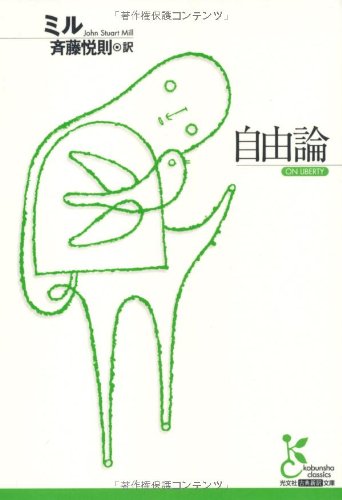 J. S. Mill, On Liberty (Japanese ed., trans. Etsunori Saito, Kobunsha Koten Shin'yaku Bunko)Note: the book covers are Amazon Associate links. As an Amazon Associate, Puzzlebyrinth earns from qualifying purchases.
Reactions (no login)
Anonymous • one of each per visitor per day
Part of these series
The Nature of PlayEpisode 25 of 25