ESSAY · 2026-08-14
Solving by Ear — Designing Puzzles Around Sound (from The Witness's Jungle to Unheard)
From watching to listening: why audio clues are rare, and how to design them anyway
Introduction
I remember the night my headphones broke and I kept playing The Witness in silence. Almost nowhere on the island did it matter. Line puzzles are a game for the eyes, and I had filed the audio under atmosphere. Then I stepped into the jungle and stopped cold. The answers to those panels existed only in the birdsong pouring from speakers overhead. A game I had taken for a purely visual art had, from the start, entrusted the keys to certain rooms to my ears.
Puzzle games lean overwhelmingly on sight. Boards, glyphs, notebooks—everything is something you look at. In Observation as Play I used the phrase "resolution of observation," and I now realize I had quietly restricted observation to seeing. This essay takes up the complement: the thin lineage of games that treat sound not as decoration but as primary information—something you must listen to in order to solve—and asks why that lineage has stayed so thin. This is an entry in the observation puzzle series.
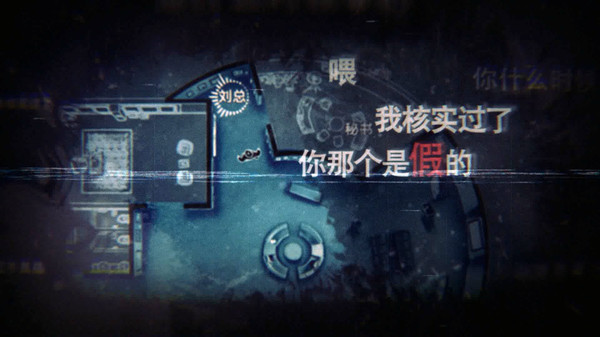 Unheard (from the official Steam screenshots)
Birdsong in the Jungle — The Witness Tests Aural Resolution
The jungle of The Witness (2016) is a laboratory that transplants the island's grammar of observation directly into the ear. The branches of each panel's path correspond to the sequence of birdsong pitches playing nearby—low, high, in between. Trace what you hear into the shape of the line and the gate opens. The rule is never stated. The first panel teaches the verb "transcribe sound" with a simple two-note series, and from there only the count and the confusability increase. It is proof that a learning curve can be carved in audio with exactly the same chisel as in vision.
What the later panels do is raise the resolution of the ear. They ask you to separate two nearly identical pitches, bury the true series under a second bird or the drone of insects, and test the focus of attention itself. I read this as the same design as the island's environmental puzzles, which hide solution lines in the overlap of rocks and branches: one isolates signal from visual noise, the other from a soundscape. The Witness spent one of its eleven regions demonstrating that the resolution of observation is not a property of the eyes alone.
At the same time, the jungle drew some of the sharpest criticism aimed at the game. For deaf and hard-of-hearing players, or for anyone who struggles to discriminate pitch, the area can become a hard stop. At launch there was no official way to translate the sounds into visual information. Visual puzzles have accumulated mitigations—zoom, colorblind support—however imperfect; aural clues have almost none. The moment sound takes the lead role, a designer can produce a kind of exclusion that vision never did. I will return to this.
Sound as Terrain, Sound as Instrument — Dark Echo and FRACT OSC
Dark Echo, released by RAC7 Games in 2015 on mobile, pulled off the reverse translation. The screen is black; you cannot even see your own body. Take a step and the footfall radiates as white lines that bounce off walls, and only in those reflections do corridors and waterlines become "visible." One invention—drawing sound—translates aural information into visual grammar. And in this world, sound feeds predators. A loud step illuminates terrain far ahead, but it also attracts the things drawn in red. Walking, running, throwing a stone: every act of making noise means gaining information and inviting danger in the same gesture.
That triangle—to know you must make sound, and to make sound is to be hunted—is vocabulary stealth games spent decades building, but Dark Echo compresses it into a single move of a single-screen puzzle. Where do you dare to be loud, and where do you hold your breath? Crossing a stretch in silence, guided only by the remembered shape of earlier echoes, has the tension of a submarine that cannot ping. It is a fine proof that putting a price on information—the same conflict as choosing whether to open a hint—can be embedded into the act of taking a step.
For sound as output rather than input, there is FRACT OSC (2014) by Phosfiend Systems, a first-person exploration puzzler set inside a derelict synthesizer world. Each solved puzzle wakes a silent machine: a bassline starts, an arpeggio joins, and the world itself gradually begins to play. Here sound is the feedback channel. Correct wiring locks the phrases together; mistakes sound wrong. Because the ear verifies the solution, the player naturally starts thinking while listening. Sound as clue or sound as response—the same sense, and yet the center of gravity of the design shifts completely.
Crime Scenes Made of Voices — Eavesdropping in Unheard and the Darkness of Obra Dinn
For sound elevated into evidence, take Unheard (2019) by NExT Studios. You drift like a ghost over a floor plan, eavesdropping on several conversations unfolding simultaneously in different rooms. Nobody is visible; there are only voices. The goal is to attach a name to each voice and answer questions about the case. Names used in address, verbal tics, testimony that contradicts across rooms—since you can see no faces and no belongings, every piece of evidence lives inside the audio. It is Return of the Obra Dinn's question—who is who?—rebuilt entirely from sound.
The device that makes this work is a freely scrubbable timeline. Sound, unlike a picture, cannot be surveyed at a glance; a conversation must be heard in order. That serial nature is the deepest weakness of audio clues. Unheard combines time-scrubbing with movement between rooms to unfold serial audio into something almost spatial. First pass, the lobby; second pass, the back room during the same minutes. Replaying becomes the equivalent of moving your gaze, and "what was happening in that room behind this line?" becomes a question you can handle the way you compare regions of a board.
Return of the Obra Dinn (2018) also rereads surprisingly well as an audio game. Diving into a death, you first get several seconds of darkness and sound alone—a scream, cannon fire, someone calling a name—and only then do you step into the frozen diorama. The order matters: the audio proposes a hypothesis, the still image verifies it. In identifying the sixty souls aboard, accents, languages, and names spoken aloud carry the same evidentiary weight as anything visible. And the logbook I discussed in the in-game notebook essay transcribes every line of dialogue—quietly compensating for the fact that sound cannot be written down.
What the two games share is a discipline: every audio clue comes with a path back to it. Unheard offers unlimited rewinding; Obra Dinn offers revisits to each death and a full transcript. Both designs carefully avoid making evidence out of a sound you can hear only once, because a missed sound that leads straight to a dead end turns the serial nature of audio from difficulty into unfairness.
Why Audio Clues Stay Rare — Unsearchable, Unwritable, Inaudible
Why do these games remain a small minority? I can explain it as the loss of three verbs. First, sound cannot be searched. You can screenshot a screen and set two images side by side, but you cannot listen to two pitch sequences simultaneously and compare them. The basic moves of observation puzzles—compare, transcribe, survey—are all sealed off in audio. Unless the designer draws auxiliary lines like Unheard's scrubbing or Obra Dinn's transcript, an audio clue degenerates into a memory test.
Second, the environment cannot be controlled. Speaker quality, volume, a noisy room, a commuter train where sound is impossible at all—vision survives differences in brightness with its shapes intact, while pitch discrimination collapses easily with playback conditions. Once you accept that many people play muted, making a sound mandatory is equivalent to writing off a fraction of your players from the start. That most games demote audio to a bonus for the attentive—directional footsteps, suggestive ambience—is a rational adaptation to this lack of control.
Third, some players cannot hear. Subtitles rescue dialogue, but not the pitch of birdsong, the sourness of a chord, or the direction of a footstep. As The Witness's jungle showed, making sound the key risks a new kind of exclusion. But I want to treat this as a reason to design translatability from the start, not a reason to give up on sound. Dark Echo drew the sound itself. Obra Dinn wrote it down. FRACT OSC confirmed answers with machinery and light in the same instant as the audio. Every strong sound-led design I know runs a visual equivalent alongside the sound.
Closing
Sound works as a clue in four modes: sound as pattern (the birdsong of The Witness), sound as space (the echoes of Dark Echo), sound as evidence (the voices of Unheard and Obra Dinn), and sound as response (the chords of FRACT OSC). And every success observed the same two disciplines: always lay a path back to the sound, and always run a visual equivalent alongside it. The serial nature of audio and the impossibility of controlling playback cannot be erased, but those two disciplines pull them back from unfairness into difficulty.
If I were to build my next observation puzzle around sound, the first design meeting would open with one agenda item: can it be solved on mute? It sounds paradoxical, but I would give every audio clue a visual equivalent, then tune the game so that listening is the faster and more pleasurable route. Sound designed not as mandatory information but as the shortest path—joy for those who can listen, another road for those who cannot. I will leave the question with you as well. In the last puzzle you solved, what job did your ears hold? Beyond the background music, was there a key the designer had entrusted to your ears alone?
Reactions (no login)
Anonymous • one of each per visitor per day
Learn — Curriculum
LearnPart 5 Observation — Deduction and StoryChapter 13 Making Observation Play5 / 9
Part of these series
Read next

Related reviews
Please, Don't Touch Anything
You are covering a colleague's bathroom break in front of an unmarked console with a single red button, and you have been told not to touch anything. A pixel-art point-and-click puzzle by Four Quarters about reading the clues hidden in the posters and the wiring to dig out its 25 endings.
Machinika: Museum
A first-person puzzle box in which you scan alien devices of unknown origin delivered to a museum, peer inside them and reprint their missing parts until they run again. A short piece from Littlefield Studio that opens seven machines one at a time, with the touch of science-fiction archaeology.
Tacoma
A first-person exploration adventure set aboard an emptied space station in 2088, where you replay, rewind and walk around volumetric recordings of its six-person crew to reconstruct the days before they left. From Fullbright, the studio behind Gone Home.


