REVIEW · 2023-06-22
The Bookwalker: Thief of Tales
Praise and dissent name the same four things
First Impressions
The thing that surprised me most in the review pool: the people who praise this game and the people who dismiss it name exactly the same four faults. By the numbers it looks quiet. Steam reads 92% positive across 1,923 reviews, labelled Very Positive (snapshot 21 August 2026), and the last thirty days hold at 95% of 23. SteamDB is harsher: 87.7% across about 2,000. Nothing here looks contested.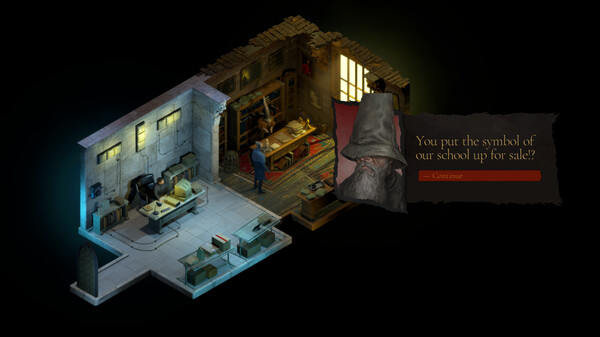 The Bookwalker: Thief of Tales — Steam store key art
Change the vessel and the number moves. Metacritic's critic average is 80 from seven reviews. Metacritic's own user score is 7.3 from 47 ratings, labelled Mixed or Average. Measured by thumbs it is 92%; measured out of ten it is 73. That gap is not noise. 'Would you recommend it' and 'what is it worth' are different questions.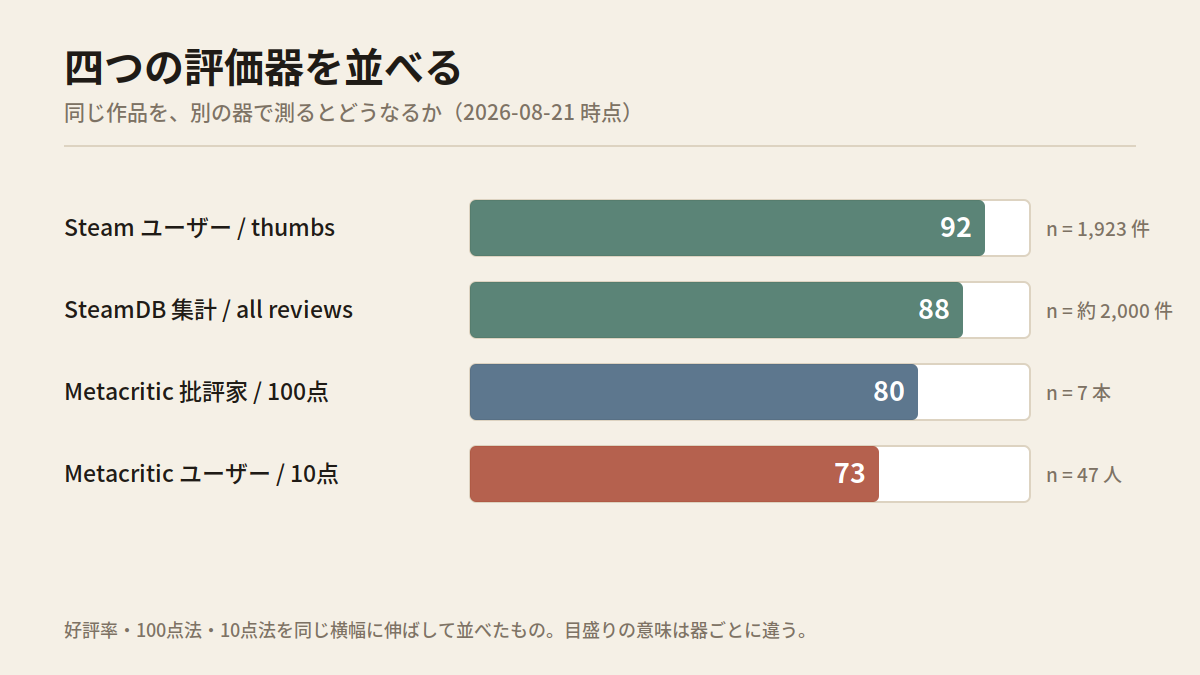 One game measured in four vessels; each scale means something different — diagram by the author
What struck me in the pool — the ten most helpful positive reviews and the two negative ones that gathered votes — is that both sides name the same faults. Combat is unnecessary. Choices do not reach the ending. Puzzles never stop you. Each chapter is short. What separates praise from dissent is not the list. It is whether the art and the premise are held to be enough.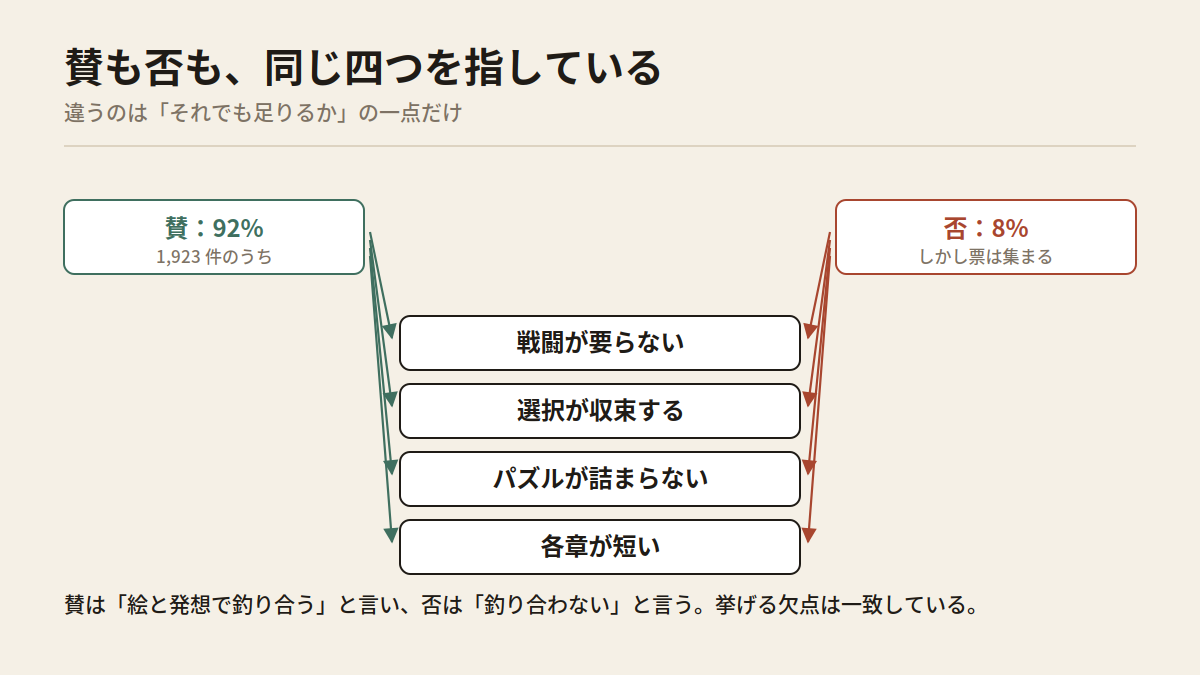 Both sides point at the same four faults — diagram by the author
The Feel of the Story
Almost every positive review starts with the premise. Publishers run the world, authors hold power, and a Book Police watches that power. Etienne, a writer whose ability has been shackled, dives into books to steal the legendary objects inside. One reviewer calls it Inception with literature instead of dreams; another is reminded of the novel Libriomancer.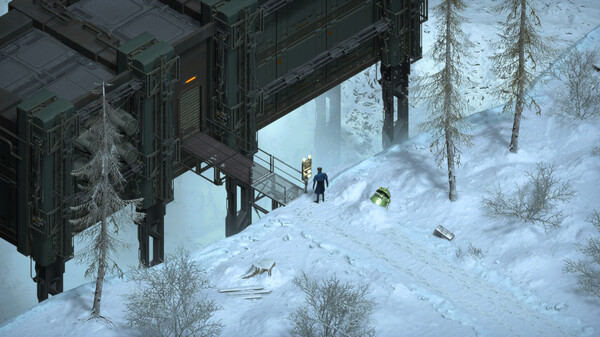 The Bookwalker: Thief of Tales — Steam store key art
The most-upvoted negative review, past sixty votes, goes after the moral design instead. At the end of the first book you either keep a potion of immortality or hand half of it to an alchemist who experimented on people. Keep it, and a companion you met minutes ago calls you cruel — and at the start of the next chapter your character apologises. In that reviewer's words, there is no branch that lets you stand by the decision and go on.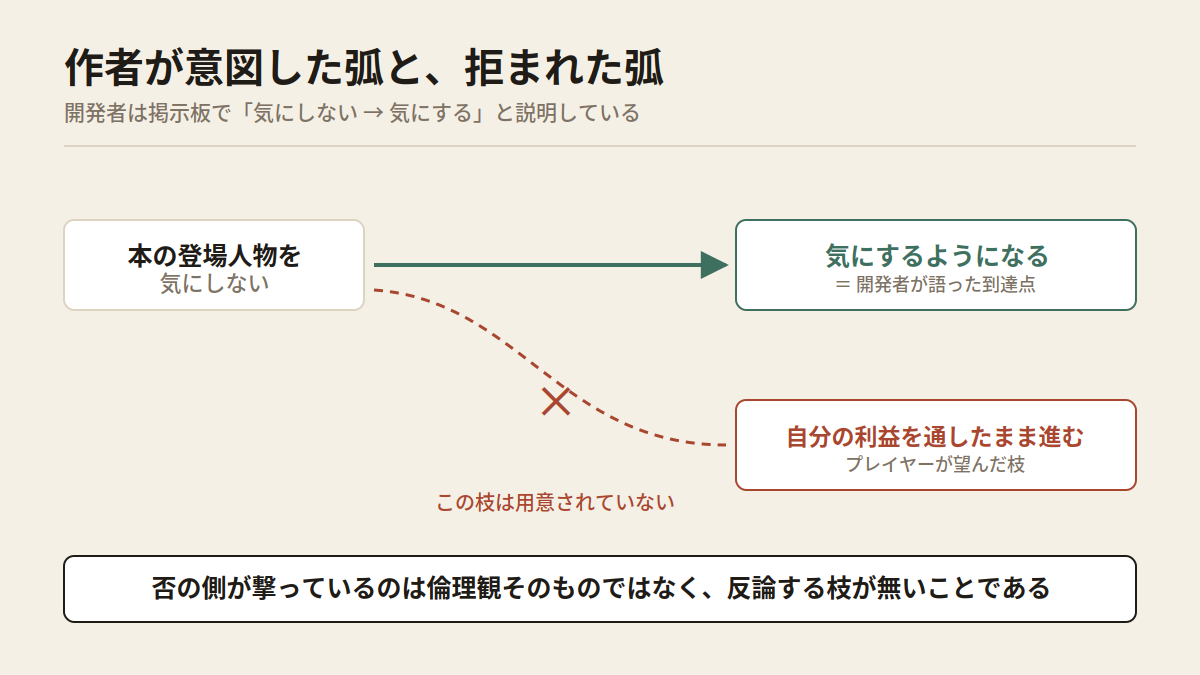 The intended arc, and the branch that was never built — diagram by the author
The developer never hid that arc. On the forum in 2021 he wrote about this exact scene that you do not have to pity the alchemist, that it is the beginning of a movement from not caring about book characters to caring about them, and that he hopes to always leave the player a choice. So the mismatch is not about ethics. It is about consequence: branches change the conversation in front of you, but the point where they rejoin never moves. It is the question I raised in Undo, and whether choices still mean anything, standing up on the story side.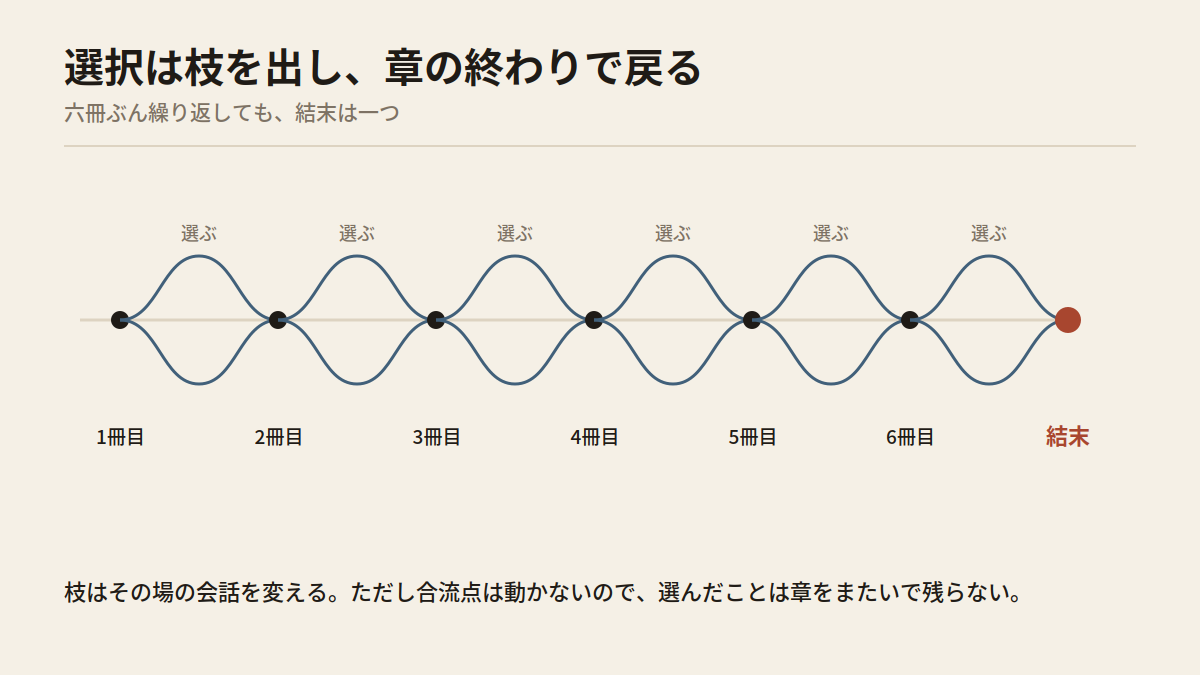 Branches open, then rejoin at the end of every chapter — diagram by the author
Putting the Mechanics into Words
The positive side calls this a puzzle game with a story. The negative side says there are no real puzzles. So what is actually there? You pick up junk, craft a lockpick or a crowbar at a bench, open the box, take the next object. Spare junk becomes ink, and ink buys you a rewrite of one line in the book. Meet an enemy and you get turn-based combat.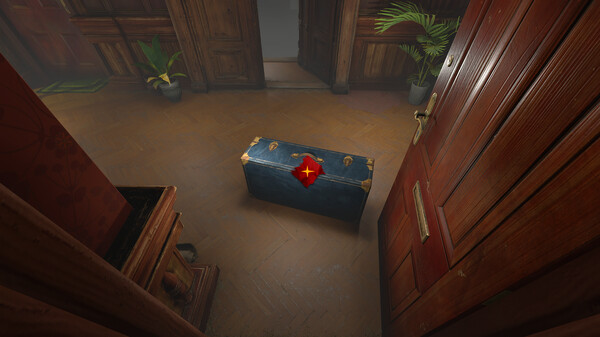 The Bookwalker: Thief of Tales — Steam store key art
Take inventory and there are seven verbs: walk, pick up, craft, convert, rewrite, fight, choose. Not a small set. But none of the seven can stop you. Combat is rock-paper-scissors with the enemy's next move shown, and losing costs nothing but a retry. A five-hour reviewer reassures others that there is no punishment for failing. Seven verbs, none of which can stall you — diagram by the author
The ink economy is where it slackens most. Junk is abundant in every chapter, and ink can be drained straight out of enemies, so the question of what to spend it on never arrives. The longest review in the pool puts it plainly: never died, never missed an ink option. Cutting a resource and lowering it to exactly what is needed are different moves — one creates tension, the other removes it. It runs opposite to the subtraction I traced in when fewer verbs make a richer game.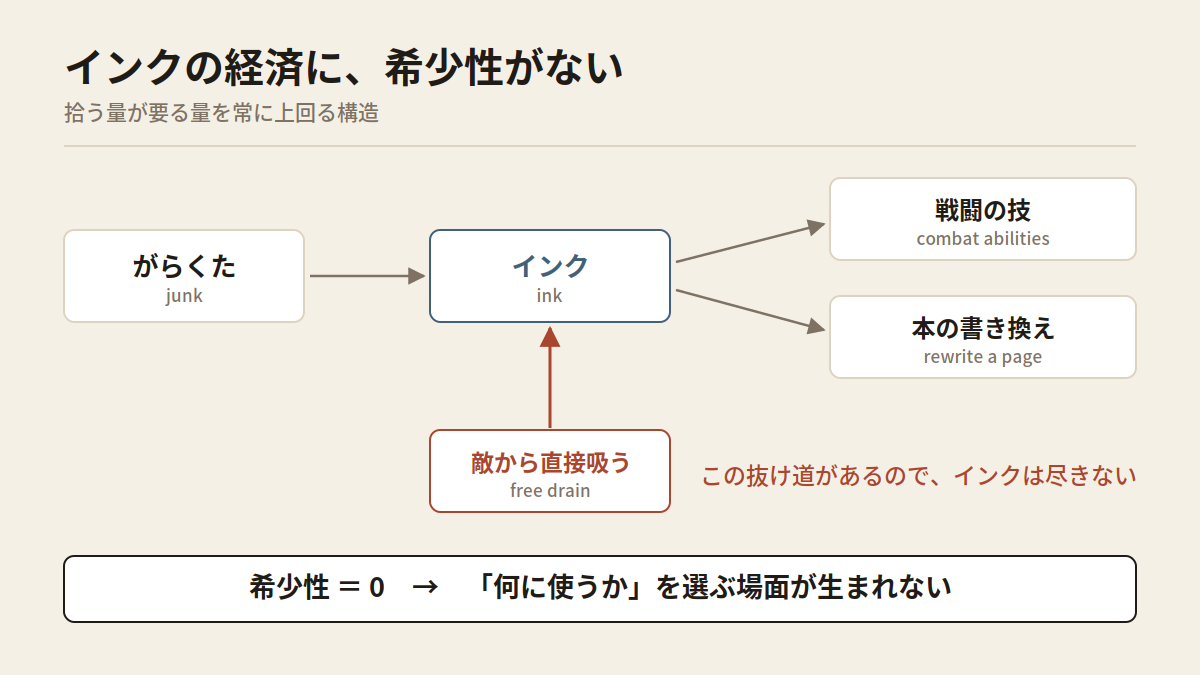 Supply outruns demand, so scarcity never forms — diagram by the author
Place in the Lineage
The most careful review in the pool spends its opening correcting an expectation. Most people who look at this game, it says, arrive because the art and the interface resemble Disco Elysium — and that is where the resemblance ends. It is nowhere near as text-heavy, and it is not an RPG. It is a point-and-click adventure with turn-based combat and crafting. That the correction is needed says a lot about where the game sits.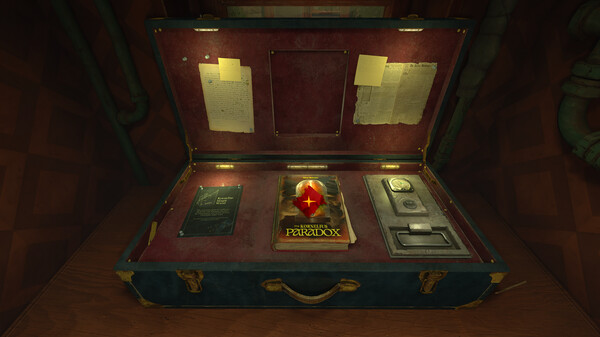 The Bookwalker: Thief of Tales — Steam store key art
On our own shelf I would file it with the devices built to make you read. Reality is first person, the books are isometric, and the whole frame changes every time you dive — seven times over. That contrast is well made, and it is the thing praise returns to most. Set beside Heaven's Vault, which asks you to decipher a language, or the titles I lined up in puzzles with a story and puzzles without, this one keeps the load on the device side deliberately light.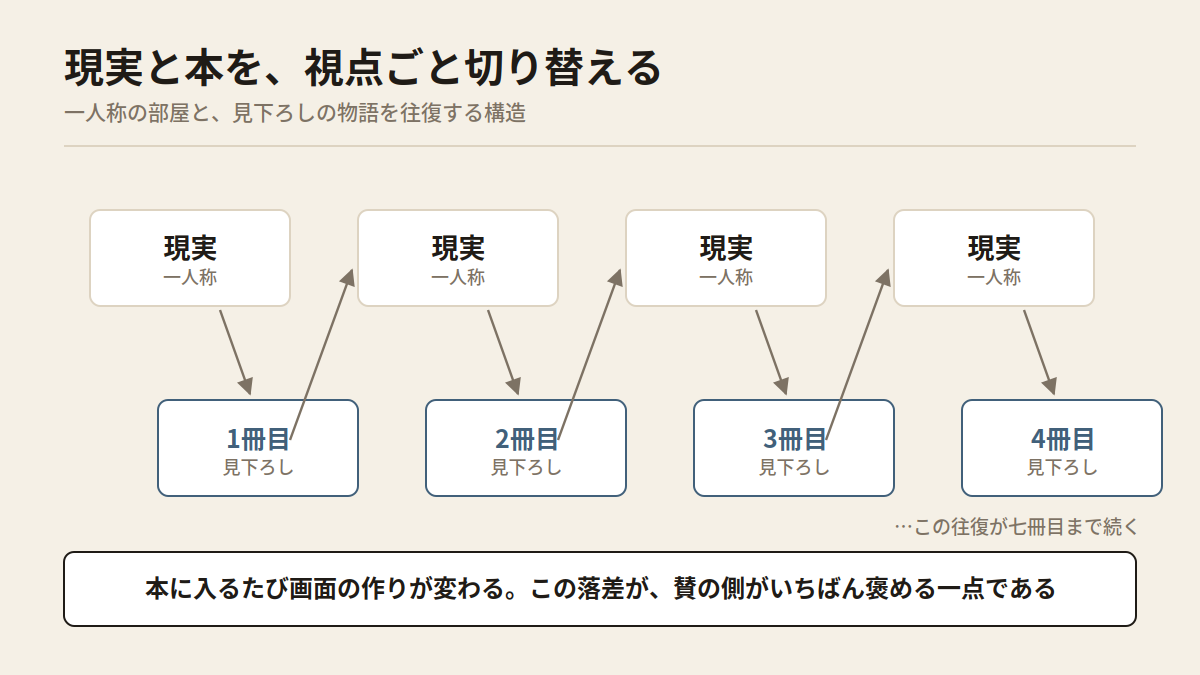 Reality and book, switched by changing the whole view — diagram by the author
Closing
What separates press from players is easy to see: the critics are applying a ruler. Adventure Game Hotspot gave 74, noting it was stumped exactly once in ten hours, that it could not tell why combat is there at all, and that the moral forks are in-the-moment window dressing. Rock Paper Shotgun wrote that the game runs out of ideas after a few hours. The 92% put their thumbs up without subtracting for any of that.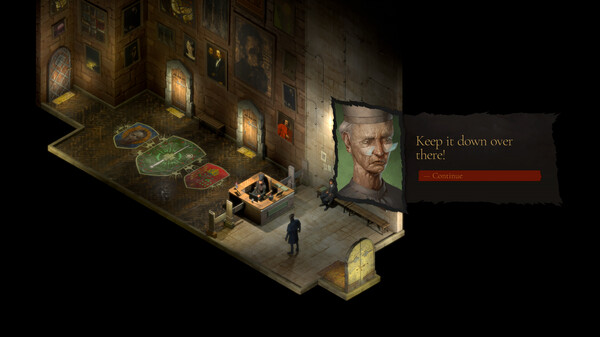 The Bookwalker: Thief of Tales — Steam store key art
I have it at difficulty 2, labelled easy. The pool keeps saying the same thing — stuck once — and there is no dead end, no death, no cost to retrying. Completion times agree: the median of the finishes reported in the reviews I read is about eight hours, the shortest 5.4. This is not a game to settle into for a month. It is one or two evenings.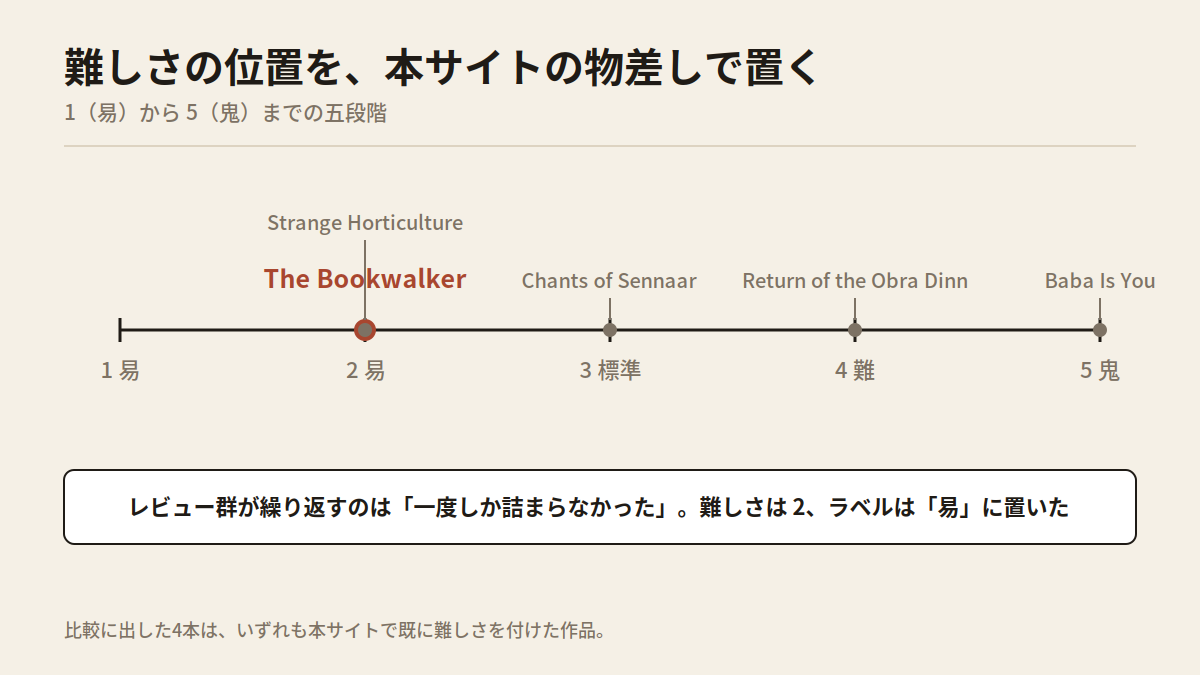 Where this sits on our five-step scale — diagram by the author
I give it 7.4. The distance from Steam's 92% is a distance in what is being measured. The premise and the view-switching presentation are strong, and there I rate it above the critics. Two things come off: the verbs carry no tension, and nothing you choose survives the chapter. Both sit in the middle of a puzzle ruler. So it is not for someone who wants to be beaten by a device. For a reader drawn to books as a subject, it hands over eight honest hours. The Bookwalker: Thief of Tales — Steam store key art
Sources
This piece was written by reading the user reviews on the Steam store page and the official discussion board as of 21 August 2026. No review text is quoted directly; typical claims are reconstructed.
- Steam: The Bookwalker: Thief of Tales (92% of 1,923 reviews positive, Very Positive; 95% of 23 in the last thirty days)
- Read the review listing sorted by helpfulness: the top ten positive reviews in full, plus the two negative reviews that gathered votes (65 and 61). In this environment every locale and sort order returned the same set, so only twelve distinct reviews could be read. The shortfall was covered by the official thread 'This too is feedback', including the developer's own replies, and by the store's About This Game text
- Metacritic: critics 80 from 7 reviews, users 7.3 from 47 ratings, SteamDB (about 2,000 reviews, 87.7%), Adventure Game Hotspot's review (74), Wikipedia (developer, release date, press reception)
- On images. Six are official Steam assets whose existence was confirmed on the store page and in SteamDB's asset listing; the image CDN was unreachable from this environment, so their contents could not be checked by eye and the captions are kept to the title and the asset type. No in-game capture URLs were obtainable for this title, so all six are key art. The remaining eight are diagrams I drew for this piece, and those were checked one by one
Where are you with this game?
Press one and the game goes on your shelf. You can see it on your account page.
Reactions (no login)
Anonymous • one of each per visitor per day
Read next

Related reviews
The Tartarus Key
A first-person puzzle adventure with no combat: a woman wakes in a mansion full of traps and puzzles and tries to escape while rescuing other captives. By Vertical Reach.
Happy Game
A point-and-click adventure that walks a sleeping boy through three chapters of nightmare. You pull, turn and pick at the screen to open the way forward, and what waits there is smiley faces, pink bunnies and rooms the colour of blood. Amanita Design's first turn toward horror, scored by the Czech band DVA.
Underground Blossom
A point-and-click escape puzzle that rides down seven metro stations through the life of a woman named Laura. You buy a ticket, search each room, and reassemble the pieces of her memory. A 2023 release from Rusty Lake, the studio behind the Cube Escape series.


