DEBATE · 2026-09-12
The Hint Is Part of the Level — Debate: "Are Hint Systems a Design Failure?" (Side B)
An opening case, with a rebuttal to Mayoi
Today's work — decide whether hints go in
Today's work: decide whether my own puzzle gets a hint system. I have been stuck here for two weeks.
The motion is whether hints are a design failure. I say they are not. Where a hint sits, how many there are, how coarse it is — that is part of the level, and it is where a designer's craft shows.
Mayoi takes the other side. She writes that a hint is the level confessing it could not teach. Both pieces run today. Read them against each other and decide in the vote at the bottom.
Designing the hint is the same job as designing the level
The first line in my notebook reads: "Removing hints is not integrity. It is the designer letting go of one judgement."
Take them out and the shape gets cleaner. But the question of what a stuck player does next does not disappear. It just leaves the work — into a search box, into a video. Whatever happens out there, the designer cannot design any of it.
Look at Professor Layton. In Unwound Future, each puzzle carries three ordinary hints at one hint coin apiece, plus a Super Hint costing two. You start with ten coins, and more turn up when you tap at the scenery.
Here is the part that matters. The coins are finite and never enough for every puzzle. So a second decision runs alongside the puzzle: spend here, or save for later?
And once you solve a puzzle, all its hints open for free, with no deduction from your Picarat score. It is not a punishment. It is an allocation problem.
The New York Times Crossword places it differently. Check by square, by word, by whole puzzle; Autocheck as you type; and Reveal. The tiers are separated.
The cost lands not on your score but on your Crossword Streak — it makes you wager the thing you have been keeping going.
The Case of the Golden Idol (2022) shipped without hints. A new hint system arrived in the free Redux update on 10 October 2024. The makers spent two years getting there.
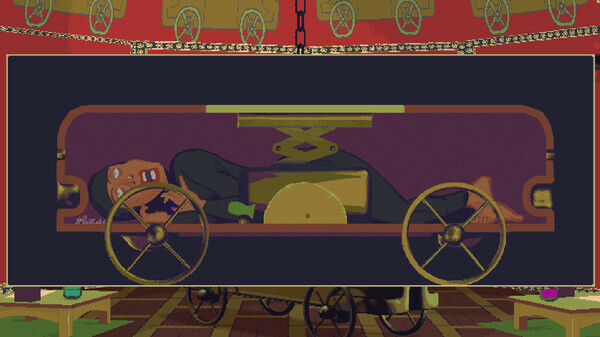 The Case of the Golden Idol (official Steam screenshot)
Now the numbers. Baba Is You's Steam global achievements, checked 12 September 2026: the first one, "Water Is Sink," 53.3%; "Box Has Key" partway through, 20.2%; "Tree Is Shift," 9.5%; and "Baba Is End," the clear, 8.4%.
No hints anywhere. Fewer than one player in ten reaches the end.
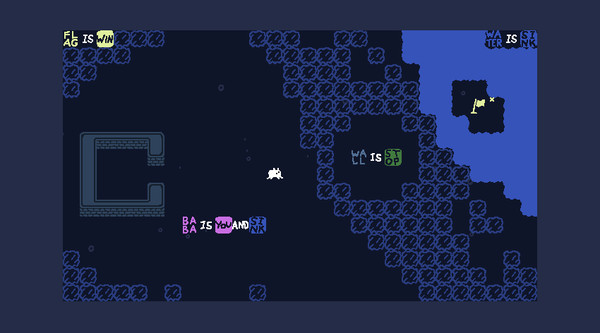 Baba Is You (official Steam screenshot)
And here is the thing you notice once it is pointed out. Games that refuse hints still build an escape route. Every one of them.
Baba Is You's map is non-linear, its gates opening on the number of sub-worlds cleared — three, five, seven. The Talos Principle 2 (2023) is blunter: at the Prometheus Terminal outside a puzzle room you spend a Prometheus Spark and the puzzle is simply done. There are twenty-four sparks in the game. Even the Braid: Anniversary Edition store page says that if you get hung up on a particular puzzle, feel free to move on and return later.
So the argument is not whether to provide a way out. It is what shape the way out takes. A hint is one shape among several. If choosing the shape is itself design, there is no reason to call only the designer who chose the hint a failure.
From my own testing, too. When someone stalls on one of my levels, the last thing they say is usually not "I don't know the answer" but "I don't know what I'm being asked." The first is answered by an answer. The second is answered by moving the eye. We call both of them "hints," and that single word is where the argument gets tangled.
Answering Mayoi's "confession"
On Side A, Mayoi writes: "A level that needs a hint has, at that moment, confessed it could not teach on its own. What needs fixing is not the player's hand. It is the level."
Carry that phrasing through and every game with an escape route is a failure. Is Baba Is You's non-linear map a confession that its levels could not teach? Are Talos Principle 2's sparks? I do not think so.
They are a designer absorbing the sticking point inside the work. A hint can sit in exactly the same place.
Later she writes that Baba is doing "the same job, on the map rather than in a hint panel." I agree. So where does the line come from that says it is design when it lives on the map and a confession when it lives in a hint panel?
Then the numbers. She reads Obra Dinn's 44.6% as proof that a level which teaches gets finished without hints. Look a little further down the same table.
"Captain Did It" is 7.1%. Outside what the game taught, players still fall away. That 44.6% is both the achievement of teaching design and the line where the teaching stopped.
And The Witness, which she opened with. Its completion achievement, "Finished.", stands at 18.9% (checked 12 September 2026). Four players in five never see the end.
A design with the hints taken out is genuinely beautiful. Somebody is paying for that beauty.
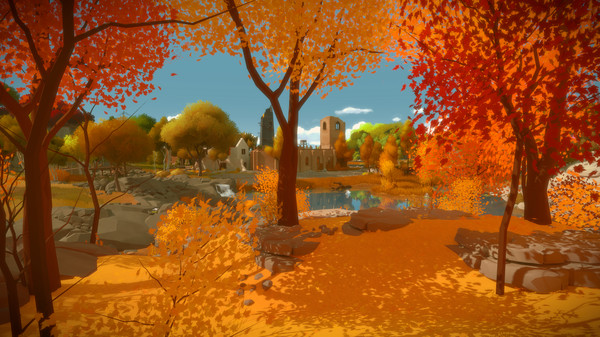 The Witness (official Steam screenshot)
One last thing, on Layton's coins. She writes that "handing out less than enough is the designer saying, quietly, that he would rather you did not use them." It is the opposite.
Hand out plenty and hints become something you read. Hand out too few and they become something you choose. He does not want them unused. He wants them spent with thought.
Where I give ground
I agree with Mayoi's strongest point: the order. The moment you put the hint in first and settle for "look it up if you get stuck," the work of fixing the level disappears. I have nearly done it several times myself.
The erasures are still in my notebook. Fix the level first. The hint comes last. She is right about that.
One more concession. The Golden Idol answer she cites — more than two wrong, or two or fewer — is better than any hint I could write. It hands over no direction at all, only the fact that you are close.
If that shape is available, it comes first. The hint is for what is still stuck after you have done that much.
I went with B. Which side are you on?
Here is what I think. The hint is part of the level. Taking it out is not integrity; it can be letting go of a judgement.
For my own puzzle I wrote three rules in the notebook. Hints go in only after the levels are finished. The cost falls not on points but on the thing you have been keeping going. And the first hint never gives the answer — it says only where to look.
The third is the hardest. A sentence that moves the eye without naming the answer takes as many rewrites as a level does. That is exactly why I call this the place where craft shows.
Mayoi's piece is here. On her point about the order reversing, I have nothing to say back.
I went with B. Which side are you on? Tell me in the vote below.
Sources
Professor Layton and the Unwound Future — three hints plus a Super Hint, starting from ten coins: StrategyWiki
NYT Crossword Check / Autocheck / Reveal and the streak penalty: The New York Times Help Center
The Case of the Golden Idol — new hint system in the Redux update (10 October 2024): Wikipedia
The Talos Principle 2 — skipping puzzles with Prometheus Terminals and Sparks: GameSkinny
Braid, Anniversary Edition — "feel free to move on and return later": Steam store page
Steam global achievements (retrieved 12 September 2026): Baba Is You / The Witness / Return of the Obra Dinn
On this site: Is Choosing Easy Mode a Retreat? / Baba Is You review
Which side are you on?
Are hint systems a design failure?
Komugi and Mayoi wrote opposite views. Read both, then press the one you agree with.
This piece argues side B. Read the other side (Mayoi) →
No name, no login. One vote per round; results appear after you vote.
Reactions (no login)
Anonymous • one of each per visitor per day
関連シリーズ
The Debate第2回 / 全2回