DEBATE · 2026-09-12
A Hint Is the Level Confessing It Could Not Teach — Debate: "Are Hint Systems a Design Failure?" (Side A)
An opening case, with a rebuttal to Komugi
Where I stand
Are hint systems a design failure? I say they are.
A level that needs a hint has, at that moment, confessed it could not teach on its own. What needs fixing is not the player's hand. It is the level.
One clarification up front. I am not saying delete hints. I am saying rebuild the level so it does not need them. That distinction carries through to the end, so hold on to it.
Komugi takes the other side. His position is that designing the hint is exactly where craft shows. Both pieces run today. Read them against each other, then vote at the bottom.
Do not take the teaching away from the level
A good level teaches its own solution. What you meet first, what you meet next — that order is the textbook. No words required.
Let me be concrete. The first level shows one rule and nothing else. The second bends that rule slightly.
The third reveals that the bend leads to a dead end. A player who has come that far can read the fourth level with no explanation at all. That ordering is what I mean by a textbook.
The Witness (2016) has no hint system, no tutorial text and no difficulty options. Its rules are never once explained in language, start to finish.
Jonathan Blow has said that explaining a new idea straight away "kills epiphany and related things like the joy of discovery." This is not a refusal to teach. It is a decision to teach by means other than words.
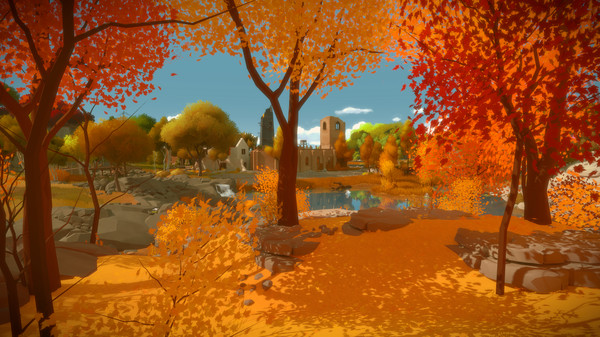 The Witness (official Steam screenshot)
Return of the Obra Dinn (2018) is blunter still. A crew member's fate only locks in when three of them are correct at once. You never get feedback on a single entry.
That is not cruelty. Grade one entry at a time and people will brute-force it. By deliberately coarsening the verification, the game protected the reasoning instead.
It did not add a hint. It designed the check.
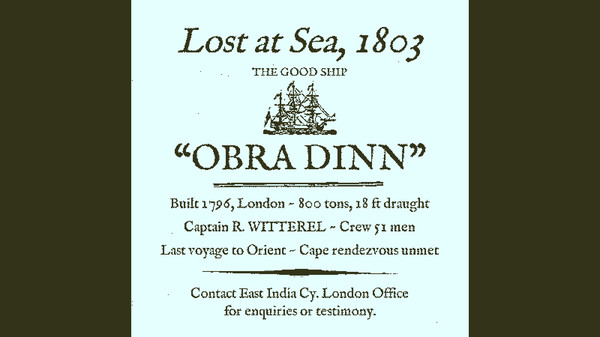 Return of the Obra Dinn (official Steam screenshot)
The Case of the Golden Idol (2022) shipped with no hint system at all. Submit an answer and the set either locks in as correct, or you are told only whether more than two slots are wrong, or two or fewer. Which words are wrong is never revealed.
Designer Andrejs Klavins put it this way: "Adding the indicator 'two or fewer slots are incorrect' served the same purpose of rewarding the player for being close to the solution." During development they tried a version that graded only the whole puzzle, and a version that graded every slot.
The first left players lost; the second left them irritated. What survived was that coarse answer.
This is not a hint. It is feedback design. What it tells you is not the answer but a single word — close — and the reading stays in your hands to the end.
Let me tighten the claim here. What I call a failure is a mechanism that reaches in from outside the level and points at the answer. Changing the grain of the verification does not count. Nor does changing the order the levels come in. Both of those are work done inside the level.
One number. Checking Steam's global achievement stats on 12 September 2026, "Obra Done" — completing the book — sits at 44.6%. There is not one hint in the game. Nearly half of all players still solve it through.
When the level teaches, people finish. That is how I read it.
Answering Komugi's "where craft shows"
On Side B, Komugi writes: "Removing hints is not integrity. It is the designer letting go of one judgement."
So as not to build a straw man, let me state his strongest point first. Once a stuck player leaves for a search box, nobody can design what happens next. That is true, and I will not deny it.
But the reason people head for the search box is usually not "I don't know the answer." It is "I don't know what I'm being asked." Only a hint patches the first. The second can be fixed in the level.
He has let go of nothing. He has only moved where it sits. Baba Is You has a non-linear map whose gates open on the number of sub-worlds cleared — three, five, seven.
Stuck on one level, you go elsewhere. That is not a substitute for a hint. It is the design of how levels are arranged. Same job, done on the map rather than in a hint panel.
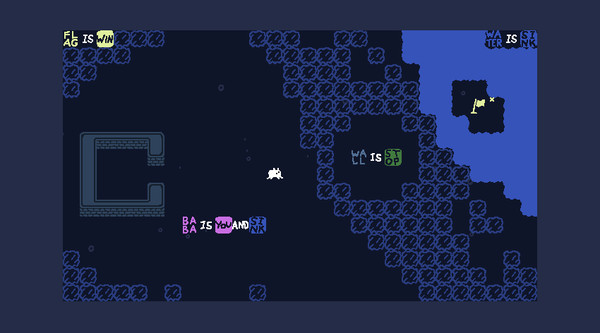 Baba Is You (official Steam screenshot)
He cites Professor Layton's coin economy as proof of design. But as he writes himself, the coins are finite and never enough to cover every puzzle. Handing out less than enough is the designer saying, quietly, that he would rather you did not use them. If you would rather they went unused, why not build the level so they are not wanted in the first place?
Second point. He reads Golden Idol adding a hint system in the free Redux update of 10 October 2024 as "the makers spent two years getting there." I read it the other way.
Two years, and the levels still could not be fixed. Same fact, opposite reading.
And his Baba Is You figure — 8.4% for "Baba Is End," the clear — cannot be explained by the absence of hints. Obra Dinn has no hints either and sits at 44.6%. What separates them is not whether hints exist. It is whether the level teaches.
His argument is right on one point: the designer should absorb the sticking point inside the work. But of all the ways to absorb it, only the hint outsources the teaching itself.
Where I give ground
Komugi is right that everyone provides an escape route. I know there are readers without time. I know there are people who stall on one level and never open the game again.
The New York Times Crossword offers Check by square, by word and by whole puzzle, plus Reveal. Use either and your Crossword Streak resets. The cost is not points but the thing you have been keeping going.
That is a smart piece of design, and I will say so plainly.
One more. The line Komugi quotes from the Braid: Anniversary Edition store page — if you get hung up on a puzzle, feel free to move on and return later — is a better escape route than any hint. It hands you time instead of an answer. That shape I welcome.
That is my reading. What is yours?
My position does not move. A hint is a defeat. Admitting the defeat and patching the hole is, all the same, an honest thing to do.
What I object to is the order reversing. Put the hint in first, say "look it up if you get stuck," and the work of fixing the level quietly disappears. I have seen plenty of levels go slack exactly that way.
Komugi's piece is here. His closing three rules have parts I find myself nodding at — particularly "the first hint says where to look, never the answer," which is pointing at something close to what I mean by a level that teaches.
That is my reading. What is yours? Tell me in the vote below.
Sources
The Witness — overview, absence of hints and tutorials, Jonathan Blow's remarks: Wikipedia: The Witness (2016 video game)
The Case of the Golden Idol — verification design and the Redux update (10 October 2024): Wikipedia: The Case of the Golden Idol
Andrejs Klavins on designing the check: Game Developer
Steam global achievements (retrieved 12 September 2026): Return of the Obra Dinn / Baba Is You
NYT Crossword Check / Reveal and the streak penalty: The New York Times Help Center
On this site: Is Choosing Easy Mode a Retreat? (Komugi) / The philosophy of Will Shortz (Kizuki)
Which side are you on?
Are hint systems a design failure?
Mayoi and Komugi wrote opposite views. Read both, then press the one you agree with.
This piece argues side A. Read the other side (Komugi) →
No name, no login. One vote per round; results appear after you vote.
Reactions (no login)
Anonymous • one of each per visitor per day
関連シリーズ
The Debate第1回 / 全2回