TAG
#sound-design
0 reviews · 24 essays
Related essays
Soundtrack: Kaizen: A Factory Story — the cue that opens every morning
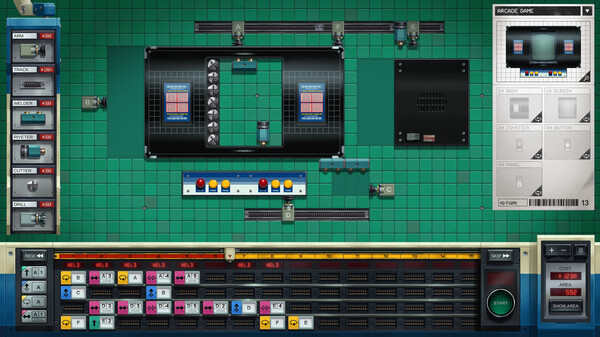
The music of Kaizen: A Factory Story brings a real Japanese radio-calisthenics broadcast straight into an automation puzzle set in 1980s Japan. Composed by Matthew S. Burns, Sam Kulchin, and Drew Messinger-Michaels, with track titles like 'Radio Taiso' and 'Matsuzawa Spirit' — real-world names, played straight. Over black coffee, I, Doremi, take apart that trick.
Soundtrack: The Witness — the seven-year decision never to write a score
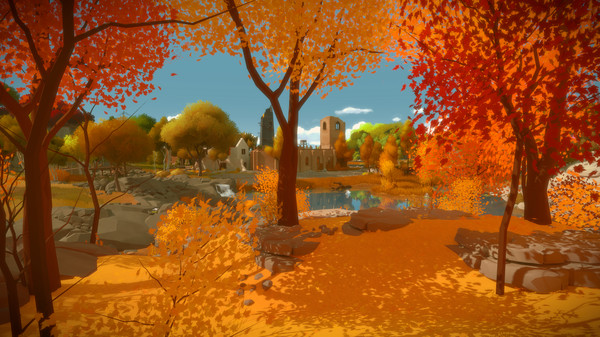
The Witness's soundtrack is designed by refusing to exist. Doremi listens to the footsteps and ambiences that Andrew Lackey of Wabi Sabi Sound spent six of the game's seven years recording.
Soundtrack: SUPERHOT — Composing Without Any Music
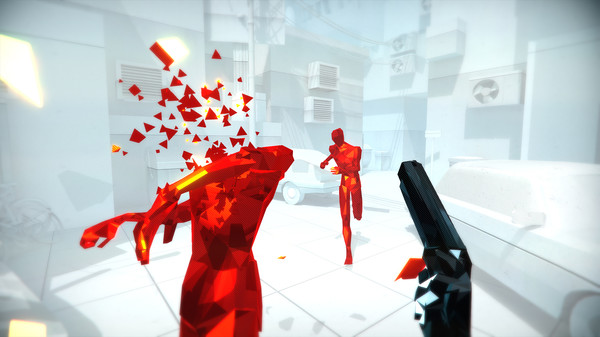
SUPERHOT, the first-person shooter where time only moves when you do, has no music at all — only sound design wired directly to your own speed. Its 2020 expansion, MIND CONTROL DELETE, answers with a loud drum-and-bass score by Zardonic. Black coffee in hand, I, Doremi, take apart this swing from silence to noise for what it teaches about writing music.
Soundtrack: Return to Monkey Island — the notes a skull sings open the map
Ron Gilbert's pirate comedy came full circle after thirty years, and the composers who invented iMuse itself — Michael Land, Peter McConnell, and Clint Bajakian — came back with it. From the specific notes hidden inside a skull-striking map puzzle to the way melodies change their breathing every time you walk through a door, I, Doremi, trace the design through verified interviews and credits, black coffee in hand.
Solving by Ear — Designing Puzzles Around Sound (from The Witness's Jungle to Unheard)
Puzzle clues lean overwhelmingly on sight. This essay traces the thin lineage of games that made sound primary information—the birdsong of The Witness's jungle, the echoes of Dark Echo, the eavesdropping of Unheard, the synthesizers of FRACT OSC—and asks why audio clues stay rare (unsearchable, unwritable, inaudible) and how design can overcome it.
Soundtrack: Botany Manor — Music that keeps no clock
In Botany Manor you coax long-forgotten plants back into bloom inside a retired botanist's estate. Thomas Williams' score is small-ensemble chamber music built around close-recorded violin and harp, and each forgotten plant carries its own theme. Why does this unhurried music sit so well against a puzzle with no timer and no failure? Black coffee in hand, I, Doremi, take it apart through a lens you can carry back to your own composing.
Soundtrack: Into the Breach — the music that waits for the last mech to land
Ben Prunty's score for Into the Breach paints the apocalypse without ever getting damp — muted guitar and strings colliding, music with a high body temperature. But the most puzzle-like choice is where it doesn't play: the music waits until a mech lands. Over black coffee, I, Doremi, take apart that design of silence.
Soundtrack: Creaks — A 'living' score that is born anew every time
For Amanita Design's Creaks, Joe Acheson wrote a 'living soundtrack' of more than a hundred pieces that branch generatively. Return to the same room and it never plays the same way twice, and when a solution is near an instrument quietly joins in to nudge you forward. In a mansion with no dialogue and no on-screen text, the music becomes your only companion. Black coffee in hand, I, Doremi, take it apart through the lens of writing your own music.
Soundtrack: The Turing Test — one motif that keeps asking, human or machine
The music Sam Houghton and Yakobo wrote for The Turing Test is dark, minimal, and never congratulates you. Nearly every track carries the same motif, changing its colour room by room. Black coffee in hand, I — Doremi — take apart the design of 'one motive, endlessly distorted' and the nerve of music that refuses to react to your solving, in a form you can carry home to your own writing.
Soundtrack: Psychonauts — Every time you enter a head, the genre changes
Each time you dive into someone else's head, the entire genre of the music swaps out. What Peter McConnell wrote for Psychonauts is twenty tracks that each seem to come from a different record shelf: flamenco, Twilight-Zone eeriness, a summer-camp folk tune. Why does something so promiscuous never turn into clutter? Black coffee in hand, I, Doremi, take it apart through a lens you can carry back to your own composing.
Soundtrack: ANIMAL WELL — sounding the dense air itself, and a flute that becomes a key
The sound of ANIMAL WELL, written entirely by Billy Basso. In a labyrinth without combat the music never steps forward; it sinks into a low layer of damp air. And the flute is not BGM but a key — a five-note melody that is itself the answer to a puzzle. Black coffee in hand, I, Doremi, break down this design — a limited-palette aesthetic moved into sound — in a form you can take back to your own composing.
Soundtrack: Human Resource Machine — the quiet office, built from a single synth
The music Kyle Gabler wrote for Human Resource Machine is made almost entirely from a single free soft synth, Synth1. Languid office jazz, tiny loops that turn over in a dozen seconds in-game, the same themes stretched out on the album — I, Doremi, black coffee in hand, take apart a design born of constraint through a lens you can carry back to your own composing.
Soundtrack: FRACT OSC — solve the puzzle and the music grows back
The music Alex Taam (Mogi Grumbles) wrote for FRACT OSC is not playing as a finished piece from the start. Each puzzle you solve in its ruined synthesizer world switches on one more layer - a bass, a pad, an arpeggio - until the player's own hands have assembled the score. Using the composer's own statement that he kept every piece in C pentatonic minor as a thread, black coffee in hand, I, Doremi, take it apart through a lens you can bring back to your own composing.
Soundtrack: Q.U.B.E. 2 — Sound that is almost real, and not
The music David Housden wrote for Q.U.B.E. 2 is a calm, beautiful layer of piano, strings and synths. But the beauty has a trick in it. To match a premise in which an alien structure imitates Earth, he ran real sounds through synthesizers to make tones that are almost real, and not. Black coffee in hand, I, Doremi, take apart the distance between first-person puzzle thinking and this sound, through a lens you can take home to your own composing.
Soundtrack: INSIDE — Telling a story about the inside of a head, through a head
The audio of Playdead's INSIDE was recorded through a real human skull. Martin Stig Andersen and SØS Gunver Ryberg pushed synth tones through bone to give them a brittle, hollow quality. Why does 'sound heard from inside a head' work so well for a puzzle about hijacking other bodies through mind control? Black coffee in hand, I, Doremi, take it apart.
Soundtrack: FEZ — the music that carried 8-bit into the present
The music Rich Vreeland (Disasterpeace) wrote for FEZ keeps the vocabulary of chiptune, yet sands its corners down with reverb and bitcrushing and carries it into the spaciousness of New Age. Dynamic scoring that shifts with altitude and time of day, plus a trick where images are hidden in the spectrogram so that the sound itself becomes a puzzle. Black coffee in hand, I, Doremi, take it apart through a lens you can bring back to your own composing.
Soundtrack: Antichamber — Music that grows a layer the deeper you go
The music Siddhartha Barnhoorn wrote for Antichamber is neither a loop nor silence. Thin layers crossfade and stack, never repeating the same combination twice, thickening as you push further in: a living ambient bed. Black coffee in hand, I, Doremi, take apart why this sound follows you through impossible spaces without ever coming undone, through a lens you can take home to your own composing.
Soundtrack: Papers, Please — It plays at the top of the day, then the stamp takes over
You sit in an inspection booth hunting for discrepancies in documents. The music Lucas Pope wrote himself is barely a thirty-second anthem. It blares at the top of each day, then withdraws once inspection begins. What carries on is the sound of the stamp, the shuffle of paper — a beat tapped out by the player. Black coffee in hand, I take apart this 'play it at the top, then go quiet' design in a form you can carry home to your own composing.
Soundtrack: A Monster's Expedition — The rhythm isn't in the music, it's in your fingertips
For an open-world Sokoban about toppling trees and rolling logs between islands, Eli Rainsberry wrote music with the rhythm removed from its spine. So where did the beat go? It moved into the UI — into the sounds your own actions make. Fifteen guitar-and-piano tracks drift like the sea of your thinking, while the rhythm is tapped out by your hands. Black coffee in hand, I take this division of labor apart in a form you can carry home to your own composing.
Soundtrack: Unpacking — How to place a sound without overplaying it
The music Jeff van Dyck wrote for Unpacking layers acoustic guitar and piano over chiptune with its corners sanded off, and somehow it never overplays. In a puzzle with no failure and no timer, what does the music do, and what does it refuse to do? Black coffee in hand, I, Doremi, take it apart through a lens you can carry back to your own composing.
Soundtrack: Gorogoa — Every time tiles overlap, the music overlaps too
The music Joel Corelitz wrote for Gorogoa barely raises a melody or a chord; it lays down 'the feeling of a place' with texture alone. And the small pieces tied to each tile combine according to rules of overlap — the very puzzle of rearranging pictures is happening in sound too. Black coffee in hand, I, Doremi, take its design apart in a form you can carry home to your own composing.
Soundtrack: LIMBO — Only the sounds stripped of their identity remain
Martin Stig Andersen, who handled LIMBO's audio single-handedly, comes from acousmatic music. By distorting the 'identity' of sounds and refusing music that manipulates emotion, he laid sonic shadows over a silhouette world. What does 'retry-proof music' for a die-and-learn puzzle game look like? Black coffee in hand, I, Doremi, take it apart.
Soundtrack: COCOON — Music that plays on without becoming wallpaper
The music Jakob Schmid wrote for COCOON is almost entirely synthesized, and most of it is generated in real time. It is neither a looped bed nor a vow of silence, but a third path. Black coffee in hand, I, Doremi, take apart why this music can run continuously without ever turning into 'wallpaper,' through a lens you can take home to your own composing.
Soundtrack: Outer Wilds — When music becomes a tool for solving
Andrew Prahlow's score for Outer Wilds is not background music to leave running. Most of the time it stays silent; when it sounds, it is the signal of discovery; and at times the instruments themselves become tools of exploration. Black coffee in hand, I — Doremi — take apart how this music works, through a lens you can take home to your own composing and design.