REVIEW · 2022-01-21
Strange Horticulture
図鑑が文法になる、オカルト植物推理
はじめに
カウンターの向こうから客が植物を持ち込み、こちらは棚の在庫と一冊の図鑑を頼りに、その植物が何者かを一つずつ特定していく。正体が分かれば、その効果——眠り、治癒、毒、幻覚——を使って客の求めや町の事件に応じる。2022年1月、英国の小規模スタジオ Bad Viking が制作し、Iceberg Interactive が発売した2Dのオカルト推理パズルだ。報道では、開発は兄弟を中心としたチームとされる。
私はこの記事を、Steam に積み上がったユーザーレビュー群を読んで書く。英語版の評価ラベルは『圧倒的に好評』、9,715件中95%が好評(全言語では14,421件、2026-06-25 snapshot)。専門メディアでも Rock Paper Shotgun が最上位の評、PC Gamer が90点、Metacritic は83点と高い。数字の上では、ほぼ全員が褒めている作品である。
だが「ほぼ全員が褒めている」作品ほど、賛辞の中身を腑分けする価値がある。レビュー群を読むと、この作品を褒める語彙——『cozy(居心地がいい)』『relaxing』『rainy day(雨の日向き)』——と、少数の不満——『tedious(単調)』『短い』『図鑑が頼りない』——は、実は同じ一つの設計を別の側から触っている。本稿はその一点を読み解く。
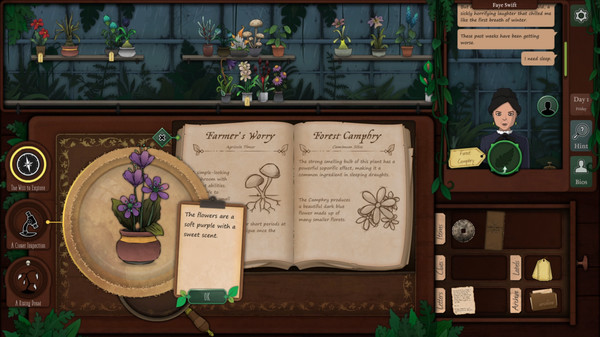 Strange Horticulture(Steam スクリーンショット)
第一印象
helpful 上位の positive レビューが、ジャンル説明より先に書くのは「雰囲気」だ。雨、ランプの灯り、店先のネコ、めくる本の手触り。『cozy』『relaxing』『chill』という語が判で押したように並ぶ。直近のレビューでも「雨の日に最高」「とにかく居心地がいい」「ネコが好き」が定型句になっている。観察者として最初に気づくのは、この作品の第一印象が、解法や難しさではなく感触で語られていることだ。
同時に、その感触の下には緊張がある。positive 側でさえ「居心地がいいのに、どこか不穏」と書く。店は安全だが、客が持ち込む依頼は失踪や毒殺や怪しげな教団へ触れていく。レビュアーが繰り返す『Lovecraftian』という形容は誇張ではなく、構造の指摘だ——穏やかな所作(植物を一つ特定する)の積み重ねが、町の暗部へ降りていく階段になっている。
Komugi の語彙でいえば、これは観察解像度を上げる訓練を、心地よさで包んで差し出す設計だ。プレイヤーは葉の形や匂いや色を見分けることに没入し、その没入そのものが物語への没入と一致する。第一印象が「感触」で語られるのは、設計が感触を入口に選んでいるからにほかならない。
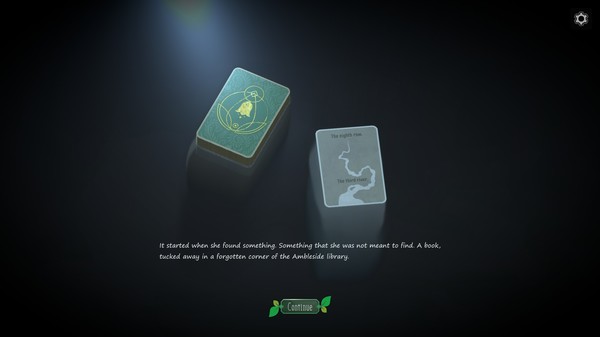 店先とネコ——多くのレビューが最初に挙げる感触(Steam スクリーンショット)
メカニクスの言語化
positive レビューが「part cozy mystery, part logic puzzle(半分は癒し系ミステリ、半分は論理パズル)」と要約するこの作品の動詞は、突きつめれば一つ——「特定する(identify)」だけだ。客や探索で得た手がかり(葉は対生、匂いは甘い、毒性あり)を図鑑のページに照らし、棚のどの鉢がその記述に一致するかを絞り込む。撃つ・押す・跳ぶといった操作は一切ない。観察と照合だけで進む。
ここで Puzzlebyrinth の語彙が効く。図鑑は、この作品の文法だ。一枚一枚のページが「対生/互生」「鋸歯あり/なし」といった対立項を提示し、手がかりはそのどれを選ぶかを指定する述語になる。プレイヤーがしているのは、植物という名詞に観察という述語を当て、図鑑という文法で文を一つ確定させる作業だ。Return of the Obra Dinn や The Case of the Golden Idol が、断片から一文を確定させる快感で支持を集めたのと、根は同じである。
注目すべきは減算だ。探偵ものから尋問も推理ボードも取り去り、「目の前の一鉢を言い当てる」一手に削っている。positive が『satisfying』と呼ぶ手応えは、この削りが生む——選択肢が二択や三択まで絞れた瞬間の、ぴたりとはまる感触だ。一方で negative 側が「図鑑が頼りない」「特定の根拠が薄い」と書くのも、同じ削りの裏面である。手がかりが一つ足りないと、文法が一意の答えを保証しなくなり、推理が当て推量へ滑る。賛否は別の体験ではなく、同じ一手の精度をどこで踏んだかの違いだ。
 図鑑と手がかり——照合の文法(Steam スクリーンショット)
世界観
レビュー群で「短いのに濃い」と評されるのは、ほぼ世界観の話だ。霧の町アンダーミア、店に届く依頼、選択で枝分かれする結末、そして机の上で眠るネコ。positive レビューは固有名詞より先に「ネコを撫でられる」を挙げ、negative すら世界観は否定しない。発売元 Iceberg は販促時、これを Sherlock Holmes の卓上ゲームや Papers, Please の系譜に置いたと述べているが、レビュアーの実感は「机の上で完結する小宇宙」という方が近い。
設計として見ると、世界観は動詞の単調さを支える梁だ。「特定する」一手は、それ自体では作業になりかねない。だがその一手ごとに、依頼の言葉、地図の更新、教団の影が乗ることで、作業が物語の前進へ変換される。Papers, Please が「書類を照合する」反復に人間ドラマを乗せて意味を与えたのと、同じ構造である。
注意したいのは射程だ。この世界観は、深い探索や戦闘を求める人には向かない。すべては机上で、選択肢の提示と短い帰結によって進む。positive が「rainy day」と呼ぶ尺の短さと密度は、negative が「物足りない」と書く尺の短さと、同じ一つの選択だ。誰に向き、誰に向かないかが、ここではっきりしている。
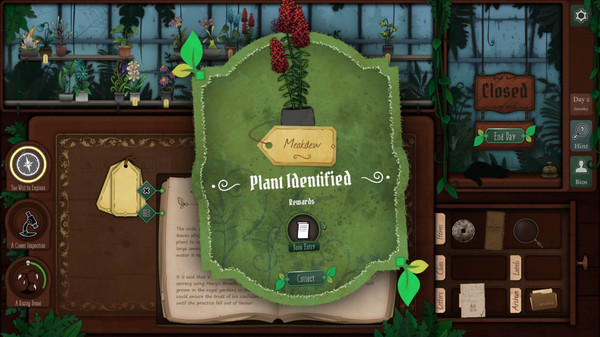 店の外——地図と探索の手がかり(Steam スクリーンショット)
難しさの手触り
難しさについては、レビュー群がきれいに割れている。「relaxing / easy to pick up」と書く人と、「Good game but needs brain(いい作品だが頭を使う)」「詰まる」と書く人が同居する。発売元は「パズルは必ずしも難しくないが、解くたびに報われる」と説明するが、helpful 上位には「思ったより詰まった」という声も混じる。開発者の言う『relaxing』と、一部プレイヤーの『needs brain』のズレが、この作品の難しさの正体だ。
レビュアーがどこで詰まったかを集めると、難しさの質は三つに分けられる。一つ目は手がかりの読解——比喩めいた依頼文から、図鑑のどの対立項を指しているかを読むところ。二つ目は近縁種の弁別——葉や花がよく似た二鉢のどちらか、観察解像度を上げないと割れないところ。三つ目は探索の地図読み——どの場所へ行くかを文脈手がかりから決めるところだ。詰まりの多くは一つ目と二つ目に集中する。
ここでも賛否は同じ設計の裏表である。手がかりを最小限に削った文法は、噛み合えば「relaxing」な流れを生み、噛み合わなければ「needs brain」な停滞を生む。誤答へのペナルティが薄く何度でも試せる作りが、停滞を致命傷にしないための安全網だ。総じて私は難しさを『易』寄りと見るが、それは底が浅いからではなく、詰まっても優しく戻してくれる設計だからである。
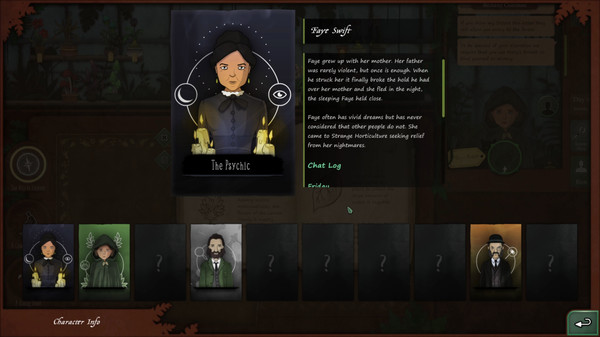 店内での照合作業——詰まりの多くはここで起きる(Steam スクリーンショット)
参照したレビュー群
本記事は 2026-06-25 時点での Steam ストアページおよびコミュニティのユーザーレビュー群を読んで書いた。
・Steam: Strange Horticulture(英語版 Overwhelmingly Positive 95%・9,715件、全言語 14,421件、評価ラベル「圧倒的に好評」)
・helpful / recent 順のユーザーレビューを positive・negative 双方とも WebFetch で読了。negative 側で繰り返されるのは「図鑑が頼りない」「単調」「短い」という主張だった。
・参考: Rock Paper Shotgun の評、PC Gamer(90)、Metacritic(83)、および GameDiscoverCo による発売元インタビュー。
結論
レビュー群を一枚に重ねると、Strange Horticulture は「一つの動詞をどこまで信じられるか」を問う作品だと分かる。植物を特定する——ただそれだけの所作を、図鑑という文法と、アンダーミアという世界観と、撫でられるネコで包み、4〜6時間(レビューで言及される範囲)の小宇宙に仕立てている。圧倒的多数が褒め、少数が「単調」と退くのは、その一つの動詞が肌に合うかどうかの差にすぎない。
数値の整合について一言。Steam の95%という圧倒的支持に対し、私は設計の観点から8.0を付ける。引いた2点は動詞の単調さそのものではなく、手がかりを削りすぎて文法が一意性を手放す瞬間——negative が「図鑑が頼りない」と呼ぶ箇所——に対してだ。そこさえ噛み合えば、これは観察を快楽へ変える、稀に見るほど潔い設計である。
派手な操作も時間制限もない。机の上で、葉を見て、本をめくり、一鉢を言い当てる。その静けさに価値を感じる人には、雨の日のために取っておきたい一本だ。逆に手応えや物量を求める人は、別の迷宮を探すといい。どちらの判断も、このレビュー群はすでに正しく予言している。
 Strange Horticulture(Steam スクリーンショット)
このゲーム、あなたは?
押すと「あなたの棚」に入ります(アカウントのページで見られます)。
リアクション(ログイン不要)
匿名で残せます • 同じリアクションは1日1回まで
次に読む
関連レビュー
Strange Antiquities
湖畔の町アンダーミアでオカルト骨董店の臨時店主となり、正体不明の品を色や手触り、匂いと音、内的知覚で調べ、数冊の図鑑と照合して客の困りごとに合う一品を渡す2Dの同定推理パズル。渡す品の選択が町の運命と結末を分けていく、Bad Viking の一作。
春ゆきてレトロチカ
一族に百年つきまとう連続殺人を、実写映像で追う推理アドベンチャー。場面から拾った手掛かりの語句を仮説の文に当てはめ、四つの時代に散らばった事件を一本につないでいく。Square Enix の一作。
Escape Academy
実在の脱出ゲームを手がける設計者が作った、一人でも二人でも遊べる一人称の脱出部屋パズル。爆弾の解除からサーバのハッキングまで、部屋ごとに趣向を変えた仕掛けを観察し、散らばった手がかりを組み合わせて鍵を開ける。学園を舞台に教員たちの物語が挟まる、Coin Crew Games による脱出部屋ジャンルの入門編。