DESIGNER-STUDY · 2026-09-05
Inside Mark Brown's Philosophy — He Saw Every Criticism Coming, and Shipped Anyway
Mind Over Magnet / Word Play / Game Maker's Toolkit
Why ship a game whose flaws you could already list?
"I agree with all of them, and I saw pretty much all of them coming" (GMTK, "What it's like to launch a game on Steam," 2024-12-06 ↗). That is how Mark Brown received the complaints about his first game.
For more than a decade he has analysed other people's design. He is the person behind the YouTube channel Game Maker's Toolkit (GMTK). What happens when a critic crosses over and makes something? This is a rare case where the answer survives in the maker's own words.
What I read here are six devlogs he wrote himself between 2024 and 2025. Not a review of the games — a study of the person.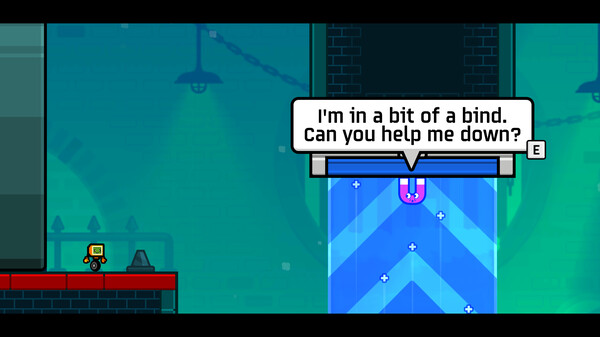 From the official screenshots on the Steam store page for Mind Over Magnet (2024)
The conclusion first. His argument leans on "finish it," not "perfect it." And that leaning became far clearer on his second game.
From reporter to critic — and back to making puzzles
Mark Brown is a British writer born in 1985. From 2009 he worked freelance for GamesRadar, Wired, Edge, Polygon and Eurogamer, among others. In 2012 he became news editor at Pocket Gamer.
In fact, the making came first. In September 2013 he released Pixel This!, a nonogram puzzle game. Before he was known as a critic, he had already built a puzzle once.
In November 2014 he started GMTK on YouTube. He became known for series like Boss Keys, which diagrams the dungeon structures of Zelda, and Designing for Disability, on accessibility. In 2017 he left Pocket Gamer to work on the channel full time.
Since 2017 he has also run the GMTK Game Jam. Around 38,000 people entered in 2025, making it one of the largest game jams in the world.
Then, at the end of 2021, he announced he would make a game himself. The result was Mind Over Magnet (13 November 2024), followed by Word Play (2025). Outside the English-speaking world he is mostly known as the person who explains games. He is also, now, someone with two puzzle games out.
Why he keeps talking about finishing
Line up his writing and the same claim keeps returning: adding content and shipping are two different jobs.
"There's a fundamental fight between wanting to put absolutely everything into the game, and wanting to release the game while you're still alive" ("The hardest thing about finishing a game," 2024-08-02 ↗). It is phrased as a joke, but it reads as a real feeling.
And he doubts what adding actually buys you. "When I was producing new content, the game was getting longer, but it wasn't really getting much better" (same source).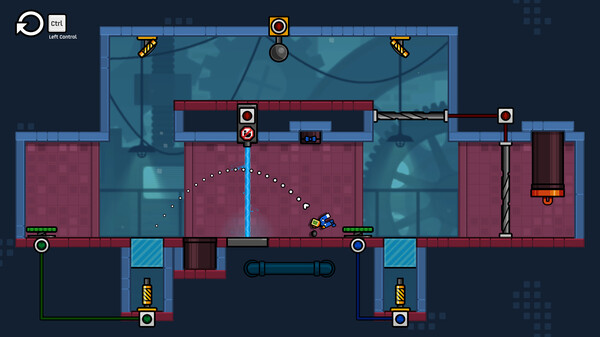 From the official screenshots on the Steam store page for Mind Over Magnet (2024)
Once a complete version exists, testing and polish alone keep making it better. So you declare the end first. "You just have to stand up, say 'this is it. I'm done. I've called it'" (same source). Finishing, read this way, is a decision rather than a destination.
The obsession that carries across both games: time
On his second game, Word Play, the obsession gets blunter. His criterion stops being better or worse, and becomes how long it takes.
"I was ruthless about the game's scope. I would routinely make decisions through the lens of which choice is going to take the least amount of time" ("How I Made Word Play," 2025-07-14 ↗). Rather than draw unique art for all 160 perks, he used a simple icon set — saving, he writes, weeks of work.
The second obsession is order. "Focus on making the bones of the game before turning my attention to the content" (same source). Split it into layers, and look at one at a time.
Prototypes sit on the same line. "A prototype lets you answer a question" ("What's the point of prototyping?" 2025-11-05 ↗). Since it is thrown away once the question is answered, ugly art made in Microsoft Paint will do.
But he puts a stopping point there too. "If you never stop making prototypes, you won't make a video game" (same source). Never describing how to start without also describing how to stop — that is his habit.
What he cut from the first game that took three years
Mind Over Magnet did not go to plan. "I announced my plan to make a game at the end of 2021 and it was not supposed to take this long, but here we are three years later" ("I made a game about magnets," 2024-11-13 ↗).
There were large restarts along the way. He describes it as "after changing the game's genre and after changing the game's entire art style" (same source). What the genre changed from, and to, is not explained in that post.
The art rebuild began as a resolution problem. Scaling, anti-aliasing, borders — none of them settled it, and "it felt like I was trying to find the least worst compromise" ("I just changed my entire game," 2024-03-12 ↗).
In the end he threw out all the pixel art and replaced it with new 4K-ready artwork. His own summary: "Sometimes it's just better to bite the bullet, knuckle down, and do the hard work to make an actual real solution that's going to work properly" (same source).
He cut content too. Puzzles went from 50 to 40. Worlds from 5 to 4 (then back to 5, with the last one shortened). The magnet characters from three to two. Some mechanics were built and never used. Some cuts were later reinstated.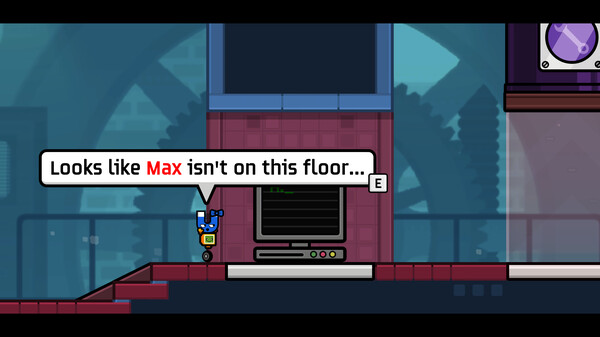 From the official screenshots on the Steam store page for Mind Over Magnet (2024)
The second game took seven months. "By taking everything I learned from Mind Over Magnet, and really planning out the development instead of just making stuff willy nilly, I was able to take this game from idea, to prototype, to playtesting, to QA, and to release in just seven months" ("How I Made Word Play," 2025-07-14 ↗).
What happens when the critic becomes the criticised
After release, three complaints arrived. Too short (about two hours), too easy, and — in reviewers' words — bland, safe, uninspiring.
His reaction was unusual. "I agree with all of them, and I saw pretty much all of them coming" ("What it's like to launch a game on Steam," 2024-12-06 ↗). That is the voice of someone who can grade his own work with his own critical eye, in advance.
On difficulty he admits he ran out of time — he writes that he didn't have time to put in content better suited to a more hardcore audience (same source).
And he calls his own game "a pretty bog-standard, by the numbers, my first video game" (same source). The numbers were not bad: 12,446 copies within weeks, an 88% recommendation rate, and only about 2% refunds (same source). His own verdict is still harsh.
So his dilemma is not whether the criticism is correct. It is whether to ship carrying flaws you already know are there, or to hold the game until they are gone. He appears to have chosen the former.
The influences he acknowledges
He names his influences plainly. One is Valve's developer commentary.
"When these clever people from Valve talked about creating game mechanics or teaching things to the player about guiding their eye, about creating puzzles or running play tests, it just blew my mind" ("I made a game about magnets," 2024-11-13 ↗).
What is interesting is that he brought the form itself into his own game. Finishing it unlocks a commentary mode where you hear "a voice note from me telling you how I made that part of the game" (same source). The thing that influenced him became a feature of the thing he made.
The starting point for game two was a blunter combination: the poker roguelike Balatro crossed with a spelling game like Scrabble or Bookworm Adventures ("How I Made Word Play," 2025-07-14 ↗).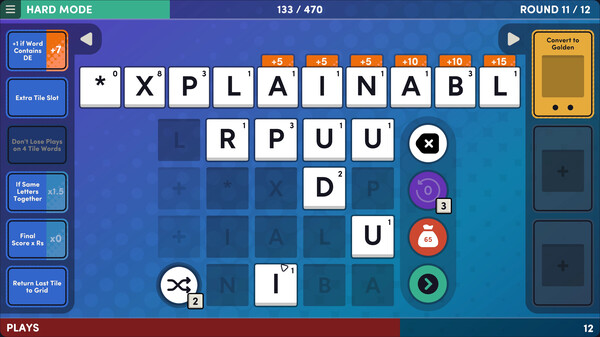 From the official screenshots on the Steam store page for Word Play (2025)
Kizuki's reading — how I read him
From here on, this is my reading. I read Mark Brown as someone who spent his critic's eye down to the last coin as a maker.
Normally that eye is the maker's enemy: you see every flaw in your own work. He seems instead to have used it to decide when to stop. If you can write out the incoming criticism in advance, all that remains is choosing which flaws to fix and which to carry out the door. A predictable flaw can be treated as inventory rather than as fear.
I read the seven-month second game the same way. The gap between three years and seven months looks less like a gap in skill than in being able to design how you give up. What he really learned on game one, I suspect, was not the physics of magnets but a procedure that does not pick fights with his own critical eye.
Where to start if you want to understand him
Start by playing Mind Over Magnet. It is on the gentle side, but you can feel with your hands what he says he was aiming for. Play through to the commentary and you hear, in his voice, much of what this article quotes.
Then read the devlogs above in order, pre-release and post-release. The August and December 2024 pieces are especially worth reading back to back: doubt, then decision.
For a neighbouring mind, Derek Yu — finishing as a skill rather than a talent — is the closest match. Terry Cavanagh, who starts by assuming the game won't sell, is worth reading alongside for how he sets his shipping assumptions.
If the teaching-without-telling problem is what caught you, look at Toki Tori 2+. It answers the same question in a completely different way.
Sources
Primary sources quoted in this article (all written by Brown himself):
・Game Maker's Toolkit, "I just changed my entire game (Developing)," 2024-03-12
・Game Maker's Toolkit, "The hardest thing about finishing a game," 2024-08-02
・Game Maker's Toolkit, "I made a game about magnets," 2024-11-13
・Game Maker's Toolkit, "What it's like to launch a game on Steam," 2024-12-06
・Game Maker's Toolkit, "How I Made Word Play," 2025-07-14
・Game Maker's Toolkit, "What's the point of prototyping?" 2025-11-05
Secondary sources used to check biography and release dates:
・Wikipedia, "Game Maker's Toolkit" (birth year, career, series names, game jam scale)
・Steam store page for Mind Over Magnet / Steam store page for Word Play (release dates and screenshots)
Japanese renderings of the quotes are my own translations; the originals are at the links above.
Reactions (no login)
Anonymous • one of each per visitor per day
Learn — Curriculum
LearnTeil 9 Shipping — Make It, Then Deliver ItKapitel 20 Market and Delivery10 / 11
関連シリーズ
The Designer's Philosophy第54回 / 全63回
Read next
Related reviews
La-Mulana 2
Ein 2D-Erkundungs-Actionpuzzle, in dem man sich, nur mit einer Peitsche und Steintafeln ausgerüstet, in die antiken Ruinen von Eg-Lana hinabbegibt. Man schreibt die in Wände geritzten Inschriften ab und verknüpft sie mit Mechanismen in weit entfernten Räumen. NIGOROs Fortsetzung zu La-Mulana.
Toki Tori
Ein 2D-Denkrätsel, in dem man mit genau den Werkzeugen, die ein Level vorher festlegt, alle eingeschlossenen Eier einsammelt und zurückbringt: eine Stufe bauen, eine Brücke schlagen, einen Gegner einfrieren. Welches Werkzeug wie oft zur Verfügung steht, verrät bereits die Form der Lösung. Das niederländische Studio Two Tribes hat damit sein Game-Boy-Color-Original von 2001 neu aufgelegt.
Thomas Was Alone
Ein 2D-Puzzle-Platformer, in dem man zwischen unterschiedlich gefärbten und unterschiedlich großen Rechtecken wechselt, ihre je einzige Fähigkeit kombiniert, um Trittsteine zu bauen, und sich so durch 120 Level bewegt. Während des Spiels läuft aus dem Off eine Erzählung mit, die das Innenleben der Rechtecke kommentiert. Ein Werk von Bithell Games, dem Studio von Mike Bithell, erschienen 2012.


