DESIGNER-STUDY · 2026-09-08
Inside Thomas Grip's Philosophy — Rewriting Puzzles from Obstacle to "I Did That"
Penumbra / Amnesia: The Dark Descent / SOMA / Ontos
A horror developer wrote about puzzles seven times
Sixteen years ago today, on 8 September 2010, Amnesia: The Dark Descent was released. It was made by Frictional Games in Sweden, and the person at the centre of it is Thomas Grip. By the usual filing system, he is a horror developer.
But that is not why I picked him today. On his own blog he wrote a seven-part series about puzzles. He has written about puzzles longer, and at greater length, than many people who make nothing but puzzles.
There is also a reason to read him now. Last December the studio announced a new game, Ontos, and he wrote in the announcement that "Ontos is not really a horror game in a traditional sense" (Xbox Wire, 11 December 2025 ↗). Sixteen years of writing have arrived somewhere, and this is a good moment to see where.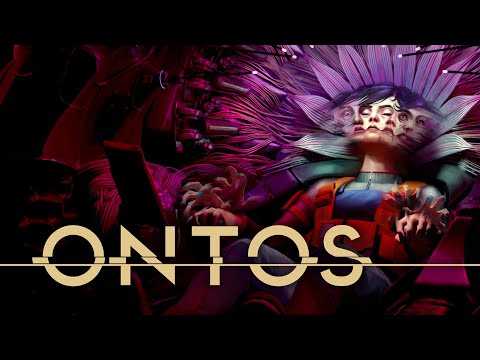 From the Ontos reveal (YouTube channel frictionalgames, "ONTOS – Reveal Trailer")
Here is the conclusion first. His philosophy is not "remove the puzzles." It is to rewrite what a puzzle is for: not to test the player, but to make the player say "I did that."
From a graphing calculator at sixteen to a company founded on 1 January 2007
Thomas Grip is a Swedish game developer, co-founder of Frictional Games and its creative director. Outside the horror audience he is best known as the Amnesia and SOMA guy.
According to the studio's own profile of him, he started making games at sixteen, in 1997. He began on a TI-83 graphing calculator and moved through QBasic, Pascal and C. His stated motive is plain: "I simply made these games, because I loved making them" (Frictional Games, November 2013 ↗).
Frictional Games was founded on 1 January 2007 with Jens Nilsson, in Helsingborg, Sweden. The catalogue runs: three Penumbra games (2007–2008), Amnesia: The Dark Descent (2010), SOMA (2015), Amnesia: Rebirth (2020), Amnesia: The Bunker (2023), and Ontos to come.
What sets him apart is that he does not stop at making. He has published his design thinking at length for well over a decade, which means nearly every quote below can be taken from something he signed himself.
Taking "fun" off the list of goals
In January 2010 he published a post titled "When focusing on fun fails." One sentence carries it: "I think designers shall focus entirely on what kind of experience they want to deliver and make that come across as effectively as possible!" (Frictional Games, 6 January 2010 ↗).
Fun, on this view, is not the target but one possible result of hitting the target. How he treats puzzles follows from it. In 2013 he wrote that "the puzzle must fit with the experience that you want to create" (Frictional Games, 21 February 2013 ↗). Difficulty and cleverness are not the measure.
In the same post he grants puzzles their uses: "They give the player a goal." He is not arguing for abolition. He does, though, write that "the goal is not to make players think you are clever" — the designer's own showing-off is struck off the scorecard.
The thinking also became a procedure. His 2014 post "4-Layers" runs every scene through Gameplay, Narrative Goal, Narrative Background and Mental Modeling (Frictional Games, 29 April 2014 ↗). It reads as a worksheet for keeping story and input from coming apart.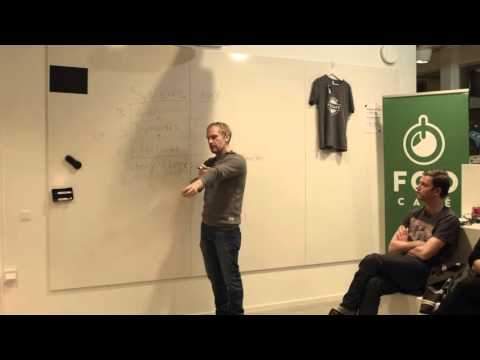 From his own talk on the four-layer method (YouTube channel FooCafe, "Game design with 4 layers approach - Thomas Grip")
Memories you can say "I did" about — and one wooden stick
Two phrases keep coming back. The first is "causal history." In his words: "Basically, it means the sum of actions that players feel they have caused; any previous actions remembered as 'I did…'" (Frictional Games, 17 March 2013 ↗).
That yields an unusually concrete instruction: "The retelling of a puzzle should be dense with the player performing actions, not passive spectating." He is not measuring whether the puzzle was solved. He is measuring how many first-person verbs survive when the player later describes it. I find that a rare yardstick.
The second is an obsession with not letting anyone get stuck. In September 2010 he wrote a whole post about a single wooden stick — the one jammed in a pulley in Amnesia, which must be removed before a hatch will open. "For each test session we found that there was always one or more testers that got stuck on this puzzle" (Frictional Games, 1 September 2010 ↗).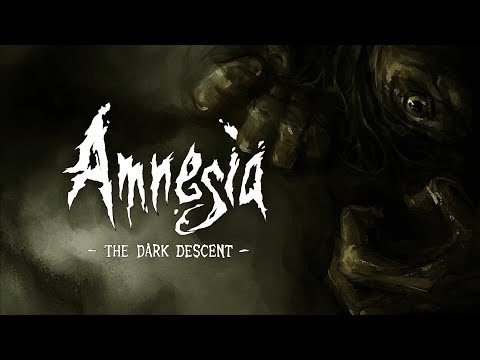 From the official trailer for Amnesia: The Dark Descent (YouTube channel frictionalgames, "Amnesia: The Dark Descent - Trailer")
The list of fixes is the good part: added descriptions, a changed texture, added light and particle effects, a bigger model, and finally an alternative solution. All of that for one stick. The post signs off: "Finally, we hope, for the love of all puzzles, that this puzzle has been tweaked to perfection and that none of you will get stuck on it." It is a joke, but the obsession is what shows through.
Naming his own failed puzzles out loud
In October 2009 he graded the puzzles of Penumbra one by one. Some he liked. Of the invisible ink puzzle: "I really like how this combined the puzzle element with a strong horror event" (Frictional Games, 19 October 2009 ↗).
The failures get no mercy. Of the exploding potion: "Because of some bad design in this, many people did not make the right connections and got stuck." Of the late-game Tuurngait Trials: "The segment was far from a success." Not many developers mark their own work down this plainly.
He also withdrew his own hopes for physics. His August 2009 post argues that physics is not the "promised land" of adventure games, and the reason is practical: "physics require alot of restrictions and special cases to be added in order to make a working game" (Frictional Games, 26 August 2009 ↗). Penumbra's mining cart kept derailing after hours of stabilising work: "In hindsight it would have been a lot easier to just use an animation."
The near-death of the studio is on the record under his own byline too. During Amnesia's development a contract was broken, the money almost ran out, and with one month of salaries left they let their employees go (The Escapist, 12 July 2011 ↗). Combat was cut: "We intended for combat to be a used as a last resort only, but this kind of gameplay proved extremely hard to accomplish." One line from that piece stays with me: "It is quite easy to overlook blatant flaws simply because you invested time in them."
Help them, or leave them alone
His longest-running problem is how kind to be. In the October 2009 post on hint systems he first grants what hints are for — they lower the chance of getting stuck — and then adds: "However, like with the other systems described, hints can easily turn into hand holding and make the experience worse" (Frictional Games, 5 October 2009 ↗).
On trial and error he is harsher. His April 2010 post is titled "Why Trial and Error will Doom Games," and it offers a replacement: "Instead of thinking of a game as a something to be beaten, it should be thought of as an experience. Something that the player 'lives' through rather than 'plays' through" (Frictional Games, 11 April 2010 ↗).
The dilemma took its clearest shape in SOMA's Safe Mode, added in November 2017, two years after release, which removes the need to sneak past enemies. His stated reason: "As people started to say that they really wanted to play the game and experience the philosophical sci-fi narrative, but couldn't because of the monsters, we started considering doing something about it." And in the same post: "We actually considered releasing something similar at launch, but chose not to because we felt it would make the core intent of the game too unfocused" (Frictional Games, 30 November 2017 ↗). From the official Safe Mode trailer for SOMA (YouTube channel frictionalgames, "SOMA Safe Mode Launch Trailer")
What catches my eye is how his verdict on puzzles moves within a few years. Writing about LIMBO in 2011 he said "puzzles can be quite a hindrance if you want to make a living world" (Frictional Games, 11 October 2011 ↗). By February 2013 he is arguing that puzzles should be improved rather than dropped. Side by side it looks like a reversal; I read it as evidence that the question never closed for him.
It started with Resident Evil
On influences he is unusually direct. The origin is Resident Evil: "I was really unaware that you could make games like this. The mixture of action, exploration, and puzzles was completely new to me" (PC Gamer, 22 January 2017 ↗).
He goes further: "It has been a guiding light for pretty much everything I have done." In the same interview: "For the last 15 years, I have basically been doing first-person versions of Resident Evil." It is worth noting that the man filed under horror describes his own lineage as a mixture of exploration and puzzles.
He also reads his contemporaries closely. On LIMBO he wrote a long critique, including this on repetition: every repeat, he wrote, made the game "less about being present in it's virtual world" and more "about figuring out an algorithm." We have a piece on the designer on LIMBO's side of that argument (Inside Jeppe Carlsen's philosophy). Read together, the two give different answers to the same problem.
Kizuki's reading — how I read him
What follows is my own reading. I do not read him as a horror developer who disliked puzzles. I read him as someone who rewrote the pass mark for a puzzle.
Line his writing up by year and you can watch certain yardsticks disappear: difficulty, cleverness, how smart the solver looks, how smart the designer looks. One remains — how many first-person verbs survive when the player retells it. "Causal history" is, I think, the name he gave to that measurement.
And I do not think that standard was adopted because he works in horror. I think it runs the other way. Fear is the cheapest available device for making a player unable to look away from their own actions. He chose means for the experience he wanted, and the means happened to be horror. The record of one wooden stick, fixed over and over, sits closer to his centre than the horror on the sign — that is my reading.
Where to start if you want to understand him
If you want to play him, start with Amnesia: The Dark Descent (2010). When you pull the stick out of the pulley, remember the record of what that took. Then SOMA (2015) — and if fear was your reason for skipping it, Safe Mode exists now.
If you want to read him, three posts in order are enough: "Penumbra puzzles" (October 2009) for the self-assessment, "Why Trial and Error will Doom Games" (April 2010) for the position, and "Puzzles and Causal Histories" (March 2013) for the conclusion. Read in sequence, you can watch the thinking move.
For neighbours, try Jeppe Carlsen of LIMBO, INSIDE and COCOON, and Sam Barlow, who threw away the container for his stories. All three design around the same question: what will the player remember doing?
Sources
Primary sources referenced in this article:
・Ibid., "Puzzles in horror games Part 6: On 'brain boosters' and hint systems," 2009-10-05
・Ibid., "Puzzles in horror games Part 7: Penumbra puzzles," 2009-10-19
・Ibid., "When focusing on fun fails," 2010-01-06
・Ibid., "Why Trial and Error will Doom Games," 2010-04-11
・Ibid., "Puzzle Tweaking – Tale of a Wooden Stick," 2010-09-01
・Ibid., "Thoughts on Limbo," 2011-10-11
・Ibid., "Puzzles, what are they good for?," 2013-02-21
・Ibid., "Puzzles and Causal Histories," 2013-03-17
・Ibid., "4-Layers, A Narrative Design Approach," 2014-04-29
・Ibid., "What is SOMA's Safe Mode?," 2017-11-30
・Ibid., "Thomas Grip: Co-founder, creative director," November 2013 (his own profile)
・The Escapist, Thomas Grip, "The Terrifying Tale of Amnesia," 2011-07-12
・Frictional Games old blog, "Amnesia - One year later," 2011-09-09
・PC Gamer (Mat Paget), interview with Thomas Grip, 2017-01-22
・Xbox Wire, Thomas Grip, "Introducing Ontos," 2025-12-11
・FooCafe, "Game design with 4 layers approach - Thomas Grip" (his own talk)
Reactions (no login)
Anonymous • one of each per visitor per day
関連シリーズ
The Designer's Philosophy第56回 / 全63回